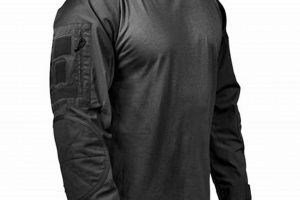
Apparel designed specifically for airsoft participants often serves as a distinguishing element within the sport. This specialized clothing can indicate team affiliation or player role. For example, similar attire worn by individuals during a competitive simulation may signify they are part of the same unit.
Such garments provide practical advantages. Enhanced breathability facilitates moisture management during strenuous activity. Reinforcement in key areas, such as the elbows and shoulders, contributes to durability and protection. Historically, these articles evolved from modified military surplus to purpose-built designs reflecting advancements in textile technology and ergonomic considerations.
The subsequent sections will detail the various styles available, examine material composition and performance characteristics, and provide guidance on selecting appropriate attire based on individual needs and intended application.
Essential Considerations for Airsoft Apparel Selection
The selection of appropriate apparel significantly impacts both comfort and performance during airsoft activities. The following tips provide guidance on making informed decisions when procuring specialized garments.
Tip 1: Prioritize Material Breathability: Fabric composition directly influences ventilation and moisture-wicking properties. Materials such as polyester blends or specialized performance fabrics offer superior breathability, reducing discomfort caused by perspiration during extended gameplay.
Tip 2: Evaluate Reinforcement and Durability: High-wear areas, including elbows, shoulders, and torso, benefit from reinforced construction. Double-stitching and strategically placed padding enhance resistance to abrasion and impact, extending the lifespan of the garment.
Tip 3: Consider Camouflage Pattern Effectiveness: The selection of camouflage should align with the environment in which the garment will be used. Evaluate local foliage, terrain characteristics, and prevailing color palettes to choose a pattern that provides optimal concealment.
Tip 4: Assess Mobility and Range of Motion: The garment should allow for unrestricted movement during dynamic activities such as running, crouching, and aiming. Articulated designs and flexible materials enhance maneuverability and reduce fatigue.
Tip 5: Verify Proper Fit and Sizing: Accurate sizing ensures comfort and prevents binding or constriction. Consult sizing charts provided by the manufacturer and consider individual body measurements when making a selection. A well-fitted garment optimizes range of motion and reduces chafing.
Tip 6: Inspect Closure Systems and Adjustability: Secure and reliable closures are essential. Zippers, hook-and-loop fasteners, and adjustable cuffs allow for a customized fit and prevent snagging or interference with equipment.
Tip 7: Evaluate Compatibility with Protective Gear: The garment should integrate seamlessly with other protective equipment, such as vests, chest rigs, and plate carriers. Adequate layering space and secure attachment points are crucial considerations.
Adhering to these recommendations will contribute to enhanced comfort, durability, and overall performance during airsoft engagements. Prioritizing these factors ensures that the selected apparel effectively meets the demands of the sport.
The subsequent sections will delve deeper into specific garment styles and explore the benefits of incorporating advanced features into airsoft loadouts.
1. Identification

Apparel serves a critical identification function within airsoft simulations. Distinctive colors, patterns, or markings on garments enable rapid visual differentiation between opposing teams, mitigating friendly fire incidents and facilitating tactical coordination. The presence of specific insignia, such as team logos or call signs, further enhances individual recognition and unit cohesion. Misidentification can result in compromised strategic objectives and potentially hazardous scenarios; therefore, clear and unambiguous visual cues are paramount.
Real-world application demonstrates the significance of identification. Uniform color schemes or the attachment of colored armbands allows players to identify teammate and foes. The use of high-visibility panels on backs or shoulders can be particularly beneficial in dense environments, ensuring clear lines of sight during engagements. At organized events, adherence to standardized color assignments is often mandatory, reinforcing the importance of visual differentiation for safety and fair play. Conversely, inadequate or ambiguous marking can lead to confusion, disrupting established strategies and increasing the risk of unintended consequences.
In conclusion, clear and effective identification is a fundamental design consideration for apparel. Selecting garments that promote rapid visual differentiation through distinctive colors, patterns, and markings is essential for maintaining tactical awareness and preventing potentially adverse outcomes. Consistent adherence to established identification protocols reinforces unit cohesion and contributes to a safer and more effective gameplay environment. The link between identification and appropriate apparel selection is undeniable.
2. Breathability

Breathability in apparel is of paramount importance for airsoft participants due to the physically demanding nature of the sport. Effective moisture management directly influences comfort, performance, and overall player endurance. Garments that lack adequate ventilation can lead to overheating, discomfort, and decreased tactical effectiveness.
- Fabric Composition and Ventilation
Material selection directly impacts a garment’s breathability. Fabrics such as polyester blends and specialized moisture-wicking materials facilitate airflow and promote evaporative cooling. The incorporation of mesh panels in strategic locations, such as under the arms or along the back, further enhances ventilation. Conversely, heavier, less breathable fabrics, such as thick cotton, can trap heat and moisture, resulting in discomfort and reduced performance.
- Moisture-Wicking Properties
The ability of a fabric to draw moisture away from the skin is a critical aspect of breathability. Moisture-wicking materials typically feature a capillary action that transports perspiration to the outer surface of the garment, where it can evaporate more readily. This process helps to regulate body temperature and prevent the buildup of sweat, which can lead to chafing and discomfort. Garments with effective moisture-wicking properties contribute to a drier and more comfortable experience, particularly during prolonged or intense gameplay.
- Design and Construction Considerations
Beyond fabric selection, design elements also influence breathability. Loose-fitting garments generally promote better airflow than tightly fitted ones. The incorporation of ventilation features, such as zippered vents or strategically placed perforations, can provide additional cooling options. The construction techniques employed in the garment’s creation can also impact breathability; for example, flatlock seams reduce chafing and promote airflow compared to traditional seams.
- Impact on Player Performance
Breathability directly affects a player’s comfort, concentration, and overall performance. Overheating and discomfort can lead to decreased focus, impaired decision-making, and reduced physical stamina. Garments that effectively manage moisture and promote ventilation allow players to remain comfortable and perform at their best for extended periods. In tactical scenarios, even slight advantages in comfort and endurance can have a significant impact on the outcome.
The selection of breathable garments for airsoft activities is not merely a matter of comfort; it is a critical element of performance and player safety. Prioritizing materials and design features that promote ventilation and moisture management contributes to a more comfortable, effective, and enjoyable gameplay experience. Apparel lacking adequate breathability is less likely to be suitable for such activity.
3. Durability

The longevity of apparel used in airsoft simulations is directly correlated with its ability to withstand the rigors of the environment and the intensity of gameplay. Durability, therefore, constitutes a primary consideration in the selection of appropriate garments, as frequent replacement of substandard attire can incur significant costs and logistical challenges. Airsoft scenarios often involve traversing varied terrains, including dense vegetation, urban environments, and constructed obstacles. These environments expose garments to abrasion, tearing, and other forms of physical stress. The repeated impact of BB projectiles also contributes to wear and tear, particularly on exposed areas. As a component of apparel for airsoft, robust construction and resilient materials are necessary to extend the lifespan of the item.
Specific examples illustrate the practical significance of durability. A garment constructed from ripstop nylon, for instance, is more resistant to tearing than one made from standard woven cotton. Reinforced stitching at critical stress points, such as seams and pockets, further enhances its ability to withstand prolonged use. Military simulations often feature participants wearing attire constructed from high-denier fabrics, designed to endure harsh conditions and repeated wash cycles. Similarly, purpose-built apparel incorporates strategically placed padding or abrasion-resistant panels to protect areas prone to high impact or friction. Failure to prioritize durability can result in premature garment failure, leading to discomfort, impaired performance, and the need for frequent replacements.
In summary, the durability of garments designed for airsoft is essential for both economic and practical reasons. Selecting apparel that incorporates robust materials, reinforced construction, and strategic protective elements ensures longevity and sustained performance under challenging conditions. Prioritizing durability not only reduces the long-term cost of outfitting participants but also minimizes potential disruptions to gameplay due to equipment failure. The relationship between durability and airsoft apparel is thus intrinsic to the success and enjoyment of the activity.
4. Camouflage
Camouflage represents a critical attribute in apparel designed for airsoft engagements. Its effectiveness directly influences a player’s ability to conceal themselves within the environment, providing a tactical advantage in simulations that often rely on stealth and maneuverability. The selection of appropriate camouflage patterns is thus a fundamental consideration in choosing suitable airsoft attire.
- Environmental Adaptation
The primary function of camouflage is to disrupt the wearer’s silhouette and blend them seamlessly with their surroundings. This necessitates selecting patterns that correspond to the specific environment in which the simulation will take place. Woodland patterns, characterized by greens, browns, and blacks, are effective in forested areas. Desert patterns, featuring tans, browns, and grays, provide concealment in arid environments. Urban environments may necessitate patterns with grays, blacks, and blues to blend with concrete and asphalt. Adaptations of Multicam provides a balance of many area of operations.
- Pattern Disruption and Concealment
Effective camouflage patterns employ techniques to disrupt the human form, making it more difficult for opponents to recognize and target the wearer. This often involves irregular shapes, varying scales, and a combination of contrasting colors to break up the outline of the body. Digital camouflage patterns, for example, utilize small, pixelated shapes to create a disruptive effect that is particularly effective at longer ranges.
- NIR Compliance (Near-Infrared)
Some advanced camouflage patterns incorporate Near-Infrared (NIR) compliance. NIR-compliant fabrics exhibit a reflectance signature that closely matches that of natural foliage when viewed through night vision devices. This makes the wearer less visible under night vision, providing a significant tactical advantage in low-light conditions. Without NIR compliance, standard fabrics may appear brighter than the surrounding vegetation, making the wearer easier to detect.
- Personal Preference and Team Coordination
While environmental adaptation is paramount, personal preference and team coordination also play a role in camouflage selection. Some players prefer patterns that align with their individual style or tactical approach. In team-based simulations, coordinating camouflage patterns can enhance unit cohesion and improve the team’s overall concealment effectiveness. Standardized color schemes can prevent friendly fire incidents and facilitate clearer visual communication between team members.
In conclusion, the selection of appropriate camouflage represents a crucial decision in acquiring effective airsoft apparel. Consideration of the environment, pattern disruption techniques, NIR compliance, and team coordination all contribute to optimizing concealment and enhancing tactical effectiveness. The link between camouflage and apparel should follow the environment, type of game and also consider teamwork.
5. Customization
The capacity to personalize apparel is a significant factor in the acquisition and utilization of garments within airsoft. This customization serves practical, tactical, and social functions, influencing team cohesion, individual expression, and overall player experience. The ability to modify and adapt apparel to specific needs and preferences enhances its utility and reinforces a sense of belonging within the community.
- Team Identification and Branding
A primary function of customization is the facilitation of team identification. The application of team logos, names, and colors to apparel allows for immediate recognition and fosters a sense of unity among members. Patches, embroidery, or printed designs can be affixed to garments, creating a visual representation of group affiliation. This element is particularly important in competitive scenarios where clear distinction between teams is essential for fair play and effective communication.
- Role Designation and Specialization
Customization can also denote specific roles or specializations within a team. Different patterns, colors, or insignia may be used to indicate the wearer’s responsibilities, such as medic, grenadier, or team leader. This visual cue aids in strategic coordination and allows for rapid identification of individuals with specific skill sets. For instance, a medic may wear a patch displaying a medical symbol, while a team leader might wear a distinctive armband or shoulder marking.
- Personal Expression and Individual Style
Beyond team and role identification, customization allows for personal expression and the manifestation of individual style. Players may choose to add patches, accessories, or modifications that reflect their personality, interests, or tactical preferences. This can range from morale patches featuring humorous or motivational slogans to the addition of extra pockets or gear attachment points. The ability to personalize apparel fosters a sense of ownership and pride, enhancing the individual’s connection to the activity.
- Functional Adaptations and Performance Enhancement
Customization can extend beyond purely aesthetic considerations to encompass functional adaptations that enhance performance. The addition of padding in high-impact areas, the integration of ventilation systems, or the modification of closure mechanisms can improve comfort, protection, and overall efficiency. Players may also choose to add pockets or attachment points for carrying essential gear, tailoring the garment to their specific loadout and tactical requirements. These modifications can significantly enhance the garment’s utility and effectiveness in the field.
In summary, customization is a multifaceted element of apparel used in airsoft, serving practical, tactical, and expressive purposes. From team identification and role designation to personal expression and functional adaptations, the ability to modify and personalize garments enhances their utility, strengthens group cohesion, and fosters a sense of individual ownership. The degree of customization employed often reflects the seriousness and commitment of the individual or team, demonstrating the integral link between apparel and the overall airsoft experience.
6. Teamwork

Effective teamwork is fundamental to success in airsoft simulations, and apparel plays a supportive, though crucial, role in facilitating collaborative efforts on the field. The ability to quickly and accurately identify teammates, understand their roles, and maintain cohesion during dynamic engagements is significantly enhanced by thoughtful consideration of attire.
- Visual Identification and Cohesion
Apparel, particularly color schemes and patterns, facilitates rapid visual identification of teammates. Uniformed appearance promotes a sense of unity and shared purpose, enhancing team cohesion and reducing the risk of friendly fire. For example, squads utilizing a consistent camouflage pattern can more easily distinguish each other in dense environments compared to teams with disparate attire. In organized events, mandated color assignments reinforce this principle by ensuring clear differentiation between opposing forces.
- Role Differentiation and Communication
Specific design elements or markings on apparel can denote specialized roles within a team. Medics, snipers, or team leaders may wear distinct insignia or color variations to communicate their function to other members. This allows for efficient allocation of resources and facilitates coordinated tactical maneuvers. A designated marksman with a unique arm patch can be quickly identified, enabling teammates to prioritize support and protection for that key asset.
- Strategic Coordination and Movement
Consistent and recognizable apparel assists in strategic coordination and facilitates fluid team movement. Players can more easily track the positions of their teammates and anticipate their actions, leading to improved communication and responsiveness. A team operating in a confined space, where visual contact is limited, benefits from easily discernible patterns, allowing them to maintain formation and react cohesively to evolving threats. Uncoordinated movement, often stemming from a lack of clear visual identifiers, can lead to tactical disadvantages and increased vulnerability.
- Morale and Esprit de Corps
Shared team apparel fosters a sense of belonging and enhances morale. Wearing matching attire can instill a sense of pride and camaraderie, strengthening the bonds between teammates. Custom-designed items, such as shirts or patches, can further personalize the experience and reinforce the team’s identity. High morale translates to increased motivation, improved communication, and a greater willingness to work collaboratively towards shared objectives.
Ultimately, carefully selected and, where appropriate, uniform attire contributes significantly to enhanced teamwork in airsoft. From promoting rapid visual identification to fostering a sense of unity and shared purpose, apparel serves as a supportive tool for improving communication, coordination, and overall team effectiveness. The selection is best made in unison and should accurately reflect the individual and collective.
Frequently Asked Questions
The following questions address common inquiries regarding specialized apparel designed for airsoft activities, providing clarification and guidance for informed decision-making.
Question 1: What is the primary function of specialized apparel in airsoft?
The primary function is to provide identification, enhance breathability and offer a degree of protection. They can signify team affiliation, improve comfort during strenuous activity, and offer a minimal barrier against BB impacts. Garments are designed to withstand the demands of gameplay.
Question 2: How does material composition impact garment performance?
Material composition directly influences breathability, durability, and moisture-wicking properties. Polyester blends offer superior ventilation and moisture management compared to traditional cotton fabrics. Reinforced fabrics enhance abrasion resistance and extend garment lifespan.
Question 3: What factors should be considered when selecting a camouflage pattern?
The selection of camouflage should align with the environment in which the garment will be used. Evaluate local foliage, terrain characteristics, and prevailing color palettes to choose a pattern that provides optimal concealment. Consideration of NIR compliance may be appropriate for night operations.
Question 4: Is customization a necessary element of airsoft attire?
Customization is not strictly necessary but can enhance team cohesion and individual expression. The addition of team logos, role designations, or personal insignia can foster a sense of unity and facilitate communication. Customization options offer benefits that enhance the overall experience.
Question 5: How does attire contribute to teamwork during airsoft engagements?
Uniform or coordinated attire facilitates rapid visual identification of teammates, reducing the risk of friendly fire and improving communication. Consistent attire promotes a sense of unity and shared purpose, enhancing overall team cohesion.
Question 6: What are the common indicators of quality in airsoft apparel?
Indicators of quality include reinforced stitching, durable fabrics, strategic placement of protective elements, and adherence to standardized sizing. Reputable brands often provide detailed specifications regarding material composition and construction techniques, allowing for informed purchasing decisions.
Effective apparel is a key element in the overall airsoft experience, contributing to comfort, performance, and team cohesion. Understanding fundamental design and performance characteristics ensures informed selection and optimal utilization.
The subsequent sections will explore advanced features and technologies incorporated into modern airsoft apparel, providing insight into cutting-edge innovations in the field.
Conclusion
This exposition has explored the multifaceted role of airsoft jerseys in the sport, emphasizing their functions beyond mere aesthetics. The discussion addressed identification, breathability, durability, camouflage, customization, and contribution to teamwork. Each aspect offers practical benefits influencing player performance and tactical effectiveness.
The information presented should inform purchasing decisions and promote a deeper understanding of the strategic implications related to clothing selection within airsoft. Careful consideration of these factors contributes to a safer, more enjoyable, and ultimately more competitive experience for all participants. Continued technological advancements will undoubtedly introduce new materials and designs, further enhancing the utility of airsoft jerseys in the future.