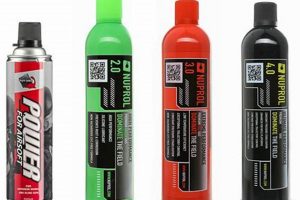
The compressed gas propellant used in certain airsoft replicas allows for semi-automatic or fully-automatic firing. Typically composed of propane mixed with silicone oil, this propellant provides the necessary pressure to expel projectiles from the firearm replica. These gas-powered replicas offer a more realistic shooting experience compared to their spring-powered counterparts, particularly in terms of recoil simulation and rate of fire.
Its adoption has significantly impacted the airsoft hobby, contributing to the realism and immersive gameplay that many players seek. The consistent pressure provided by the gas results in more predictable projectile velocities and improved accuracy. Furthermore, the lubricant present in the composition aids in maintaining the internal mechanisms of the replica, extending its lifespan and ensuring reliable operation. The introduction of this propellant presented a viable alternative to compressed air or CO2, offering a balance of performance, cost, and ease of use.
The following sections will delve into the operational mechanics, safety considerations, performance characteristics, and maintenance procedures associated with these airsoft devices and the specific propellant they utilize. Understanding these aspects is crucial for responsible ownership and optimal performance on the airsoft field.
Essential Usage Guidelines
Optimizing performance and ensuring safety require adherence to specific handling and maintenance practices when employing airsoft replicas powered by compressed gas. The following guidelines outline key considerations for users.
Tip 1: Select the Appropriate Gas Type: Use only gas formulations specifically designed for airsoft replicas. Avoid using propane or other industrial gases, as they can damage internal components due to excessive pressure and lack of lubrication.
Tip 2: Fill Magazines Correctly: Ensure magazines are filled in a well-ventilated area, away from open flames or ignition sources. Hold the gas canister vertically and press the nozzle firmly into the magazine’s fill valve until the magazine is full. Overfilling can damage the magazine seals.
Tip 3: Lubricate Regularly: The gas typically contains silicone oil. However, additional lubrication may be necessary depending on usage frequency. Apply silicone oil to magazine seals and internal components as recommended by the manufacturer to maintain proper function and prevent leaks.
Tip 4: Store Magazines Properly: Store magazines with a small amount of gas to maintain seal integrity. Empty magazines can dry out, leading to leaks. Keep magazines in a cool, dry place away from direct sunlight.
Tip 5: Maintain the Replica: Regularly clean and inspect the replica’s internal components. Remove any debris or dirt that may accumulate. Pay particular attention to the hop-up unit and barrel to ensure consistent projectile trajectory.
Tip 6: Monitor Gas Pressure: Ambient temperature affects gas pressure. In colder conditions, gas pressure may decrease, resulting in reduced power and performance. Consider using a stronger gas formulation or a regulated adaptor for consistent performance in varying temperatures.
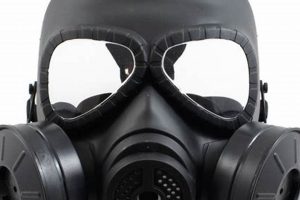
Tip 7: Prioritize Safety: Always wear appropriate eye protection and face protection when operating airsoft replicas. Treat all airsoft replicas as if they are loaded and never point them at anything or anyone that is not intended to be targeted.
Adhering to these guidelines will enhance the lifespan and performance of airsoft replicas while promoting safe and responsible use. Consistent maintenance and informed operation are critical for maximizing the user experience.
The subsequent sections will address common troubleshooting issues and advanced customization options, providing a comprehensive resource for airsoft enthusiasts.
1. Propellant Composition

Propellant composition constitutes a critical factor influencing the performance and longevity of airsoft replicas utilizing compressed gas. The standard composition typically involves propane combined with silicone oil. This mixture serves a dual purpose: propane provides the necessary pressure to propel projectiles, while silicone oil lubricates internal components, mitigating friction and wear. Variations in the propane-to-silicone oil ratio or the introduction of alternative additives can significantly alter operational characteristics.
An imbalanced ratio, for instance, with insufficient silicone oil, may lead to accelerated wear on O-rings and other seals, resulting in gas leaks and reduced replica efficiency. Conversely, excessive silicone oil could foul hop-up buckings, affecting projectile trajectory and accuracy. Manufacturers often specify recommended gas formulations to optimize performance and prevent damage. Some specialized formulations may incorporate additives to enhance performance in colder temperatures or improve recoil simulation. The correct selection and utilization of an appropriate propellant composition are therefore paramount for maintaining the integrity and functionality of compressed gas airsoft replicas.
Understanding the relationship between propellant composition and its impact on system performance is thus crucial for responsible airsoft replica ownership and maintenance. Deviations from recommended formulations carry inherent risks that can compromise operational effectiveness and shorten the lifespan of the equipment. Continued advancements in propellant technology aim to optimize these mixtures for enhanced performance and reduced environmental impact.
2. Pressure Regulation

Pressure regulation, in the context of airsoft replicas powered by compressed gas, directly influences projectile velocity and overall system performance. These replicas rely on the consistent release of gas to propel projectiles. Fluctuations in gas pressure directly correlate to variations in the force applied to the projectile, leading to inconsistent shooting performance. Regulators mitigate this issue by maintaining a stable output pressure, regardless of the pressure within the gas reservoir. For instance, in scenarios involving rapid firing, without regulation, the pressure in the gas magazine would drop, causing subsequent shots to weaken noticeably. A regulator ensures each shot receives the same propulsive force.
The benefits of regulated pressure extend beyond shot-to-shot consistency. Stable pressure contributes to improved accuracy by minimizing variations in projectile trajectory. Furthermore, consistent pressure reduces stress on internal components, potentially extending the lifespan of seals and other sensitive parts. A practical example involves converting a gas-blowback airsoft rifle to an external High-Pressure Air (HPA) system. These conversions almost invariably incorporate a regulator to step down the high tank pressure to a level compatible with the rifle’s internal mechanism. Without it, catastrophic damage could occur. The ability to fine-tune the output pressure also allows users to optimize the replica’s performance for specific game types or field regulations.
In summary, pressure regulation is a fundamental aspect of achieving consistent performance and extending the service life of airsoft replicas that use compressed gas. The use of a regulator stabilizes projectile velocity and reduces internal stress. The absence of adequate pressure regulation mechanisms leads to inconsistencies in accuracy, diminished power over time, and increased risk of component failure. Therefore, awareness of these principles is crucial for responsible ownership and skillful utilization.
3. Temperature Sensitivity

Temperature sensitivity presents a critical consideration in the operation of airsoft replicas that use compressed gas propellants. The performance of these systems is intrinsically linked to the ambient temperature due to the thermodynamic properties of the gas itself.
- Vapor Pressure Fluctuation
Compressed gas propellant exhibits a direct relationship between temperature and vapor pressure. Lower temperatures decrease the vapor pressure, resulting in reduced force exerted on the projectile. Conversely, higher temperatures increase vapor pressure, potentially leading to increased projectile velocity but also posing a risk of over-pressurization and component damage. The degree of performance variability is contingent upon the specific gas formulation and the design of the airsoft replica.
- Gas Expansion Rate
Temperature also influences the rate at which the compressed gas expands upon release. At lower temperatures, the expansion rate is reduced, diminishing the amount of energy transferred to propel the projectile. This leads to a decrease in effective range and impact force. In contrast, elevated temperatures accelerate the expansion rate, potentially causing erratic behavior and reduced accuracy.
- Material Properties
Temperature variations impact the material properties of components within the airsoft replica. Polymers and seals become more rigid and brittle in colder temperatures, increasing the risk of cracking or failure. Higher temperatures can cause expansion and softening, potentially compromising the seal integrity and leading to gas leaks. Proper maintenance, including the use of temperature-appropriate lubricants, is crucial for mitigating these effects.
- Performance Mitigation Strategies
Several strategies exist to mitigate the effects of temperature sensitivity. Specialized gas formulations designed for specific temperature ranges are available. The use of regulated systems, which maintain a constant output pressure regardless of temperature fluctuations, can also improve consistency. Additionally, pre-warming magazines in colder environments or storing replicas in temperature-controlled areas can help maintain optimal performance.
The interplay between temperature and the properties of compressed gas requires diligent consideration for optimal performance and longevity of airsoft replicas. Neglecting these factors can lead to inconsistent projectile velocities, component damage, and a diminished overall experience. Responsible ownership necessitates an understanding of these principles and the implementation of appropriate mitigation strategies.
4. Lubrication Requirements
Airsoft replicas utilizing compressed gas, such as those employing propane-based propellants, exhibit specific lubrication requirements essential for sustained functionality and durability. The presence of silicone oil within the propellant mixture serves a dual purpose, acting as both a lubricant and a sealant for internal components. The absence of adequate lubrication precipitates accelerated wear on O-rings, seals, and other moving parts, resulting in gas leaks, diminished performance, and ultimately, component failure. For example, a gas-blowback pistol operated without sufficient lubrication will experience increased friction between the slide and frame, leading to sluggish cycling and eventual damage to the slide rails.
The type and frequency of lubrication directly influence the operational lifespan of the replica. While the compressed gas itself contains lubricant, supplementary application of silicone oil is often necessary, particularly in areas subject to high friction or wear. Regular lubrication of magazine valves, piston heads, and nozzle assemblies minimizes friction, ensuring smooth and consistent cycling. Improper lubrication can manifest in several ways, including reduced projectile velocity, inconsistent gas output, and eventual mechanical failure. Conversely, over-lubrication can attract dirt and debris, hindering component movement and creating abrasive conditions. A balanced approach, adhering to manufacturer recommendations, is critical for optimal performance.
In conclusion, understanding and addressing the lubrication requirements of airsoft replicas powered by compressed gas is paramount for responsible ownership. The integration of lubrication into routine maintenance procedures mitigates wear, prevents gas leaks, and prolongs the service life of the equipment. Neglecting these requirements inevitably leads to diminished performance and premature component failure, underscoring the fundamental connection between proper lubrication and the operational integrity of compressed gas-powered airsoft replicas. Further advancements in lubricant technology aim to optimize these properties for enhance performance and lifespan.
5. Compatibility Factors

Compatibility factors represent a critical consideration in the context of airsoft replicas designed to utilize compressed gas. The interplay between various components, gas formulations, and system design parameters directly influences operational effectiveness, safety, and longevity. Neglecting compatibility can lead to diminished performance, equipment damage, or hazardous situations.
- Gas Formulation and Replica Material
The material composition of an airsoft replica’s internal components must be compatible with the chemical properties of the gas. For instance, certain plastics or rubber seals may degrade or swell upon exposure to specific gas formulations, leading to leaks and malfunctions. Replica manufacturers often specify recommended gas types to ensure material compatibility. Using incompatible gases can void warranties and compromise the structural integrity of the firearm replica.
- Pressure Ratings and Internal Mechanisms
Internal mechanisms are engineered to withstand specific pressure ranges. Exceeding these limits with high-pressure gases can cause catastrophic failures, such as broken pistons, cracked cylinders, or damaged valves. Compliance with recommended pressure ratings is essential for maintaining operational safety and preventing component damage. Regulators are frequently employed to ensure that gas pressure remains within safe operational parameters.
- Magazine Compatibility and Gas Delivery Systems
Magazines designed for specific airsoft replica models may not function correctly with others. The gas delivery systems, including valves and seals, must align precisely to ensure proper gas flow and projectile feeding. Incompatible magazines can result in gas leaks, misfeeds, or complete failure to operate. Confirming magazine compatibility before use is critical for reliable performance.
- Temperature Sensitivity and Gas Selection
Ambient temperature significantly influences the pressure output of compressed gases. Selecting appropriate gas formulations for varying temperature conditions is essential for maintaining consistent performance. High-pressure gases may become excessively powerful in warm environments, posing a safety risk, while low-pressure gases may struggle to generate sufficient force in cold conditions. Considering temperature sensitivity during gas selection is important for optimal operation.
In summary, compatibility factors are inextricably linked to the performance and safety of gas-powered airsoft replicas. Understanding these considerations, and adhering to manufacturer recommendations, minimizes the risk of equipment damage, operational malfunctions, and potential hazards. Proper component matching ensures the longevity and reliable functionality of these replicas.
6. Storage Protocols
Effective storage protocols are paramount for maintaining the integrity, performance, and safety of airsoft replicas that utilize compressed gas as a propellant. Improper storage can lead to gas leaks, component degradation, and potential safety hazards. Adherence to established storage procedures is thus essential for responsible ownership.
- Magazine Storage and Seal Integrity
Airsoft magazines, when not in use, should be stored with a small amount of gas remaining. Empty magazines are prone to drying out, which leads to the deterioration of internal seals. Seals that have lost their pliability are more likely to leak, resulting in a loss of gas and reduced performance upon subsequent use. A small amount of residual gas helps maintain seal integrity and prevent this degradation. For extended storage periods, periodically topping off the gas level is advisable.
- Temperature and Environmental Control
Extreme temperatures and humidity can adversely affect both the propellant and the airsoft replica itself. High temperatures increase gas pressure, potentially leading to leaks or component damage. Cold temperatures reduce gas pressure, affecting performance and potentially damaging seals. Humidity can promote corrosion and degradation of metallic components. Storing replicas and magazines in a cool, dry environment with stable temperature conditions mitigates these risks.
- Gas Canister Storage and Safety
Compressed gas canisters should be stored in a well-ventilated area away from direct sunlight, heat sources, and open flames. Exposure to elevated temperatures can cause the canister to rupture or explode. Canisters should also be stored in a secure location inaccessible to children or unauthorized individuals. Following these guidelines minimizes the risk of accidents or injuries related to canister storage.
- Replica Orientation and Component Stress
The orientation in which an airsoft replica is stored can impact the long-term health of its internal components. Storing replicas in a horizontal position can distribute weight evenly, preventing undue stress on certain parts. Avoid storing replicas in a manner that places prolonged pressure on valves or seals, as this can lead to deformation and leaks. Periodically rotating the replica’s position can further distribute stress and prevent localized degradation.
By implementing these storage protocols, owners of compressed gas-powered airsoft replicas can effectively prolong the lifespan of their equipment, maintain consistent performance, and ensure safe handling procedures. These considerations are crucial for responsible ownership and contribute to a positive and secure airsoft experience. Regular inspection of stored equipment is also recommended to identify and address any potential issues promptly.
Frequently Asked Questions
The following section addresses common inquiries regarding airsoft replicas that utilize compressed gas, offering clarifications and technical details.
Question 1: Is the gas propellant universally compatible with all airsoft replicas?
No, the gas propellant is not universally compatible. Different airsoft models have varying pressure tolerances and material compositions. Refer to the manufacturer’s specifications for recommended gas types to prevent damage or performance issues.
Question 2: What safety precautions are essential when handling gas canisters?
Gas canisters should be stored in a cool, well-ventilated area away from direct sunlight, heat sources, and open flames. Avoid puncturing or incinerating canisters. Always wear appropriate eye protection when handling gas and operating compressed gas airsoft replicas.
Question 3: How does temperature impact the performance of these airsoft replicas?
Temperature significantly influences gas pressure. Lower temperatures decrease pressure, resulting in reduced projectile velocity. Higher temperatures increase pressure, potentially causing over-pressurization and component damage. Select appropriate gas formulations for ambient temperature conditions.
Question 4: What maintenance procedures are necessary to prolong the lifespan of these replicas?
Regular lubrication of internal components, such as O-rings and valves, is crucial. Clean and inspect magazines and gas delivery systems frequently. Store magazines with a small amount of gas to maintain seal integrity. Adhere to manufacturer’s recommendations for specific maintenance intervals.
Question 5: Can alternative gases, such as propane, be used in place of designated propellants?
Using alternative gases, such as propane, is strongly discouraged. These gases may not contain necessary lubricants and can damage internal components due to excessive pressure. Only use gas formulations specifically designed for airsoft replicas.
Question 6: How can gas leaks be detected and resolved?
Gas leaks are typically identified by a hissing sound or a reduction in performance. Inspect magazine valves and seals for damage or wear. Apply silicone oil to potential leak points. If leaks persist, replace the affected components or consult a qualified technician.
Proper handling, maintenance, and understanding of the operational parameters of compressed gas airsoft replicas are critical for ensuring safe and reliable performance.
The following section will explore advanced customization options for airsoft enthusiasts.
Conclusion
This exploration of airsoft guns green gas has illuminated critical aspects, from propellant composition and pressure regulation to temperature sensitivity, lubrication needs, compatibility considerations, and storage protocols. A comprehensive understanding of these elements is essential for responsible ownership, optimal performance, and prolonged equipment lifespan. Furthermore, adherence to recommended safety measures is paramount in preventing accidents and ensuring a secure operational environment.
The information provided serves as a foundation for informed decision-making, promoting both individual safety and the overall advancement of the airsoft community. Continued research and responsible application of these principles will contribute to the sustainable evolution of this specialized recreational activity. The responsible and informed utilization of airsoft guns green gas remains the cornerstone of a safe and enjoyable experience.