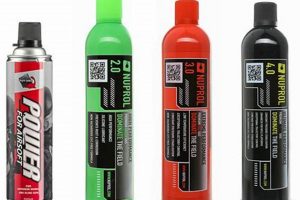
These devices are projectile-launching replicas that utilize compressed gas, typically either green gas, propane (with an adapter), or CO2, to propel plastic pellets. Commonly used in recreational skirmishes and training exercises, they offer a realistic simulation of firearm handling and operation. For instance, a user loads a magazine with plastic pellets, inserts it into the device, and upon activating the trigger, compressed gas is released, propelling a pellet from the barrel.
The importance of these systems lies in their ability to provide a relatively safe and controlled environment for training in weapon manipulation and tactical maneuvers. Their benefits extend to cost-effectiveness compared to live-fire training, reduced risk of injury, and environmental considerations due to the use of biodegradable projectiles in some cases. Historically, their development stemmed from the desire for realistic training tools and the growing popularity of simulated combat sports.
The subsequent sections will delve into the various types of these systems, their operational mechanisms, maintenance procedures, and safety considerations. This exploration will provide a detailed understanding of their application and responsible use in airsoft activities.
Essential Operation and Maintenance Tips
Effective operation and longevity depend on adherence to specific practices. The following points offer guidance for optimal performance and responsible handling.
Tip 1: Gas Selection Considerations: The choice of propellant significantly impacts performance. Green gas is a common choice, offering a balance of power and temperature sensitivity. CO2, while providing higher pressure, can strain internal components and is more affected by ambient temperature. Propane requires an adapter and appropriate lubrication.
Tip 2: Magazine Care: Magazines are critical components. Overfilling magazines can lead to gas leaks and reduced performance. Regular cleaning of the gas route and seals is essential to prevent debris buildup and ensure proper gas flow. Periodically lubricating the seals with silicone oil maintains their integrity and prevents drying.
Tip 3: Internal Component Lubrication: The internal mechanisms require periodic lubrication. Silicone oil, specifically formulated for use with rubber seals and o-rings, is recommended. Applying lubricant to the slide, hammer assembly, and nozzle improves cycling smoothness and reduces wear.
Tip 4: Storage Practices: Proper storage minimizes degradation. When not in use, magazines should be stored with a small amount of gas to prevent seal shrinkage. Storing the device in a cool, dry place away from direct sunlight prevents warping and material damage.
Tip 5: Regulator Usage (If Applicable): Certain models utilize regulators to maintain consistent pressure. Ensure the regulator is properly calibrated and adjusted according to the manufacturers specifications. Regular inspection of the regulator for leaks or damage is recommended.
Tip 6: Disassembly Precautions: When disassembling for maintenance, consult the manufacturers instructions and use appropriate tools. Avoid forcing components, as this can lead to damage. Pay attention to the orientation of parts during disassembly for correct reassembly.
Tip 7: Consistent Cleaning: Regular cleaning of the barrel is crucial for maintaining accuracy. Use a cleaning rod and appropriate cleaning patches to remove residue buildup. Ensure the barrel is completely dry before use.
These tips collectively contribute to enhanced reliability, consistent performance, and extended service life. Adhering to these guidelines minimizes the risk of malfunctions and ensures a more enjoyable and safe experience.
The next section will explore common issues encountered with these systems and effective troubleshooting methods.
1. Gas Compatibility

Gas compatibility is a fundamental consideration in the operation of these devices, directly influencing performance, safety, and the longevity of the device. The design of internal components, specifically seals, valves, and pressure regulation systems, dictates the permissible gas types. Employing an incompatible gas can result in component failure, reduced performance, or potentially hazardous situations.
For example, utilizing high-pressure CO2 in a system designed for green gas typically leads to accelerated wear on seals and valves, potentially causing leaks or catastrophic failure of the magazine or internal mechanism. Conversely, using green gas in a system engineered for high-pressure CO2 will generally result in significantly reduced power and inconsistent cycling. Certain high-end systems offer adaptable components allowing for different gas types through user adjustments, however, these require precise calibration to maintain safe and optimal operation. Improper gas selection constitutes a primary cause of malfunctions and damage, highlighting the critical importance of adherence to manufacturer specifications regarding gas type.
Understanding gas compatibility is not merely a technical detail; it’s a core aspect of responsible ownership and usage. Misuse not only jeopardizes the users investment but also raises safety concerns. Therefore, consulting the device’s manual and verifying the designated gas type prior to operation is imperative. Failure to do so can result in costly repairs or, in extreme cases, render the system unusable. This fundamental principle ensures both reliable performance and safe operation.
2. Internal Mechanisms

The operational efficacy of these devices is intrinsically linked to their internal mechanisms. These components orchestrate the controlled release of compressed gas to propel projectiles, influencing power, accuracy, and reliability. A comprehensive understanding of these mechanisms is crucial for maintenance, troubleshooting, and optimizing performance.
- Hammer Assembly
The hammer assembly is responsible for striking the gas valve, releasing a metered amount of propellant. Its design dictates the force applied to the valve, influencing the muzzle velocity of the projectile. For instance, a heavier hammer with a stronger spring generates a more forceful impact, resulting in increased power output, but potentially at the expense of gas efficiency. Conversely, a lighter hammer reduces power but improves gas conservation. The precision of the hammer’s engagement with the valve directly affects shot consistency.
- Gas Valve and Nozzle
The gas valve regulates the flow of compressed gas from the magazine to the barrel. The nozzle, attached to the valve, directs the gas behind the projectile. The dimensions and design of these components significantly influence gas efficiency and projectile trajectory. A poorly designed valve or nozzle can result in gas leaks, inconsistent shot power, and inaccurate projectile flight. Advanced designs incorporate adjustable valves for fine-tuning performance parameters.
- Blowback Unit (GBB Models)
In gas blowback (GBB) models, the blowback unit utilizes a portion of the released gas to cycle the slide or bolt, simulating the recoil action of a real firearm. The blowback unit’s design influences the perceived realism and recoil intensity. A well-designed blowback unit enhances the shooting experience but can also increase gas consumption. The efficiency of the blowback mechanism is critical for maintaining consistent performance across multiple shots.
- Hop-Up System
While not directly involved in the gas release mechanism, the hop-up system significantly impacts projectile trajectory. It imparts backspin to the projectile, creating lift and extending its range. The effectiveness of the hop-up system depends on the design of the hop-up bucking and the consistency of the pressure applied. Improper hop-up adjustment can lead to erratic projectile flight and reduced accuracy. Some systems incorporate adjustable hop-up units allowing for fine-tuning to accommodate different projectile weights and distances.
These interconnected internal components function in concert to deliver a controlled and repeatable projectile launch. Any deviation from optimal operating conditions within these mechanisms can manifest as performance degradation or malfunctions. Therefore, regular maintenance, including lubrication and inspection of these parts, is essential for maintaining reliability and maximizing the operational lifespan of the device.
3. Magazine Capacity

Magazine capacity in the context of airsoft gas guns directly influences gameplay dynamics and user experience. It defines the number of projectiles that can be fired before requiring a reload. A higher capacity allows for sustained engagement, reducing the frequency of interruptions during skirmishes. Conversely, a lower capacity mandates more frequent reloads, demanding greater tactical awareness and reload proficiency. The design constraints of gas-powered systems often limit magazine capacity compared to their electric counterparts, necessitating strategic considerations regarding ammunition management. Real-life examples include CQB (Close Quarters Battle) scenarios where higher capacity magazines provide a significant advantage in sustained firefights, while scenarios emphasizing realism might utilize lower capacity magazines to simulate real-world firearm limitations. The practical significance of understanding magazine capacity lies in its impact on tactical decision-making and the overall flow of gameplay.
Furthermore, magazine capacity affects gas consumption and internal pressure. A magazine with a higher projectile count necessitates a greater gas reservoir to propel all projectiles effectively. Insufficient gas volume can lead to reduced muzzle velocity and inconsistent projectile trajectory, particularly towards the end of the magazine’s capacity. The design of the magazine, including the gas reservoir volume and valve efficiency, are crucial factors in maintaining consistent performance throughout the magazine’s usage. For instance, some magazines incorporate pressure regulators to ensure uniform gas output, mitigating the effects of decreasing gas pressure as projectiles are expelled. The relationship between magazine capacity and gas pressure is a critical consideration for optimizing both performance and gas efficiency.
In conclusion, magazine capacity represents a key variable influencing the performance and tactical application of airsoft gas guns. It is not merely a number but a design parameter that interacts with gas consumption, internal pressure, and gameplay strategy. Balancing magazine capacity with gas efficiency and tactical requirements presents a challenge for both manufacturers and users. Understanding this connection enhances the overall experience and promotes responsible engagement with the sport.
4. Pressure Regulation

Pressure regulation is a critical aspect of airsoft gas gun systems, directly impacting performance consistency, component longevity, and user safety. The controlled management of gas pressure within these systems ensures repeatable projectile velocities and minimizes the risk of damage to internal components.
- Constant Output Valves
Constant output valves are designed to maintain a consistent gas pressure output, irrespective of the pressure remaining in the gas reservoir. These valves mitigate performance degradation as the gas supply depletes, ensuring projectile velocity remains relatively stable throughout the magazine’s capacity. For instance, without a constant output valve, the initial shots from a full magazine might exhibit significantly higher velocities compared to the final shots, leading to inconsistent accuracy. Such valves are often found in higher-end systems prioritizing consistent performance.
- Regulator Units (External/Internal)
Regulator units offer precise control over operating pressure. External regulators, typically used with HPA (High Pressure Air) systems, allow users to adjust pressure according to specific field limits or desired performance characteristics. Internal regulators, integrated within the gun or magazine, provide a fixed pressure output. The use of a regulator protects internal components from excessive stress, extending their lifespan. For example, a regulator can be set to a lower pressure for indoor gameplay to comply with velocity restrictions, while a higher pressure setting might be employed for outdoor engagements demanding greater range.
- Pressure Relief Valves
Pressure relief valves serve as a safety mechanism, automatically venting excess pressure to prevent catastrophic failures. In the event of overfilling a magazine or a malfunction causing a pressure surge, the relief valve activates, releasing gas and preventing potential damage to the gun or injury to the user. These valves are typically calibrated to a specific pressure threshold, ensuring safe operation within designated parameters. An example scenario would be a magazine exposed to excessive heat, causing internal pressure to rise beyond safe limits; the relief valve would then trigger, mitigating the risk of explosion.
- Gas Route Efficiency
While not strictly a pressure regulation component, gas route efficiency significantly influences the consistency of pressure delivery. A well-designed gas route minimizes pressure drop between the gas reservoir and the firing valve, ensuring a more consistent volume of gas is released with each shot. Obstructions or leaks within the gas route can lead to inconsistent pressure delivery, resulting in velocity fluctuations and reduced accuracy. Ensuring a clean and unobstructed gas route is essential for maintaining consistent performance, particularly in systems lacking sophisticated pressure regulation mechanisms.
These elements collectively contribute to the overall pressure management within airsoft gas guns. Precise pressure regulation is not merely about achieving higher velocities; it is about ensuring consistent, reliable performance and safe operation. The integration of these components reflects a commitment to quality and responsible use of these systems.
5. Material Durability

The operational lifespan and reliable performance of these devices are fundamentally linked to the durability of the materials employed in their construction. The stresses induced by repeated cycling of internal mechanisms, coupled with exposure to environmental factors, necessitate the use of robust materials capable of withstanding significant wear and tear. Material selection directly influences a device’s resistance to impact damage, gas leakage, and overall structural integrity. For example, a slide constructed from a low-grade polymer may be prone to cracking or warping under the stress of repeated blowback operation, leading to malfunctions and reduced accuracy. Conversely, the utilization of high-strength aluminum alloys or reinforced polymers can significantly enhance a device’s resilience to such stresses, extending its operational lifespan and maintaining consistent performance.
The materials used in critical components, such as the gas valve, hammer assembly, and magazine, are particularly crucial for ensuring reliable operation. The gas valve, subjected to repeated impacts and exposure to pressurized gas, requires materials exhibiting high resistance to wear and corrosion. Similarly, the hammer assembly must withstand repeated strikes without deformation or failure. Magazine construction demands materials resistant to pressure fluctuations and potential impacts during reloading. The choice of materials also impacts the device’s susceptibility to environmental factors such as moisture, temperature extremes, and ultraviolet radiation. Exposure to these elements can lead to material degradation, resulting in gas leaks, component failure, and reduced performance. A practical application of this understanding is evident in the selection of appropriate maintenance procedures, such as lubrication with silicone oils formulated to protect rubber seals and o-rings from degradation. The composition of the materials also influences the overall weight of the device, impacting user comfort and maneuverability.
In conclusion, material durability represents a non-negotiable attribute in these systems. Compromises in material selection often result in diminished performance, reduced reliability, and a shortened operational lifespan. Investing in devices constructed from durable materials translates to long-term cost savings, reduced maintenance requirements, and a more enjoyable and reliable user experience. Therefore, a thorough understanding of material properties and their impact on the overall performance of is essential for making informed purchasing decisions and ensuring responsible ownership.
6. Maintenance Frequency

The operational longevity and consistent performance of these devices are directly correlated with maintenance frequency. Infrequent maintenance precipitates a cascade of detrimental effects, ranging from diminished accuracy and reduced gas efficiency to premature component failure. Regular maintenance, conversely, mitigates these risks, ensuring the system functions within its design parameters. The design and complexity of the internal mechanisms necessitate a proactive maintenance schedule to prevent the accumulation of contaminants, ensure proper lubrication, and identify potential issues before they escalate into significant malfunctions. The specific maintenance schedule is influenced by the type of propellant used, the frequency of operation, and the environmental conditions in which the system is deployed. For instance, models utilizing CO2 may require more frequent seal inspections due to the dehydrating effects of the gas, while those exposed to dusty environments may necessitate more frequent cleaning of the barrel and internal components. The practical significance of adhering to a maintenance schedule lies in its ability to preserve the system’s functionality, prolong its lifespan, and minimize the occurrence of unexpected breakdowns during critical use.
The consequences of neglecting maintenance extend beyond mere performance degradation. Unlubricated components experience increased friction, leading to accelerated wear and potential damage. Contaminants, such as dirt and debris, can impede the movement of internal mechanisms, resulting in inconsistent gas flow and reduced projectile velocity. Furthermore, neglected seals and o-rings may dry out and crack, causing gas leaks and further diminishing performance. A real-world example is observed in scenarios where a system, consistently used without proper lubrication, exhibits a gradual decline in accuracy and eventually suffers a catastrophic failure of the gas valve due to excessive wear. Conversely, a system meticulously maintained according to the manufacturer’s recommendations will consistently deliver accurate shots, maintain optimal gas efficiency, and exhibit a significantly extended operational lifespan. The implementation of a preventative maintenance program, incorporating regular cleaning, lubrication, and inspection of key components, represents a cost-effective strategy for maximizing the return on investment and ensuring the reliable operation.
In summary, maintenance frequency constitutes a cornerstone of responsible ownership. Consistent adherence to a well-defined maintenance schedule is paramount for preserving performance, extending operational lifespan, and mitigating the risk of malfunctions. The challenges associated with infrequent maintenance, including component wear, gas leaks, and reduced accuracy, underscore the importance of prioritizing this aspect of system ownership. The integration of a proactive maintenance program, tailored to the specific characteristics of the system and its operating environment, ensures long-term reliability and minimizes the potential for disruptive breakdowns.
7. Operational Safety

Operational safety constitutes a paramount consideration when employing airsoft gas guns. These devices, while designed for recreational use, possess the potential to inflict injury if mishandled or operated without adherence to established safety protocols. A comprehensive understanding of safety procedures and responsible handling practices is imperative for mitigating risks and ensuring a safe operational environment.
- Protective Gear Requirements
The mandatory use of appropriate protective gear serves as the primary safeguard against potential injury. Eye protection, specifically ANSI-rated goggles or masks, is non-negotiable to prevent projectile impacts to the eyes. Face protection, encompassing a lower face mask or full-face mask, is strongly recommended to shield vulnerable facial areas from potential lacerations or dental damage. Examples of real-life incidents underscore the necessity of protective gear, ranging from minor abrasions to severe eye injuries sustained by individuals neglecting such precautions. Compliance with protective gear requirements is not merely a suggestion but a fundamental prerequisite for safe operation.
- Safe Handling Practices
Safe handling practices encompass a range of protocols designed to prevent accidental discharges and ensure responsible firearm management. These practices include keeping the system pointed in a safe direction at all times, treating every system as if it were loaded, and keeping the finger off the trigger until ready to fire. Furthermore, it is imperative to secure the system when not in use, preventing unauthorized access or accidental activation. Instances of unintentional discharges resulting in injury highlight the importance of strict adherence to safe handling protocols. These practices are not merely theoretical concepts but practical guidelines that minimize the risk of accidents.
- Adherence to Field Rules and Regulations
Designated airsoft fields establish specific rules and regulations governing gameplay, velocity limits, and permissible engagement distances. Compliance with these rules is essential for maintaining a safe and controlled environment. Velocity limits are imposed to minimize the potential for injury from high-impact projectiles, while engagement distance restrictions prevent excessively close-range engagements that could result in painful or damaging impacts. Instances of rule violations leading to injuries or property damage underscore the necessity of respecting and adhering to field regulations. These rules are not arbitrary constraints but measures designed to protect participants and maintain a fair playing field.
- Proper Storage and Transportation
Proper storage and transportation procedures are crucial for preventing accidental discharges and ensuring the system remains secure. When not in use, the system should be stored in a secure location, preferably a locked case or container, inaccessible to unauthorized individuals, particularly children. During transportation, the system should be unloaded and stored in a manner that prevents accidental activation. Instances of improperly stored systems resulting in accidental shootings or theft highlight the importance of responsible storage practices. These procedures are not merely precautionary measures but essential steps for preventing potential harm or criminal activity.
These facets, encompassing protective gear, handling practices, field rules, and storage procedures, collectively contribute to a comprehensive framework for operational safety. Adherence to these principles is paramount for mitigating risks, preventing injuries, and ensuring a safe and enjoyable experience. The responsible use of airsoft gas guns necessitates a unwavering commitment to safety protocols and a proactive approach to risk management. Failure to prioritize operational safety can have serious consequences, underscoring the importance of vigilance and responsible conduct.
Frequently Asked Questions
This section addresses common inquiries regarding airsoft gas guns, providing informative answers to enhance understanding and promote responsible usage.
Question 1: What are the primary advantages of using airsoft gas guns compared to electric models?
Airsoft gas guns often offer a more realistic simulation of firearm operation due to features like blowback action and realistic magazine capacities. They can also provide higher muzzle velocities and greater customization options compared to some electric models.
Question 2: What types of gas are commonly used in airsoft gas guns, and what are their respective characteristics?
Common propellants include green gas, CO2, and propane (with an adapter). Green gas offers a balance of power and temperature sensitivity, CO2 provides higher pressure but is more temperature-dependent, and propane requires specific adapters and lubrication.
Question 3: What are the key maintenance procedures necessary to ensure the longevity and performance of an airsoft gas gun?
Essential maintenance includes regular cleaning of the barrel and internal components, lubrication of seals and moving parts with silicone oil, and proper storage practices to prevent degradation of gas seals.
Question 4: What safety precautions should be observed when handling and operating airsoft gas guns?
Mandatory safety measures include wearing appropriate eye protection, adhering to safe handling practices, complying with field rules and regulations, and ensuring proper storage to prevent unauthorized access or accidental discharge.
Question 5: What factors influence the accuracy and range of an airsoft gas gun?
Accuracy and range are affected by factors such as barrel quality, hop-up system effectiveness, projectile weight, and the consistency of gas pressure output. Proper adjustment of the hop-up system is crucial for optimizing projectile trajectory.
Question 6: What are some common malfunctions encountered with airsoft gas guns, and how can they be addressed?
Common issues include gas leaks, magazine malfunctions, and cycling problems. Troubleshooting often involves inspecting seals, cleaning components, and ensuring proper lubrication. Consulting the manufacturer’s instructions is recommended for specific repair procedures.
These frequently asked questions offer a foundational understanding of these systems. Adherence to safety protocols and proper maintenance procedures are crucial for responsible and enjoyable use.
The next section will delve into the legal considerations surrounding the ownership and use of these devices.
Conclusion
This exploration of airsoft gas guns has illuminated critical aspects of their operation, maintenance, and safe handling. The preceding sections have covered gas compatibility, internal mechanisms, magazine capacity, pressure regulation, material durability, maintenance frequency, operational safety, and addressed frequently asked questions. A thorough understanding of these elements is essential for responsible ownership and optimal performance.
The informed application of this knowledge will contribute to enhanced safety, prolonged system lifespan, and responsible participation within the airsoft community. Continued adherence to established guidelines and a commitment to ongoing education are paramount for ensuring the safe and ethical use of airsoft gas guns.