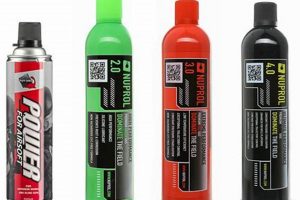
A portable, external gas reservoir system designed for airsoft guns, commonly used by players seeking to increase their gas capacity during gameplay. This system typically comprises a gas container housed in a backpack and a hose connecting it to the airsoft weapon. This allows for extended firing without the need for frequent magazine refills or gas canister replacements. For example, a player utilizing a gas blowback rifle in a prolonged skirmish might employ this system to maintain consistent performance throughout the engagement.
The implementation of such a system provides a considerable advantage in terms of sustained firepower and reduced downtime for re-gassing. This capability is particularly valuable in scenarios involving prolonged engagements or specialized roles, such as support gunner positions. While offering enhanced capacity, these systems have evolved over time, focusing on improvements in hose durability, regulator precision, and backpack ergonomics to enhance user comfort and operational efficiency.
The subsequent sections will delve into specific types, operational considerations, safety protocols, and maintenance strategies applicable to these systems. Furthermore, the discussion will address the advantages and disadvantages associated with their use, as well as the critical aspects of selecting the most suitable system based on individual gameplay requirements.
Essential Usage Tips
This section outlines critical guidelines for the effective and safe utilization of an external gas reservoir system for airsoft weapons.
Tip 1: Gas Compatibility Assessment: Prior to operation, verify the compatibility of the gas propellant with the airsoft weapon and the reservoir system’s components. Incompatible gases can cause damage to seals, valves, or internal mechanisms. Consult the manufacturer’s specifications for approved gas types.
Tip 2: Regulator Calibration and Monitoring: Precise adjustment of the output pressure regulator is paramount. Excessive pressure can lead to weapon malfunction or damage. Employ a calibrated gauge to monitor pressure levels and adhere strictly to the recommended operating range.
Tip 3: Hose Integrity and Maintenance: Regularly inspect the connecting hose for signs of wear, cracks, or abrasions. A compromised hose can result in gas leaks and reduced system performance. Replace the hose at recommended intervals or upon detection of any damage.
Tip 4: Secure Backpack Integration: Ensure the backpack is properly fitted and secured to the operator’s body. A loose or improperly positioned backpack can impede movement and create a safety hazard. Adjust straps to provide a snug and stable fit.
Tip 5: Leak Testing and Seal Verification: Conduct routine leak tests using a soapy water solution to identify potential gas escapes at connection points. Address any leaks immediately by tightening fittings or replacing seals as necessary.
Tip 6: Storage Protocols and Safety: When not in use, store the system in a cool, dry environment away from direct sunlight and heat sources. Ensure the gas reservoir is empty or properly vented to prevent pressure buildup and potential hazards.
Tip 7: Operational Awareness and Adaptation: Remain aware of environmental conditions and adjust gas pressure accordingly. Extreme temperatures can affect gas performance and regulator stability. Monitor weapon performance and adapt pressure settings as needed to maintain consistent operation.
Adherence to these recommendations promotes operational safety, optimizes performance, and extends the lifespan of the equipment. Consistent application of these tips is crucial for responsible and effective use in the field.
The subsequent discussion will explore advanced troubleshooting techniques and maintenance procedures to further enhance user proficiency.
1. Capacity

The capacity of an airsoft gas backpack directly correlates with the duration and intensity of gameplay an airsoft player can sustain. A larger capacity translates to a greater volume of gas available, effectively increasing the number of shots possible before requiring a refill. This extended operational period is particularly advantageous in scenarios involving prolonged engagements or where access to resupply points is limited. For instance, a support gunner role, characterized by continuous suppressive fire, benefits significantly from the enhanced capacity, reducing the need for frequent interruptions to reload gas canisters.
The significance of capacity extends beyond mere convenience. A sufficient gas supply ensures consistent performance of gas-powered airsoft guns, preventing fluctuations in pressure that can affect accuracy and range. Consider a scenario where a sniper relies on a consistent gas pressure for precise long-range shots; a backpack with inadequate capacity may lead to a gradual pressure drop, compromising shot placement. Conversely, an ample capacity maintains stable pressure, enhancing the weapon’s effectiveness throughout the engagement. Furthermore, increased capacity reduces the reliance on carrying multiple smaller gas canisters, streamlining the player’s loadout and improving mobility.
In summary, the capacity of an airsoft gas backpack is a critical determinant of operational effectiveness. Insufficient capacity can hinder gameplay by requiring frequent refills and compromising weapon performance. Adequate capacity provides sustained firepower, consistent pressure, and enhanced mobility, all contributing to a more competitive and enjoyable airsoft experience. Understanding the relationship between capacity and performance enables players to select systems that align with their specific gameplay requirements and tactical roles.
2. Pressure

The operational efficacy of an airsoft gas backpack system hinges critically on pressure management. Gas pressure directly influences projectile velocity and firing consistency of airsoft weapons. Insufficient pressure leads to diminished range and accuracy, whereas excessive pressure can damage the weapon’s internal components or pose a safety risk. The backpack system must maintain a stable and appropriate pressure level to ensure optimal performance of the connected airsoft gun. A real-world example is a gas blowback rifle that requires a specific pressure range to cycle properly; deviations outside this range can cause jamming or inconsistent firing.
The backpack’s regulator component is responsible for controlling and stabilizing the gas pressure supplied to the weapon. The regulator must be calibrated correctly to match the weapon’s specifications and the desired firing characteristics. Factors such as ambient temperature can affect gas pressure, requiring adjustments to the regulator. Furthermore, the hose connecting the backpack to the weapon must be capable of withstanding the operating pressure to prevent leaks or ruptures. For instance, if a system rated for 100 PSI is subjected to 150 PSI, the likelihood of component failure increases significantly.
In summation, pressure is a fundamental parameter governing the performance and safety of the airsoft gas backpack system. Accurate regulation and consistent monitoring are essential for achieving optimal results and preventing equipment damage or personal injury. Challenges include maintaining pressure stability across varying environmental conditions and ensuring the compatibility of the system’s pressure rating with the connected airsoft weapon. Addressing these challenges is crucial for realizing the full potential of the system in airsoft applications.
3. Mobility
An individual’s mobility during airsoft engagements is intrinsically linked to the design and implementation of an airsoft gas backpack system. The system’s form factor directly impacts a player’s ability to navigate diverse terrains, engage in rapid maneuvers, and maintain tactical flexibility. A bulky or poorly balanced backpack can impede movement, limiting the operator’s capacity to effectively utilize cover, advance on objectives, or react swiftly to changing combat scenarios. For example, a player burdened with an oversized pack may struggle to negotiate dense woodland environments or engage in close-quarters combat within confined spaces.
The weight distribution of the backpack and the securing mechanisms are critical factors affecting stability and freedom of movement. An unevenly distributed load can create imbalance, increasing fatigue and compromising agility. Secure and adjustable straps are essential to minimize shifting and ensure the pack remains firmly affixed to the operator’s body, preventing it from hindering movement during strenuous activities. A poorly secured pack might swing unpredictably during sprints or sudden changes of direction, potentially causing loss of balance or hindering weapon manipulation. Furthermore, the profile of the pack should be streamlined to minimize snagging on obstacles or interfering with weapon handling.
In conclusion, maintaining optimal mobility is a paramount consideration when selecting and utilizing an airsoft gas backpack system. A well-designed system prioritizes ergonomics, weight distribution, and secure attachment to enhance the operator’s agility and tactical responsiveness. Challenges include balancing the desire for increased gas capacity with the need to minimize bulk and weight. Therefore, players must carefully evaluate the trade-offs between these factors to select a system that maximizes both firepower and maneuverability, ultimately enhancing their effectiveness on the airsoft field. A deep understanding of mobility contributes significantly to informed decision-making regarding equipment choices.
4. Compatibility

The operational effectiveness of any airsoft gas backpack system is inextricably linked to the principle of compatibility. This encompasses the seamless integration of the backpack with the user’s airsoft weapon, the type of gas propellant employed, and the various components within the backpack system itself. Lack of compatibility introduces the potential for compromised performance, equipment damage, or, in extreme cases, hazardous malfunctions. For instance, connecting a high-pressure backpack system to an airsoft gun designed for low-pressure operation may result in catastrophic failure of the weapon’s internal mechanisms, rendering it unusable. Similarly, utilizing an incompatible gas propellant may degrade seals and O-rings within the system, leading to leaks and reduced efficiency.
Compatibility extends beyond mere physical connections. Gas backpacks must be matched to the specific type of gas used in the user’s airsoft gun. Green gas, propane adapters, or high-pressure air (HPA) systems each have unique requirements regarding pressure regulation and hose materials. Cross-contamination or improper mixtures can damage equipment or cause unpredictable performance. The type of threads on the gas fittings also plays a critical role. Mismatched threads can lead to leaks, or stripping and damaging both the backpack and the gun. Consider the scenario where a player attempts to connect a European standard fitting to an American standard valve; the resulting incompatibility necessitates adaptors and increases the risk of leaks or system failure. Further consideration must be given to regulators to ensure consistent and correct pressure delivery to the airsoft gun
In conclusion, assessing and ensuring compatibility across all aspects of an airsoft gas backpack system is paramount for safe, reliable, and optimal performance. Overlooking these considerations can lead to equipment damage, reduced efficiency, and potentially dangerous situations. Players must consult manufacturer specifications, seek expert advice, and conduct thorough testing to verify compatibility before deploying a system in the field. Emphasizing compatibility contributes directly to improved operational efficiency, enhanced safety, and prolonged equipment lifespan, ultimately ensuring a more enjoyable and effective airsoft experience. Continuous verification is key for a successful end result.
5. Durability
The operational lifespan and sustained performance of an airsoft gas backpack are fundamentally determined by its inherent durability. The demanding conditions of airsoft gameplay, often involving exposure to varied weather, rough terrain, and physical stress, necessitate robust construction and resilient materials. Therefore, durability is not merely a desirable attribute but a critical factor influencing the long-term value and reliability of the system.
- Material Selection
The choice of materials in the construction of an airsoft gas backpack directly impacts its ability to withstand the rigors of field use. High-strength polymers, reinforced fabrics (e.g., Cordura nylon), and corrosion-resistant metals are frequently employed to provide a balance of weight reduction and structural integrity. A backpack constructed from low-grade materials is susceptible to tearing, abrasion, and premature failure, especially under stress. In contrast, a backpack utilizing durable materials can withstand impacts, resist wear, and maintain its structural integrity over extended periods of use.
- Component Quality
The longevity of a gas backpack is heavily reliant on the quality of its individual components, including regulators, hoses, and connectors. Substandard components are prone to leaks, pressure fluctuations, and mechanical failure, rendering the system unreliable and potentially hazardous. For example, a low-quality regulator may exhibit inconsistent pressure output, affecting the performance of the airsoft weapon. Similarly, a poorly constructed hose may develop cracks or ruptures, leading to gas leaks. Investing in components from reputable manufacturers ensures consistent performance and reduces the risk of premature failure.
- Seam and Stitching Reinforcement
The structural integrity of the backpack itself depends on the strength and durability of its seams and stitching. Reinforced stitching techniques, such as double or triple stitching, enhance the backpack’s resistance to tearing and abrasion, particularly at stress points such as strap attachment points and zipper closures. Weak or poorly executed seams are a common point of failure in lower-quality backpacks, leading to separation of components and reduced functionality. Robust seam construction contributes significantly to the overall durability and longevity of the system.
- Environmental Resistance
Airsoft gas backpacks are frequently exposed to a wide range of environmental conditions, including rain, mud, and extreme temperatures. A durable system must be resistant to these elements to prevent degradation and maintain operational efficiency. Water-resistant coatings, sealed seams, and corrosion-resistant materials are essential for protecting the internal components from moisture damage. Extreme temperatures can also affect the performance of gas systems, requiring the use of materials that maintain their properties across a wide temperature range. Resistance to environmental factors ensures consistent performance and prolongs the lifespan of the system, regardless of the playing conditions.
The various facets of durability highlighted above underscore its importance in the context of airsoft gas backpack systems. By prioritizing material selection, component quality, seam reinforcement, and environmental resistance, manufacturers can create systems that withstand the demanding conditions of airsoft gameplay and provide reliable performance over extended periods. Players should carefully consider these factors when selecting a gas backpack to ensure they are investing in a system that offers long-term value and minimizes the risk of equipment failure.
6. Maintenance
Consistent maintenance of an airsoft gas backpack is paramount for ensuring its operational longevity and consistent performance. The system, comprising a gas reservoir, regulator, connecting hose, and associated fittings, is subject to wear and tear from regular use, environmental exposure, and the inherent properties of the pressurized gas. Neglecting maintenance protocols can lead to gas leaks, pressure inconsistencies, component degradation, and ultimately, system failure. A practical example includes the deterioration of rubber O-rings within the regulator due to prolonged exposure to certain gas propellants, leading to a gradual loss of pressure control and reduced firing consistency. Regular inspection and replacement of these seals is a preventative measure, mitigating performance decline. Maintenance, therefore, is not merely a reactive measure, but a proactive strategy for preserving system integrity.
Preventative maintenance procedures include periodic leak testing using soapy water solutions around all connections, cleaning the regulator and fittings to remove debris or contaminants, and lubricating moving parts with appropriate silicone-based lubricants. Inspection of the hose for cracks, kinks, or abrasions is also critical. Failure to address these issues can lead to catastrophic failures during gameplay. For example, a crack in the hose could worsen under pressure, resulting in a sudden gas release and rendering the airsoft weapon inoperable during a critical moment. Furthermore, proper storage, which entails venting residual gas and storing the system in a cool, dry place, minimizes component degradation and extends the lifespan of the backpack. Maintenance tasks are often overlooked, but this is a major part of operating an airsoft gas backpack safely and for longer usage.
In conclusion, the intimate connection between maintenance and the airsoft gas backpack cannot be overstated. Regular adherence to established maintenance protocols mitigates the risks of system failure, ensures consistent operational performance, and prolongs the lifespan of the equipment. Challenges include educating users on the importance of preventative maintenance and providing accessible resources for proper procedures. Understanding that maintenance is an integral component, not an optional addendum, to the operation of an airsoft gas backpack is crucial for responsible and effective utilization of the system within the airsoft sport.
Frequently Asked Questions
This section addresses common inquiries regarding the use, maintenance, and safety of airsoft gas backpack systems.
Question 1: What is the typical capacity of an airsoft gas backpack system?
The capacity varies significantly depending on the specific model and manufacturer. Common capacities range from 13 cubic inches to over 70 cubic inches. The selection should align with the anticipated duration and intensity of gameplay.
Question 2: How often should the connecting hose be replaced?
The connecting hose should be inspected before each use. Replacement frequency depends on usage, environmental conditions, and hose material. Generally, replacement is recommended every 6 to 12 months, or immediately upon detection of any signs of wear, cracking, or abrasion.
Question 3: What type of gas propellant is compatible with most airsoft gas backpack systems?
Compatibility depends on the regulator and valve fittings. Common propellants include green gas, propane (with an adapter), and high-pressure air (HPA). Always consult the manufacturers specifications to ensure compatibility and prevent equipment damage.
Question 4: How is pressure regulated in an airsoft gas backpack system?
Pressure regulation is achieved through a regulator, which controls the output pressure delivered to the airsoft weapon. The regulator typically features an adjustable knob or dial for setting the desired pressure level, which should adhere to the weapon’s specified operating range.
Question 5: What safety precautions should be observed when using an airsoft gas backpack system?
Key safety precautions include: verifying gas compatibility, monitoring pressure levels, inspecting components for damage, ensuring proper ventilation, and storing the system in a cool, dry environment away from direct sunlight and heat sources.
Question 6: How does temperature affect the performance of an airsoft gas backpack system?
Temperature can significantly influence gas pressure and consistency. Colder temperatures typically reduce gas pressure, resulting in lower projectile velocity, while higher temperatures can increase pressure. Compensating for these variations may require adjusting the regulator to maintain optimal performance.
This FAQ is not exhaustive but offers foundational information regarding airsoft gas backpack systems. Responsible use and adherence to safety guidelines are paramount.
The subsequent section will address advanced customization options and accessories for enhanced system performance.
Airsoft Gas Backpack
This discourse has illuminated the multifaceted nature of the airsoft gas backpack, detailing its function, benefits, operational considerations, and safety protocols. The analysis has traversed the critical elements of capacity, pressure management, mobility constraints, compatibility imperatives, durability factors, and the essential practice of regular maintenance. The exploration underscores that the selection and employment of such a system demands a comprehensive understanding of its intrinsic properties and associated responsibilities.
The decision to integrate an airsoft gas backpack into one’s loadout is a deliberate choice, contingent upon individual gameplay style, tactical requirements, and commitment to responsible equipment management. It is incumbent upon users to prioritize safety, adhere to manufacturer guidelines, and exercise due diligence in the ongoing care of their equipment. The future trajectory of this technology likely entails advancements in material science, ergonomic design, and regulatory precision, further enhancing its utility within the airsoft landscape. It is important to stay up-to-date with the product specifications.