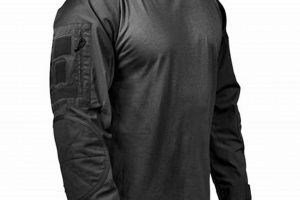
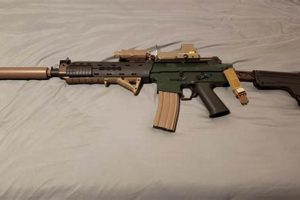
Protective gear and specialized clothing employed in airsoft activities constitute a complete set of apparel. This assemblage typically encompasses items such as eye protection, face masks, tactical vests, appropriate clothing, footwear, and headwear. For example, a player might wear a full-face mask, camouflage clothing, and sturdy boots in a woodland scenario.
The comprehensive nature of this protective ensemble provides essential safeguarding during gameplay. It offers vital protection against projectile impacts, environmental hazards, and potential injuries. The implementation of such equipment enhances player safety and promotes a more immersive and realistic experience. Historically, the evolution of personal protective equipment in military simulations has influenced the development of the complete sets used today.
Understanding the components of this type of equipment, selecting appropriate sizes and materials, and maintaining its functionality are all critical aspects of responsible airsoft participation. Subsequent sections will address these topics in greater detail, offering guidance on selecting, using, and caring for the necessary components.
Optimizing an Airsoft Protective Ensemble
The following recommendations are crucial for selecting and utilizing an appropriate protective airsoft configuration. Careful consideration of these points will contribute to a safer and more effective playing experience.
Tip 1: Prioritize Eye Protection: Full-seal goggles or a mask meeting ANSI Z87.1 standards are essential. Ensure a secure fit that prevents projectiles from entering the eye area. For example, investing in anti-fog lenses minimizes visibility impairment.
Tip 2: Select Durable Clothing: Opt for robust, tear-resistant fabrics. Military-grade BDUs or tactical pants offer enhanced protection and functionality, with reinforced knees and elbows. Examples include ripstop nylon or cotton blends designed for field use.
Tip 3: Invest in a Quality Tactical Vest: Choose a vest with ample MOLLE webbing to customize load carriage. A proper vest distributes weight evenly and accommodates essential gear, such as magazines and communication devices. Consider vests with integrated padding for added torso protection.
Tip 4: Protect Extremities: Gloves provide protection for hands, while knee and elbow pads mitigate impact injuries. Reinforced gloves with knuckle protection are recommended. Articulated knee and elbow pads enhance mobility while maintaining a secure fit.
Tip 5: Consider Environmental Factors: Select colors and patterns suitable for the playing environment. Camouflage patterns enhance concealment, while appropriate layering manages temperature extremes. A boonie hat or tactical cap offers sun protection.
Tip 6: Ensure a Proper Fit: Ill-fitting gear compromises protection and mobility. Measure carefully and consult sizing charts before purchasing any components. Adjust straps and closures to achieve a snug, yet comfortable, fit.
Tip 7: Regularly Inspect Equipment: Before each game, thoroughly inspect all components for damage or wear. Replace damaged items promptly to maintain the protective integrity of the system. Check for tears in fabric, cracks in plastic, and loose stitching.
Adhering to these tips allows for the construction of a robust protective set that maximizes safety and performance during airsoft engagements. Investing in quality components and maintaining their condition is crucial for mitigating potential risks.
The subsequent discussion will explore the maintenance and longevity of protective gear.
1. Protection Level

Protection Level, as a critical attribute of an airsoft protective ensemble, directly influences player safety and the overall suitability of the gear. The adequacy of the protection afforded by each component determines the potential for injury mitigation during gameplay. Insufficient protection can result in abrasions, contusions, or, more seriously, eye injuries or dental trauma. The specific rating of eye protection, such as ANSI Z87.1, exemplifies the quantifiable measure of protection offered. Selecting garments constructed from durable materials, such as ripstop nylon, directly contributes to the garment’s ability to withstand the rigors of the environment and projectile impacts. The cause-and-effect relationship is clear: higher protection levels reduce the probability and severity of injuries.
Examples illustrating the practical significance abound. A full-face mask with ballistic-rated lenses significantly reduces the risk of eye and facial injuries compared to simple mesh goggles. A tactical vest with integrated padding can mitigate the impact of close-range shots to the torso. Similarly, robust footwear protects ankles from sprains and abrasions in uneven terrain. The selection of appropriate gloves prevents hand injuries when navigating obstacles or handling equipment. The inverse is equally true; inadequate protection, such as wearing standard civilian clothing, increases the risk of injury and detracts from the overall immersion. A further example lies in the materials used for garments. Common civilian clothing is often not durable or thick enough to provide adequate protection from close-range BB impacts.
The overall importance of prioritizing protection is high. Considering this, and following the provided information, the protection level of an airsoft outfit is a primary determinant of its effectiveness and safety. Selecting gear with demonstrably higher protection ratings, coupled with careful consideration of environmental factors and play style, is paramount. The challenge lies in balancing protection with mobility and comfort, as excessively heavy or restrictive gear can hinder performance. Understanding the specific risks associated with airsoft and selecting gear that adequately mitigates those risks is a continuous process of evaluation and refinement. This ties into the broader understanding that a comprehensive and balanced approach to personal protective equipment is essential for responsible participation in airsoft.
2. Camouflage Effectiveness

Camouflage effectiveness constitutes a significant component of an airsoft protective set, directly influencing concealment and tactical advantage within simulated combat environments. The selection of appropriate camouflage patterns and colors can determine a player’s ability to blend into the surrounding terrain, thereby reducing visibility to opposing forces. This, in turn, enhances opportunities for flanking maneuvers, ambushes, and reconnaissance activities. The cause-and-effect relationship is evident: improved camouflage effectiveness increases a player’s survivability and operational capability. The importance of this element cannot be overstated, as it directly impacts the success or failure of mission objectives.
Examples abound across various operational environments. Woodland camouflage patterns, such as M81 Woodland or MARPAT, are highly effective in forested areas with dense vegetation. Desert camouflage patterns, like Desert Digital or Multicam arid, provide concealment in arid or semi-arid landscapes. Urban camouflage patterns, characterized by grayscale colors and geometric shapes, are designed for urban environments. A player operating in a woodland environment wearing desert camouflage would be readily visible, negating any potential tactical advantage. Conversely, a player equipped with woodland camouflage in a forested setting would possess a significantly reduced visual signature. The practical significance of this understanding lies in the ability to adapt the overall set to the specific environment in which the airsoft activity takes place. Choosing the correct camouflage is the best and most important step.
In summary, camouflage effectiveness is an integral aspect of a protective airsoft set. The selection of appropriate patterns and colors is paramount for maximizing concealment and enhancing tactical advantages. The challenge lies in accurately assessing the environmental conditions and selecting a pattern that effectively blends with the surroundings. Moreover, considerations such as lighting conditions and seasonal changes can further influence the optimal camouflage choice. Recognizing and adapting to these variables contributes to a more immersive and realistic airsoft experience, increasing the overall strategic depth. The right choice ensures optimal blend, reducing the visual signature and enhancing tactical opportunities within the operational area.
3. Load-Bearing Capacity

Load-bearing capacity, an inherent characteristic of a tactical vest or plate carrier within an airsoft set, dictates the amount of essential gear a player can efficiently and safely carry during gameplay. The correlation between load-bearing capacity and operational effectiveness is direct: higher capacity allows for the carriage of more ammunition, communication devices, medical supplies, and other mission-critical items. Consequently, a player with greater load-bearing capability is typically better equipped to sustain prolonged engagements, maintain situational awareness, and provide support to teammates. The cause-and-effect is manifest; a well-configured load-bearing system translates to enhanced combat readiness and sustained operational performance.
Examples are prevalent in various airsoft scenarios. A rifleman role might necessitate the carriage of multiple magazines, a sidearm, and associated ammunition, requiring a vest with ample magazine pouches. A medic role would require a vest equipped with pouches for carrying medical supplies, bandages, and trauma kits. A designated marksman may prioritize a lower-profile chest rig to maintain agility while still carrying sufficient ammunition and communication equipment. Conversely, insufficient load-bearing capacity limits a player’s capabilities, potentially forcing them to return to base camp prematurely to resupply or hindering their ability to effectively fulfill their assigned role. This can negatively impact the team’s overall effectiveness and mission success. A player with a limited vest is unable to carry enough magazines, for example, may find themselves at a severe disadvantage.
In conclusion, load-bearing capacity represents a critical dimension of a protective ensemble. The proper selection and configuration of a tactical vest or plate carrier is essential for optimizing a player’s ability to carry and access essential gear. The challenge lies in balancing load-bearing capacity with mobility and comfort, as an excessively heavy or cumbersome vest can hinder movement and lead to fatigue. A carefully considered approach to load carriage is vital for ensuring that players are adequately equipped to fulfill their roles and contribute to the overall success of their team. Therefore, the player must determine the right load and gear for each game.
4. Environmental Suitability

Environmental suitability is a critical factor in determining the overall effectiveness of an airsoft full outfit. The selection of components must align with the specific environmental conditions under which the equipment will be deployed, impacting both player comfort and operational performance.
- Climate Adaptation
Climate adaptation encompasses the selection of materials and designs appropriate for temperature, humidity, and precipitation. In hot and humid environments, breathable fabrics like mesh and moisture-wicking materials are essential to prevent overheating and maximize comfort. Conversely, in cold environments, insulated layers and waterproof outer shells are necessary to maintain body temperature and protect against the elements. Choosing gear that is ill-suited to the climate can lead to discomfort, reduced performance, and potentially dangerous conditions such as heatstroke or hypothermia. Example: Utilizing a heavy, insulated jacket in a tropical environment versus selecting a lightweight, breathable combat shirt.
- Terrain Compatibility
Terrain compatibility refers to the suitability of the equipment for the physical environment, including vegetation, ground conditions, and obstacles. Durable fabrics and reinforced construction are essential for navigating rough terrain, while appropriate footwear provides traction and support. The choice of camouflage pattern should also align with the surrounding vegetation to maximize concealment. Failure to consider terrain compatibility can result in gear damage, reduced mobility, and increased risk of injury. Example: Selecting sturdy boots with ankle support for a rocky, uneven field versus wearing lightweight sneakers that offer minimal protection.
- Concealment Optimization
Concealment optimization involves selecting camouflage patterns and colors that effectively blend with the surrounding environment. Different environments require different patterns, such as woodland patterns for forested areas, desert patterns for arid landscapes, and urban patterns for built-up areas. The choice of camouflage should also consider seasonal changes and lighting conditions. Ineffective concealment can compromise a player’s position and reduce their tactical advantage. Example: Employing a woodland camouflage pattern in a desert environment versus utilizing a pattern specifically designed for arid terrain.
- Visibility Management
Visibility management focuses on minimizing visual detection by adjusting gear elements to the light levels and reflective properties of the surrounding area. This includes considering the reflectivity of materials, the use of matte finishes, and the reduction of sharp contrasts. Brighter colors and reflective surfaces can increase visibility, while darker, muted tones help blend into the environment. Effectively managing visibility can improve a player’s concealment and tactical effectiveness. Example: Wearing dark, non-reflective clothing during a nighttime game versus wearing bright colors that stand out against the darkness.
These considerations underscore the importance of aligning the airsoft protective set with the specific environmental conditions of the playing field. A well-chosen system not only enhances player comfort and safety but also provides a significant tactical advantage, contributing to a more immersive and realistic airsoft experience.
5. Regulatory Compliance

Regulatory Compliance, when considered as an integral aspect of a complete airsoft protective set, underscores the necessity for adherence to established rules, regulations, and legal requirements governing airsoft activities. Failure to comply with these mandates can result in penalties, ranging from warnings and suspensions to legal repercussions. The cause-and-effect relationship is direct: adherence ensures safe and legal participation, while non-compliance poses risks to individuals and the sport as a whole. The importance of this element stems from its role in promoting responsible behavior, maintaining positive relationships with communities, and preserving the legitimacy of airsoft as a recreational activity.
The practical significance of regulatory compliance manifests in several ways. Eye protection, for example, must meet ANSI Z87.1 standards in many jurisdictions, ensuring adequate protection against projectile impacts. Airsoft guns themselves are often subject to velocity restrictions, typically measured in feet per second (FPS) using 0.20g BBs. Failure to adhere to these velocity limits can result in disqualification from games and potential legal consequences. Local ordinances may also restrict the public display or transportation of airsoft guns, requiring them to be stored in cases or bags. Fields themselves often have their own regulations regarding acceptable gear, minimum engagement distances, and prohibited activities. For example, some fields may mandate the use of full-face protection for players under a certain age or prohibit the use of certain types of projectiles. The consequences of disregarding these regulations are not insignificant. Non-compliant players may face expulsion from the field, confiscation of their equipment, or even legal charges if their actions violate local laws.
In conclusion, regulatory compliance is a fundamental element of a protective airsoft set, encompassing adherence to legal restrictions, field rules, and safety standards. Upholding these standards protects participants, promotes a safe and respectful environment, and preserves the long-term viability of the sport. Players must familiarize themselves with the regulations governing airsoft in their area and ensure that their equipment and actions are in full compliance. The challenge lies in staying informed about evolving regulations and adapting equipment and practices accordingly, reinforcing the understanding that responsible airsoft participation is inseparable from regulatory adherence.
Frequently Asked Questions
The following section addresses common inquiries concerning the composition, selection, and maintenance of a complete airsoft protective system.
Question 1: What constitutes an “airsoft full outfit,” and what components are considered essential?
An airsoft full outfit encompasses all necessary protective gear and tactical clothing required for safe and effective participation in airsoft activities. Essential components typically include certified eye protection (ANSI Z87.1 rated), a lower face mask or shield, appropriate clothing for environmental conditions, footwear with ankle support, hand protection (gloves), and potentially a tactical vest or plate carrier for carrying essential equipment.
Question 2: Is it permissible to participate in airsoft activities with only minimal protective gear?
While some individuals may choose to participate with minimal protection, doing so is strongly discouraged and potentially prohibited by field rules. The inherent risks associated with airsoft, including projectile impacts, necessitate comprehensive protective measures to mitigate the potential for injury. Prioritizing safety through the use of a full outfit is paramount.
Question 3: Are there specific regulatory requirements or standards that must be met by airsoft protective gear?
Yes, specific standards and regulations often govern the safety and legality of airsoft protective gear. Eye protection must typically meet ANSI Z87.1 standards to ensure adequate impact resistance. Local laws may also restrict the types of camouflage patterns that can be worn or the appearance of tactical clothing, to avoid confusion with law enforcement or military personnel. Consulting local laws is advised.
Question 4: How does one properly maintain and care for an airsoft full outfit to ensure longevity and continued protection?
Proper maintenance is crucial for preserving the functionality and lifespan of an airsoft protective set. Regularly inspect all components for damage or wear. Clean clothing according to the manufacturer’s instructions. Store equipment in a dry and protected environment. Replace damaged items promptly to maintain the integrity of the protection. Maintenance schedules may vary.
Question 5: What factors should influence the selection of camouflage patterns for an airsoft full outfit?
The selection of camouflage patterns should be dictated by the environment in which the airsoft activities will take place. Woodland patterns are suitable for forested areas, while desert patterns are appropriate for arid environments. Urban patterns are designed for built-up areas. Seasonal changes and lighting conditions should also be considered to optimize concealment effectiveness.
Question 6: Is there an optimal configuration for a tactical vest or plate carrier within an airsoft full outfit?
The configuration of a tactical vest or plate carrier should be tailored to the specific role and equipment requirements of the individual player. Magazine pouches, communication device pouches, and medical supply pouches should be strategically placed for easy access. Weight distribution should be balanced to minimize fatigue and maximize mobility. Personal preferences also factor into configuration.
This FAQ section serves as a general guideline. Specific circumstances may warrant further investigation and adaptation.
The following section explores the economic considerations associated with acquiring a complete airsoft protective ensemble.
Airsoft Full Outfit
This exploration of the “airsoft full outfit” has underscored its multifaceted nature, extending beyond mere apparel to encompass a critical safety and performance system. The comprehensive nature of this ensemble, including essential components such as certified eye protection, appropriate clothing, and load-bearing equipment, is vital for mitigating the inherent risks associated with airsoft activities. Further, effective implementation requires careful consideration of protection levels, camouflage effectiveness, environmental suitability, and regulatory compliance.
Therefore, the proper selection and diligent maintenance of a complete protective ensemble is not merely a matter of preference but a fundamental responsibility for all participants. Prioritizing safety, understanding regulatory requirements, and adapting gear to specific environments are paramount for ensuring a safe, responsible, and engaging airsoft experience. Continued advancements in materials and design, coupled with a heightened awareness of safety protocols, will undoubtedly shape the future of protective gear in this dynamic sport.