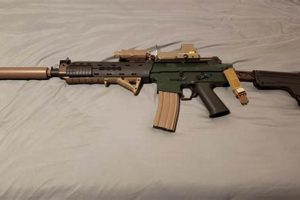
Devices capable of additive manufacturing have found application in the realm of recreational simulated combat. These machines enable the creation of custom components and accessories utilized in airsoft equipment. This capability allows enthusiasts to personalize their gear and potentially enhance its performance.
The utilization of such technology provides several advantages, including rapid prototyping, cost-effective production of small-batch parts, and the ability to design and implement unique modifications not commercially available. Early adoption of this technology by hobbyists has paved the way for innovative designs and an evolving ecosystem of shared resources and printable models.
The subsequent sections will delve into specific aspects of employing this technology within this context, examining design considerations, material selection, post-processing techniques, and the associated safety protocols imperative for responsible use.
Tips for Airsoft Component Fabrication
This section provides guidance on effectively utilizing additive manufacturing for airsoft equipment, emphasizing practical considerations for successful implementation.
Tip 1: Prioritize Design Accuracy. Precise measurements and adherence to specifications are crucial for compatibility and proper function within existing airsoft mechanisms. Inaccurate designs can lead to unusable parts or system malfunctions.
Tip 2: Select Appropriate Materials. Consider the stresses and environmental conditions to which the part will be exposed. Options like ABS, PETG, and nylon offer varying degrees of durability and impact resistance. Experimentation is often necessary to determine the optimal material.
Tip 3: Optimize Print Settings. Layer height, infill density, and wall thickness influence both part strength and print time. Balance these parameters to achieve the desired performance characteristics while minimizing material consumption and production time.
Tip 4: Implement Post-Processing Techniques. Smoothing, sanding, and painting can improve the surface finish and overall aesthetics of 3D-printed components. Chemical smoothing, when appropriate for the chosen material, can enhance durability and reduce friction.
Tip 5: Reinforce High-Stress Areas. Identify areas prone to failure and incorporate design features such as fillets, gussets, or increased wall thickness to enhance structural integrity. Consider metal inserts for threaded connections or bearing surfaces.
Tip 6: Verify Fit and Functionality. Thoroughly test all printed parts in a controlled environment before field use. Ensure proper alignment, smooth operation, and secure attachment within the intended airsoft system.
Tip 7: Consult Community Resources. Online forums and communities dedicated to airsoft and 3D printing offer valuable insights, shared designs, and troubleshooting advice. Leverage this collective knowledge to refine designs and printing processes.
Adhering to these guidelines maximizes the potential for producing functional and reliable components through additive manufacturing. Attention to detail in design, material selection, and fabrication ensures optimal performance and longevity.
The next section will address common challenges and troubleshooting strategies encountered when implementing this technology in the context of airsoft applications.
1. Material Strength
The efficacy of additive manufacturing for airsoft components is intrinsically linked to the material’s inherent strength. A part’s ability to withstand operational stresses directly determines its usability and longevity in the field. Inadequate material strength results in premature failure, rendering the component ineffective and potentially hazardous. For instance, a magazine release crafted from a brittle polymer will likely fracture under repeated use, compromising the rifle’s functionality. Conversely, a robust polymer blend selected with material strength considerations is more likely to withstand the forces involved in loading, unloading, and accidental impacts.
Material selection must consider the anticipated stress levels and environmental conditions. Components subjected to high impact, such as pistons or gears, necessitate materials exhibiting high tensile strength and impact resistance. For parts exposed to temperature variations or solvents, chemical resistance and thermal stability become crucial. The selection process often involves trade-offs between properties, requiring a compromise to achieve the desired balance of durability, weight, and cost-effectiveness. The widespread adoption of filaments like Nylon and reinforced PLA variants illustrates the practical application of this understanding, providing airsoft enthusiasts with materials capable of withstanding the rigors of gameplay.
In summary, material strength represents a critical factor in the successful application of 3D printing technology to the airsoft realm. While design considerations and manufacturing precision are paramount, the underlying material’s properties ultimately dictate the component’s functional lifespan. Addressing this challenge requires thorough material research, informed selection, and rigorous testing to ensure the manufactured parts can reliably perform under operational conditions. The pursuit of stronger, more durable materials is a continuing endeavor, driving innovation in both material science and additive manufacturing techniques for the benefit of airsoft hobbyists and professionals alike.
2. Design Accuracy
The utility of additive manufacturing in the context of recreational simulated combat equipment is directly contingent upon the precision of the digital design. Without accurate dimensional representation and faithful translation to a printable model, the resulting physical object risks incompatibility, malfunction, or complete failure. Accurate designs are not merely aesthetically pleasing; they are structurally and functionally imperative for integration with pre-existing airsoft systems. For example, a 3D-printed replacement for a gearbox component must replicate the original’s dimensions within extremely tight tolerances. Even minor deviations can cause binding, increased wear, or catastrophic mechanical failure during operation.
The process of achieving design accuracy involves several critical steps. Initially, precise measurements of the original component or system must be obtained, often utilizing digital calipers or three-dimensional scanning technologies. Subsequently, these measurements must be meticulously translated into a CAD (Computer-Aided Design) model, ensuring that all dimensions, angles, and features are accurately represented. This CAD model then serves as the blueprint for the additive manufacturing process. The choice of slicing software and its settings directly impacts the fidelity of the final printed object. Incorrectly configured settings can introduce errors, such as dimensional inaccuracies, warping, or layer adhesion issues, which compromise the design’s intended functionality. Verification and validation of the printed component are equally essential. Test fitting the component into the intended airsoft mechanism and performing functional tests help identify any discrepancies between the design and the physical object. This iterative process allows for refinement of the design and printing parameters, leading to increased accuracy.
In conclusion, design accuracy forms the cornerstone of effective additive manufacturing for airsoft components. The ability to create precisely dimensioned and functionally sound parts relies on a combination of accurate measurement, meticulous CAD modeling, optimized slicing parameters, and thorough validation procedures. Addressing challenges in this area is crucial for unlocking the full potential of 3D printing for customizing, repairing, and enhancing airsoft equipment. Ultimately, achieving optimal design accuracy translates to improved performance, enhanced reliability, and greater user satisfaction within the realm of recreational simulated combat.
3. Component Compatibility

The effective integration of additive manufacturing into the sphere of airsoft equipment rests significantly upon the principle of component compatibility. Devices capable of additive manufacturing produce parts based on digital designs; therefore, these parts must seamlessly interact with existing airsoft systems, mechanisms, and accessories. Failure to achieve compatibility results in non-functional components, system malfunctions, and diminished utility of the manufacturing process. An illustrative instance is the creation of a custom hop-up unit; if its dimensions deviate from established standards, it will not properly interface with magazines or barrels, rendering it useless.
Compatibility issues can arise from multiple sources, including inaccurate initial measurements, imprecise digital modeling, or deviations during the printing process itself. Consideration must be given to thread sizes, tolerances, and attachment mechanisms. A 3D-printed buffer tube for an airsoft rifle, for example, requires precise threading to interface correctly with the receiver and stock; otherwise, stability and functionality are compromised. Similarly, internal components, such as gears or pistons, demand compliance with established dimensional standards within the gearbox to ensure smooth operation and prevent premature wear. Open-source design repositories and community forums often offer valuable insights regarding compatibility best practices and established standards, facilitating successful integration.
In summary, component compatibility constitutes a critical factor influencing the successful adoption of additive manufacturing in the domain of airsoft. The ability to design and produce parts that seamlessly integrate with existing systems is paramount for realizing the technology’s potential for customization, repair, and performance enhancement. Awareness of established standards, meticulous design practices, and rigorous testing protocols are essential for ensuring that 3D-printed components meet the required specifications for reliable and effective operation. Achieving comprehensive component compatibility not only fosters the expansion of the technology within the community but also contributes to the safety and enjoyment of the sport.
4. Operational Reliability

Operational reliability, in the context of utilizing additive manufacturing for airsoft equipment, pertains to the consistency and dependability of 3D-printed components during gameplay. It is a crucial factor determining the practicality and effectiveness of replacing or enhancing original parts with those produced via additive methods. Component failure during a skirmish can significantly impede performance and enjoyment, highlighting the importance of ensuring operational reliability.
- Material Degradation Resistance
The selected material must withstand repeated stress cycles, temperature variations, and potential exposure to moisture or lubricants. Polymers susceptible to rapid degradation compromise the component’s integrity over time. For example, a 3D-printed piston head should maintain its shape and sealing properties under continuous firing, avoiding pressure loss and reduced performance.
- Failure Point Mitigation
Design choices must address potential points of failure, such as areas of high stress concentration or thin cross-sections. Reinforcement strategies, like incorporating fillets or increasing wall thickness, can mitigate these vulnerabilities. A 3D-printed trigger assembly, for instance, requires careful design to avoid fracture at the pivot point under repeated actuation.
- Assembly Integrity Maintenance
Additively manufactured components often require assembly with other parts, either original or also 3D-printed. Maintaining the integrity of these connections under operational stress is paramount. Threaded inserts or robust interlocking features are necessary to prevent loosening or separation. A 3D-printed magazine well, for example, must maintain a secure connection to the receiver to ensure reliable feeding.
- Calibration Stability Retention
Certain airsoft components require precise calibration or adjustment for optimal performance. The 3D-printed part must maintain its dimensional stability and resistance to deformation to ensure the calibration remains accurate over time. A 3D-printed hop-up unit, for instance, should resist warping under stress and temperature changes, preventing variations in BB trajectory.
The convergence of these factors significantly influences the overall operational reliability of airsoft equipment enhanced through additive manufacturing. Prioritizing material selection, design optimization, and robust assembly methods ensures that 3D-printed components meet the demands of rigorous gameplay, offering a dependable and satisfying experience. The successful integration of this technology requires a holistic approach, carefully balancing performance enhancements with the imperative of long-term reliability.
5. Regulatory Compliance
The application of additive manufacturing techniques to the creation of airsoft components necessitates strict adherence to applicable regulations. These rules govern various aspects of manufacturing, sales, and use of airsoft devices, and non-compliance can result in legal repercussions.
- Material Restrictions
Certain jurisdictions impose restrictions on the materials used in manufacturing airsoft replicas, particularly concerning toxicity or potential for conversion into functional firearms. The use of prohibited materials in 3D-printed components can lead to seizure of the items and potential legal action. For instance, materials that mimic the appearance or properties of firearm components might be subject to stricter scrutiny.
- Velocity Limitations
Many regions establish maximum velocity limits for airsoft projectiles, measured in feet per second (FPS). Modifications or enhancements made through additive manufacturing cannot cause the device to exceed these legal limits. A 3D-printed piston designed to increase firing velocity beyond legal thresholds would render the device non-compliant.
- Appearance and Imitation
Regulations often address the degree to which airsoft replicas resemble actual firearms. Overly realistic designs or the absence of required markings (e.g., orange tips) can result in legal penalties. Additive manufacturing enables precise replication, making compliance with appearance-related regulations especially critical. Some jurisdictions require specific markings to distinguish replicas from real firearms.
- Sales and Distribution
The sale and distribution of airsoft equipment are often subject to licensing and age restrictions. Individuals utilizing additive manufacturing to produce and sell airsoft components must comply with all applicable sales regulations. Failure to obtain necessary licenses or selling to underage individuals can result in fines or other legal consequences.
The utilization of additive manufacturing in the airsoft domain presents both opportunities and challenges with respect to regulatory compliance. While offering customization and innovation, it also demands diligence in adhering to established rules and guidelines. Awareness of and adherence to these regulations is crucial for responsible use of 3D printing technology in the airsoft community.
Frequently Asked Questions about Airsoft Component Fabrication
This section addresses common inquiries regarding the use of additive manufacturing technology in the creation of airsoft components, providing clarity on practical considerations and potential challenges.
Question 1: What types of materials are suitable for fabricating airsoft parts?
Materials such as ABS, PETG, nylon, and reinforced PLA variants are frequently employed. Material selection should be guided by the component’s intended function and the anticipated stress levels. ABS offers impact resistance, while nylon provides enhanced durability. Consideration must also be given to chemical resistance and temperature stability.
Question 2: How does design accuracy impact the performance of 3D-printed airsoft components?
Design accuracy is paramount. Inaccurate designs can lead to incompatibility with existing systems, malfunctions, or complete failure. Precise measurements and faithful translation into a digital model are essential for ensuring proper fit and function.
Question 3: What are the primary limitations of additive manufacturing for airsoft parts?
Limitations include material strength compared to traditionally manufactured parts, potential for layer delamination under stress, and dimensional inaccuracies if printing parameters are not optimized. Post-processing techniques can mitigate some of these limitations.
Question 4: What post-processing techniques are commonly used for 3D-printed airsoft parts?
Post-processing techniques include sanding, smoothing, painting, and chemical treatments. These techniques improve surface finish, enhance durability, and enhance aesthetics. Chemical smoothing can reduce friction and improve component longevity.
Question 5: Are there any safety considerations when utilizing additive manufacturing for airsoft equipment?
Safety considerations include proper ventilation during printing, adherence to material safety data sheets, and ensuring that the fabricated components do not exceed legal velocity limits for airsoft projectiles. Eye protection and appropriate handling procedures are also recommended.
Question 6: Can 3D-printed airsoft components be used in competitive events?
The acceptability of 3D-printed components in competitive events varies depending on the specific rules and regulations of the event organizer. It is essential to verify the legality of using such components with the event organizers prior to participation.
The successful application of additive manufacturing in the airsoft realm requires a comprehensive understanding of material properties, design considerations, and safety protocols. Addressing these aspects maximizes the potential for creating functional and reliable components.
The next section provides concluding remarks and future outlook for the topic.
Conclusion
The preceding exploration of “airsoft 3D printer” technology reveals its capacity to revolutionize the customization and maintenance of airsoft equipment. The capacity for rapid prototyping, bespoke design, and small-batch production of parts offers unprecedented flexibility to enthusiasts and professionals. However, the successful integration of this technology requires a comprehensive understanding of material properties, design accuracy, component compatibility, and operational reliability.
The future trajectory of “airsoft 3D printer” applications depends on continued innovation in material science, refinement of design tools, and establishment of industry standards. Vigilance regarding regulatory compliance remains paramount. Continued research and development promise to further enhance the practicality and dependability of additively manufactured airsoft components, potentially transforming the industry landscape.