The phrase refers to the significance and details surrounding a specific type of airsoft gun: Automatic Electric Guns. These replicas operate using an electric motor powered by a rechargeable battery, which drives an internal mechanism to propel plastic projectiles, known as BBs. As an example, a player might choose this type of airsoft replica for its consistent rate of fire and adaptability in various game scenarios.
Understanding the workings and characteristics of this type of airsoft gun is important for players seeking a reliable and versatile option on the field. Their relative ease of use, combined with their ability to fire in both semi-automatic and fully automatic modes, have contributed significantly to their widespread adoption within the airsoft community. Historically, the introduction of these electrically powered guns marked a turning point, offering a more accessible and practical alternative to spring-powered and gas-powered models.
Given this foundation, the following will delve into specific models, maintenance considerations, upgrade possibilities, and tactical applications within the airsoft hobby, providing a thorough overview for both novice and experienced players.
Tips for Optimizing Automatic Electric Gun Airsoft Performance
This section offers key insights into maximizing the performance and longevity of automatic electric airsoft guns. These tips are designed to provide a practical understanding of essential maintenance and operational considerations.
Tip 1: Battery Selection is Crucial. Opt for batteries with appropriate voltage and discharge rates (C-rating) matched to the replica’s specifications. Incorrect battery choices can damage the motor or other internal components. Lithium Polymer (LiPo) and Nickel-Metal Hydride (NiMH) batteries are common, but require different charging protocols.
Tip 2: Regular Cleaning Prevents Jams. After each use, clean the inner barrel using a cleaning rod and silicone oil. This removes debris and ensures consistent BB trajectory. Neglecting this step can lead to reduced accuracy and increased wear on internal parts.
Tip 3: Gearbox Maintenance is Essential. Periodically inspect the gearbox for wear or damage. Re-greasing internal gears with appropriate lubricant is necessary to maintain smooth operation and prevent premature failure. Disassembly requires technical expertise and should only be performed by qualified individuals.
Tip 4: Hop-Up Adjustment Affects Range. Fine-tune the hop-up unit to achieve optimal BB flight trajectory and range. Over-hopping can cause BBs to curve upwards excessively, while insufficient hop-up results in a downward trajectory. Experimentation is necessary to find the ideal setting for different BB weights and distances.
Tip 5: Use Quality BBs for Consistent Results. Employ high-quality, seamless BBs to minimize jamming and maximize accuracy. Low-quality BBs can have inconsistencies in size and shape, leading to misfeeds and inaccurate shots. Weights ranging from 0.20g to 0.28g are commonly used, depending on the replica’s power and intended range.
Tip 6: Store Batteries Properly. When not in use, store batteries in a cool, dry place. LiPo batteries should be stored at a storage voltage (typically around 3.8V per cell) to prolong their lifespan. Failure to follow proper storage procedures can result in reduced battery capacity or even fire hazards.
These tips are integral to ensuring the reliable operation and extending the lifespan of automatic electric airsoft guns. By adhering to these guidelines, users can enhance their performance on the field and minimize potential mechanical issues.
Therefore, the subsequent discussion will elaborate on advanced upgrade options and strategies for further enhancing the capabilities of these replicas.
1. Electric motor operation

The operational mechanism of the electric motor is central to understanding the functionality of automatic electric airsoft guns. The electric motor’s design and performance directly impact the replica’s rate of fire, trigger response, and overall reliability. Its crucial role necessitates a detailed examination of related facets.
- Motor Torque and Speed
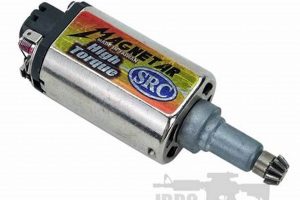
Motor torque refers to the rotational force exerted, influencing the ability to pull the AEG’s spring. Higher torque motors generally provide better trigger response and the capacity to handle stronger springs, improving power. Motor speed, measured in rotations per minute (RPM), affects the replica’s rate of fire. A motor with a higher RPM will typically yield a faster firing rate. Selecting a motor with balanced torque and speed characteristics is crucial for optimal AEG performance.
- Motor Type and Construction
Various types of electric motors are employed in AEGs, including ferrite and neodymium magnet motors. Neodymium motors offer superior performance due to their stronger magnetic fields, resulting in improved torque and efficiency. The motor’s internal construction, including the armature and brushes, also influences its durability and lifespan. Upgrading to a higher-quality motor can significantly enhance an AEG’s overall capabilities.
- Electrical System Integration
The electric motor is intrinsically linked to the AEG’s electrical system, including the battery, wiring, and electronic control unit (ECU) or trigger contacts. The battery provides the electrical energy that powers the motor. The wiring must be of sufficient gauge to handle the motor’s current draw. ECUs offer advanced features like programmable firing modes and active braking, which can protect the motor and improve trigger response. A well-designed electrical system ensures efficient and reliable motor operation.
- Maintenance and Longevity
Proper maintenance is crucial for maximizing the lifespan of the electric motor. Regularly inspecting and replacing worn motor brushes is essential for maintaining optimal performance. Overheating can damage the motor’s windings and magnets, so it’s important to avoid excessive stress and ensure adequate cooling. Periodic cleaning and lubrication can also contribute to the motor’s longevity.
These interconnected elements of electric motor operation are fundamentally linked to the performance and reliability of any AEG. Understanding these aspects is essential for choosing the right type of motor and for maintaining its optimal functionality. Furthermore, the efficiency of these components is at the very heart of the technology that defines an automatic electric gun in airsoft.
2. Rechargeable battery power

The operational efficacy of automatic electric airsoft guns is inextricably linked to rechargeable battery power. This power source provides the necessary energy to drive the electric motor, which in turn actuates the internal mechanisms responsible for projectile propulsion. Understanding the various facets of rechargeable battery power is crucial for optimizing AEG performance and ensuring reliable operation.
- Voltage and Capacity Ratings
The voltage rating of a battery (measured in volts, V) determines the motor’s speed and torque. Higher voltage batteries generally increase the rate of fire and trigger response, but may also increase wear on internal components. The capacity rating (measured in milliampere-hours, mAh) indicates the battery’s energy storage capacity and thus, the runtime of the AEG. A higher mAh rating translates to longer periods of continuous use before requiring a recharge. Example: a 9.6V 1600mAh battery provides a balance between performance and runtime, whereas a 7.4V 2200mAh battery prioritizes runtime. In the context of automatic electric airsoft guns, correctly matching the voltage and capacity to the motor and gearbox specifications is paramount.
- Battery Chemistry and Discharge Rate
Common battery chemistries used in AEGs include Nickel-Metal Hydride (NiMH) and Lithium Polymer (LiPo). NiMH batteries are generally more robust and require less stringent charging procedures, but typically offer lower energy density and discharge rates. LiPo batteries provide higher energy density and discharge rates, resulting in improved performance, but necessitate careful handling and charging to prevent damage or fire hazards. Discharge rate, measured in C-rating, signifies the battery’s ability to deliver current. A higher C-rating indicates a greater capacity to supply the motor’s instantaneous current demand. Utilizing LiPo batteries with appropriate C-ratings provides necessary burst power for immediate functionality within automatic electric airsoft guns.
- Battery Charging and Maintenance
Proper charging and maintenance are vital for extending battery lifespan and preventing damage. Overcharging or deep discharging can significantly reduce a battery’s capacity and performance. Specialized chargers designed for specific battery chemistries should be used to ensure safe and efficient charging. Example: LiPo batteries require balance chargers that regulate the voltage of individual cells. Storing batteries in a cool, dry environment and at a partial state of charge when not in use can also prolong their lifespan. Maintaining the AEG’s battery connections and overall electrical system prevents resistance or short circuits.
- Battery Compatibility and AEG Design
The physical dimensions and connector type of the battery must be compatible with the AEG’s battery compartment and wiring. Incorrectly sized or incompatible batteries cannot be installed or may damage the replica. Tamiya and Deans connectors are commonly used, each offering different current handling capabilities. Some AEGs are specifically designed to accommodate certain battery types, influencing the overall design and ergonomics of the airsoft gun. Considering battery accessibility and overall design is critical for ensuring convenient and efficient energy usage within the complete functionality of automatic electric airsoft guns.
These interconnected facets voltage, capacity, chemistry, discharge rate, charging protocols, and compatibility collectively determine the performance and reliability of rechargeable battery power in the operation of automatic electric airsoft guns. Selection of an appropriate power source is, therefore, integral to ensuring optimal gameplay and longevity of the airsoft replica.
3. Automatic firing capability

Automatic firing capability constitutes a defining characteristic of automatic electric airsoft guns. This feature distinguishes these replicas from spring-powered and single-shot models, significantly influencing their tactical application and gameplay dynamics. The ability to sustain a continuous stream of projectiles offers advantages in suppression and close-quarters engagements.
- Rate of Fire (ROF) and Gear Ratio
Rate of Fire, measured in rounds per minute (RPM), dictates the volume of projectiles discharged over a specific time interval. This value is largely influenced by the replica’s internal gear ratio and motor speed. Lower gear ratios combined with high-speed motors yield higher ROF, enhancing suppressive fire capabilities. Conversely, higher gear ratios paired with torque-oriented motors offer increased power and trigger response at the expense of ROF. The implications for automatic electric airsoft guns are direct: a higher rate of fire translates to an increased capacity to saturate an area with BBs, potentially disrupting enemy maneuvers and providing cover for team advancements. This parameter must be balanced with considerations for battery consumption and BB supply.
- Trigger Mechanism and Electronic Control Units (ECUs)
The trigger mechanism initiates the firing sequence, while electronic control units (ECUs) regulate the replica’s operation. ECUs offer programmable firing modes, including semi-automatic (single shot per trigger pull), fully automatic (continuous fire while the trigger is depressed), and burst modes (a pre-set number of rounds fired per trigger pull). These programmable firing modes allows modification for enhanced control over the rate of fire, with direct performance consequences for automatic electric airsoft guns.
- Magazine Capacity and Reloading Considerations
Magazine capacity limits the duration of sustained automatic fire. High-capacity magazines (hi-caps) can hold hundreds of BBs, reducing the frequency of reloading during intense engagements. However, hi-caps often require winding to feed BBs consistently, a process that can interrupt gameplay. Mid-capacity magazines (mid-caps) offer a more realistic round count and eliminate the need for winding but necessitate more frequent reloading. The interplay between automatic fire and magazine capacity is critical for tactical planning. For instance, an automatic electric airsoft gun with high ROF will deplete a standard-capacity magazine rapidly.
- Accuracy and Effective Range
While automatic fire provides suppressive capabilities, accuracy and effective range are inevitably compromised compared to single-shot modes. Recoil, inherent in real firearms, is absent in airsoft replicas. However, sustained automatic fire can still induce barrel wobble and projectile dispersion, reducing precision. Hop-up units, which impart backspin to BBs, can improve range and consistency, but require careful adjustment. This becomes even more important for automatic electric airsoft guns firing at high ROF. Balancing accuracy and projectile spread becomes crucial for tactical effectiveness.
The automatic firing capability, thus, is an integral component of what defines an automatic electric airsoft gun. Its effectiveness is contingent upon several factors, including rate of fire, trigger mechanisms, magazine capacity, and the inherent trade-offs between accuracy and projectile saturation. Understanding these dynamics is crucial for deploying such weapons effectively on the airsoft field, showcasing the very meaning these aspects have together.
4. Gearbox internal mechanics

The gearbox serves as the central mechanical component in automatic electric airsoft guns, directly influencing performance metrics such as rate of fire, power output, and overall reliability. Its internal mechanics are intrinsic to defining the capabilities and limitations of these replicas. A detailed examination of these mechanics is essential for understanding the operational characteristics and the meaning of “aeg airsoft meaning”.
- Gear Set Configuration
The gear set within the gearbox consists of a series of gears (sector gear, spur gear, and bevel gear) that transmit rotational motion from the motor to the piston. Different gear ratios affect the rate of fire and torque. For example, high-speed gears prioritize a faster rate of fire, while high-torque gears provide greater power for pulling stronger springs. The configuration and material composition of the gear set are crucial determinants of an AEG’s performance capabilities. This set works in conjunction to compress the spring within an automatic electric airsoft gun to facilitate the ejection of a BB projectile.
- Piston and Cylinder Assembly
The piston and cylinder assembly works to compress air with each cycle. The piston, propelled by the sector gear, moves within the cylinder to compress air, which is then forced through the cylinder head and nozzle to propel the BB. The material and design of the piston head, cylinder head, and nozzle influence air seal and efficiency. For example, a double o-ring piston head in an automatic electric airsoft gun improves compression, enhancing power and consistency.
- Spring and Spring Guide
The spring stores the potential energy that is released to propel the BB. The spring’s strength (measured by its spring constant) determines the AEG’s muzzle velocity. The spring guide supports the spring and ensures smooth compression and release. For example, a metal spring guide with bearings reduces torsional stress on the spring, improving its lifespan and performance within an automatic electric airsoft gun.
- Tappet Plate and Nozzle Timing
The tappet plate controls the movement of the nozzle, which feeds BBs from the magazine into the hop-up chamber. The timing of the tappet plate and nozzle is critical for reliable feeding and consistent performance. For example, incorrect tappet plate timing can lead to misfeeds or double feeds in an automatic electric airsoft gun. This specific timing has to be maintained to function properly and requires specialized care when making upgrades.
These interconnected facets of gearbox internal mechanics directly influence the performance and longevity of automatic electric airsoft guns. The configuration of the gear set, the efficiency of the piston and cylinder assembly, the characteristics of the spring, and the timing of the tappet plate all contribute to the overall functionality. Understanding these aspects is fundamental to comprehending the capabilities and limitations associated with “aeg airsoft meaning”. Furthermore, upgrading these components necessitates careful consideration of their compatibility and the intended performance outcome.
5. BB projectile propulsion

Projectile propulsion constitutes the terminal action of automatic electric airsoft guns, translating stored mechanical energy into kinetic energy, thus launching the BB. The efficacy of this action is intrinsic to the weapon’s performance and determines its utility within the airsoft context.
- Air Compression Volume and Efficiency
The volume of compressed air generated by the piston-cylinder assembly dictates the potential energy transferred to the BB. A larger air volume can accommodate longer inner barrels and heavier BBs, potentially increasing range and accuracy. However, inefficient compression, due to leaks or poor seals, diminishes the available energy and reduces performance. For example, a full cylinder intended for longer barrels, when paired with a short barrel in an automatic electric airsoft gun, can lead to energy waste and reduced muzzle velocity. Efficient air compression is therefore paramount for maximizing the potential of the energy source.
- Nozzle Design and Air Seal
The nozzle directs the compressed air from the cylinder head to the BB in the hop-up chamber. The nozzle’s design impacts the consistency of the air seal and the efficiency of BB feeding. A well-designed nozzle ensures a tight seal with the hop-up bucking, preventing air leakage and maximizing energy transfer. For instance, nozzles with O-rings are common in automatic electric airsoft guns as they improve the seal, ensuring consistent BB velocities. Consequently, air seal influences shot-to-shot consistency and overall power.
- Hop-Up Unit and Backspin Application
The hop-up unit imparts backspin to the BB as it exits the barrel, creating lift and increasing range. The adjustable hop-up bucking applies pressure to the top of the BB, causing it to spin. The amount of backspin influences the BB’s trajectory, with excessive backspin causing the BB to curve upwards and insufficient backspin resulting in a rapid downward trajectory. For instance, adjusting the hop-up unit in an automatic electric airsoft gun is crucial for optimizing the BB’s flight path for different BB weights and engagement distances. The hop-up unit is essential to maximize range and accuracy during projectile propulsion.
- Inner Barrel Length and Bore Diameter
The inner barrel guides the BB during its acceleration phase and influences accuracy and muzzle velocity. Longer barrels generally increase muzzle velocity, but may also reduce maneuverability. Bore diameter impacts air seal and consistency. Tighter bore diameters can improve accuracy, but may also increase friction and require higher quality BBs. A 6.03mm inner barrel is a popular choice in automatic electric airsoft guns as it offers a balance between accuracy and compatibility with various BB brands. The length and diameter of the inner barrel thus influences accuracy, range and maneuverability.
In essence, the interplay between air compression, nozzle design, hop-up application, and barrel characteristics dictates the effectiveness of BB projectile propulsion. Optimizing these elements is integral to maximizing the performance potential of automatic electric airsoft guns. The functionality relies on precise interaction to ensure the reliable and accurate launch of projectiles, showcasing “aeg airsoft meaning” in an action-oriented perspective.
Frequently Asked Questions Regarding Automatic Electric Gun Airsoft
This section addresses common inquiries and misconceptions surrounding automatic electric airsoft guns (AEGs). The following questions are intended to clarify key aspects of their operation, maintenance, and performance characteristics.
Question 1: What distinguishes automatic electric airsoft guns from other types of airsoft replicas?
The defining characteristic is their utilization of an electric motor and rechargeable battery to power an internal mechanism that propels projectiles. Spring-powered replicas require manual cocking before each shot, while gas-powered replicas rely on compressed gas as a propellant. AEGs offer a balance of sustained firepower and ease of use absent in other airsoft gun categories.
Question 2: What are the primary advantages of using automatic electric airsoft guns in gameplay?
The principal advantage lies in their ability to deliver a consistent rate of fire in both semi-automatic and fully automatic modes. This allows for effective suppressive fire and tactical flexibility in various game scenarios. Additionally, AEGs generally offer greater customizability and upgrade potential compared to other airsoft replica types.
Question 3: What are the common maintenance requirements for automatic electric airsoft guns?
Regular maintenance includes cleaning the inner barrel, lubricating internal components, inspecting wiring and connectors, and properly storing batteries. Periodic gearbox disassembly and re-greasing may also be necessary to ensure smooth operation and prevent premature wear.
Question 4: What factors influence the range and accuracy of automatic electric airsoft guns?
Range and accuracy are affected by several factors, including inner barrel length and bore diameter, hop-up unit adjustment, BB weight and quality, and air seal integrity. Optimizing these elements is crucial for achieving consistent performance.
Question 5: What battery types are commonly used in automatic electric airsoft guns, and what are their respective advantages and disadvantages?
Common battery types include Nickel-Metal Hydride (NiMH) and Lithium Polymer (LiPo). NiMH batteries are more robust and require less stringent charging procedures, but offer lower energy density and discharge rates. LiPo batteries provide higher performance but necessitate careful handling and charging to prevent damage or fire hazards.
Question 6: What are some common upgrade options for automatic electric airsoft guns?
Typical upgrade options include replacing the motor, gears, piston, cylinder, hop-up unit, and inner barrel. These upgrades can enhance rate of fire, power output, accuracy, and overall reliability. However, compatibility and proper installation are critical for achieving the desired results.
In summary, automatic electric airsoft guns offer a versatile and adaptable platform for airsoft gameplay. Understanding their operational characteristics, maintenance requirements, and upgrade possibilities is essential for maximizing their performance and ensuring their longevity.
The subsequent section will delve into specific automatic electric airsoft gun models and their intended applications, offering a comparative analysis for informed decision-making.
Understanding Automatic Electric Gun Airsoft
This examination has dissected the core components and functionalities that define the essence of “aeg airsoft meaning.” From the intricacies of the gearbox mechanics to the nuances of projectile propulsion and the selection criteria for batteries, the discussion has sought to provide a comprehensive understanding of these replicas. The operational characteristics, maintenance requirements, and upgrade pathways contribute to the overall proficiency on the airsoft field.
The automatic electric airsoft gun continues to evolve, demanding players to stay abreast of technological advancements and tactical applications. A dedication to the comprehension of its principles ensures responsible and proficient participation within the airsoft community. Continued education on current best practices and adherence to safety protocols remains paramount for all involved.