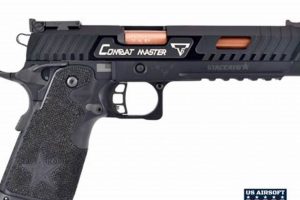
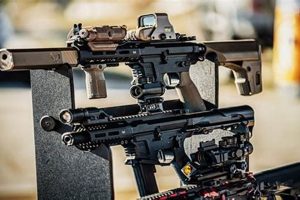
The degree to which airsoft weaponry and gameplay emulate real-world firearms and tactical situations is a central element within the sport. This encompasses the visual similarity of the replicas, their weight and handling, and the implementation of tactics mirroring those employed by military and law enforcement personnel. For instance, an airsoft rifle may be designed to closely resemble a specific model of firearm, constructed with similar materials, and require comparable manipulation for operation and maintenance.
The pursuit of heightened fidelity enhances the immersive experience for participants, enabling them to engage in scenarios that approximate the intensity and strategic demands of actual combat situations. This emphasis on verisimilitude can contribute to improved training outcomes, particularly for individuals in security-related fields, by providing a safe and controlled environment for practicing tactical skills. Historically, the desire for lifelike simulation has driven innovation in airsoft technology, leading to increasingly sophisticated replicas and gameplay methodologies.
Therefore, the following analysis will delve into specific aspects that contribute to the aforementioned quality, examining the equipment utilized, the tactical doctrines employed, and the overall impact on player engagement and skill development within the airsoft community.
Enhancing Verisimilitude in Airsoft
Achieving a high degree of authenticity in airsoft necessitates careful consideration of equipment, tactics, and scenario design. The following tips outline key areas to focus on for those seeking a more immersive and credible airsoft experience.
Tip 1: Weapon Selection: Choose airsoft replicas that accurately represent real-world firearms in terms of appearance, weight, and handling. Research specific models and their real-world counterparts to ensure a close match. Consider gas blowback systems for added recoil and realism.
Tip 2: Tactical Gear: Employ authentic tactical gear such as plate carriers, pouches, and helmets. Prioritize functionality and ergonomic design. Replicating the loadouts of specific military or law enforcement units can further enhance the sense of authenticity.
Tip 3: Communication Protocols: Implement clear and concise communication protocols mirroring those used by professional forces. Utilize hand signals, call signs, and standardized terminology. This fosters teamwork and enhances the overall operational environment.
Tip 4: Movement and Positioning: Practice realistic movement techniques, including bounding overwatch, room clearing, and proper use of cover. Avoid predictable patterns and prioritize situational awareness. Consult military manuals or training videos for guidance.
Tip 5: Scenario Design: Develop scenarios that incorporate realistic objectives and constraints. Consider factors such as terrain, weather conditions, and enemy capabilities. Integrate intelligence gathering and reconnaissance elements to enhance the strategic depth of the gameplay.
Tip 6: Adherence to Rules of Engagement: Establish clear and consistent rules of engagement that promote fair play and prevent unsafe practices. Emphasize respect for other players and adherence to safety regulations. Implement penalties for violations.
Tip 7: Training and Skill Development: Invest time in training and skill development to improve marksmanship, tactical proficiency, and physical fitness. Attend airsoft events and workshops to learn from experienced players and instructors. Practice regularly to maintain a high level of performance.
Implementing these strategies will contribute to a more engaging and believable airsoft environment. The pursuit of enhanced credibility not only improves the immersive qualities of the game but can also foster valuable skills applicable in various real-world contexts.
The subsequent sections will explore the ethical considerations and potential risks associated with pursuing a high level of “airsoft realistic,” emphasizing the importance of responsible gameplay and adherence to all applicable laws and regulations.
1. Replica Firearm Fidelity

Replica firearm fidelity stands as a cornerstone in achieving authenticity within airsoft. The extent to which an airsoft replica mirrors a real-world firearm directly impacts the perceived credibility of the simulation and influences the overall player experience.
- External Realism
External realism encompasses the accurate replication of a firearm’s physical appearance. This includes dimensional accuracy, material selection, and surface finish. Replicas constructed from materials similar to their real-world counterparts, such as aluminum alloys or high-impact polymers, contribute to a more convincing aesthetic. The presence of accurate markings, such as manufacturer logos and model designations, further enhances the visual fidelity. This focus on external detail directly translates to a more believable and immersive airsoft experience.
- Internal Mechanics
Beyond outward appearance, the internal mechanics of an airsoft replica play a critical role in enhancing realism. Features such as realistic disassembly, functional bolt carriers, and adjustable hop-up systems contribute to a more authentic handling experience. Gas blowback systems, for example, simulate the recoil of a real firearm, adding a tactile element that enhances immersion. The degree to which these internal mechanisms emulate the operation of their real-world counterparts directly affects the perceived realism of the airsoft replica.
- Weight and Balance
The weight and balance of an airsoft replica significantly impact its handling characteristics. Replicas that closely match the weight and balance of their real-world counterparts provide a more realistic training platform. This is particularly important for practicing weapon manipulation drills and developing muscle memory. A replica that feels similar in hand to the actual firearm allows for more effective transfer of skills and techniques.
- Operation and Manipulation
Faithful replication of a firearm’s operational characteristics is essential for achieving a high level of authenticity. This includes the correct placement of controls, such as magazine releases and selector switches, as well as the realistic manipulation of these controls. Replicas that require similar procedures for loading, firing, and reloading contribute to a more credible training experience. The degree to which these operations mirror real-world procedures directly impacts the perceived fidelity of the airsoft simulation.
The interconnectedness of these facets underscores the significance of replica firearm fidelity in the broader context of airsoft realism. By prioritizing accuracy in external appearance, internal mechanics, weight distribution, and operational characteristics, manufacturers and players alike can contribute to a more immersive and authentic airsoft experience. This heightened fidelity not only enhances the enjoyment of the sport but also increases its potential value as a training tool.
2. Authentic Tactical Gear

Authentic tactical gear serves as a crucial component in achieving a high degree of realism within airsoft simulations. The use of equipment mirroring that employed by military and law enforcement personnel contributes significantly to the immersive experience and the practical application of tactical principles. The implementation of authentic gear is not merely aesthetic; it directly influences player movement, load carriage, and the overall strategic approach to gameplay. For example, a player utilizing a replica plate carrier experiences realistic weight distribution, impacting stamina and movement speed, thus necessitating the adoption of more deliberate and efficient tactical maneuvers. Similarly, the incorporation of functional communication headsets allows for clear and coordinated team communication, mirroring real-world operational effectiveness.
The selection and utilization of authentic tactical gear offer tangible benefits beyond enhanced immersion. The accurate representation of equipment placement and accessibility fosters the development of muscle memory relevant to weapon manipulation and gear deployment under simulated stress. Furthermore, understanding the limitations and advantages of specific gear configurations, such as different types of magazine pouches or medical kits, promotes a deeper appreciation for the logistical considerations inherent in tactical operations. This level of engagement can contribute to improved decision-making in simulated scenarios, allowing players to adapt and overcome challenges with a heightened sense of authenticity. The prevalence of MOLLE (Modular Lightweight Load-carrying Equipment) systems in modern tactical gear allows for a high degree of customization, enabling players to tailor their loadouts to specific roles and mission requirements, thereby increasing both the fidelity and the practicality of the simulation.
In conclusion, the integration of authentic tactical gear is instrumental in bridging the gap between airsoft gameplay and real-world tactical applications. While challenges may arise in terms of cost and availability of certain items, the benefits derived from enhanced immersion, realistic equipment handling, and improved tactical understanding far outweigh these considerations. The utilization of authentic tactical gear fundamentally contributes to the pursuit of fidelity in airsoft simulations, fostering a more engaging and educationally valuable experience for participants.
3. Lifelike Scenario Design

Lifelike scenario design is a pivotal element in achieving authenticity within airsoft. It is the framework that dictates the rules of engagement, objectives, and environmental conditions, significantly influencing the degree to which airsoft experiences emulate real-world tactical situations. The meticulous construction of these scenarios is essential for fostering immersive and educationally valuable gameplay.
- Objective-Based Missions
The incorporation of clearly defined, realistic objectives is paramount. Scenarios should move beyond simple elimination matches and instead focus on tasks such as intelligence gathering, hostage rescue, or securing strategic locations. These objectives must have clear consequences for success or failure, mirroring the stakes present in real-world operations. An example would be a scenario where the attacking team must successfully extract a simulated high-value target while the defending team attempts to prevent the extraction within a set time limit. This shifts the emphasis from solely engaging in combat to strategic planning and coordinated execution.
- Environmental Considerations
The environment in which the scenario unfolds contributes significantly to its authenticity. Factors such as terrain, weather conditions, and time of day should be realistically represented. For example, a scenario conducted in a wooded area might require players to navigate dense foliage and utilize camouflage effectively, while a nighttime scenario would necessitate the use of night vision equipment and modified tactics. These environmental factors should not only influence the visual landscape but also impact gameplay mechanics, such as visibility, movement speed, and communication range.
- Force Structure and Roles
Realistic force structure and role assignments are crucial for replicating the dynamics of real-world tactical units. Teams should be organized into specific roles, such as reconnaissance, assault, and support, with each role having clearly defined responsibilities and limitations. This encourages teamwork, communication, and the development of specialized skills. For example, a scenario might involve a sniper team providing overwatch while an assault team breaches and clears a building. The success of the mission depends on the effective coordination and execution of these individual roles.
- Realistic Rules of Engagement
The implementation of realistic rules of engagement is essential for maintaining a credible simulation. These rules should govern the use of force, the treatment of civilians, and the handling of casualties. For example, a scenario might stipulate that players are only authorized to use lethal force against hostile combatants and must make every effort to avoid civilian casualties. Furthermore, the scenario might incorporate simulated medical procedures and require players to triage and evacuate injured teammates. These rules not only enhance the authenticity of the experience but also promote ethical decision-making and responsible gameplay.
By carefully considering these facets, lifelike scenario design significantly contributes to the overall realism of airsoft. The meticulous planning and execution of these scenarios create immersive and engaging experiences that foster strategic thinking, teamwork, and tactical proficiency, aligning airsoft more closely with real-world operational environments.
4. Realistic Tactical Maneuvers

Realistic tactical maneuvers are an integral component of the pursuit of verisimilitude within airsoft. These maneuvers, when accurately replicated, enhance the immersive experience and provide participants with a simulated environment conducive to the development of practical skills applicable to real-world scenarios. The successful implementation of these maneuvers requires both a thorough understanding of tactical principles and a commitment to executing them with precision.
- Bounding Overwatch
Bounding overwatch is a fundamental tactical maneuver employed to advance across open terrain while providing continuous fire support. In this technique, one element provides cover fire while another element moves forward to a covered position. This process is repeated until the objective is reached. Within airsoft, the accurate execution of bounding overwatch necessitates clear communication, disciplined fire control, and effective utilization of cover. The adoption of this maneuver directly enhances the realism of gameplay by mirroring the protocols utilized by military and law enforcement units.
- Room Clearing Procedures
Room clearing procedures involve the systematic and methodical entry and clearing of enclosed spaces. These procedures prioritize minimizing risk to personnel while effectively neutralizing any threats within the room. In airsoft, replicating these procedures requires careful coordination, precise weapon handling, and adherence to established protocols. The implementation of realistic room clearing techniques significantly increases the intensity and complexity of gameplay, forcing participants to engage in strategic decision-making under simulated pressure.
- Cover and Concealment
The effective utilization of cover and concealment is paramount to survivability in any tactical environment. Cover provides protection from enemy fire, while concealment obscures a unit’s position. In airsoft, the intelligent use of terrain features, artificial barriers, and camouflage is essential for both offensive and defensive operations. Participants who master the art of utilizing cover and concealment gain a significant advantage, enhancing the realism of their engagement and increasing their effectiveness in simulated combat scenarios.
- Communication Protocols
Clear and concise communication is the lifeblood of any successful tactical operation. The use of standardized communication protocols, including call signs, brevity codes, and pre-planned signals, is essential for coordinating movements and disseminating critical information. Within airsoft, the adoption of these protocols fosters teamwork, reduces confusion, and enhances the overall realism of the simulation. Effective communication allows participants to react quickly to changing circumstances and to execute complex maneuvers with precision and efficiency.
The integration of these realistic tactical maneuvers into airsoft gameplay is directly proportional to the degree of authenticity achieved. These maneuvers, when executed with precision and discipline, elevate the experience from a simple game to a simulated environment conducive to learning and skill development. The commitment to replicating these maneuvers not only enhances the immersive qualities of airsoft but also provides participants with a valuable understanding of tactical principles applicable to a variety of real-world scenarios. The pursuit of airsoft realistic relies heavily on the faithful reproduction and implementation of these tactical skills.
5. Believable Player Conduct

Believable player conduct forms a critical, often underestimated, pillar supporting the structure of simulated military or law enforcement scenarios within airsoft. Its presence elevates the experience from a simple recreational activity to a more immersive and potentially educational simulation. Absent credible behavior, the carefully crafted replicas, tactics, and scenarios lose their impact, undermining the broader objective of achieving a convincing level of “airsoft realistic.”
- Adherence to Rules and Regulations
Strict adherence to established rules and safety regulations is paramount for maintaining a credible environment. This includes honoring hit calls, observing MED (Minimum Engagement Distance) restrictions, and respecting site boundaries. A willingness to cheat or bend the rules disrupts the simulation, breaks immersion, and erodes trust among participants. Consistent enforcement of these regulations is crucial for fostering an environment where realistic tactical decision-making can occur.
- Role-Playing and Immersion
Embracing a designated role and committing to the established scenario narrative enhances the overall sense of believability. This might involve adopting specific character traits, using appropriate communication protocols, and responding to simulated events in a manner consistent with the assigned role. For example, a player designated as a medic should prioritize casualty care and adhere to established medical procedures within the scenario. A failure to engage in appropriate role-playing detracts from the shared immersive experience and reduces the overall sense of realism.
- Respectful Interaction and Communication
Maintaining respectful interaction and communication with fellow participants, regardless of team affiliation, is essential for fostering a positive and believable environment. Avoiding excessive trash talk, engaging in constructive criticism, and prioritizing clear and concise communication all contribute to a more professional and credible atmosphere. Poor communication, disrespectful behavior, or personal attacks can disrupt the flow of the simulation and undermine the sense of camaraderie and teamwork that are essential components of real-world tactical operations.
- Realistic Injury and Death Roleplay
Simulating the effects of injury or death with appropriate conduct is crucial for maintaining immersion. This involves acknowledging a “hit” with a clear and unambiguous signal, refraining from excessive complaining, and adhering to established respawn or evacuation procedures. Engaging in “hit-calling” or refusing to acknowledge a valid hit undermines the integrity of the simulation and diminishes the credibility of the scenario. Believable injury roleplay adds weight to engagements and encourages players to act more cautiously and tactically.
The convergence of these facets directly influences the degree to which “airsoft realistic” can be achieved. When participants prioritize adherence to rules, embrace their designated roles, maintain respectful communication, and accurately simulate the consequences of injury, the overall quality of the simulation is significantly enhanced. Conversely, a lack of believable player conduct can erode the credibility of even the most meticulously crafted scenarios, ultimately diminishing the value of the experience. Therefore, it is incumbent upon all participants to actively contribute to fostering an environment of believability, thereby maximizing the potential for immersion, learning, and enjoyment within the context of “airsoft realistic.”
Frequently Asked Questions Regarding Airsoft Realism
The following section addresses common inquiries and misconceptions surrounding the pursuit of enhanced fidelity within the sport of airsoft. The information provided aims to offer clarity and guidance for individuals seeking to elevate their airsoft experience through increased realism.
Question 1: Does increased emphasis on “airsoft realistic” inherently lead to increased risk of injury?
The pursuit of heightened realism does not automatically correlate with increased risk. Risk mitigation primarily depends on adherence to safety regulations, responsible equipment handling, and respectful player conduct. While more realistic scenarios may simulate the intensity of combat, prioritizing safety protocols remains paramount.
Question 2: How crucial is authentic tactical gear in achieving “airsoft realistic?”
Authentic tactical gear significantly contributes to the immersive experience and practical application of tactical principles. While not strictly mandatory, the use of gear mirroring that employed by military and law enforcement personnel enhances the sense of realism and allows for more accurate simulation of load carriage and equipment deployment.
Question 3: What is the best way to ensure adherence to safety protocols while striving for increased “airsoft realistic?”
Thorough pre-game briefings, strict enforcement of MED (Minimum Engagement Distance) rules, and consistent monitoring of player conduct are essential. Open communication regarding safety concerns and a zero-tolerance policy for unsafe practices are crucial for maintaining a secure playing environment.
Question 4: How does the pursuit of “airsoft realistic” impact the overall cost of participation in the sport?
The pursuit of enhanced realism can potentially increase the cost of participation due to the acquisition of more authentic replicas and tactical gear. However, cost-effective alternatives exist, and prioritizing skill development and tactical proficiency can often compensate for limitations in equipment.
Question 5: Is it possible to achieve a high degree of “airsoft realistic” without prior military or law enforcement experience?
While prior experience can be beneficial, it is not a prerequisite for achieving a realistic airsoft experience. Thorough research, dedicated training, and a commitment to learning tactical principles can enable individuals from diverse backgrounds to excel in simulated tactical scenarios.
Question 6: How does the community contribute to promoting responsible and ethical gameplay within the context of “airsoft realistic?”
Established airsoft communities often play a crucial role in promoting responsible gameplay by setting standards of conduct, providing training opportunities, and fostering a culture of respect and sportsmanship. Experienced players can mentor newcomers, ensuring they understand and adhere to safety regulations and ethical guidelines.
In summary, the pursuit of “airsoft realistic” offers significant potential for enhancing the immersive qualities and educational value of the sport. However, it is imperative to prioritize safety, ethical conduct, and responsible gameplay to ensure a positive and rewarding experience for all participants.
The subsequent section will explore the long-term trends and future directions within the realm of “airsoft realistic,” examining emerging technologies and evolving gameplay methodologies.
Conclusion
The preceding analysis has explored the multifaceted dimensions of “airsoft realistic,” encompassing replica firearm fidelity, authentic tactical gear utilization, lifelike scenario design, realistic tactical maneuvers, and believable player conduct. Each element contributes uniquely to the overall objective of simulating real-world tactical scenarios with a heightened degree of credibility. The integration of these components allows for an immersive experience and fosters the potential for skill development applicable beyond the confines of the game.
As the sport evolves, continued emphasis on responsible gameplay, ethical conduct, and adherence to safety regulations remains paramount. The pursuit of realism should not compromise player well-being or disregard the legal and social implications associated with simulating tactical operations. Future advancements in technology and gameplay methodologies should be thoughtfully integrated to enhance the experience without sacrificing safety or ethical considerations. The ultimate goal is to create a challenging, engaging, and informative environment that promotes both individual skill development and collective responsibility within the airsoft community.