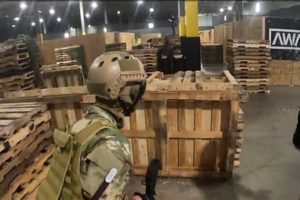
The discharge of projectiles in airsoft simulates ballistic activity for recreational and training purposes. This process involves a compressed gas, typically CO2 or green gas, or a spring-piston mechanism propelling a small, spherical plastic pellet from a replica firearm.
The importance lies in providing a safe and controlled environment for tactical simulations, marksmanship practice, and team-building exercises. Its historical context traces back to Japan, where it emerged as a response to strict firearm ownership laws, offering an alternative for realistic firearms training and wargaming scenarios. It has evolved into a globally recognized sport and training tool.
The subsequent discussion will address various aspects including the mechanics of different propulsion systems, safety protocols associated with the activity, and the legal considerations governing its practice in different jurisdictions.
Enhancing Performance and Safety
The following recommendations are intended to maximize effectiveness and mitigate potential risks associated with the activity. Adherence to these guidelines is crucial for both individual performance and the collective safety of participants.
Tip 1: Weapon Maintenance. Regular cleaning and lubrication of the internal mechanisms are essential for consistent performance and preventing malfunctions. A well-maintained replica firearm will exhibit greater accuracy and reliability.
Tip 2: Projectile Quality. Utilizing high-quality, seamless projectiles minimizes the risk of barrel jams and enhances accuracy. Variation in projectile size and shape can significantly impact trajectory and consistency.
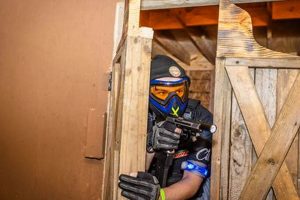
Tip 3: Protective Gear. Full-face protection, including eye protection rated to withstand impact, is non-negotiable. Additional protective gear, such as vests and gloves, is advisable for mitigating potential injuries.
Tip 4: Tactical Positioning. Employing strategic positioning and cover is crucial for minimizing exposure to opposing forces. Understanding terrain and utilizing available cover effectively enhances survivability and tactical advantage.
Tip 5: Communication. Clear and concise communication within a team is paramount for coordinated movement and effective tactical execution. Established communication protocols enhance situational awareness and responsiveness.
Tip 6: Adherence to Field Rules. Strict adherence to established field rules and regulations is essential for maintaining a safe and fair playing environment. Disregard for these rules can result in penalties or exclusion from the activity.
Tip 7: Understanding Propulsion Systems. Familiarization with the specific propulsion system of a replica firearm, whether gas-powered or spring-operated, enables informed maintenance and optimized performance. Different systems require specific maintenance procedures and handling techniques.
By implementing these tips, participants can significantly improve their performance, enhance their safety, and contribute to a more positive and responsible experience. Understanding the nuances of the activity is critical for long-term enjoyment and responsible engagement.
The subsequent sections will delve into legal considerations and ethical responsibilities surrounding this activity.
1. Projectile Trajectory

The path of a projectile in airsoft is fundamentally linked to its discharge. The initial velocity, imparted by either compressed gas or a spring mechanism, sets the foundation for the trajectory. However, external factors, most notably gravity and air resistance, exert constant influence, causing the projectile’s path to deviate from a perfectly straight line. This deviation is a key aspect to consider. The understanding and manipulation of trajectory are critical for achieving accuracy and consistency. For example, a player aiming at a distant target must account for the downward curve of the projectile’s flight, adjusting the aim point accordingly. The effectiveness is directly tied to an appreciation of trajectory.
A crucial element in managing projectile trajectory is the hop-up unit. This mechanism imparts backspin to the projectile, generating lift and extending its effective range by counteracting the effects of gravity. The angle and pressure applied by the hop-up rubber influence the trajectory significantly. Improperly adjusted hop-up can result in projectiles curving upwards or downwards excessively, rendering them inaccurate. Seasoned players fine-tune the hop-up based on projectile weight and environmental conditions to optimize trajectory for various engagement distances. A real-world example: adjusting the hop-up based on projectile weight influences travel distance.
Mastery of trajectory is not merely a matter of theoretical understanding but a practical skill honed through experience. Through consistent practice and observation, players develop an intuitive sense of how to compensate for trajectory drop and wind drift, enhancing hit probability. By understanding the complex interaction between initial velocity, hop-up adjustment, and environmental factors, players can effectively control the trajectory of projectiles, maximizing performance and achieving superior outcomes within this simulated combat activity.
2. Gas Pressure Regulation

Gas pressure regulation is a critical factor governing the consistency and performance of gas-powered replica firearms. Maintaining a stable pressure output is essential for achieving predictable projectile velocity and accuracy.
- Role of Regulators
Regulators maintain consistent pressure output from gas sources, such as CO2 or green gas canisters. Without a regulator, pressure can fluctuate with temperature and usage, leading to inconsistent projectile velocity and reduced accuracy. Regulators mitigate this by maintaining a consistent pressure feed to the replica’s firing mechanism. The absence of this regulation will significantly impact performance.
- Internal Valve Systems
Within the replica itself, valve systems control the flow of gas to propel the projectile. These valves must operate reliably to release a consistent volume of gas with each shot. Malfunctioning or poorly designed valves can lead to pressure variations, negatively affecting projectile velocity and shot-to-shot consistency. Valve performance is a key determinant of consistency.
- Temperature Sensitivity
The pressure of compressed gases is temperature-dependent. Warmer temperatures increase pressure, while colder temperatures decrease it. This can lead to variations in projectile velocity, especially during outdoor engagements where temperature fluctuations are common. Players may need to adjust pressure settings based on temperature to maintain consistent performance. A change in weather requires a pressure check.
- Maintenance and Calibration
Regular maintenance and calibration of gas pressure regulation systems are crucial for ensuring reliable performance. This includes cleaning valves, inspecting seals for leaks, and adjusting regulator settings as needed. Neglecting maintenance can lead to pressure inconsistencies, decreased accuracy, and potential damage to the replica firearm. Proper care ensures consistent performance.
In summary, gas pressure regulation is a fundamental element in gas-powered replica firearms. Effective regulation ensures consistent projectile velocity, contributing to improved accuracy and overall performance. Ignoring the principles of gas pressure will negatively impact overall performance in any scenario.
3. Spring tension consistency

Spring tension consistency is a critical factor influencing the performance of spring-powered replica firearms. Variations in spring tension directly affect the force applied to the piston, subsequently impacting the projectile’s velocity and, consequently, its trajectory. Ensuring consistent spring tension is, therefore, paramount for achieving accuracy and predictable shot placement.
- Material Fatigue and Spring Degradation
Over time, the repeated compression and expansion of a spring can lead to material fatigue. This fatigue results in a gradual reduction in spring tension, leading to decreased projectile velocity. For example, a replica firearm used frequently over an extended period will likely exhibit a noticeable decrease in power output as the spring weakens. This degradation necessitates periodic spring replacement to maintain optimal performance. Inconsistent performance will be noticeable with spring degradation.
- Manufacturing Tolerances and Spring Quality
The consistency of spring tension is also influenced by manufacturing tolerances and the quality of the spring material. Variations in wire diameter, coil spacing, and heat treatment processes can lead to inconsistencies in spring tension, even among springs of the same nominal specification. Higher-quality springs, manufactured with tighter tolerances and superior materials, exhibit greater consistency and durability. Substandard springs can cause accuracy issues and inconsistent shot power.
- Environmental Factors and Temperature Sensitivity
Environmental factors, such as temperature, can also affect spring tension. Extreme temperatures can cause changes in the spring’s elastic properties, leading to variations in performance. For example, in cold environments, a spring may become stiffer, resulting in reduced projectile velocity. Conversely, in hot environments, a spring may become more flexible, potentially increasing velocity. While less pronounced than in gas-powered systems, temperature can still influence spring-powered replica firearm performance. External elements affect outcomes.
- Maintenance and Lubrication
Proper maintenance and lubrication can help mitigate the effects of friction and wear on the spring, contributing to greater consistency in tension. Applying a thin layer of silicone grease to the spring can reduce friction within the cylinder assembly, allowing for smoother piston movement and more consistent energy transfer. Neglecting lubrication can lead to increased friction, decreased projectile velocity, and accelerated spring wear. Spring maintenance extends the life of airsoft guns.
In conclusion, spring tension consistency is a fundamental aspect of spring-powered replica firearm performance. Factors such as material fatigue, manufacturing tolerances, environmental conditions, and maintenance practices all play a role in influencing spring tension and, ultimately, the accuracy and reliability. Recognizing and addressing these factors is essential for optimizing performance and ensuring a consistent experience.
4. Hop-up adjustment

Hop-up adjustment is a critical element in optimizing projectile trajectory during operation. This adjustment controls a small rubber nub or bucking within the replica firearm that applies backspin to the projectile as it exits the barrel. The backspin creates a Magnus effect, generating lift and extending the projectile’s range by counteracting gravity. Without proper adjustment, the projectile will drop significantly over distance, limiting accuracy and effective range.
The relationship between hop-up adjustment and projectile trajectory is direct: increased backspin results in a flatter trajectory and extended range, up to a point. Over-adjusting the hop-up, however, causes the projectile to rise excessively, reducing accuracy. The optimal adjustment depends on several factors, including projectile weight, replica firearm power, and environmental conditions such as wind. Field conditions often dictate adjustments. A player using heavier projectiles, for instance, requires more hop-up to achieve the same trajectory as a player using lighter projectiles. Similarly, windy conditions may necessitate slight adjustments to counteract wind drift. In a practical scenario, a sniper might fine-tune the hop-up based on observed projectile behavior during test shots before engaging targets at varying distances.
Mastering hop-up adjustment requires a combination of theoretical understanding and practical experience. Players must learn to recognize the signs of improper adjustment, such as excessive drop or upward curving of the projectile, and make incremental adjustments accordingly. A properly adjusted hop-up is essential for achieving consistent accuracy and maximizing effective range, contributing significantly to overall performance. The ability to fine-tune hop-up enhances the operator’s performance in any engagement scenario.
5. Barrel Length Influence

The length of the internal barrel directly impacts projectile performance. The duration for which compressed gas propels the projectile, and therefore the achievable velocity and accuracy, is contingent on the barrel’s dimensions. Shorter barrels may offer advantages in maneuverability, while longer barrels potentially enhance precision at extended ranges. Understanding this interplay is crucial for optimizing replica firearms for specific scenarios.
- Velocity Modulation
The length of the barrel dictates the time the projectile is subjected to the accelerating force of the expanding gas. A longer barrel allows for more prolonged acceleration, theoretically resulting in higher velocities, up to a certain point. Beyond this point, frictional forces may negate any further velocity gains. For instance, increasing barrel length from 200mm to 400mm may yield a noticeable increase in velocity, while extending it to 600mm might produce negligible improvement, or even a decrease due to increased friction. The relationship is curvilinear.
- Accuracy Potential
Longer barrels inherently possess a longer sight radius, potentially aiding in aiming accuracy. The extended length can also contribute to stabilizing the projectiles flight path, reducing deviations caused by imperfections in the projectile or air turbulence. An example would be a sniper rifle replica with a long barrel providing greater inherent stability for long-range engagements compared to a short-barreled carbine replica.
- Gas Efficiency Considerations
While longer barrels can potentially increase velocity, they also require a greater volume of gas to effectively propel the projectile. This increased gas consumption can reduce the number of shots achievable per gas canister or battery charge in electric-powered replicas. Conversely, shorter barrels offer improved gas efficiency, allowing for more shots per gas source. A sidearm replica often has a shorter barrel to conserve gas.
- Maneuverability Trade-offs
Longer barrels, while potentially enhancing accuracy, can compromise maneuverability, particularly in close-quarters environments. Replica firearms with extended barrels are more cumbersome to wield in confined spaces, hindering quick target acquisition and transitions. Conversely, shorter barrels provide enhanced maneuverability, facilitating rapid movement and target engagement in close-quarters scenarios. Choosing the right barrel length demands balancing accuracy and maneuverability.
The selection of barrel length involves a trade-off between potential velocity and accuracy gains and the practical considerations of maneuverability and gas efficiency. The ideal barrel length is contingent upon the intended use of the replica firearm and the prevailing engagement environment. Tactical decisions must be weighed against weapon configuration.
6. Trigger response time

Trigger response time represents a critical performance metric directly impacting the effectiveness of replica firearms. The temporal duration between trigger actuation and projectile discharge dictates the speed with which a player can engage targets, influencing tactical advantage and hit probability.
- Mechanical Latency
Mechanical latency encompasses the physical movement and engagement of internal components within the firing mechanism. Factors such as spring tension, sear engagement, and the mass of moving parts contribute to the overall mechanical delay. For example, a replica with a worn or improperly adjusted sear may exhibit increased trigger travel and a sluggish response. Minimizing mechanical latency enhances responsiveness and facilitates rapid follow-up shots.
- Electrical System Delays
In electric-powered replicas, electrical system delays constitute a significant component of the overall response time. The time required for the motor to spin up, engage the gears, and compress the spring contributes to the delay between trigger pull and projectile release. Upgrading to a high-torque motor or optimizing the electrical wiring can reduce these delays, resulting in a quicker response. Modifications to the wiring and motor are important considerations.
- Battery Performance Influence
The performance of the battery directly affects the electrical system’s ability to deliver power to the motor. A battery with insufficient voltage or a high internal resistance will result in a slower motor spin-up and a diminished trigger response. Utilizing a high-discharge battery with adequate capacity ensures consistent power delivery, maximizing responsiveness and minimizing delay. Investing in high quality batteries is critical.
- Programmable Electronic Control Units (ECUs)
Programmable ECUs offer advanced control over the firing cycle, allowing for fine-tuning of trigger sensitivity and pre-cocking functionality. Pre-cocking involves partially compressing the spring prior to trigger pull, reducing the distance the piston must travel and minimizing response time. Configuring the ECU settings to optimize trigger sensitivity and utilize pre-cocking effectively enhances responsiveness and provides a competitive edge. Fine tuning enhances performance.
The interplay of these factors ultimately determines the overall trigger response time. Minimizing mechanical latency, optimizing electrical system performance, utilizing appropriate battery technology, and leveraging the capabilities of programmable ECUs are all crucial for achieving a responsive and competitive edge. These considerations are key for operational effectiveness.
7. Effective range limitation

The discharge of projectiles is inherently constrained by the principles of physics, thereby establishing an effective range limitation. This limitation represents the maximum distance at which a projectile can consistently and reliably impact a target with sufficient force to register. It is not simply a measure of how far a projectile can travel, but rather a quantification of the range at which accuracy and impact energy are maintained at an acceptable level. Factors contributing to range restriction include projectile weight, velocity, air resistance, and the Magnus effect induced by hop-up systems. For example, lighter projectiles, while exhibiting higher initial velocities, are more susceptible to wind drift and air resistance, resulting in a shorter reach. A real-world example: a field designating a maximum engagement distance of 150 feet reflects an explicit acknowledgment of this limitation.
Effective range limitation is paramount for safety and fair play. Exceeding this distance introduces ethical concerns regarding the potential for unintended harm, as projectiles fired at extended ranges may lack the energy required to trigger the appropriate response while still posing a risk of eye injury or other superficial harm. Furthermore, engagements beyond the specified effective range compromise the integrity of gameplay by relying on chance rather than skill. Field regulations often stipulate minimum engagement distances for high-powered replicas to prevent excessive close-range impacts. The establishment of clearly defined boundaries is fundamental to ethical engagement.
Understanding effective range limitation and its connection is crucial for responsible participation. The adherence to established range restrictions, combined with a comprehensive understanding of the factors influencing projectile trajectory and energy, is essential for fostering a safe and fair environment. Challenges in range estimation and the variability of environmental conditions necessitate constant awareness and adaptation. This aspect remains a key component within the broader framework of safety and ethical responsibility.
Frequently Asked Questions About Projectile Discharge in Airsoft
The following section addresses common queries surrounding the operation of replica firearms and the discharge of projectiles within the context of the sport. Clarification of these points promotes a safer and more informed environment.
Question 1: What constitutes safe projectile velocity?
Safe projectile velocity varies depending on field regulations and replica firearm type. Common velocity limits range from 300 to 400 feet per second (FPS) with 0.20g projectiles, though specific limits may apply for sniper rifles or close-quarters engagements. Chronograph testing prior to engagement is essential to ensure compliance.
Question 2: What protective equipment is necessary?
Eye protection, specifically full-seal goggles or a mask rated to withstand projectile impact, is mandatory. Additional protective gear, such as face masks, vests, and gloves, is strongly recommended to minimize potential injury.
Question 3: How does hop-up affect range?
Hop-up applies backspin to the projectile, generating lift and extending its range. Proper hop-up adjustment is crucial for achieving optimal trajectory and accuracy. Over-adjustment or under-adjustment can negatively impact projectile flight.
Question 4: What is the ideal projectile weight for a given replica firearm?
The ideal projectile weight depends on the replica firearm’s velocity and intended use. Heavier projectiles offer greater stability and resistance to wind drift, while lighter projectiles provide higher initial velocities. Experimentation and chrono testing are recommended to determine the optimal weight.
Question 5: How does temperature affect gas-powered replica firearms?
Temperature significantly impacts the performance of gas-powered replica firearms. Colder temperatures reduce gas pressure, leading to decreased projectile velocity. Warmer temperatures increase gas pressure, potentially exceeding velocity limits. Adjustments to gas pressure or the use of different gas types may be necessary.
Question 6: What are the legal implications of using replica firearms?
Legal regulations governing replica firearms vary by jurisdiction. Some regions may require orange tips or specific markings to differentiate them from real firearms. It is imperative to understand and comply with all applicable laws and regulations.
This information clarifies essential aspects of operating replica firearms responsibly. Further exploration of specific topics is encouraged.
The next section will focus on the common techniques used by experienced operators.
Airsoft Firing
This exploration has dissected the mechanics, safety considerations, and performance-enhancing techniques associated with airsoft firing. The interplay between projectile trajectory, gas pressure regulation, spring tension consistency, hop-up adjustment, barrel length influence, trigger response time, and effective range limitation dictates operational success and responsible engagement. Understanding these facets is paramount for achieving consistent performance and mitigating potential risks.
Adherence to safety protocols and a comprehensive understanding of equipment functionality are critical for fostering a responsible and enjoyable environment. Continued education and a commitment to ethical engagement will ensure the longevity and positive perception of airsoft firing as a recreational and training activity. Responsible practices today will determine the future of the sport.