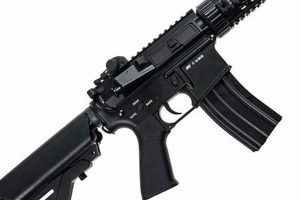
This refers to a type of replica firearm designed for airsoft games and training. These replicas are modeled after the iconic 1911 pistol design and are constructed with a significant amount of metal in their external components, providing a realistic weight and feel. They typically use compressed gas, such as CO2 or green gas, to propel 6mm plastic BBs.
The appeal of such models lies in their realistic appearance and handling, which enhances the overall experience for airsoft enthusiasts. The heft and metallic construction offer a more authentic representation of the firearm they imitate, contributing to immersion during gameplay or training scenarios. The 1911 platform itself has a rich history, making replicas desirable for collectors and those interested in military or firearms history.
Understanding the construction, operation, and potential applications of these replicas is crucial before acquisition or use. Factors like gas type compatibility, maintenance requirements, and safe handling practices are important considerations for both new and experienced users.
Airsoft 1911 Full Metal
The following provides critical guidance for the responsible ownership, operation, and upkeep of airsoft replicas based on the 1911 platform and constructed with a full metal body. Proper adherence to these points ensures longevity, performance, and safe handling.
Tip 1: Gas Compatibility Verification: Prior to operation, confirm the replica is compatible with the intended gas type. Utilizing incompatible gases can cause damage to internal components, leading to malfunctions and potential safety hazards. Consult the manufacturer’s specifications for approved propellant options.
Tip 2: Magazine Maintenance: Airsoft magazines require regular cleaning and lubrication. Debris and lack of lubrication can impede BB feeding. Disassemble magazines periodically, clean internal components, and apply a thin layer of silicone oil to the follower and internal walls.
Tip 3: Barrel Cleaning: Regular barrel cleaning is essential for accuracy and consistent performance. Use a cleaning rod and appropriate cleaning patches to remove residue and debris from the barrel’s internal surface. This should be done after each use or during extended periods of storage.
Tip 4: Silicone Oil Application: Internal components, particularly O-rings and seals, require periodic lubrication with silicone oil. This prevents drying and cracking, maintaining airtight seals necessary for proper gas pressure and consistent velocity. Apply sparingly to avoid excessive build-up.
Tip 5: Storage Practices: When not in use, store the replica in a cool, dry environment away from direct sunlight and extreme temperatures. Remove the magazine and ensure the replica is not loaded. Consider using a padded case to protect against physical damage during storage or transport.
Tip 6: Disassembly Caution: Disassembly should only be performed by individuals with the appropriate knowledge and skills. Improper disassembly can damage internal components and void warranties. Refer to the manufacturer’s instructions or seek assistance from a qualified technician.
Tip 7: Secure Transportation: When transporting, always use a case or bag designed for firearms or replicas. Follow all local laws and regulations regarding the transportation of airsoft devices. Keep magazines unloaded and ideally separate from the replica during transport.
Adhering to these guidelines will maximize the lifespan, performance, and safety of the airsoft replica. Regular maintenance and responsible handling are crucial for a positive and safe experience.
Attention to these details will lead to the safe and responsible enjoyment of this type of airsoft replica.
1. Realistic Weight

The realistic weight is an important attribute. A full-metal construction significantly contributes to the overall weight of the replica, closely mimicking the feel of the actual firearm. This has direct implications for handling. A heavier replica requires more physical exertion to manipulate, improving realism during training exercises and simulations.
The connection between a metal body and a heavier weight goes beyond mere imitation. The added heft provides improved balance, making it easier to maintain a stable grip and sight alignment. This can lead to enhanced accuracy and control during gameplay or target practice. Conversely, a lighter-weight replica, while potentially less fatiguing, may lack the stability and recoil absorption offered by a heavier, metal-constructed model. For example, scenarios involving rapid target acquisition or simulated recoil would benefit from a replica with a more substantial weight.
The impact of realistic weight on the handling and overall experience of an airsoft replica should not be underestimated. Selecting a model with a suitable weight based on individual preferences and intended use is a crucial decision. While personal preferences vary, the correlation between a full-metal construction, realistic weight, and improved handling characteristics is evident and forms a significant factor in the appeal of the 1911 full metal type.
2. Gas Efficiency

In airsoft replicas modeled after the 1911 platform with a full metal construction, gas efficiency is a critical performance factor. These replicas typically rely on compressed gas, such as CO2 or green gas, to propel BBs. Gas efficiency dictates the number of shots a single gas charge can deliver, directly impacting gameplay continuity and operational cost.
The full metal construction of these replicas can affect gas efficiency in several ways. The metal slide and frame require more gas to cycle compared to lighter polymer alternatives. A heavier slide necessitates a stronger gas pressure to initiate blowback action, potentially reducing the number of shots per gas charge. Conversely, a properly sealed and well-maintained metal replica may exhibit improved gas efficiency due to tighter tolerances and reduced gas leakage. For example, a leaking magazine or a damaged O-ring will negatively affect gas efficiency, resulting in reduced velocity and fewer shots.
Understanding gas efficiency is essential for optimizing the performance of airsoft replicas. Players can improve gas efficiency by using high-quality gas, maintaining the replica properly, and ensuring all seals are intact. Selecting a model with a reputation for gas efficiency is also a key consideration for players who prioritize minimizing gas consumption during extended gameplay. Addressing these aspects is integral to optimizing performance.
3. Material Durability
Material durability is a paramount consideration for airsoft replicas based on the 1911 platform and constructed with full metal bodies. The operational environment for these devices often involves exposure to impacts, abrasion, and varying weather conditions. Inadequate material durability directly correlates to reduced operational lifespan, increased maintenance requirements, and potential safety risks. The full metal construction, while contributing to realism and weight, must be composed of alloys engineered to withstand the stresses of repeated cycling, gas pressure, and physical handling.
Real-world examples illustrate the practical significance of material selection. Zinc alloys, while cost-effective, exhibit lower tensile strength and corrosion resistance compared to steel or aluminum alloys. Consequently, zinc alloy components are more susceptible to cracking, deformation, and surface degradation under stress, leading to malfunctions and reduced accuracy. Conversely, models constructed from high-grade steel or reinforced aluminum offer superior resistance to wear and tear, extending their service life and maintaining performance integrity over time. The selection of appropriate materials directly influences the longevity, reliability, and overall cost-effectiveness.
In conclusion, the interplay between material durability and the long-term viability of airsoft replicas featuring the 1911 full metal design is undeniable. Addressing this involves employing appropriate alloys and manufacturing processes to ensure resilience and resistance to operational stressors. While initial costs may be higher, the increased durability translates to reduced maintenance expenses and an extended operational lifespan, representing a more sustainable and reliable investment. Choosing a manufacturer that prioritizes robust materials is essential for optimal performance.
4. Field regulations
Field regulations exert a considerable influence on the usability of airsoft replicas modeled after the 1911 platform and constructed with full metal bodies. These regulations, established by individual airsoft fields or organizations, dictate permissible velocity limits, minimum engagement distances, and equipment restrictions. An airsoft replica exceeding the field’s velocity limit, typically measured in feet per second (FPS) with a 0.20g BB, will be prohibited from use, irrespective of its realistic appearance or construction quality. Variations in regulations from field to field necessitate careful consideration before selecting a replica.
The presence of a full metal body does not inherently dictate compliance with field regulations. While the metal construction contributes to a replica’s weight and realism, the critical factor determining legality is its FPS output. For example, a full metal 1911 replica capable of firing at 400 FPS may be permissible at one field, while prohibited at another with a 350 FPS limit. This variance underscores the importance of chronoing the replica prior to gameplay at each specific field to ensure compliance. Adherence to minimum engagement distances is also critical to prevent injury and maintain fair play. Certain fields may restrict the use of high-powered replicas at close range, mandating the use of sidearms or limiting engagement distances to a set minimum.
In summary, understanding and adhering to field regulations are essential for responsible participation in airsoft activities. The selection of an airsoft replica modeled after the 1911 with a full metal body requires careful consideration of its FPS output and compliance with the specific regulations of the intended field. Failure to comply can result in exclusion from gameplay and potential safety hazards. Prior verification and adherence to established rules are crucial.
5. Maintenance schedule

The longevity and operational reliability of airsoft replicas designed after the 1911 and constructed with full metal bodies are intrinsically linked to adherence to a consistent maintenance schedule. The all-metal construction, while enhancing realism and durability to a degree, also presents specific maintenance challenges. The increased mass of the metal components subjects internal mechanisms to greater stress during operation. Regular maintenance mitigates wear, prevents malfunctions, and ensures consistent performance. Failure to implement a maintenance schedule will accelerate component degradation and diminish the lifespan.
A comprehensive schedule includes regular cleaning, lubrication, and inspection. Cleaning removes accumulated dirt and debris that can impede mechanical function, especially within the barrel and gas delivery system. Lubrication of moving parts minimizes friction, reducing wear and improving the smoothness of operation. Inspection allows for the early detection of worn or damaged components, enabling timely replacement and preventing more extensive damage. Examples include inspecting O-rings for cracks, checking the magazine for proper sealing, and verifying the integrity of the hop-up unit. Neglecting these steps leads to diminished accuracy, reduced gas efficiency, and potential catastrophic failures. For instance, a dry O-ring can rupture under gas pressure, requiring complete disassembly and replacement.
In conclusion, a well-defined maintenance schedule is not merely an optional practice but a necessity for owners of 1911-style airsoft replicas with full metal construction. The investment of time and resources in regular upkeep translates directly into enhanced reliability, extended lifespan, and sustained performance. Prioritizing maintenance mitigates risks associated with component failure, ensuring both the functionality and safe operation of the airsoft replica.
Frequently Asked Questions
The following addresses common inquiries regarding airsoft replicas of the 1911 pistol platform, specifically those featuring full metal construction. The information is intended to provide clarity on key aspects of ownership and operation.
Question 1: What distinguishes a “full metal” airsoft 1911 from other types?
The designation “full metal” indicates that the primary external components, such as the slide, frame, and often smaller details, are constructed from metal alloys rather than polymer or plastic. This contributes to a more realistic weight, feel, and aesthetic appearance compared to non-metal counterparts.
Question 2: Does a full metal construction guarantee enhanced durability?
While metal construction generally improves durability compared to plastic, the specific alloy used and the manufacturing process are critical factors. Higher-grade alloys and precise manufacturing yield superior resistance to wear and tear. Durability is not solely determined by material but also by overall design and quality control.
Question 3: How does the full metal construction affect gas efficiency?
The heavier slide and frame of a full metal model may require more gas to cycle during each shot. This can potentially reduce the number of shots obtainable per gas charge compared to lighter models. However, proper maintenance and efficient internal components can mitigate this effect.
Question 4: Are there specific maintenance requirements for full metal airsoft 1911 replicas?
Yes. The metal components necessitate regular cleaning and lubrication to prevent corrosion and ensure smooth operation. Special attention should be paid to the slide rails, magazine well, and other areas where metal parts interface. Silicone oil is generally recommended for lubrication.
Question 5: Does a full metal construction automatically make an airsoft 1911 more accurate?
Not necessarily. Accuracy is primarily determined by the quality of the inner barrel, hop-up unit, and consistency of gas pressure. While the added weight of a full metal construction may provide a more stable shooting platform, it does not directly guarantee improved accuracy.
Question 6: Are full metal airsoft 1911 replicas legal in all locations?
Regulations governing airsoft devices vary significantly by jurisdiction. Prior to purchase and use, it is imperative to consult local laws and regulations regarding the ownership, transportation, and use of airsoft replicas. Compliance with all applicable laws is the sole responsibility of the user.
The information provided serves as a general guideline. Users should always refer to the manufacturer’s instructions and consult with experienced airsoft technicians for specific maintenance and operational advice.
Continuing this exploration, the next section will discuss aftermarket upgrades and modifications.
Conclusion
The preceding discussion has explored critical aspects of airsoft replicas modeled after the 1911 pistol platform and constructed with full metal bodies. These replicas represent a specific segment within the broader airsoft market, distinguished by their emphasis on realistic weight, feel, and aesthetic authenticity. Considerations such as gas efficiency, material durability, field regulations, and maintenance schedules are paramount for informed ownership and responsible operation. The full metal construction, while contributing to realism, necessitates diligent maintenance practices to ensure longevity and consistent performance.
Potential purchasers and current owners are encouraged to approach this type of airsoft replica with a comprehensive understanding of its inherent characteristics and associated responsibilities. Continued adherence to safe handling practices, regular maintenance procedures, and compliance with local regulations remains essential for maximizing the enjoyment and minimizing potential risks associated with these devices. The informed user ensures the continued responsible participation in the sport of airsoft.