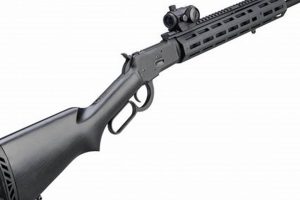
An airsoft gun that utilizes an electric motor to power a piston and subsequently propel projectiles is a common type within the broader airsoft sport. These devices typically employ rechargeable batteries to drive an internal gearbox mechanism. This mechanism cycles, pulling back a spring and releasing it to force air through a barrel, launching a plastic BB. This system contrasts with gas-powered or spring-powered alternatives.
The prevalence of this particular type stems from its combination of ease of use, consistent performance, and versatility. The mechanisms offer a higher rate of fire compared to spring-powered options, and a generally more stable output compared to gas-powered variants, especially under varying temperature conditions. Historically, early models faced challenges in battery life and reliability, but advancements in battery technology and gearbox design have significantly improved their operational characteristics.
The following sections will delve into specific aspects of these devices, including their internal components, the range of available models, maintenance considerations, and their role in the wider airsoft landscape.
Electric Airsoft Device Optimization
Maximizing the performance and lifespan of a powered airsoft replica requires adherence to best practices. The following tips provide guidance on maintenance, operation, and upgrades.
Tip 1: Battery Management: Consistent battery maintenance is crucial. Overcharging or allowing batteries to fully discharge can significantly reduce their lifespan. Use a smart charger with automatic cutoff capabilities.
Tip 2: Gearbox Lubrication: Regular lubrication of internal gearbox components minimizes friction and wear. Use silicone-based lubricants specifically designed for airsoft mechanisms. Disassembly and re-lubrication should occur periodically, dependent on usage frequency.
Tip 3: Barrel Cleaning: Fouling within the barrel impacts accuracy and range. A cleaning rod and silicone-based cleaning solution should be used to remove debris and residue from the barrel’s inner surface after each skirmish or extended use.
Tip 4: Motor Maintenance: Brushes within the motor wear over time. Inspect brushes periodically and replace them when they become excessively worn. Consider upgrading to a high-torque motor for improved trigger response and reliability.
Tip 5: Hop-Up Adjustment: The hop-up unit imparts backspin to the projectile, extending its range. Proper adjustment is essential for accuracy. Experiment with small adjustments until the optimal trajectory is achieved for the specific BB weight used.
Tip 6: Storage Considerations: When not in use, store the device in a cool, dry environment away from direct sunlight. Remove the battery to prevent slow discharge and potential damage. A protective case is recommended to prevent physical damage during storage and transport.
Tip 7: Upgrade Cautiously: While upgrades can enhance performance, ensure compatibility between components. Upgrading the spring without addressing other parts, for example, can lead to premature wear or failure of the gearbox. Consult with experienced technicians before undertaking significant modifications.
Adhering to these guidelines ensures reliable operation and maximizes the investment in an airsoft device.
The subsequent discussion will examine common issues encountered and troubleshooting strategies.
1. Gearbox Mechanics

The gearbox is the central operational unit within an electrically powered airsoft replica. Its design and construction directly influence the device’s performance, reliability, and longevity. Understanding gearbox mechanics is therefore essential for effective maintenance, troubleshooting, and potential performance upgrades.
- Piston Assembly and Air Compression
The piston assembly, driven by the motor and gears, compresses air within the cylinder. The efficiency of this compression directly impacts the projectile’s velocity and range. Variations in piston head design, cylinder porting, and air seal contribute to differences in performance characteristics across various models. Incorrect assembly or damaged components within the piston assembly will lead to inconsistent or reduced power output.
- Gear Train and Motor Interface
The gear train transmits power from the electric motor to the piston assembly. The gear ratio influences the rate of fire and the amount of torque applied to the piston. Different gear materials and manufacturing tolerances affect durability and efficiency. Improper shimming of the gears, or use of incompatible gears, can lead to premature wear and gearbox failure. The motor type and its interaction with the gear train determines the trigger response and overall energy consumption.
- Trigger Mechanism and Electrical Contacts
The trigger mechanism initiates the firing sequence by completing an electrical circuit, powering the motor. The quality and design of the electrical contacts influence trigger response and minimize electrical resistance. Over time, contacts can become corroded or damaged, leading to intermittent firing or complete failure. Upgraded trigger mechanisms often incorporate MOSFETs (Metal-Oxide-Semiconductor Field-Effect Transistors) to improve electrical efficiency and protect the contacts.
- Cut-Off Lever and Cycling Control
The cut-off lever is a critical component responsible for regulating the firing cycle, allowing for semi-automatic or fully automatic operation. It interacts with the sector gear to interrupt the electrical circuit at the appropriate point in the cycle. Malfunctions of the cut-off lever can result in uncontrolled firing or failure to complete the cycle, preventing subsequent shots. Its proper adjustment and functionality are crucial for reliable operation.
The interplay of these components dictates the overall functionality of an electric airsoft device. A thorough understanding of these mechanics enables users to diagnose issues effectively and implement appropriate solutions, maximizing the lifespan and performance of their equipment. The gearbox represents a critical link between the electric motor and the pneumatic propulsion of the BB, highlighting its significance.
2. Battery Technology

Battery technology is a fundamental element in the operation and performance of airsoft replicas utilizing electric power. The advancements and limitations in battery technology directly influence the rate of fire, trigger response, operational lifespan, and overall reliability of these devices. Choosing the appropriate battery type and adhering to proper usage guidelines are crucial for optimal performance and longevity.
- Nickel-Metal Hydride (NiMH) Batteries
NiMH batteries were a common power source in earlier airsoft replicas due to their relative affordability and high discharge rate capabilities. However, they exhibit a higher self-discharge rate compared to more modern chemistries and require careful management to avoid memory effects. They are more tolerant to overcharging than Nickel-Cadmium (NiCd) batteries but still necessitate proper charging procedures. Their usage is diminishing in favor of lithium-based alternatives offering superior energy density.
- Lithium Polymer (LiPo) Batteries
LiPo batteries offer significantly higher energy density and discharge rates compared to NiMH batteries, resulting in improved trigger response and rate of fire in electric airsoft devices. They are lighter and more compact for the same energy capacity. However, LiPo batteries are more sensitive to overcharging, over-discharging, and physical damage, requiring specialized chargers and careful handling. The use of a Battery Management System (BMS) or low-voltage alarm is crucial to prevent irreversible damage. Their widespread adoption has greatly enhanced the performance capabilities of electric airsoft equipment.
- Lithium Iron Phosphate (LiFePO4) Batteries
LiFePO4 batteries represent a safer alternative to LiPo batteries, exhibiting greater thermal stability and reduced risk of fire or explosion. While they offer slightly lower energy density and discharge rates compared to LiPo batteries, their increased safety and longer lifespan make them a viable option for users prioritizing safety and longevity. They also require dedicated chargers designed for the specific charging profile of LiFePO4 chemistry.
- Voltage and Capacity Considerations
The voltage of the battery directly influences the motor speed and overall performance of the electric airsoft device. Higher voltage batteries generally result in a faster rate of fire and improved trigger response, but can also increase stress on internal components. The capacity of the battery, measured in milliampere-hours (mAh), determines the runtime of the device. Selecting a battery with the appropriate voltage and capacity for the specific airsoft replica and intended usage is essential for optimal performance and reliability. Using a battery exceeding the recommended voltage can lead to gearbox damage.
The selection and maintenance of battery technology are critical aspects of utilizing airsoft replicas powered by electricity. The trade-offs between cost, performance, safety, and lifespan must be carefully considered when choosing a battery type. As battery technology continues to evolve, further advancements are expected to impact the performance and capabilities of these devices. The evolution of battery technology directly drives performance improvements and broadens the appeal of these replicas in the airsoft community.
3. Rate of Fire

The rate of fire (ROF), measured in rounds per minute (RPM), is a significant performance characteristic of airsoft replicas utilizing electrical power. It quantifies the speed at which the device can discharge projectiles. The electric motor, gearbox, and battery system collectively determine the ROF. A higher ROF can provide a tactical advantage in certain gameplay scenarios, allowing for increased suppressive fire and rapid target engagement. However, achieving a high ROF necessitates careful consideration of component compatibility and potential increases in wear and tear. The effective ROF is also influenced by magazine capacity and reloading speed.
Examples of real-world scenarios illustrate the practical importance of understanding ROF. In close-quarters battle (CQB) environments, a higher ROF allows for aggressive maneuvering and rapid engagement of multiple opponents. Conversely, in open-field scenarios, a more controlled ROF may be preferable to conserve ammunition and maintain accuracy over longer distances. Achieving a balance between ROF, accuracy, and ammunition consumption is critical for optimizing performance in diverse gameplay situations. Upgrading internal components, such as the motor or gears, can increase the ROF, but such modifications must be approached cautiously to avoid compromising the device’s reliability or exceeding field limits.
In summary, the rate of fire is a crucial performance metric directly influenced by the electrical and mechanical systems within powered airsoft devices. Optimizing the ROF for specific gameplay scenarios requires careful consideration of component compatibility, ammunition management, and the potential impact on device longevity. While a higher ROF can offer tactical advantages, a balanced approach that prioritizes reliability and accuracy is generally more effective. Improperly implemented modifications aimed at increasing the ROF can lead to premature wear or complete failure of critical components, highlighting the importance of informed decision-making.
4. Range and Accuracy

In the context of airsoft replicas powered by electric motors, range and accuracy represent critical performance parameters directly influencing their effectiveness in gameplay. Range, defined as the maximum distance a projectile can travel, and accuracy, representing the degree to which projectiles strike a consistent point of impact, are intrinsically linked to the design, components, and proper maintenance of these devices. The electric motor drives the internal mechanisms responsible for propelling the projectile; any inconsistencies or inefficiencies within this system directly affect the consistency of each shot, thus impacting both range and accuracy. A well-maintained and appropriately upgraded system will exhibit greater consistency in air compression and projectile launch, leading to improved performance in both categories. Conversely, wear and tear, improper lubrication, or mismatched components can introduce variability, resulting in decreased range and unpredictable shot placement. For example, a worn piston seal will allow air leakage, reducing the force with which the projectile is expelled, thereby diminishing range and potentially causing erratic trajectory.
The hop-up unit plays a crucial role in maximizing range and accuracy. This mechanism imparts backspin to the projectile, creating a lift force that counteracts gravity, allowing the projectile to travel further. Accurate adjustment of the hop-up is essential; over-hopping causes the projectile to rise excessively, while under-hopping results in a rapid drop. The quality of the hop-up bucking (the rubber component that contacts the projectile) significantly impacts consistency. A damaged or worn bucking can introduce inconsistencies in backspin, reducing accuracy. Real-world examples include scenarios where a correctly adjusted hop-up enables a player to accurately engage targets at extended distances, while a poorly adjusted hop-up results in missed shots and tactical disadvantage. Furthermore, the quality of the inner barrel contributes to accuracy. A tighter bore diameter and smoother inner surface can improve projectile stability, resulting in tighter groupings and increased precision. In contrast, a damaged or dirty barrel can introduce imperfections that disrupt the projectile’s flight path.
Understanding the interplay between range and accuracy is paramount for effective utilization of airsoft replicas propelled by electric power. Maximizing both parameters requires attention to detail in maintenance, component selection, and adjustment. Addressing factors such as air seal, hop-up performance, and barrel quality is essential for achieving consistent and predictable shot placement. Ultimately, the practical significance of this understanding lies in the enhanced ability to effectively engage targets, gain a tactical advantage, and improve overall performance in airsoft gameplay scenarios. Achieving a balance between range and accuracy allows a player to effectively engage targets at various distances and maintain consistent shot placement, leading to a more successful and enjoyable experience. The challenges associated with optimizing range and accuracy underscore the importance of continuous maintenance and a thorough understanding of the device’s internal mechanics.
5. Upgrade Potential
The inherent modularity of airsoft replicas propelled by electric mechanisms facilitates extensive customization and performance enhancement through component upgrades. This upgrade potential represents a significant factor influencing user adoption and long-term engagement with this type of airsoft device.
- Enhanced Gearbox Components
The internal gearbox, responsible for cycling and air compression, can be upgraded with reinforced gears, pistons, and springs. These upgrades enhance durability and increase the device’s ability to withstand higher stress loads associated with increased rates of fire or higher projectile velocities. For example, replacing stock gears with high-strength steel gears is a common upgrade to prevent premature wear or breakage when using a more powerful motor or spring. An upgraded piston with improved air seal contributes to more consistent power output, enhancing both range and accuracy.
- Motor Upgrades
The electric motor directly influences trigger response, rate of fire, and overall power output. Upgrading to a high-torque motor can improve trigger response and allow for the use of stronger springs without compromising performance. Examples include replacing a stock motor with a neodymium magnet motor, which provides increased torque and efficiency. This upgrade is particularly beneficial for users seeking faster trigger response in semi-automatic mode or a higher rate of fire in fully automatic mode.
- Hop-Up Unit Modifications
The hop-up unit, responsible for imparting backspin to the projectile, can be modified or replaced to improve range and accuracy. Upgrading to a precision hop-up unit with a more consistent adjustment mechanism allows for finer control over the projectile’s trajectory. Examples include replacing the stock hop-up bucking with a higher-quality rubber compound that provides a better seal and more consistent backspin. This upgrade is crucial for achieving optimal range and accuracy at various distances.
- Electronic Control Systems (ECUs)
Electronic Control Systems offer advanced features such as programmable firing modes, active braking, and MOSFET protection. These upgrades enhance the device’s functionality, protect internal components, and improve overall performance. For example, installing an ECU with active braking prevents overspin, resulting in more consistent shot-to-shot performance. MOSFETs protect the trigger contacts from damage caused by high current draw, extending the lifespan of the electrical system. These advanced electronic upgrades provide a significant enhancement to the user’s control over the device’s performance.
The upgrade potential inherent in airsoft devices propelled by electric power allows users to tailor the performance characteristics to suit specific gameplay styles and field requirements. The ability to modify and enhance internal components ensures that these devices remain adaptable and competitive within the evolving landscape of airsoft gaming.
6. Maintenance Needs
The operational longevity and consistent performance of airsoft devices utilizing electric power are directly contingent upon adherence to a structured maintenance regimen. Neglecting such maintenance can lead to diminished performance, increased component wear, and potential device failure. Therefore, a thorough understanding of necessary maintenance procedures is crucial for maximizing the investment in these devices.
- Gearbox Servicing and Lubrication
The gearbox, being the central mechanical component, requires periodic servicing. This includes disassembly, inspection for wear or damage, cleaning, and re-lubrication with appropriate silicone-based grease. A lack of lubrication increases friction, accelerating wear on gears, pistons, and other internal parts. Real-world examples include instances where neglected gearboxes exhibit stripped gears or cracked pistons, rendering the device inoperable. Regular servicing mitigates these risks and ensures smooth, efficient operation.
- Battery Care and Management
Batteries, particularly Lithium Polymer (LiPo) variants, demand specific care to maintain their performance and prevent hazardous conditions. Proper charging practices, including the use of balance chargers, are essential to avoid overcharging or undercharging, both of which can reduce battery life and increase the risk of fire. Storage conditions also play a role; batteries should be stored in a cool, dry place, ideally at a storage voltage. Neglecting these procedures can result in decreased capacity, reduced discharge rates, and, in extreme cases, thermal runaway. Implementing a consistent battery management protocol is vital for safe and reliable operation.
- Barrel Cleaning and Hop-Up Maintenance
The inner barrel and hop-up unit are critical for accuracy and range. The accumulation of dirt, debris, and residue within the barrel can disrupt projectile flight, reducing accuracy and range. Regular cleaning with a cleaning rod and appropriate solvent is necessary to maintain optimal performance. The hop-up bucking, the rubber component that imparts backspin, requires periodic inspection for wear or damage. A worn or torn bucking can lead to inconsistent backspin and reduced accuracy. Replacing the bucking as needed ensures consistent projectile trajectory and optimal range.
- Motor Brush Inspection and Replacement
The electric motor, responsible for driving the gearbox, utilizes brushes to conduct electricity to the armature. These brushes wear down over time due to friction. Periodic inspection and replacement of the brushes are necessary to maintain motor performance and prevent damage. Worn brushes can lead to reduced motor torque, slower trigger response, and eventually, complete motor failure. Replacing brushes as part of a regular maintenance schedule ensures consistent and reliable motor operation.
The aforementioned maintenance facets are intrinsically linked to the overall performance and longevity of electric airsoft devices. Consistent attention to these areas not only ensures optimal performance but also minimizes the risk of costly repairs and extends the operational lifespan of the equipment. Neglecting these maintenance needs ultimately translates to a diminished user experience and a reduced return on investment. A pro-active maintenance approach is paramount for sustained functionality and enjoyment of the airsoft activity.
7. Model Variations
The design and configuration of airsoft replicas powered by electric mechanisms exhibit significant variation, driven by factors such as intended gameplay roles, aesthetic preferences, and manufacturer-specific innovations. These variations represent more than mere cosmetic differences; they directly influence performance characteristics, operational ergonomics, and suitability for specific airsoft scenarios. The diversity in model variations addresses the broad spectrum of user requirements within the airsoft community. For example, compact carbine models prioritize maneuverability in close-quarters battle (CQB) environments, while longer rifle platforms emphasize accuracy and range for engagements in open field scenarios. These design choices reflect a deliberate tailoring of the device to optimize its performance within a defined operational context. The internal components, such as gearbox type, motor selection, and barrel length, are often modified or customized to complement the external design, ensuring a cohesive and balanced performance profile.
Examples of specific model variations underscore the practical implications of design choices. Replicas modeled after the M4 platform offer modularity and compatibility with a vast ecosystem of aftermarket accessories, appealing to users seeking customization options. Conversely, replicas of AK-pattern rifles often emphasize durability and reliability, even under adverse conditions. Sniper rifle variants incorporate features such as magnified optics and adjustable hop-up units to maximize long-range accuracy. The choice of model variation directly impacts the user’s tactical options and engagement capabilities on the airsoft field. A player equipped with a CQB-oriented model will excel in room-clearing scenarios, while a player using a sniper rifle variant will be more effective at providing overwatch and engaging targets at a distance.
In summary, the model variations of electric airsoft replicas reflect a dynamic interplay between design, performance, and intended use. These variations cater to a diverse range of player preferences and tactical requirements. Understanding the specific attributes of different model variations enables users to make informed purchasing decisions and optimize their equipment for specific gameplay scenarios. While aesthetic preferences play a role in model selection, a thorough consideration of performance characteristics and operational ergonomics is essential for maximizing effectiveness on the airsoft field. The ongoing development and refinement of model variations reflect the continued evolution of airsoft technology and the pursuit of enhanced performance and user experience.
Frequently Asked Questions
This section addresses common inquiries regarding airsoft devices propelled by electric power, offering concise and informative responses to enhance understanding and inform decision-making.
Question 1: What is the typical operational lifespan of an average device powered by electricity?
The operational lifespan varies significantly based on usage frequency, maintenance practices, and component quality. A well-maintained device can function effectively for several years, while neglected equipment may experience premature failure. Regular lubrication, proper battery care, and timely replacement of worn components are crucial for maximizing longevity.
Question 2: What are the primary advantages of this type compared to gas-powered alternatives?
The devices offer greater consistency in performance across varying temperature conditions. Gas-powered alternatives are often more sensitive to temperature fluctuations, which can affect pressure and projectile velocity. Devices also generally require less maintenance compared to gas-powered counterparts.
Question 3: What is the optimal battery voltage for maximizing performance without damaging internal components?
The optimal battery voltage is specified by the manufacturer and is typically indicated on the device itself or in the accompanying documentation. Exceeding the recommended voltage can lead to accelerated wear or catastrophic failure of the gearbox or motor. Adhering to the manufacturer’s guidelines is essential for safe and reliable operation.
Question 4: What factors influence the rate of fire (ROF)?
The rate of fire is influenced by the motor’s speed, the gear ratio within the gearbox, and the battery’s discharge rate. Upgrading any of these components can increase the ROF, but such modifications should be approached cautiously to ensure compatibility and avoid stressing other internal parts.
Question 5: How can accuracy be improved in airsoft devices?
Accuracy can be improved through several measures, including upgrading the hop-up unit, using higher-quality inner barrels, ensuring proper barrel cleaning, and selecting consistent-weight projectiles. Adjusting the hop-up unit to impart the appropriate amount of backspin is also crucial for achieving optimal accuracy at various distances.
Question 6: What are the common indicators of a failing gearbox?
Common indicators of a failing gearbox include unusual noises (grinding, clicking), decreased rate of fire, inconsistent projectile velocity, and complete failure to cycle. If any of these symptoms are observed, the gearbox should be inspected and serviced by a qualified technician.
The answers provided offer a foundational understanding of key aspects pertaining to these airsoft devices. Further research and consultation with experienced technicians are recommended for addressing specific issues or undertaking advanced modifications.
The subsequent discussion will explore advanced troubleshooting techniques for common malfunctions.
Electric Airsoft
This exploration has addressed the multifaceted nature of electric airsoft, encompassing mechanical function, performance characteristics, maintenance protocols, and upgrade possibilities. Understanding these core elements enables informed decision-making regarding equipment selection, operation, and preservation. The interplay between components, from the gearbox to the hop-up unit, dictates the overall effectiveness and reliability of these devices.
The informed and responsible utilization of these devices within the airsoft community ensures the continued advancement and safe practice of the sport. Continued research and adherence to established safety guidelines are paramount. Future developments in battery technology and gearbox design hold the potential for further performance enhancements, underscoring the ongoing evolution of electric airsoft systems.