![Best Airsoft Tactical Headset [Gear Guide]](data:image/svg+xml;base64,PHN2ZyB4bWxucz0iaHR0cDovL3d3dy53My5vcmcvMjAwMC9zdmciIHdpZHRoPSI0NzQiIGhlaWdodD0iMTAwIiB2aWV3Qm94PSIwIDAgNDc0IDEwMCI+PHJlY3Qgd2lkdGg9IjEwMCUiIGhlaWdodD0iMTAwJSIgc3R5bGU9ImZpbGw6I2NmZDRkYjtmaWxsLW9wYWNpdHk6IDAuMTsiLz48L3N2Zz4= "Best Airsoft Tactical Headset [Gear Guide] Ultimate Airsoft Guide for Beginners, Tactics & Gear Reviews")
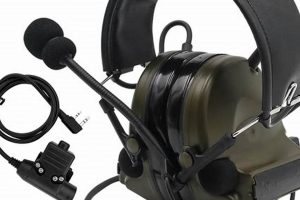
A specialized communication device designed for use in airsoft simulations, these audio peripherals provide enhanced auditory awareness and facilitate team coordination. They typically incorporate noise-canceling microphones and earpieces, allowing players to communicate effectively in noisy environments, such as outdoor fields or indoor arenas. Some models may also include features like bone conduction technology or compatibility with push-to-talk (PTT) devices.
These devices enhance situational awareness by amplifying ambient sounds and providing clear communication channels. Improved communication fosters better teamwork and tactical execution during gameplay. Historically, rudimentary versions of these devices were adapted from military communication systems to improve simulated combat experiences. The benefits include not only enhanced gameplay but also a more immersive and realistic simulation.
The subsequent sections will delve deeper into specific features, selection criteria, maintenance, and considerations for optimal use within the airsoft context. An exploration of compatible accessories and legal considerations will also be provided.
Airsoft Tactical Headset
The following guidelines provide instruction for maximizing the functionality and lifespan of communication equipment used in airsoft applications. Proper understanding and implementation of these techniques contribute to a more effective and enjoyable gaming experience.
Tip 1: Maintain Component Cleanliness: Regularly clean the microphone and earpiece components. Accumulation of debris can degrade sound quality and impede transmission efficiency. Use a soft, dry cloth to wipe away dirt and moisture. Avoid the use of solvents or abrasive cleaners.
Tip 2: Secure Cable Management: Ensure proper routing of the cable to prevent entanglement and potential damage. Use clips or cable ties to secure the cord to clothing or gear. This reduces the risk of accidental disconnections and extends the cable’s service life.
Tip 3: Optimize PTT Placement: Position the Push-To-Talk (PTT) button in a location that allows for quick and intuitive activation. Consider mounting options that enable hands-free operation, such as attaching the PTT to a firearm or vest. Experiment to determine the most ergonomic placement.
Tip 4: Conduct Routine Battery Checks: Monitor battery levels frequently. Depleted batteries can lead to communication failure at critical moments. Invest in high-quality batteries or consider a rechargeable power source. Carry spare batteries for extended gameplay sessions.
Tip 5: Ensure Proper Fit and Seal: A secure and comfortable fit is essential for optimal performance and user comfort. Experiment with different earpiece sizes and configurations to achieve a proper seal. This enhances noise isolation and improves sound clarity.
Tip 6: Regular Functionality Testing: Before each game, conduct a system check to verify that the communication equipment is functioning correctly. Test the microphone, earpieces, and PTT button. Address any issues promptly to prevent communication breakdowns during gameplay.
Tip 7: Understand Environmental Limitations: Be cognizant of the equipment’s operational parameters. Extreme temperatures, humidity, and physical stress can negatively impact performance. Store and transport the equipment in a protective case to minimize exposure to these elements.
By adhering to these guidelines, users can enhance the performance, longevity, and reliability of their airsoft communication equipment, resulting in a more strategic and coordinated gameplay experience. Proper maintenance and operational awareness are crucial for optimal performance.
The following sections will address safety considerations and legal aspects associated with the use of radio communication devices in airsoft simulations.
1. Communication Clarity

Communication clarity is paramount when employing airsoft tactical headsets. Its direct impact on the effectiveness of team coordination and strategic execution necessitates careful consideration of factors influencing the intelligibility of transmitted information.
- Microphone Quality
The microphone’s capacity to accurately capture and transmit vocal input is fundamental. High-quality microphones, often incorporating noise-canceling technology, reduce background interference, ensuring the sender’s voice is the primary sound source. Conversely, inferior microphones can produce distorted or muffled audio, hindering understanding and potentially jeopardizing tactical maneuvers.
- Audio Bandwidth
The range of frequencies a headset can reproduce directly affects the richness and clarity of the transmitted signal. A wider audio bandwidth allows for a more faithful reproduction of the human voice, enabling subtle nuances and inflections to be conveyed. Restrictive bandwidth can compress the audio signal, resulting in a less natural and more difficult-to-understand transmission. For instance, a headset that cuts off high frequencies might make sibilant sounds (like “s” or “sh”) less distinct.
- Signal-to-Noise Ratio (SNR)
SNR represents the relative strength of the desired signal (voice) compared to the level of background noise. A higher SNR indicates a cleaner and more intelligible audio signal. Tactical headsets with effective noise suppression mechanisms, such as active noise cancellation (ANC), improve SNR by reducing ambient sounds that compete with the user’s voice.
- Speaker Fidelity
The receiving end is equally vital. High-fidelity speakers are designed to accurately reproduce the incoming audio signal. Poor speaker quality can introduce distortion or coloration to the sound, making it harder to understand. Headsets with low-quality speakers may emphasize certain frequencies while attenuating others, leading to a skewed and less intelligible representation of the original message.
These components illustrate the multi-faceted nature of communication clarity in the context of airsoft tactical headsets. Optimizing each element – microphone quality, audio bandwidth, SNR, and speaker fidelity – enhances overall communication effectiveness, leading to improved coordination and tactical outcomes on the field.
2. Noise Cancellation

Noise cancellation technology is a critical component of airsoft tactical headsets due to the inherently noisy environments in which these devices are utilized. The presence of simulated gunfire, environmental sounds, and competing communication channels can severely impede the clarity of radio transmissions. Effective noise cancellation mitigates these disruptive factors, enabling players to clearly hear and understand instructions, warnings, and tactical updates from teammates. For example, during a simulated urban combat scenario, the ability to filter out the sounds of blank rounds and environmental noise is essential for receiving critical information about enemy positions. Without effective noise cancellation, players risk misinterpreting or completely missing key communications, which can significantly impact mission success.
The practical application of noise cancellation in airsoft headsets manifests in various forms, ranging from passive noise reduction offered by well-sealing earcup designs to active noise cancellation (ANC) systems that electronically counteract ambient sounds. Passive noise reduction primarily relies on physical barriers to block external noise, while ANC utilizes microphones to detect external sounds and generate inverse sound waves that cancel out the unwanted noise. Active noise cancellation offers a more comprehensive solution, particularly in environments with variable noise levels. Furthermore, the integration of directional microphones with noise filtering capabilities allows for selective amplification of desired sounds, such as human speech, while suppressing unwanted background interference. Several models incorporate both passive and active strategies, achieving higher overall efficiency.
In conclusion, the incorporation of noise cancellation technology directly addresses the challenges posed by the auditory environment in airsoft simulations. Its presence significantly enhances the clarity of communication, enabling players to maintain situational awareness and execute tactical maneuvers with greater precision. While advancements continue to refine noise cancellation techniques, its fundamental role in enabling effective team communication within the demanding context of airsoft simulations remains indispensable. Further research and development in this area continue to focus on expanding noise-canceling bandwidths and lowering latency times associated with electronic noise cancellation.
3. Situational Awareness

Situational awareness, defined as the perception of environmental elements with respect to time and space, the comprehension of their meaning, and the projection of their status in the near future, is critically enhanced through the use of airsoft tactical headsets. These headsets serve as vital auditory tools, augmenting the user’s capacity to perceive and interpret sounds that might otherwise be missed or misinterpreted in the simulated combat environment. For example, the faint rustling of leaves indicating an opponent’s movement or the distant shout of a teammate relaying critical information are auditory cues crucial for effective decision-making. Absent a tactical headset, such subtle sounds might be obscured by the general din of the game, leading to tactical disadvantage. The headset, therefore, functions as an extension of the players senses, converting ambient auditory data into actionable intelligence.
The practical significance of this enhanced auditory perception manifests in several ways. Firstly, it allows for improved reaction times. A player who can accurately pinpoint the source of gunfire is better positioned to take cover or return fire effectively. Secondly, it facilitates coordinated team movements. Real-time communication regarding enemy positions and movements, delivered clearly through the headset, enables teams to execute complex maneuvers with greater precision. Thirdly, it fosters a deeper understanding of the overall battlefield dynamics. By being attuned to the subtle auditory cues, players can anticipate enemy actions and adapt their strategies accordingly. The ability of a tactical headset to selectively amplify certain frequencies or filter out background noise further optimizes this auditory information processing.
In conclusion, the connection between situational awareness and airsoft tactical headsets is intrinsically linked. The headset amplifies auditory perception, translating into enhanced tactical awareness and improved decision-making capabilities. While challenges remain in the form of external interference and hardware limitations, ongoing technological advancements continue to refine the capacity of these devices to provide a crucial edge in the simulated combat arena. Understanding the intricacies of this connection is paramount for optimizing the player’s ability to perceive, comprehend, and anticipate the dynamic elements of the airsoft battlefield, effectively transforming auditory input into strategic advantage.
4. Comfort & Fit
The comfort and fit of an airsoft tactical headset are not merely matters of user preference, but critical determinants of operational effectiveness. Prolonged use under demanding conditions necessitates careful consideration of ergonomic factors to minimize distraction and maximize focus.
- Headband Design and Material
The design and materials used in the headband directly influence pressure distribution and overall comfort. A poorly designed headband can create pressure points, leading to discomfort and headaches during extended gameplay. Materials such as breathable mesh or padded fabrics can mitigate heat buildup and improve ventilation, enhancing comfort in warm environments. An adjustable headband is essential to accommodate varying head sizes and shapes, ensuring a secure and stable fit without excessive pressure.
- Earcup Construction and Seal
Earcup construction impacts both comfort and noise isolation. Over-ear designs, encompassing the entire ear, can provide superior noise isolation but may also trap heat. On-ear designs, pressing against the ear, may offer better ventilation but potentially reduce noise isolation effectiveness. The earcup seal is equally important; a proper seal blocks external noise and prevents sound leakage, improving communication clarity. Materials such as memory foam or gel-filled cushions can enhance comfort and improve the seal, particularly when worn with eye protection.
- Weight Distribution
Uneven weight distribution can lead to neck strain and fatigue, particularly during dynamic movements. A well-designed headset distributes weight evenly across the head, minimizing stress on specific areas. Lightweight materials and a balanced design contribute to improved comfort and reduced fatigue during extended gameplay. Consideration should be given to the weight of ancillary components, such as microphones and cables, to maintain optimal weight distribution.
- Adjustability and Compatibility
A high degree of adjustability is essential to accommodate individual preferences and anatomical variations. Adjustable earcup positions, headband height, and microphone boom angle allow users to fine-tune the fit for optimal comfort and performance. Compatibility with other gear, such as helmets and eye protection, should also be considered. Interference with other equipment can compromise comfort and hinder functionality. Modular designs and adaptable mounting systems enhance compatibility and allow for personalized configurations.
These facets of comfort and fit, when addressed comprehensively, contribute to a tactical headset that enhances, rather than hinders, performance. A headset that is comfortable and secure allows the user to maintain focus on the objective, improving communication and overall effectiveness in the airsoft environment. Neglecting these factors can lead to discomfort, distraction, and ultimately, a reduction in tactical advantage.
5. PTT Accessibility
Push-to-talk (PTT) accessibility is a critical factor influencing the operational effectiveness of airsoft tactical headsets. The speed and ease with which a user can initiate and maintain voice communication directly impacts team coordination and response times during gameplay.
- Placement and Ergonomics
The physical location and design of the PTT button significantly affect its accessibility. Ideally, the PTT should be positioned within easy reach of the user’s dominant hand, allowing for rapid activation without requiring significant deviation from a firing stance or other critical tasks. Ergonomic designs, such as contoured buttons or textured surfaces, can further enhance tactile feedback and prevent accidental activation. For instance, a PTT button mounted on a weapon’s foregrip allows for simultaneous weapon control and communication.
- Activation Method
Various PTT activation methods exist, each offering unique advantages and disadvantages. Traditional button-press activation is reliable but may require conscious effort. Voice-activated transmission (VOX) offers hands-free operation but can be susceptible to accidental activation by ambient noise. Proximity sensors, which detect the presence of a finger or hand, offer a balance between responsiveness and intentionality. The chosen activation method should align with the user’s tactical requirements and the environment in which the headset is deployed. For example, in situations where silence is paramount, a button-press activation is preferable.
- Cable Management and Durability
The cable connecting the PTT button to the headset and radio transceiver must be robust and properly managed to prevent entanglement or disconnection. Durable cables, reinforced connectors, and secure attachment points are essential for maintaining reliable communication in dynamic environments. Cable management solutions, such as clips or cable ties, can prevent the cable from interfering with the user’s movements or becoming snagged on obstacles. A broken or disconnected PTT cable renders the headset useless, therefore, resilience is crucial.
- Tactile Feedback and Confirmation
Clear tactile feedback upon PTT activation is essential for ensuring reliable communication. A distinct click or change in pressure provides confirmation that the button has been successfully pressed. Some advanced PTT systems incorporate visual or auditory cues, such as an LED indicator or a brief audible tone, to further confirm activation. This feedback is crucial for preventing unintentional periods of silence or interrupted transmissions, particularly in high-stress situations.
The interplay of these elements shapes the overall usability of PTT systems in airsoft tactical headsets. A well-designed PTT system facilitates seamless communication, improving team coordination and tactical effectiveness. Conversely, a poorly designed or unreliable PTT system can hinder communication and negatively impact performance. Consideration of these factors is vital when selecting and configuring airsoft communication equipment.
6. Durability
The durability of a tactical headset used in airsoft is paramount due to the demanding environmental conditions and physical stresses inherent in the sport. A headset’s ability to withstand impacts, moisture, and repeated use directly correlates to its longevity and reliability, influencing its overall value proposition.
- Material Composition and Construction
The choice of materials, such as impact-resistant polymers, reinforced cabling, and waterproof coatings, significantly affects a headset’s ability to endure physical stress. For instance, a headset constructed with a high-density polycarbonate shell is better equipped to withstand impacts from BBs or accidental drops than one made from a less robust material. Similarly, reinforced cables are less prone to fraying or breaking under stress. The method of construction, including the integrity of seams and the quality of adhesives, also plays a crucial role in preventing structural failure. A headset featuring robust construction and high-quality materials is more likely to withstand the rigors of active airsoft gameplay.
- Environmental Resistance
Exposure to moisture, dust, and extreme temperatures can degrade the performance and lifespan of an airsoft headset. Headsets designed with water-resistant or waterproof coatings are better protected against rain, sweat, and humidity. Sealed components and robust gaskets prevent dust and debris from entering sensitive electronics, ensuring reliable operation in dusty environments. Furthermore, the headset’s operating temperature range should be considered, particularly for players operating in extreme climates. A headset designed to withstand a wide range of environmental conditions is more likely to maintain functionality over an extended period.
- Stress Testing and Quality Control
Rigorous stress testing and quality control procedures are essential for ensuring the durability of airsoft headsets. Manufacturers often subject headsets to a battery of tests, including drop tests, impact tests, and environmental exposure tests, to assess their ability to withstand real-world conditions. Quality control inspections identify and eliminate defects before the headsets are released to the market. Reputable manufacturers typically provide warranties that cover defects in materials or workmanship, providing consumers with added assurance of product quality and durability. The presence of comprehensive testing and quality control procedures indicates a commitment to producing a reliable and durable product.
- Component Reliability and Longevity
The reliability and longevity of individual components, such as speakers, microphones, and PTT buttons, directly impact the overall durability of the headset. High-quality components, designed to withstand repeated use and exposure to environmental factors, are less likely to fail prematurely. For example, a microphone featuring a robust diaphragm and sealed housing is more likely to provide reliable performance over an extended period than one constructed from less durable materials. Similarly, a PTT button with a high actuation life is better equipped to withstand repeated use. The selection of reliable and long-lasting components contributes to the headset’s overall durability and extends its operational lifespan.
In conclusion, the durability of an airsoft tactical headset is a composite attribute, stemming from the selection of robust materials, environmentally sound design principles, rigorous testing procedures, and the utilization of reliable components. A durable headset provides a consistent communication platform, ensuring that players can rely on their equipment to perform under the most demanding conditions, contributing significantly to both tactical effectiveness and the overall enjoyment of the airsoft experience.
Frequently Asked Questions
This section addresses common inquiries concerning the functionality, selection, and maintenance of specialized communication devices designed for airsoft applications. Information is presented in a concise and objective manner.
Question 1: What are the primary advantages of using a tactical headset in airsoft?
Tactical headsets facilitate clear communication amidst simulated combat, improve situational awareness through enhanced auditory perception, and promote coordinated team movements. Their usage is crucial for effective strategic execution.
Question 2: How does noise cancellation improve communication during airsoft games?
Noise cancellation technologies reduce ambient noise interference, such as simulated gunfire and environmental sounds, enabling users to clearly hear and understand communications from teammates, preventing misinterpretation of critical information.
Question 3: What features should be considered when selecting a tactical headset for airsoft?
Key features include microphone quality, audio bandwidth, noise cancellation capabilities, comfort, PTT accessibility, and overall durability to ensure reliable performance under demanding conditions.
Question 4: How should a tactical headset be properly maintained to ensure its longevity?
Routine maintenance should include regular cleaning of microphone and earpiece components, secure cable management to prevent damage, frequent battery checks, and storage of the headset in a protective case to minimize environmental exposure.
Question 5: Are there any potential safety concerns associated with using tactical headsets in airsoft?
Potential safety concerns include auditory overexposure due to excessive volume levels, which can be mitigated by using headsets with volume limiting features. Users should also ensure the headset does not impede movement or create entanglement hazards.
Question 6: What are the legal considerations related to using radio communication devices in airsoft?
The use of radio communication devices is subject to relevant regulations and licensing requirements. Users must ensure compliance with applicable laws and regulations regarding frequency usage and transmission power to avoid legal penalties. Consulting local regulations is crucial.
The information presented here serves as a general guide and should not be considered a substitute for professional advice or specific product documentation. Users should consult the manufacturer’s instructions for detailed information regarding their equipment.
The following section will explore potential modifications and customization options for airsoft tactical headsets.
Airsoft Tactical Headset
The preceding analysis has explored various facets of the airsoft tactical headset, emphasizing its role in communication clarity, situational awareness, and user effectiveness. Considerations such as noise cancellation, comfort, PTT accessibility, and inherent durability were assessed, demonstrating their respective influences on the overall performance of these devices. Furthermore, the critical aspects of maintenance, safety protocols, and regulatory compliance were reviewed, underscoring the importance of responsible usage and upkeep.
As airsoft continues to evolve, the integration of sophisticated communication equipment will undoubtedly play an increasingly pivotal role in simulated combat scenarios. The judicious selection, operation, and maintenance of the airsoft tactical headset remain paramount for optimizing team performance and enhancing the overall strategic depth of the sport. Continued advancements in this domain hold the potential to further revolutionize the airsoft experience, provided that users remain cognizant of both the capabilities and limitations of the technology.