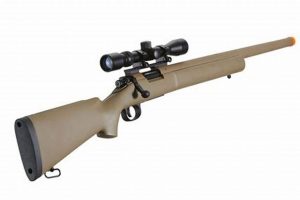
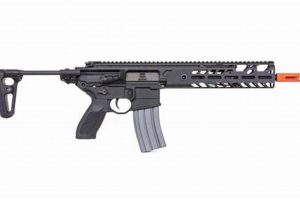
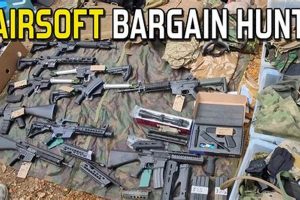
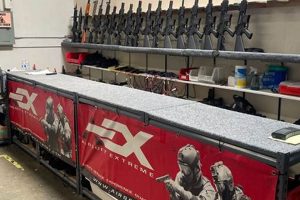
These organized activities simulate military operations using airsoft weaponry. Participants engage in scenarios that mirror real-world combat situations, often requiring teamwork, tactical planning, and adherence to specific rules of engagement. A typical weekend might involve objectives such as securing a designated area, rescuing a hostage, or conducting reconnaissance, all within a defined geographical boundary.
The value of these simulations lies in fostering leadership skills, promoting strategic thinking, and encouraging physical activity in a challenging and immersive environment. Participants develop problem-solving abilities under pressure while experiencing the complexities of coordinated teamwork. Such events also provide a structured outlet for individuals interested in military simulations and historical reenactments, offering a safe and controlled environment for engagement.
The following sections will delve into the specific equipment utilized, the diverse roles participants undertake, and the detailed rules and regulations governing these types of engagements. Further discussion will also explore the community aspects and the safety protocols essential for these recreational activities.
Essential Considerations for Realistic Airsoft Engagements
Success in immersive airsoft experiences requires meticulous preparation and a keen understanding of operational principles. The following guidelines offer crucial insights for participants seeking to enhance their performance and contribute effectively to their team’s objectives.
Tip 1: Prioritize Physical Conditioning: Endurance is critical for sustained performance throughout extended operations. Implement a regimen of cardiovascular exercises, such as running and hiking, to improve stamina and reduce fatigue. Additionally, strength training focusing on core stability and load-bearing capacity is highly recommended. For example, practice walking with a weighted vest to simulate carrying tactical gear.
Tip 2: Master Navigation Skills: Proficiency in map reading and compass navigation is essential for independent movement and coordinated maneuvers. Familiarize oneself with topographic maps and practice using a compass to determine direction and plot routes. Participate in orienteering exercises to refine these skills. Successfully navigating to a pre-determined rally point without relying on electronic devices demonstrates competence.
Tip 3: Understand Communication Protocols: Effective communication is paramount for cohesive teamwork and situational awareness. Learn and adhere to established radio communication procedures, including call signs, brevity codes, and reporting formats. Practice conveying concise and accurate information under pressure. For instance, relaying enemy positions using a standardized grid reference ensures clarity and minimizes confusion.
Tip 4: Adapt Camouflage and Concealment Techniques: Proper camouflage minimizes visual detection and enhances tactical advantage. Select camouflage patterns appropriate for the environment and utilize natural cover to break up one’s silhouette. Practice moving silently and minimizing exposure. Successfully remaining undetected while observing an enemy position showcases effective concealment.
Tip 5: Maintain Equipment Readiness: Ensure all equipment is in optimal working condition prior to deployment. Regularly inspect airsoft weaponry, communication devices, and load-bearing gear for malfunctions or wear and tear. Clean and lubricate components as necessary. Replacing worn parts prevents failures in critical moments. Calibrating the hop-up unit on an airsoft rifle ensures accurate projectile trajectory.
Tip 6: Practice Tactical Movement: Employ tactical movement techniques to navigate terrain effectively and minimize exposure to enemy fire. Utilize bounding overwatch, staggered formations, and room-clearing procedures to enhance survivability. Regularly practice these maneuvers with teammates to build muscle memory. Effectively maneuvering through a simulated urban environment while maintaining situational awareness exemplifies proficient tactical movement.
Effective implementation of these guidelines will significantly enhance an individual’s contribution to the overall success of realistic airsoft engagements. These skills, combined with teamwork and strategic thinking, are essential for a rewarding and immersive experience.
The following sections will explore specific equipment considerations and safety protocols vital for participation in these organized activities.
1. Tactical Realism

Tactical realism serves as a cornerstone for immersive airsoft military simulation events. It seeks to replicate, as closely as possible, the operational procedures, equipment, and scenarios encountered in actual military settings, enhancing the overall experience and contributing to skill development.
- Equipment Replication
The use of airsoft replicas of actual firearms, tactical gear, and communication devices contributes significantly to tactical realism. Participants utilize equipment mirroring that employed by military personnel, necessitating familiarity with its operation and maintenance. For example, communication protocols employed with replica radios mimic standard military procedures, reinforcing realistic communication practices.
- Adherence to Military Tactics
Events often incorporate real-world military tactics, such as bounding overwatch, fire and maneuver, and room clearing procedures. Participants are expected to employ these tactics effectively, requiring an understanding of their principles and practical application. A scenario might involve securing a building using established room clearing protocols, enhancing the sense of tactical immersion.
- Scenario Authenticity
The design of scenarios is often based on historical or contemporary military operations, incorporating realistic objectives, terrain, and enemy forces. This necessitates participants to consider logistical challenges, intelligence gathering, and strategic decision-making. An event might simulate a patrol in a contested area, requiring participants to navigate challenging terrain while avoiding or engaging simulated enemy patrols.
- Chain of Command Simulation
The implementation of a clear chain of command, mirroring military organizational structures, is crucial for effective coordination and decision-making. Participants operate within established roles and responsibilities, reporting to designated leaders. This fosters teamwork and reinforces the importance of following orders. A simulated command post might relay intelligence and coordinate movements based on reports from subordinate units, replicating the dynamics of a military operation.
The integration of these facets of tactical realism significantly elevates the immersive experience of airsoft military simulation events. By incorporating realistic equipment, tactics, scenarios, and command structures, these events provide participants with a challenging and engaging environment that fosters teamwork, strategic thinking, and a deeper appreciation for military operations.
2. Teamwork Emphasis

The success of any endeavor hinges significantly on the synergy of its constituent members, and airsoft military simulation events are no exception. These activities, by their very nature, demand a high degree of collaborative effort to achieve shared objectives. A lone individual, irrespective of skill, will find limited success in a scenario designed for coordinated action. The interdependent nature of these simulations necessitates effective communication, mutual support, and a unified strategic approach.
Consider, for example, a scenario involving the capture of a fortified position. Such an objective necessitates a coordinated assault involving multiple teams. One team might be tasked with providing covering fire, another with breaching the defenses, and a third with securing the interior. Each team’s actions are contingent upon the success of the others, highlighting the critical role of teamwork. A breakdown in communication or a failure to coordinate movements can easily lead to mission failure and potentially expose team members to simulated harm. Successful airsoft engagements frequently showcase carefully planned operations executed with precise timing and a deep understanding of each team member’s role. This mirrors real-world military operations where coordinated action is paramount for achieving objectives.
In conclusion, the emphasis on teamwork is not merely a desirable attribute of airsoft military simulation events; it is a fundamental requirement for success and a key differentiating factor. The immersive nature of these simulations underscores the practical implications of effective teamwork, providing participants with a valuable opportunity to develop and refine their collaborative skills within a challenging and engaging environment. The ability to work cohesively as a unit is not only essential for achieving objectives within the game but also translates to valuable skills applicable in various professional and personal contexts. These events emphasize not only individual skill but also the collective intelligence and effectiveness of the team, making them a worthwhile training ground for cooperation and strategic thinking.
3. Authentic Equipment

The selection and utilization of authentic equipment within airsoft military simulation events profoundly impact the overall experience and realism. This extends beyond mere aesthetics; the functionality, weight, and ergonomics of replicated gear contribute to a heightened sense of immersion and tactical understanding. For example, the employment of realistic load-bearing vests and pouches necessitates participants to consider weight distribution and accessibility, mirroring the challenges faced by military personnel. The use of replica optics and communication devices similarly requires users to adapt to specific functionalities and limitations, promoting realistic operational practices. The presence of authentic equipment directly affects the participant’s physical engagement, tactical decision-making, and perception of the simulated environment.
The pursuit of authenticity often extends to uniforms and personal protective equipment. Replicated military uniforms, specific to historical or contemporary units, can significantly enhance the sense of immersion and camaraderie. The utilization of ballistic helmets and eye protection, while primarily serving a safety function, also contributes to the realistic aesthetic. A participant equipped with accurate gear is more likely to internalize the role and responsibilities associated with that equipment, fostering a deeper connection to the simulated military environment. Furthermore, the use of authentic equipment can facilitate a greater appreciation for the design and functionality of military hardware, promoting a more informed understanding of military operations.
In summary, the integration of authentic equipment within airsoft military simulation events is not merely a cosmetic enhancement; it serves as a critical component in creating a realistic and immersive experience. The functionality, ergonomics, and visual fidelity of replicated gear directly influence participant behavior, tactical decision-making, and overall engagement. While challenges related to cost and availability may exist, the pursuit of authenticity remains a driving factor for many participants and organizers, contributing to the continued growth and evolution of these simulations.
4. Scenario Complexity

In airsoft military simulation events, scenario complexity serves as a pivotal element directly influencing participant engagement and the overall quality of the simulated experience. The design of multifaceted scenarios, incorporating intricate objectives and dynamic variables, compels participants to engage in strategic planning, collaborative problem-solving, and adaptive decision-making. The deliberate layering of objectives, the inclusion of unpredictable events, and the integration of realistic operational constraints contribute to a more immersive and challenging environment. For example, a scenario might involve securing a strategically important location while simultaneously managing limited resources, navigating unpredictable weather conditions, and responding to evolving enemy tactics. Such complexities demand a higher level of tactical proficiency and communication skills from participants.
The level of scenario complexity directly correlates with the authenticity and educational value of the event. Scenarios that accurately represent the challenges and complexities of real-world military operations provide participants with a valuable opportunity to develop their tactical understanding and leadership capabilities. The inclusion of ethical dilemmas, logistical constraints, and communication breakdowns further enhances the realism and promotes critical thinking. For instance, a scenario might require participants to make difficult decisions regarding civilian casualties or the allocation of scarce medical supplies. The ability to navigate these complexities effectively underscores the importance of responsible decision-making and ethical conduct within a simulated combat environment. Properly designed complexity encourages players to move beyond simple “shoot-em-up” gameplay to deeper levels of strategic thinking and immersive role-play.
However, effective implementation of scenario complexity requires careful planning and execution. Overly complex scenarios can overwhelm participants and detract from the overall experience. The key lies in striking a balance between realism and playability. Clear communication of objectives, well-defined rules of engagement, and adequate briefing materials are essential for ensuring that participants understand the scenario’s complexities and can effectively engage with the challenges presented. Successfully navigating this balance ensures that scenario complexity serves as a catalyst for learning, skill development, and a more engaging and immersive airsoft military simulation experience. Ultimately the key is to promote collaborative thinking and problem solving.
5. Rule Adherence

Strict rule adherence forms a foundational component of airsoft military simulation events. These regulations, established by event organizers, govern safety protocols, engagement parameters, and the overall simulation’s integrity. A failure to comply with stipulated guidelines can result in penalties, ejection from the event, and, more critically, an elevated risk of injury. The causal relationship between rule adherence and participant well-being is direct and demonstrable; consistently following safety regulations, such as mandatory eye protection and adherence to velocity limits for airsoft weaponry, significantly reduces the likelihood of accidents. Consider instances where players disregard prescribed engagement distances, potentially leading to close-range impacts that could cause injury. Such actions directly contravene established rules and endanger participants.
Beyond safety, rule adherence maintains the simulation’s authenticity and fairness. Regulations governing weapon types, ammunition capacity, and permissible tactical actions create a level playing field and prevent unfair advantages. For example, rules restricting the use of fully automatic fire within confined spaces are designed to promote tactical engagement and prevent excessive firepower from dominating the simulation. Similarly, adherence to medic rules and respawn procedures ensures that players engage in realistic combat scenarios and do not circumvent established game mechanics. Instances of rule violations, such as unauthorized use of equipment or deliberate misrepresentation of “hits,” undermine the simulation’s integrity and diminish the experience for all participants.
In summation, rule adherence is not merely a formality within airsoft military simulation events but a critical element that safeguards participants, maintains the simulation’s integrity, and promotes a fair and enjoyable experience. The practical significance of understanding and adhering to these rules is paramount; failure to do so can have serious consequences. By consistently upholding established guidelines, participants contribute to a safe, authentic, and rewarding simulation that fosters teamwork, strategic thinking, and responsible engagement.
6. Physical Endurance

Physical endurance is not merely a desirable attribute but a fundamental requirement for effective participation in airsoft military simulation events. The demands of these simulations, which often involve prolonged periods of exertion in varied terrains, necessitate a high level of physical conditioning. Failure to possess adequate endurance can significantly impede a participant’s ability to perform assigned tasks, compromising both personal effectiveness and team cohesion.
- Sustained Movement Capabilities
Airsoft military simulations frequently entail extended periods of walking, running, and maneuvering across diverse terrains, ranging from open fields to dense forests. Participants must possess the stamina to maintain a consistent pace while carrying equipment that can add significant weight. Inability to sustain movement can lead to fatigue, reduced awareness, and an increased risk of injury. For example, a participant tasked with patrolling a designated area might find their effectiveness diminished due to exhaustion, potentially compromising the team’s security.
- Load-Bearing Capacity
The burden of carrying tactical gear, including airsoft weaponry, ammunition, communication devices, and personal protective equipment, places considerable stress on the musculoskeletal system. Participants must possess sufficient strength and conditioning to bear this load for extended periods without succumbing to fatigue or injury. Failure to adequately prepare for load-bearing can result in muscle strain, joint pain, and a diminished capacity to perform essential tasks, such as aiming and maneuvering. Simulated breaching scenarios necessitate agility in full gear.
- Environmental Adaptation
Airsoft military simulation events are often conducted outdoors in a variety of weather conditions, ranging from extreme heat to cold and wet environments. Participants must possess the physiological resilience to adapt to these environmental stressors and maintain performance levels. Exposure to extreme temperatures can lead to dehydration, heatstroke, or hypothermia, all of which can impair cognitive function and physical capabilities. Proficiency is demonstrated in varied and testing weather conditions.
- Injury Resistance
The physical demands of airsoft military simulations inherently increase the risk of minor injuries, such as sprains, strains, and abrasions. Participants with a higher level of physical conditioning are generally more resistant to these types of injuries due to increased muscle strength, joint stability, and overall fitness. Moreover, adequate preparation can reduce the risk of more serious injuries, such as heatstroke or exhaustion. Individuals should train to minimize potential injury in all activities undertaken.
In conclusion, physical endurance is inextricably linked to successful participation in airsoft military simulation events. The ability to sustain movement, bear loads, adapt to environmental stressors, and resist injury directly impacts a participant’s effectiveness and overall contribution to the team. Therefore, prospective participants should prioritize physical conditioning as a crucial element of preparation. Demonstrable endurance is essential for the attainment of objectives.
7. Strategic Planning
Strategic planning constitutes a critical element within airsoft military simulation events, directly influencing mission success and overall participant engagement. The complexity inherent in these simulations necessitates proactive planning and adaptive strategies to achieve designated objectives. A failure to adequately formulate a strategic approach often results in inefficient resource allocation, uncoordinated team movements, and an increased probability of mission failure. Consider a scenario involving the capture of a fortified position; a strategic plan would encompass detailed reconnaissance of the target, identification of potential vulnerabilities, assignment of specific roles to team members, and the establishment of clear lines of communication. The absence of such planning could lead to a disorganized and ultimately unsuccessful assault.
The connection between strategic planning and successful outcomes extends beyond individual scenarios. Well-defined strategies enable teams to anticipate enemy movements, exploit weaknesses in their defenses, and adapt to unforeseen circumstances. For example, a team might employ a feint attack to divert enemy attention from their primary objective, or utilize flanking maneuvers to gain a tactical advantage. Furthermore, strategic planning promotes efficient resource management, ensuring that ammunition, medical supplies, and communication equipment are allocated effectively. Teams that engage in thorough planning prior to deployment are demonstrably more effective at achieving their objectives and minimizing casualties. Effective implementation involves anticipation of variables.
In conclusion, strategic planning is not merely an optional component of airsoft military simulation events, but a fundamental prerequisite for success. The ability to formulate and execute effective strategies distinguishes high-performing teams from those that rely solely on individual skill or reactive tactics. By prioritizing strategic planning, participants can enhance their tactical understanding, improve their teamwork skills, and derive greater satisfaction from the overall simulation experience. Ultimately the ability to pre-plan tactical decisions prior to undertaking tactical execution is a key measure for success. Planning promotes organized execution.
Frequently Asked Questions
The following addresses commonly raised inquiries concerning organized airsoft military simulation activities, providing factual and objective responses.
Question 1: What differentiates these engagements from standard airsoft skirmishes?
Airsoft military simulation events emphasize realism, teamwork, and strategic planning, often featuring extended durations, intricate scenarios, and stricter adherence to tactical doctrines. Standard airsoft skirmishes typically prioritize fast-paced gameplay with less emphasis on tactical authenticity.
Question 2: What level of physical fitness is required for participation?
A moderate level of physical fitness is recommended. Participants should be capable of carrying equipment over uneven terrain for extended periods. Specific fitness requirements may vary depending on the event’s duration and intensity.
Question 3: Is specialized equipment necessary?
While basic airsoft equipment is essential, specialized gear, such as tactical vests, communication devices, and appropriate camouflage, is highly recommended to enhance immersion and tactical effectiveness. Event organizers often provide specific equipment guidelines.
Question 4: Are these events suitable for novice airsoft players?
While experienced players are generally preferred, novice participants are often welcome, provided they possess a basic understanding of airsoft safety rules and are willing to learn and follow instructions. Some events offer introductory sessions for newcomers.
Question 5: What are the primary safety considerations?
Mandatory eye protection, adherence to velocity limits for airsoft projectiles, and strict adherence to rules of engagement are paramount. Event organizers typically conduct safety briefings and enforce stringent safety protocols.
Question 6: How are rules of engagement enforced?
Rules of engagement are typically enforced by event organizers and designated marshals, who monitor gameplay and address any violations. Participants are expected to self-regulate and report any observed infractions.
Key takeaways emphasize the importance of realism, teamwork, physical fitness, and strict adherence to safety regulations within organized airsoft military simulation activities.
The subsequent sections will delve further into the specific equipment requirements and tactical considerations essential for participation in these organized activities.
Airsoft Milsim Events
This exploration has detailed the defining characteristics of organized military simulations using airsoft weaponry. Emphasis has been placed on tactical realism, teamwork, authentic equipment, scenario complexity, rule adherence, physical endurance, and strategic planning as core components. The interplay of these elements constructs a challenging and immersive environment, distinct from standard recreational airsoft activities.
The continued growth and sophistication of airsoft milsim events indicate a sustained interest in realistic military simulations. These activities provide a structured environment for individuals to develop leadership skills, strategic thinking, and physical fitness. Prospective participants are encouraged to research events thoroughly, prioritize safety, and understand the commitment required for meaningful engagement in this demanding recreational activity.