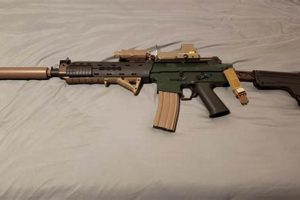
This type of recreational weapon operates via a manual compression system. The user pulls back a spring-loaded piston, creating potential energy. Upon release, this stored energy propels a small, typically 6mm plastic projectile. Due to their single-shot mechanism, they require re-cocking before each firing sequence. An example would be a low-cost replica firearm often used for target practice or introductory airsoft activities.
The significance of this type of device stems from its affordability and simplicity. Its low price point makes it accessible to a wide range of users, particularly beginners in the sport. Furthermore, the lack of reliance on batteries or gas makes it a reliable option in various environmental conditions. Historically, these were among the first types of airsoft replicas available, contributing to the early growth and accessibility of the hobby.
The following sections will delve deeper into the specific mechanisms, advantages, disadvantages, and appropriate usage scenarios for this class of recreational device. Furthermore, a comparison with other types of airsoft weaponry will be presented, along with guidelines for maintenance and safety.
Airsoft Spring Pistol
The following recommendations aim to enhance user experience and prolong the operational lifespan of manual-action airsoft replicas. Adherence to these guidelines promotes safety and effective utilization.
Tip 1: Proper Cocking Technique: Ensure a full and smooth retraction of the slide or cocking mechanism. Incomplete cocking may result in misfeeds or reduced projectile velocity. Avoid forcing the mechanism beyond its intended range of motion.
Tip 2: Projectile Quality: Employ only high-quality, seamless 6mm airsoft BBs. Irregular or damaged projectiles can cause internal damage and impair accuracy. Weight of the BB should be appropriate for the pistol’s power; lighter BBs are generally preferred.
Tip 3: Barrel Cleaning: Regularly clean the inner barrel with a cleaning rod and appropriate cleaning solution. Accumulation of dirt and debris can negatively impact accuracy and projectile velocity. Perform this maintenance after each usage session.
Tip 4: Lubrication: Apply a small amount of silicone-based lubricant to the moving parts, such as the slide rails and trigger mechanism. Avoid petroleum-based lubricants, which can degrade plastic components. Lubrication reduces friction and promotes smooth operation.
Tip 5: Storage: Store the device in a cool, dry place away from direct sunlight and extreme temperatures. Prolonged exposure to these conditions can damage plastic components and weaken the spring mechanism. A padded case is recommended.
Tip 6: Safety Practices: Always treat the replica as if it were loaded. Never point it at anything that is not intended to be targeted. Wear appropriate eye protection during operation. Supervise children during use.
Tip 7: Disassembly Caution: Disassembling the device beyond basic cleaning and lubrication is generally not recommended unless performed by a qualified technician. Improper disassembly can result in damage or malfunction. Consult the manufacturer’s instructions before attempting any repairs.
By observing these tips, users can optimize performance, extend the lifespan, and ensure the safe and responsible operation of the mentioned devices.
The concluding sections will summarize the key advantages and disadvantages, providing a comprehensive overview for potential users.
1. Manual Operation

The inherent linkage between manual operation and the function of this type of airsoft replica is fundamental. The manual mechanism directly causes the activation and subsequent projectile firing. The operator’s physical action of compressing a spring is the sole source of energy; the absence of batteries or gas propulsion necessitates this manual intervention. A direct example of this cause-and-effect relationship is evident in the cocking process, wherein the user physically pulls back the slide or charging handle to compress the internal spring, preparing the mechanism for firing. Manual operation is not merely a characteristic but an essential component that defines its operational paradigm. Without the physical act of cocking, the replica remains inert, incapable of launching a projectile.
Further analysis reveals the practical implications of this manual operation. The requirement for pre-firing action translates to a lower rate of fire compared to automatic or semi-automatic airsoft weapons. This limitation positions this type of replica as more suited for target practice, training on accuracy, or controlled scenarios where rapid firing is not a priority. A tactical simulation, for example, might utilize these replicas to enforce realistic engagement protocols, emphasizing deliberate aiming and shot placement over volume of fire. The manual cycle compels the user to consciously engage with each shot, fostering a different type of gameplay compared to automatic alternatives.
In summary, the manual operation mechanism is intrinsic to the form and function of spring airsoft replicas. This characteristic drives specific use cases, highlighting its suitability for certain training or recreational activities where controlled engagement and precision are favored. Recognizing this key aspect allows a user to fully appreciate its capabilities and limitations, understanding that its performance is directly tied to the consistent and deliberate manual action applied.
2. Single-Shot Firing

The single-shot firing mechanism is a direct consequence of the spring-powered operation. Each trigger pull necessitates a prior manual actionspring compressionto load a single projectile. There is no automated feeding system; the mechanism relies entirely on the user to reset the firing sequence for each shot. A real-world example is observed during target practice where the user re-cocks the pistol after each discharge, thereby limiting the rate of fire compared to automatic counterparts. This limitation, however, enforces deliberate aiming and shot placement, contributing to skill development.
Further analysis reveals that the single-shot characteristic inherently impacts gameplay dynamics. It shifts the focus from volume of fire to tactical positioning and precision. In scenarios like simulated close-quarters combat, the operator must carefully consider each shot, avoiding unnecessary exposure while maximizing accuracy. The absence of automatic firing capabilities demands a more strategic approach to engagement, fostering a deeper understanding of field tactics and resource management. One might compare this to a chess match, where each move (or shot) must be carefully calculated to achieve the desired outcome.
In conclusion, the single-shot firing mechanism is not merely a technical limitation but a defining feature that shapes its practical usage and the overall user experience. While it restricts the firing rate, it simultaneously encourages more deliberate engagement tactics and promotes a greater emphasis on precision and resourcefulness. Its significance lies in its ability to transform the activity from a spray-and-pray scenario to a more calculated and strategic exercise, emphasizing skill development and tactical awareness.
3. Affordable Cost

The correlation between affordable cost and spring-powered airsoft pistols is a primary factor in their widespread accessibility. The simplified mechanical design, utilizing a spring-loaded piston and minimal electronic components, reduces manufacturing expenses. Consequently, retail prices are significantly lower compared to gas-powered or electric models. An example of this is the availability of functional models for under \$20, making them entry-level options for individuals new to the sport or those seeking recreational target practice without significant financial investment.
The significance of affordability extends beyond mere cost. It directly influences the democratization of airsoft as a hobby. The lower financial barrier allows wider participation, attracting individuals who might otherwise be deterred by the higher costs associated with more advanced equipment. This increased participation contributes to the growth of the airsoft community and the diversification of its participants. Furthermore, the affordability allows for experimentation and skill development without the pressure of damaging a costly investment. A novice shooter, for example, can practice fundamental aiming and handling techniques without concern for damaging an expensive replica during the learning process.
In summary, the affordability of spring airsoft pistols is a critical component of their market position and overall appeal. It is not merely a price point but a gateway to wider participation in airsoft, facilitating accessibility and encouraging skill development at a lower financial risk. While performance limitations exist compared to more advanced options, the affordability factor provides significant advantages in terms of accessibility and introductory training, thus solidifying their role within the airsoft ecosystem.
4. Low Power Output

The direct correlation between manual spring mechanisms and diminished energy delivery defines the performance envelope. These devices necessitate manual spring compression for projectile propulsion, which inherently restricts the generated force. Consequently, the resulting projectile velocities are typically lower compared to gas or electrically powered airsoft replicas. An example of this is the consistent measurement of muzzle velocities below 300 feet per second (FPS) in typical spring-powered models, contrasting significantly with the higher velocities often observed in their gas or electric counterparts. Low power output is not merely a limitation but an inherent characteristic dictated by the operational mechanics.
The practical significance of this limited power output extends to safety considerations and appropriate usage scenarios. The lower velocities reduce the potential for injury upon impact, making these devices suitable for supervised use by younger individuals or for close-range target practice where minimizing risk is paramount. For instance, organized airsoft events often impose FPS limits to ensure player safety, and spring-powered models readily comply with these restrictions. Furthermore, the reduced power output contributes to a shorter effective range, typically limiting engagements to distances under 50 feet. This necessitates a different style of gameplay, emphasizing stealth and close-quarters maneuvering rather than long-range accuracy.
In conclusion, the low power output of spring airsoft pistols is an intrinsic consequence of their manual operation and a defining factor in their suitability for specific applications. While it limits their performance in terms of range and impact force, it simultaneously enhances safety and promotes responsible usage, particularly in introductory or controlled environments. This understanding is crucial for users to appreciate the device’s capabilities and to deploy it appropriately within the broader context of airsoft activities.
5. Plastic Construction

The extensive use of plastic in the construction of spring-powered airsoft pistols significantly influences their cost, durability, and overall performance. This design choice is integral to understanding their market position and intended use cases.
- Weight Reduction
Plastic components significantly reduce the overall weight of the replica. Lower weight enhances maneuverability, particularly for younger users or during extended periods of handling. For example, a full metal airsoft pistol can weigh upwards of two pounds, whereas a predominantly plastic model may weigh less than one pound. This weight difference directly affects user fatigue and ease of use.
- Manufacturing Efficiency
Plastic molding techniques enable efficient and cost-effective mass production. Complex shapes and intricate details can be replicated rapidly and with minimal waste. This efficiency directly translates to lower retail prices, making spring airsoft pistols more accessible to a wider consumer base. The injection molding process, for instance, allows for the creation of detailed frames and internal components with high precision and minimal labor input.
- Durability Considerations
While offering benefits in terms of weight and cost, plastic construction introduces limitations in overall durability. Exposure to ultraviolet radiation, extreme temperatures, or excessive stress can lead to degradation or breakage. For example, prolonged exposure to direct sunlight can cause plastic to become brittle and prone to cracking. This necessitates careful handling and storage to maximize the lifespan of the replica.
- Aesthetic Realism
Modern plastic molding techniques allow for the creation of highly realistic replicas of real firearms. Textures, finishes, and intricate details can be accurately replicated, enhancing the visual appeal of the airsoft pistol. However, the plastic material typically lacks the weight and tactile feel of metal, which can detract from the overall sense of realism for some users. The surface finish and mold quality also contribute to the perception of realism.
In conclusion, the prevalent use of plastic in spring-powered airsoft pistols represents a deliberate design trade-off. While it offers advantages in terms of cost, weight, and manufacturing efficiency, it also introduces limitations in terms of durability and perceived realism. The choice of plastic construction is ultimately a key factor in defining their intended role as entry-level or recreational devices rather than high-end simulation tools.
6. Short Effective Range
The limited effective range exhibited by airsoft spring pistols is a defining characteristic directly attributable to their power source and design. This range limitation has significant implications for their tactical application and suitability for various airsoft scenarios. The following details explore this relationship and its multifaceted aspects.
- Muzzle Velocity Limitations
Spring-powered mechanisms inherently produce lower muzzle velocities compared to gas or electric counterparts. Lower velocity directly translates to reduced projectile range and energy retention. For instance, a typical spring pistol might launch a BB at 200-250 FPS, resulting in a significantly shorter effective range than a gas pistol operating at 350+ FPS. This velocity deficit restricts the BB’s ability to maintain a stable trajectory over longer distances, leading to rapid deceleration and trajectory deviation due to air resistance.
- Projectile Weight and Aerodynamics
Standard 6mm airsoft BBs, typically weighing between 0.12g and 0.20g, possess limited mass and aerodynamic efficiency. This combination exacerbates the impact of air resistance on projectile range, particularly at the lower velocities produced by spring pistols. Lighter BBs, while potentially achieving slightly higher initial velocities, tend to lose momentum more rapidly, further shortening the effective range. The lack of aerodynamic shaping contributes to increased drag, diminishing range compared to projectiles with more streamlined designs.
- Hop-Up System Effectiveness
While some spring pistols incorporate a hop-up system to impart backspin on the BB and extend its range, the effectiveness of these systems is limited by the lower muzzle velocities. The hop-up mechanism relies on creating lift to counteract gravity, but the force generated is insufficient to significantly extend the range when the initial velocity is low. A poorly adjusted or weak hop-up system can further degrade accuracy and range, particularly at distances beyond 30-40 feet. The effectiveness of the hop-up unit is intrinsically linked to the power output of the spring mechanism.
- Environmental Factors
Even minor environmental factors such as wind can significantly impact the trajectory and effective range of airsoft BBs launched from spring pistols. The low velocities and lightweight projectiles make them highly susceptible to wind drift, reducing accuracy and limiting effective engagement distances. Outdoor usage requires careful consideration of wind conditions and their potential impact on shot placement. Indoor environments provide more consistent conditions, but the limited range remains a primary constraint.
These interrelated aspects underscore the inherent connection between short effective range and airsoft spring pistols. The reduced power output, projectile characteristics, hop-up limitations, and environmental vulnerabilities collectively define their suitability for close-quarters engagements, target practice, or introductory airsoft activities where long-range accuracy is not a primary requirement.
7. Beginner-Friendly

The designation “beginner-friendly” is frequently applied to airsoft spring pistols due to several factors that simplify their operation and reduce the barriers to entry for newcomers to the sport. This ease of use, combined with other attributes, makes them a common starting point for individuals exploring airsoft activities.
- Simplified Mechanics
The internal mechanisms of airsoft spring pistols are considerably less complex than those of gas-powered or electric models. This simplicity translates to easier understanding and troubleshooting for beginners who may lack prior technical knowledge. The absence of batteries, gas canisters, or intricate gearboxes removes several potential points of failure and simplifies the operational process. The user only needs to cock the mechanism and pull the trigger, making it easier to grasp fundamental concepts.
- Reduced Maintenance Requirements
Compared to more complex airsoft replicas, spring pistols require minimal maintenance. The lack of reliance on gas or batteries eliminates the need for regular charging, gas refills, or intricate cleaning procedures. Basic cleaning of the barrel and occasional lubrication of moving parts are typically sufficient to maintain reliable operation. This reduced maintenance burden allows beginners to focus on learning shooting techniques and safety protocols rather than being bogged down by complex maintenance tasks.
- Lower Risk of Malfunction
The straightforward design of airsoft spring pistols minimizes the risk of internal malfunctions. The absence of electronic components and intricate gas systems reduces the potential for breakdowns and operational errors. This reliability is particularly beneficial for beginners who may not possess the technical skills to diagnose or repair complex malfunctions. The simplified mechanics allow new users to concentrate on practicing proper handling techniques without being distracted by recurring malfunctions.
- Intuitive Operation
The manual cocking and single-shot firing mechanism of spring pistols promotes a deliberate and intuitive approach to airsoft. Beginners are required to consciously engage with each shot, fostering a greater awareness of aiming, trigger control, and shot placement. This deliberate process encourages careful planning and tactical thinking, allowing users to develop fundamental skills that can be applied to more advanced airsoft platforms later on. The need to manually cycle the action between shots reinforces a connection between action and outcome.
The culmination of these attributes underscores why airsoft spring pistols are commonly recommended as introductory platforms. Their ease of use, simplified maintenance, reduced risk of malfunction, and intuitive operation collectively provide a gentle learning curve for newcomers, allowing them to develop essential skills and safety habits without being overwhelmed by complexity. The simplicity enhances the accessibility of airsoft to a wider audience.
Frequently Asked Questions
This section addresses common inquiries regarding airsoft spring pistols, offering concise and informative responses.
Question 1: What is the typical effective range of an airsoft spring pistol?
The effective range generally extends to approximately 30-50 feet, contingent upon environmental conditions and the specific model. Accuracy diminishes significantly beyond this range.
Question 2: Are airsoft spring pistols suitable for competitive airsoft matches?
They are generally not suitable for competitive matches due to their low rate of fire and limited range. Their role is typically confined to training or recreational use.
Question 3: What type of ammunition should be used in an airsoft spring pistol?
High-quality 6mm plastic BBs are recommended. The weight should be appropriate for the pistol’s power, typically ranging from 0.12g to 0.20g. Damaged or low-quality BBs can cause malfunctions.
Question 4: How should an airsoft spring pistol be stored when not in use?
It should be stored in a cool, dry place away from direct sunlight and extreme temperatures. A padded case is recommended to protect against physical damage.
Question 5: What safety precautions should be observed when handling an airsoft spring pistol?
The device should always be treated as if loaded. It should never be pointed at anything that is not intended to be targeted. Appropriate eye protection must be worn during operation.
Question 6: How often should an airsoft spring pistol be cleaned and lubricated?
The barrel should be cleaned after each use. Moving parts should be lubricated periodically with silicone-based lubricant. Avoid petroleum-based lubricants.
In summary, airsoft spring pistols serve as accessible and affordable entry-level options for those new to the sport. Understanding their limitations and adhering to safety guidelines are crucial for responsible use.
The concluding section will provide a comparative analysis with other types of airsoft weapons.
Airsoft Spring Pistol
This exposition has meticulously examined the “airsoft spring pistol,” delineating its operational mechanics, inherent limitations, and suitable applications. Emphasis was placed on the manual operation, single-shot firing, affordable cost, low power output, prevalent use of plastic construction, short effective range, and beginner-friendly nature. These characteristics collectively define its role as an introductory platform within the broader airsoft landscape. The device’s inherent limitations preclude its effectiveness in competitive scenarios, restricting its utility to training, recreational target practice, or controlled simulation environments.
While the “airsoft spring pistol” may not represent the pinnacle of airsoft technology, its accessibility and simplicity fulfill a critical function: providing an entry point for new participants. As users gain experience and develop their skills, they may progress to more advanced airsoft weaponry. However, a thorough understanding of the limitations and appropriate usage of these devices remains paramount for responsible participation in the airsoft community. Continued emphasis on safety, responsible handling, and realistic expectations will ensure that this foundational element of the sport continues to serve its intended purpose effectively.