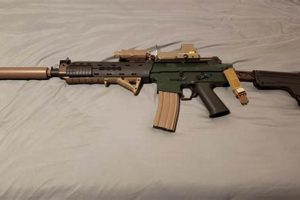
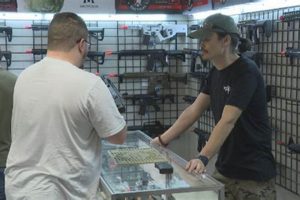
The sport involving realistic replica firearms that discharge plastic projectiles is active within Arizona. Participants engage in simulated combat scenarios in designated fields and arenas across the state. This recreational activity emphasizes teamwork, strategic thinking, and adherence to safety protocols.
Engaging in this activity in Arizona provides several benefits, including physical exercise, social interaction, and mental stimulation. The state’s diverse terrain, from desert landscapes to wooded areas, offers varied and challenging environments for gameplay. Its history reflects a growing interest in tactical simulations and competitive shooting sports.
The following sections will elaborate on specific gameplay locations, equipment considerations, safety regulations, and community resources available for individuals interested in participating within the state. These factors contribute significantly to the overall experience and accessibility.
Tips for Safe and Enjoyable Airsoft in Arizona
Participating in the sport within Arizona requires careful consideration of various factors to ensure both safety and an engaging experience. The following tips offer guidance for newcomers and experienced players alike.
Tip 1: Eye Protection is Paramount: Always wear ANSI-rated Z87.1 compliant goggles or a full-face mask during gameplay. Impact resistance is crucial in preventing serious eye injuries. Many fields mandate specific eye protection standards, which must be followed.
Tip 2: Adhere to Field Regulations: Each field in Arizona may have unique rules regarding FPS limits, engagement distances, and permissible equipment. Familiarize oneself with and abide by these regulations to maintain a safe and fair environment.
Tip 3: Understand Weapon Safety: Treat all replica firearms as if they are real. Keep the muzzle pointed in a safe direction and avoid dry-firing when not actively engaged. Utilize barrel socks or plugs when the weapon is not in use.
Tip 4: Hydration is Essential: Arizona’s climate can be extremely hot and dry. Maintaining proper hydration is vital to prevent heatstroke and exhaustion. Bring an adequate supply of water and consume it regularly throughout the day.
Tip 5: Communication is Key: Effective communication with teammates and opponents is crucial for strategic gameplay and preventing misunderstandings. Utilize clear and concise language to convey intentions and positions.
Tip 6: Appropriate Attire: Wear clothing that provides adequate protection from BB impacts and the environment. Long sleeves, pants, and sturdy footwear are recommended. Camouflage can offer a tactical advantage, but is not always necessary.
Tip 7: Respect for Property: Avoid trespassing on private property and be mindful of the surrounding environment. Refrain from littering and respect the natural landscape of the playing field.
By adhering to these tips, participants can significantly enhance their experience and minimize the risk of injury. Prioritizing safety and respecting regulations ensures a positive and enjoyable experience for all involved.
With these essential tips in mind, the following sections will delve into the diverse locations available for gameplay and the various community resources for individuals pursuing this activity within the state.
1. Fields and Arenas

The availability and characteristics of dedicated fields and arenas are fundamental to the viability of the recreational activity involving realistic replica firearms discharging plastic projectiles in Arizona. These venues provide designated spaces where participants can engage in simulated combat scenarios while adhering to safety regulations and established gameplay rules.
- Location and Accessibility
The geographical distribution of fields and arenas within Arizona directly impacts accessibility for potential participants. Facilities located near major metropolitan areas tend to attract a larger player base. Conversely, fields in more remote locations may offer unique environmental features but require longer travel times.
- Field Topography and Design
The physical characteristics of a field, including its size, terrain, and artificial structures, significantly influence gameplay dynamics. Fields range from open desert environments to wooded areas and CQB (Close Quarters Battle) arenas featuring simulated buildings and obstacles. Each type of field presents distinct tactical challenges.
- Operational Management and Safety Standards
The quality of field management is paramount for ensuring participant safety and a positive experience. Reputable fields enforce strict safety protocols, including mandatory eye protection, chronograph testing of replica firearms, and adherence to MED (Minimum Engagement Distance) rules. Well-maintained facilities also offer amenities such as staging areas, restrooms, and refreshment services.
- Game Types and Event Organization
Fields and arenas host a variety of game types, ranging from simple team deathmatch scenarios to complex objective-based missions involving scenario props and role-playing elements. Organized events, such as milsim (military simulation) operations, often draw participants from across the state and beyond, contributing to the community aspect of the sport.
The interplay between these facets determines the overall quality and appeal of this simulated combat activity within Arizona. Varied field designs, coupled with responsible operational management, contribute to a vibrant and evolving recreational landscape.
2. Safety Regulations

Adherence to comprehensive safety regulations is paramount for the sustained viability and responsible practice of the activity within Arizona. These regulations serve to mitigate potential risks and ensure a safe environment for all participants.
- Mandatory Eye Protection
The use of ANSI-rated Z87.1 compliant goggles or full-face masks is universally mandated across all recognized fields and arenas in Arizona. This requirement is non-negotiable, as eye injuries are a primary concern in this activity. Refusal to comply results in immediate removal from the playing field.
- Velocity Limits and Chronograph Testing
Replica firearms are subject to strict velocity limits, typically measured in feet per second (FPS) using .20g BBs. Fields utilize chronograph devices to test each weapon before gameplay commences, ensuring compliance with established FPS thresholds. These limits are enforced to prevent excessive projectile force and minimize the risk of injury.
- Minimum Engagement Distances (MED)
MED rules stipulate minimum distances at which a replica firearm can be discharged at another player. These distances vary based on the weapon’s FPS rating, with higher FPS weapons requiring greater engagement distances. MED rules are designed to prevent close-range injuries and promote responsible weapon handling.
- Safe Zones and Barrel Covers
Designated safe zones are established at each field where replica firearms must be rendered inoperable. This is typically achieved through the use of barrel covers or magazine removal. In safe zones, eye protection may be temporarily removed, but replica firearms must remain unloaded and secured.
The consistent and rigorous enforcement of these safety regulations is crucial for maintaining a safe and enjoyable environment for all participants in Arizona. Continuous education and adherence to these guidelines are essential for promoting responsible conduct and minimizing the potential for accidents.
3. Equipment Standards

Equipment standards are intrinsically linked to the safety, fairness, and overall experience of the activity in Arizona. These standards dictate the acceptable parameters for replica firearms, protective gear, and other accessories utilized during gameplay. Adherence to these standards is crucial for maintaining a level playing field and minimizing the risk of injury.
- Replica Firearm Velocity (FPS) Limits
Arizona fields enforce strict FPS limits for replica firearms, typically measured with 0.20g BBs. These limits vary depending on the type of weapon and intended gameplay environment. CQB fields often have lower FPS limits than outdoor fields to account for shorter engagement distances. Failure to comply with FPS limits results in the disqualification of the replica firearm.
- Protective Gear Requirements
Mandatory protective gear includes ANSI-rated Z87.1 compliant eye protection or a full-face mask. Some fields may also require lower face protection, such as mesh masks or mouth guards. The purpose of these requirements is to prevent injuries from BB impacts, which can cause serious damage to the eyes and face. Players are responsible for ensuring that their protective gear meets the required standards.
- BB Weight and Material Regulations
Fields typically specify the permissible BB weights and materials. Biodegradable BBs are often required for outdoor fields to minimize environmental impact. Heavy BBs (e.g., 0.25g, 0.28g) are often used in higher-powered replica firearms to improve accuracy and range. However, the use of excessively heavy BBs or non-biodegradable BBs may be prohibited.
- Magazine Capacity and Ammunition Restrictions
Some fields may impose restrictions on magazine capacity or the total amount of ammunition a player can carry. These restrictions are often implemented to promote fair play and prevent players from overwhelming opponents with excessive firepower. Magazine capacity limits can vary depending on the game type and field regulations.
These equipment standards are essential for fostering a safe and equitable environment for all participants. Players in Arizona are expected to familiarize themselves with and adhere to these standards to ensure a positive and responsible experience. Compliance with these regulations is often enforced through pre-game inspections and spot checks throughout gameplay.
4. Community Organizations
The organized community plays a crucial role in shaping and sustaining the landscape of the sport within Arizona. These organizations provide structure, resources, and a unified voice for players, fostering growth and responsible participation.
- Promoting Responsible Gameplay
Community organizations often establish and promote ethical gameplay standards, including adherence to safety regulations, field rules, and fair play principles. This contributes to a positive image of the activity and minimizes negative perceptions from external stakeholders.
- Facilitating Communication and Coordination
These organizations serve as central communication hubs, connecting players, field operators, and retailers. They facilitate the dissemination of information regarding upcoming events, rule changes, and safety updates. Organized communication streamlines coordination and ensures all participants are well-informed.
- Organizing Events and Tournaments
Community organizations frequently plan and execute large-scale events and tournaments, attracting players from across Arizona and neighboring states. These events provide opportunities for competition, skill development, and social interaction. They also generate revenue for local businesses and promote tourism.
- Advocating for Legal and Regulatory Issues
These entities advocate for responsible legal and regulatory frameworks. This may involve engaging with local and state governments to clarify the legal status of replica firearms and protect the rights of players to participate in the activity. This advocacy is crucial for ensuring the long-term sustainability of the sport.
The collective efforts of community organizations contribute significantly to the health and vitality of the Arizona airsoft scene. Their roles in promoting responsible gameplay, facilitating communication, organizing events, and advocating for legal issues are essential for its continued growth and acceptance.
5. Legal Compliance

Adherence to all applicable laws and regulations is a non-negotiable aspect of engaging in this simulated combat activity within Arizona. Legal compliance directly impacts the accessibility, safety, and overall viability of the sport. Failure to comply with relevant statutes can result in severe penalties, including fines, confiscation of equipment, and potential criminal charges. Therefore, a thorough understanding of the legal landscape is essential for all participants.
Specifically, Arizona law regarding replica firearms must be understood. While these devices are not classified as firearms under federal law, state and local ordinances may impose restrictions on their use, transportation, and storage. For example, some municipalities may prohibit the open carry of realistic replica firearms in public places. The transportation of replica firearms must also be conducted responsibly, typically requiring that they be stored in a closed container, out of plain sight. Moreover, modifications that increase the velocity or realism of replica firearms beyond legal limits are strictly prohibited.
In conclusion, legal compliance is not merely a procedural formality; it is a foundational pillar underpinning the responsible practice of the sport in Arizona. A proactive approach to understanding and adhering to relevant laws and regulations ensures the continued accessibility and legitimacy of this activity while safeguarding participants from potential legal repercussions. The interconnectedness of legal understanding and responsible action defines the future of this sport within the state.
6. Gameplay Styles

Diverse gameplay styles constitute a vital element of the activity’s appeal and dynamism within Arizona. These styles, varying from fast-paced CQB simulations to extended milsim operations, cater to a broad spectrum of participant preferences and skill sets, directly influencing engagement and contributing to the sport’s overall popularity within the state. The availability of diverse gameplay styles is a significant factor in attracting and retaining players, shaping the character of the activity. Without this variability, the appeal would be significantly diminished, limiting its growth and acceptance within the region.
The practical application of varied gameplay styles can be observed in the operational models of various fields across Arizona. Some facilities specialize in CQB scenarios, featuring confined spaces and rapid engagements, while others offer expansive outdoor environments designed for longer, more strategic operations. Wild West Airsoft is a great example of a combination of both types of gameplay. This segmentation allows players to select venues and styles that best align with their preferences, creating a more satisfying and engaging experience. Tournaments and organized events showcase the diversity further, with events emphasizing speed, accuracy, teamwork, or strategic planning, depending on the chosen style.
In conclusion, the diversity of gameplay styles is not merely an ancillary feature; it is an integral component of the activity’s success within Arizona. These styles cater to diverse preferences, driving participation and shaping the community. A sustained emphasis on variety and adaptation to player needs is critical to ensuring the continued vibrancy and expansion of the sport within the state. However, maintaining safety standards across all styles remains a paramount challenge requiring constant vigilance and adaptation.
7. Environmental Factors
The environmental context significantly influences the practice within Arizona. The state’s arid climate, characterized by high temperatures and low humidity, presents unique challenges to participants. Hydration becomes paramount to prevent heatstroke, and specialized gear, such as moisture-wicking clothing, is essential for maintaining comfort and performance. The terrain also dictates equipment and tactical considerations. Desert environments demand durable footwear and protective eyewear to shield against sand and dust. The presence of rocky terrain necessitates careful navigation and strategic positioning.
Wind conditions prevalent in Arizona can affect projectile trajectories, impacting accuracy and range. Players must account for wind drift when aiming, particularly in open field scenarios. The availability of shade and natural cover directly influences tactical deployments and gameplay dynamics. Fields with limited shade require participants to adjust their strategies to minimize exposure to direct sunlight, while areas with ample cover provide opportunities for concealment and ambushes. Seasonal variations also play a role, with winter months offering more temperate conditions and increased player participation. However, even during cooler months, temperature fluctuations can be significant, requiring adaptability in clothing and gear choices.
Therefore, understanding and adapting to environmental factors is crucial for ensuring safe and effective participation. Prioritizing hydration, selecting appropriate gear, and adjusting tactics to account for terrain and weather conditions contribute significantly to a positive and responsible experience. Furthermore, environmental awareness extends to the use of biodegradable BBs, minimizing the impact on the fragile desert ecosystem and promoting sustainable practices within the community.
Frequently Asked Questions
The following addresses common inquiries regarding participation in the sport within Arizona. It aims to provide clarity and guidance to both prospective and experienced players.
Question 1: Are replica firearms legal in Arizona?
Arizona law does not classify replica firearms as actual firearms. However, local ordinances may regulate their open carry and transportation. It is the responsibility of each participant to be aware of and comply with all applicable laws in their area.
Question 2: What are the minimum safety requirements for participation?
Mandatory safety equipment includes ANSI-rated Z87.1 compliant eye protection or a full-face mask. Many fields also require lower face protection. Replica firearms must adhere to field-specific velocity limits, and chronograph testing is typically conducted before gameplay.
Question 3: Where can suitable gameplay locations be found?
Various dedicated fields and arenas operate throughout Arizona, offering diverse environments and game types. Online resources and community forums often provide listings and reviews of available locations.
Question 4: How can one locate community organizations?
Community organizations dedicated to the sport in Arizona can often be identified through online searches, social media groups, and interactions with local fields. These groups provide valuable resources and support for participants.
Question 5: Are there age restrictions for participation?
Age restrictions vary depending on the specific field or event. Minors typically require parental consent and may be subject to additional safety guidelines. Individuals should verify age requirements with the operators of the chosen venue.
Question 6: What are the common gameplay styles?
Common gameplay styles include team deathmatch, capture the flag, and milsim (military simulation) operations. The specific style of play is determined by the field operator and the event organizers.
These responses provide essential information for individuals considering participation. Understanding and adhering to safety regulations, legal requirements, and community standards is crucial for a positive and responsible experience.
The following section delves into resources available for further engagement and learning. This will offer means for continuing education.
Conclusion
This exploration of “airsoft in AZ” has highlighted several critical facets: adherence to stringent safety protocols, compliance with relevant legal statutes, the diverse range of gameplay environments, the vital role of community organizations, and the impact of environmental factors on the activity. Each of these elements contributes to shaping the sport’s practice and accessibility within the state. Responsible engagement necessitates a thorough understanding of these aspects, ensuring a secure and equitable experience for all participants.
As the simulated combat sport continues to evolve within Arizona, sustained emphasis on responsible conduct, comprehensive safety education, and active community participation will be crucial for its long-term viability and acceptance. Promoting adherence to regulations and fostering a culture of ethical gameplay remains paramount to ensuring the continued growth and positive perception of “airsoft in AZ” as a legitimate recreational pursuit.