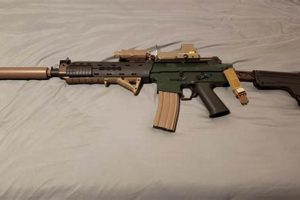
The creation of components for airsoft weaponry utilizing additive manufacturing techniques is becoming increasingly prevalent. This encompasses a range of items, from internal parts designed to enhance performance to external modifications intended to customize the aesthetic appearance of a replica firearm. Examples include hop-up units, magazine wells, and various decorative attachments.
This practice offers several advantages to both manufacturers and enthusiasts. It allows for rapid prototyping and the creation of bespoke parts that may not be commercially available. Furthermore, it can be a cost-effective solution for producing small batches of specialized components or for replacing damaged items. Historically, customization options were limited; now, additive manufacturing expands these possibilities significantly.
Subsequent sections will delve into specific material considerations, design principles, and the legal and ethical implications associated with creating these components. The aim is to provide a detailed overview of the process, empowering informed decision-making.
Airsoft Component Creation
The successful fabrication of airsoft components through additive manufacturing necessitates careful attention to detail. The following guidelines outline critical aspects for optimizing the process and achieving desired outcomes.
Tip 1: Material Selection is Paramount: The chosen filament directly impacts durability and performance. ABS offers impact resistance, while PLA is biodegradable but less heat-resistant. Consider the intended application and environmental conditions when selecting a material.
Tip 2: Layer Height Influences Strength: Lower layer heights result in denser parts with improved tensile strength. Experimentation is crucial to determine the optimal balance between print time and structural integrity.
Tip 3: Infill Density Affects Weight and Rigidity: Higher infill percentages yield stronger, more rigid parts, but also increase weight and material consumption. Evaluate the stress the component will endure and adjust accordingly.
Tip 4: Support Structures are Essential for Overhangs: Intricate designs often require support structures to prevent warping or collapse during printing. Optimize placement and density for efficient removal and minimal surface blemishes.
Tip 5: Post-Processing Enhances Finish and Functionality: Sanding, painting, and coating can improve the aesthetic appearance and functional properties of the printed part. Consider the application and choose appropriate post-processing techniques.
Tip 6: Calibration and Maintenance are Ongoing Requirements: Regular printer calibration and maintenance are crucial for consistent and reliable results. Adherence to manufacturer guidelines ensures optimal performance and extends the lifespan of the equipment.
These considerations are vital for achieving reliable and durable airsoft components. Diligence in each step of the additive manufacturing process ensures optimal performance and longevity.
The following section will address safety protocols and ethical considerations related to the creation and use of these components.
1. Material Durability

The longevity and reliable function of airsoft components created through additive manufacturing are fundamentally linked to the durability of the materials used. The stresses experienced during gameplay, including impact, temperature variations, and repetitive mechanical action, necessitate materials capable of withstanding these forces without premature failure. A component’s inability to endure operational demands leads to reduced performance, potential damage to other internal parts, and, critically, safety concerns for the user. Consider, for example, an additively manufactured hop-up unit constructed from a brittle polymer. The unit, subject to constant stress from BB loading and firing, may crack or shatter, rendering the airsoft weapon unusable and potentially causing projectile misdirection.
Selecting appropriate materials involves a detailed understanding of their mechanical properties. Tensile strength, impact resistance, and heat deflection temperature are paramount considerations. While filaments like PLA offer ease of printing and biodegradability, their lower heat resistance makes them unsuitable for components exposed to frictional heat or direct sunlight. Conversely, ABS offers higher impact resistance and heat tolerance but requires a heated build plate and proper ventilation during printing due to its fumes. Further, advanced materials like nylon and carbon fiber-reinforced composites provide superior strength and stiffness, enabling the creation of high-performance components capable of withstanding significant stress. For instance, gears manufactured from carbon fiber-reinforced nylon demonstrate increased resistance to wear and tear compared to those made from standard PLA, resulting in improved gearbox longevity and performance.
In summary, the selection of durable materials is not merely a design consideration but a critical factor determining the overall efficacy and safety of additively manufactured airsoft components. Compromising on material quality to reduce cost or printing complexity often results in diminished performance and increased risk of failure. The long-term benefits of investing in robust materials outweigh the initial cost savings, ensuring reliable and safe operation. Furthermore, ongoing research and development in polymer science continue to introduce new materials tailored to the specific demands of airsoft applications, promising further improvements in component durability and performance.
2. Design Precision
Design precision is paramount in the context of airsoft components created through additive manufacturing. The operational effectiveness and reliability of these components are directly contingent upon the accuracy and adherence to specified dimensions during the design phase. Deviations from precise specifications can lead to compatibility issues with existing airsoft weapon systems, compromised performance, and potentially hazardous malfunctions. For instance, a magazine well designed with even slight dimensional inaccuracies may fail to properly seat magazines, resulting in feeding problems or weapon inoperability. Similarly, internal components like gears or pistons require precise tolerances to ensure smooth and efficient operation within the gearbox. Failure to achieve these tolerances can lead to increased friction, premature wear, and ultimately, component failure.
The use of Computer-Aided Design (CAD) software is indispensable in achieving the necessary level of precision. CAD software allows for the creation of highly detailed and dimensionally accurate 3D models. These models can then be translated into machine-readable code (G-code) that guides the 3D printer during the fabrication process. However, even with sophisticated CAD tools, the designer must possess a thorough understanding of airsoft weapon mechanics, material properties, and manufacturing limitations. Practical application necessitates a deep understanding of how components interact and the impact of dimensional variations on overall system performance. For example, a barrel designed with an incorrect internal diameter may negatively affect BB trajectory and range. Furthermore, the design must account for factors such as shrinkage and warping that can occur during the printing process. Compensating for these effects during the design phase is critical to achieving the desired final dimensions.
In conclusion, design precision is not merely an aesthetic consideration but a fundamental requirement for functional and safe airsoft components. Accurate CAD modeling, a thorough understanding of airsoft mechanics, and consideration of material properties and manufacturing limitations are all essential elements of a successful design process. Neglecting these factors can result in components that are incompatible, unreliable, or even dangerous. The pursuit of precision directly correlates with the enhanced performance, safety, and longevity of additively manufactured airsoft components.
3. Printer Calibration
Proper printer calibration is fundamental to the successful fabrication of airsoft components via additive manufacturing. Accurate dimensional reproduction, a direct consequence of calibration, is critical for ensuring that printed parts function as intended within the airsoft weapon system. Miscalibration can lead to components that are either too large or too small, resulting in fitment issues, reduced performance, or even complete failure of the weapon. For example, if the printer’s extrusion multiplier is not properly calibrated, the actual amount of filament extruded may deviate from the intended amount. This can cause printed parts to be weaker than designed, resulting in premature failure under stress. Consider a scenario where an internal gear is printed with an incorrect diameter due to improper calibration. The gear may bind within the gearbox, causing the motor to overheat and potentially damaging other internal components. Real-world examples highlight the importance of meticulously calibrated printers in creating reliable and effective airsoft parts.
The calibration process encompasses several key aspects of printer operation. These include but are not limited to: bed leveling, which ensures consistent adhesion and layer height across the build platform; extruder temperature calibration, which optimizes filament flow and reduces warping; and Z-axis calibration, which guarantees accurate layer deposition. Each of these calibration steps directly impacts the dimensional accuracy and structural integrity of the printed component. Regularly performing these calibrations is vital, especially when changing filament types or making adjustments to printer settings. Neglecting calibration can lead to inconsistent results and increase the risk of producing unusable or unsafe parts. The practical significance of this understanding extends to both hobbyists and commercial manufacturers. It emphasizes the necessity of dedicating time and resources to printer maintenance and calibration to maximize the quality and reliability of finished products.
In conclusion, printer calibration is not merely a routine maintenance task, but a critical determinant of the quality and functionality of additively manufactured airsoft components. Addressing calibration issues proactively can mitigate potential problems related to fitment, performance, and safety. While challenges exist in maintaining consistent calibration over time, the benefits of diligent printer maintenance far outweigh the associated costs. The pursuit of precise printer calibration contributes directly to the production of reliable and effective airsoft parts, aligning with the broader goals of enhancing performance and ensuring user safety.
4. Legal Compliance

Legal compliance is a critical element in the creation and distribution of airsoft components made via additive manufacturing. Airsoft weapons, while designed to replicate real firearms, are subject to regulations that vary significantly across jurisdictions. These regulations frequently address issues such as orange tip requirements, overall length restrictions, and limitations on the modification of existing airsoft guns. Producing parts that violate these laws can lead to severe consequences, including fines, confiscation of property, and potential criminal charges. For example, manufacturing a silencer adapter for an airsoft gun may be illegal in some regions, even if the adapter is non-functional on a real firearm. Similarly, altering the external appearance of an airsoft gun to make it indistinguishable from a real firearm is often prohibited. Furthermore, the sale or distribution of 3D-printed components that enable illegal modifications to airsoft guns can also result in legal penalties. It is therefore essential to conduct thorough legal research before designing, manufacturing, or distributing any airsoft-related component using 3D printing technology.
The challenge for both hobbyists and commercial entities lies in navigating the complex and often ambiguous legal landscape. What constitutes a permissible modification versus an illegal alteration can be unclear, requiring careful interpretation of local, state, and federal laws. For example, some jurisdictions may allow the replacement of internal parts to improve performance, while others may restrict any modifications that increase the muzzle velocity beyond a certain threshold. To ensure compliance, manufacturers and designers must prioritize thorough legal research, consult with legal professionals when necessary, and clearly communicate the legal limitations of their products to consumers. This may involve including disclaimers on product packaging or providing detailed instructions on how to install and use the components legally. Regularly monitoring changes in legislation and adapting product designs accordingly is also crucial for maintaining compliance.
In conclusion, legal compliance is not simply a formality but an indispensable aspect of the airsoft 3D printing ecosystem. Neglecting legal considerations can have serious repercussions, both for individuals and businesses. Navigating the regulatory landscape requires diligent research, proactive communication, and a commitment to ethical and responsible practices. The legal environment surrounding airsoft weapons is constantly evolving; therefore, continuous vigilance and adaptation are vital for maintaining compliance and mitigating risk. Ultimately, prioritizing legal compliance ensures the sustainable and responsible development of airsoft 3D printing technology.
5. Safety Protocols

The intersection of safety protocols and the fabrication of airsoft components through additive manufacturing presents critical considerations for users and manufacturers. Safety protocols encompass a broad spectrum of precautions designed to mitigate potential hazards associated with both the manufacturing process and the subsequent use of the printed components. Failure to adhere to established safety protocols can result in physical injuries, equipment damage, and legal ramifications. For instance, inadequate ventilation during the printing of certain materials, such as ABS, can expose individuals to harmful fumes, leading to respiratory problems. Furthermore, using improperly designed or untested components in an airsoft weapon can cause malfunctions, potentially resulting in projectile misdirection and injury to the user or bystanders. Therefore, strict adherence to safety protocols is not merely a recommendation but a fundamental requirement for responsible engagement with airsoft 3D printing.
Implementing effective safety protocols involves multiple layers of protection. This includes, but is not limited to, the use of appropriate personal protective equipment (PPE) during printing and component handling, such as safety glasses, gloves, and respirators. It also necessitates a thorough understanding of the material properties and printing parameters relevant to each component. For example, conducting impact testing on printed parts is crucial for validating their structural integrity and ensuring they can withstand the stresses encountered during gameplay. Additionally, safety protocols extend to the design phase, requiring careful consideration of potential failure modes and the incorporation of safety features into the component design. Consider the design of a 3D-printed hop-up unit; without proper reinforcement, it could fracture under pressure, leading to BB fragmentation and potential eye injuries. Adherence to safety protocols directly minimizes these risks.
In conclusion, safety protocols are inextricably linked to the responsible and effective utilization of additive manufacturing in the context of airsoft components. Prioritizing safety throughout the entire process, from design to manufacturing and end-use, is essential for minimizing risks and ensuring the well-being of all involved. Although strict adherence to these protocols may entail additional time and resources, the potential consequences of negligence far outweigh the costs. Continuously evaluating and refining safety measures is crucial to adapting to evolving technologies and emerging materials in the field of airsoft 3D printing. The pursuit of safety directly contributes to the sustainability and ethical development of this evolving field.
6. Ethical Considerations

The application of additive manufacturing to airsoft components necessitates a rigorous examination of ethical considerations. The accessibility and customization afforded by this technology present potential for misuse, creating a need for responsible practices among manufacturers, designers, and users. A central concern lies in the potential for creating components that blur the line between airsoft replicas and actual firearms. Replicating functional firearm parts or modifying airsoft guns to closely resemble real weapons could lead to confusion and misidentification by law enforcement, potentially resulting in dangerous encounters. The ethical implications extend beyond mere aesthetics. Designing parts that significantly increase the power or projectile velocity of airsoft guns could compromise safety and violate regulations, potentially leading to injuries or legal repercussions. For example, engineering a high-pressure air system that exceeds safe operating limits directly contradicts ethical manufacturing standards. A lack of ethical oversight can thus jeopardize both individual safety and the reputation of the airsoft community.
Furthermore, ethical considerations extend to the distribution of designs and the enforcement of responsible usage. Manufacturers and designers have a responsibility to ensure their designs are not used for illegal purposes or in a manner that could endanger others. This may involve implementing measures to prevent the unauthorized replication of certain components or providing clear disclaimers and warnings regarding the safe and legal use of their products. Consider the open-source sharing of 3D-printable designs; while promoting innovation, it also necessitates mechanisms to prevent malicious use. Digital watermarks or licensing agreements can offer a degree of protection, but ultimately, ethical conduct relies on the integrity of the individuals involved. Educating users about responsible practices and the potential consequences of misuse is also paramount. This can involve providing instructional materials, participating in community forums, and actively promoting safe and ethical gameplay. Instances exist where community leaders have publicly condemned unethical modifications, underscoring the importance of self-regulation.
In conclusion, ethical considerations are not merely ancillary to the process of creating airsoft components via additive manufacturing; they are fundamental to ensuring its responsible and sustainable development. The accessibility of this technology places a heightened responsibility on all stakeholders to prioritize safety, adhere to legal requirements, and prevent misuse. Upholding ethical standards is not only essential for mitigating risks but also for preserving the integrity of the airsoft community and fostering a culture of responsible innovation. A commitment to ethical practices fosters trust and credibility, promoting the long-term viability of airsoft 3D printing as a safe and beneficial technology.
7. Component Functionality

The functionality of airsoft components created through additive manufacturing is paramount to their usability and overall value. A component’s intended function dictates its design, material selection, and manufacturing process. Success in this area depends on fulfilling the intended purpose without compromising safety or performance.
- Durability and Reliability
A critical aspect of component functionality is its ability to withstand the stresses of regular use. For example, a 3D-printed piston for an airsoft gearbox must endure repeated impacts and pressure cycles. Failure to adequately address durability can lead to premature breakage and system malfunctions. Materials selection, printing parameters, and post-processing techniques significantly affect these qualities, emphasizing the necessity of careful consideration throughout the entire process.
- Compatibility and Fitment
Many airsoft weapons utilize standardized dimensions, but variations exist. Additively manufactured components must adhere to these dimensions to ensure compatibility with existing systems. A magazine designed with incorrect dimensions may fail to feed properly or even damage the weapon. Precise design and accurate printing are essential for achieving the necessary compatibility and fitment, reducing the need for modification by the end-user.
- Performance Enhancement
One common application of additive manufacturing in airsoft is the creation of components that improve weapon performance, such as increased range, accuracy, or rate of fire. Examples include custom hop-up units, enhanced nozzles, or modified gears. However, performance enhancements must be achieved without compromising safety or violating legal restrictions. Designs that push the limits of material strength or exceed permissible muzzle velocity are undesirable. A balance between innovation and responsible design is essential.
- Ergonomics and Customization
Additive manufacturing enables the creation of components that enhance the ergonomics and aesthetic appeal of airsoft weapons. Examples include custom grips, stocks, and rail systems. These components can be tailored to individual preferences, providing a more comfortable and personalized experience. However, such modifications must not compromise the weapon’s structural integrity or function. Aesthetics must complement practicality to deliver true value.
These elements of component functionality durability, compatibility, performance, and ergonomics are intertwined and must be addressed holistically when designing and fabricating airsoft components using additive manufacturing. A focus on these aspects ensures the creation of high-quality parts that enhance the airsoft experience while upholding safety and legal standards.
Frequently Asked Questions
The following questions and answers address common concerns and misconceptions regarding the application of additive manufacturing in the realm of airsoft components.
Question 1: What materials are suitable for creating durable airsoft components using 3D printing?
The selection of appropriate materials depends largely on the intended application and stress levels experienced by the component. While PLA is easily printable, its lower heat resistance makes it unsuitable for many internal parts. ABS offers higher impact resistance but requires a heated bed and proper ventilation. Nylon and carbon fiber-reinforced filaments provide superior strength and durability for high-stress applications.
Question 2: Are 3D-printed airsoft components as strong as those made using traditional manufacturing methods?
The strength of 3D-printed components depends on various factors, including material selection, printing parameters (layer height, infill density), and post-processing techniques. While some additive manufacturing processes may not achieve the same strength as injection molding, advanced materials and optimized printing strategies can yield highly durable and reliable parts.
Question 3: What are the legal considerations associated with creating airsoft components using 3D printing?
Airsoft weapon regulations vary significantly across jurisdictions. Modifying airsoft guns to resemble real firearms, increasing their power beyond legal limits, or manufacturing prohibited parts (e.g., silencers) can result in legal penalties. It is essential to research and comply with all applicable laws before designing, manufacturing, or distributing 3D-printed airsoft components.
Question 4: How can I ensure the compatibility of 3D-printed components with my airsoft weapon?
Accurate measurements and adherence to standardized dimensions are crucial for ensuring compatibility. Utilizing Computer-Aided Design (CAD) software and referencing technical specifications of the target airsoft weapon can help achieve precise fitment. Prototype testing and iterative design adjustments may be necessary to fine-tune compatibility.
Question 5: What safety precautions should be taken when using 3D-printed airsoft components?
Always wear appropriate eye protection during airsoft gameplay. Inspect 3D-printed components regularly for signs of wear or damage, and replace them if necessary. Avoid exceeding the recommended operating parameters of the airsoft weapon. Exercise caution when handling modified weapons and prioritize the safety of yourself and others.
Question 6: Where can I find reliable resources for 3D printing airsoft components?
Numerous online communities and forums are dedicated to airsoft 3D printing. These resources offer valuable information on design, materials, printing techniques, and legal considerations. Consulting with experienced individuals and referencing reputable guides can help ensure the successful and responsible creation of airsoft components.
Careful attention to material selection, design precision, legal compliance, and safety protocols are essential for responsible and successful implementation of airsoft 3D printing projects.
The following section will explore future trends in the integration of additive manufacturing within the airsoft market.
Conclusion
This exploration of airsoft 3D prints has revealed a multifaceted landscape. From the initial considerations of material selection and design precision to the critical aspects of legal compliance, safety protocols, ethical considerations, and component functionality, the application of additive manufacturing within the airsoft domain demands rigorous attention to detail. The technology’s potential is undeniable, but its responsible and informed utilization is paramount.
The continued advancement of materials, printing technologies, and design tools promises even greater opportunities for innovation and customization. However, stakeholders must remain vigilant in upholding ethical standards, prioritizing safety, and adhering to legal frameworks. Future progress hinges on a commitment to responsible development, ensuring that airsoft 3D prints remain a valuable and sustainable contribution to the sport.