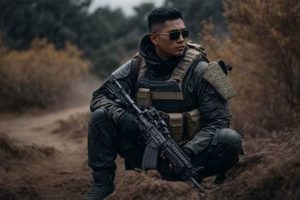
The minimum legal requirement to participate in simulated combat sports involving realistic toy guns varies significantly across jurisdictions. These regulations frequently dictate whether a minor can own, possess, or use these devices, often differentiating between supervised and unsupervised activities. For instance, some regions permit younger individuals to engage in organized matches under adult supervision, while others impose a blanket restriction on those below a certain age.
Establishing a specific limit provides a framework for responsible engagement and safety within the sport. It helps to ensure that participants possess the maturity and judgment necessary to handle the equipment properly and adhere to safety protocols. Furthermore, it acknowledges the potential risks associated with simulated weaponry and aims to protect younger individuals from accidental injury or misuse. Historically, differing opinions on child safety and responsible gun ownership have influenced these regulations.
Understanding the diverse legal landscape is crucial before engaging in this activity. This article will explore specific regional regulations, parental consent requirements, and the role of organized fields in enforcing age-related rules. It will also discuss alternative considerations when determining suitability for participation, such as maturity level and responsible behavior.
Guidance Regarding Age-Appropriate Participation
This section offers practical guidance concerning suitable involvement in airsoft activities, addressing crucial considerations for both participants and guardians.
Tip 1: Verify Local Legal Frameworks: Thoroughly investigate the regulations in the specific region of play. Laws concerning ownership, possession, and usage can differ substantially, potentially requiring adult supervision or prohibiting participation below a certain threshold. For example, some states may mandate individuals be 18 years or older, while others permit younger participants with parental consent.
Tip 2: Prioritize Safety Equipment Proficiency: Ensure comprehensive understanding and consistent utilization of protective gear, particularly eye protection, at all times. Properly fitted masks or goggles are non-negotiable, regardless of participant. Neglecting protective equipment increases the risk of serious injury.
Tip 3: Emphasize Responsible Weapon Handling: Teach and reinforce the principles of safe handling, storage, and transportation. Simulated weapons should be treated with the same respect afforded to actual firearms. Muzzle awareness, trigger discipline, and secure storage practices are paramount.
Tip 4: Evaluate Maturity and Judgment: Beyond chronological qualification, assess an individuals ability to comprehend and adhere to rules, demonstrate responsible behavior, and make sound judgments in a dynamic environment. Maturity is a critical factor, potentially outweighing the individuals specific chronological point.
Tip 5: Seek Structured Environments: Opt for participation in established, professionally managed fields or events that enforce strict safety regulations and provide experienced supervision. These environments offer a controlled setting where safety protocols are actively enforced.
Tip 6: Parental or Guardian Involvement: Active participation by a parent or guardian is highly recommended, particularly for younger individuals. This involvement allows for direct oversight, reinforcement of safety protocols, and guidance in responsible gameplay.
These guidelines underscore the importance of prioritizing safety, responsibility, and legal compliance when engaging in airsoft. Adherence to these principles promotes a positive and secure experience for all participants.
The subsequent section will provide insights into specific risk mitigation strategies and best practices for a safe and enjoyable airsoft experience.
1. Legal Minimums

The establishment of legal minimums directly governs who can participate in airsoft activities, setting a baseline for entry into the sport. These regulations, codified by governmental bodies, delineate the youngest age at which an individual is permitted to engage in airsoft, often influencing access to fields, equipment purchase, and organized events. Non-compliance with these minimums can result in legal penalties for both the individual and the event organizer, underscoring the importance of adherence.
The significance of legal minimums stems from the inherent risks associated with airsoft, including potential eye injuries, skin abrasions, and the psychological impact of simulated combat. By setting an age threshold, lawmakers aim to ensure participants possess a certain level of maturity and understanding to handle the equipment responsibly and adhere to safety protocols. For example, some jurisdictions may require participants to be 18 years or older, while others may allow younger individuals to participate with parental consent or supervision. Consider the case of states with stricter regulations, where fields are legally obligated to verify participants’ ages, often requiring government-issued identification. These regulations are frequently put in place because of incidents involving minors and highlight the ongoing efforts to protect younger individuals from potential harm. Airsoft fields or retail stores failing to confirm and comply with specified legal minimums for airsoft activities open themselves to legal action and penalties.
In summary, legal minimums are not merely arbitrary numbers; they represent a calculated effort to balance access to the sport with the need to protect vulnerable individuals. These laws create a framework for responsible participation and minimize the potential for accidents and injuries, linking directly to the overarching discussion of appropriate ages for involvement in airsoft. These regulations will continue to evolve, influenced by data on airsoft-related incidents and changing societal views on youth participation in potentially hazardous activities.
2. Parental Consent

Parental consent serves as a critical gatekeeper, particularly in jurisdictions where the legally mandated age for airsoft participation falls below the age of majority. It represents a formalized acknowledgment by a parent or legal guardian that they are aware of the risks associated with airsoft and grant permission for their child to participate.
- Assumption of Responsibility
Parental consent often entails an assumption of responsibility for ensuring the minor adheres to safety protocols and regulations. This may include verifying the child’s understanding of the rules, providing appropriate safety equipment, and ensuring responsible behavior on the field. By signing a consent form, the parent implicitly acknowledges the inherent risks of the sport and accepts a degree of liability for potential injuries or damages.
- Informed Decision-Making
The process of obtaining parental consent should involve informing parents about the specifics of airsoft, including the types of equipment used, the potential for injury, and the rules of engagement. This informed decision-making empowers parents to evaluate whether their child possesses the maturity and responsibility required to participate safely. It provides an opportunity for parents to ask questions, voice concerns, and receive clarification before granting permission.
- Legal and Insurance Implications
Parental consent forms often include clauses that release the airsoft field or event organizer from liability for certain types of injuries or damages. These clauses may be legally binding, depending on the jurisdiction. Insurance policies may also require parental consent for minors to be covered in the event of an accident. Understanding the legal and insurance implications of signing a consent form is crucial for both parents and event organizers.
- Varying Legal Standards
The specific requirements for parental consent can vary significantly across different regions. Some jurisdictions may require notarized consent forms, while others may accept a simple signature. The age at which parental consent is no longer required also varies, typically coinciding with the age of majority. Event organizers must be aware of the specific legal standards in their jurisdiction and ensure compliance with all applicable regulations.
Ultimately, parental consent plays a vital role in balancing the rights of minors to participate in recreational activities with the need to protect them from harm. By requiring parental consent, jurisdictions aim to ensure that parents are aware of the risks involved and have the opportunity to make informed decisions about their child’s participation in airsoft. The process of obtaining consent serves as a safeguard, promoting responsible participation and mitigating potential liability.
3. Field Regulations

Field regulations represent the operational rules and guidelines established by airsoft field owners and operators, significantly influencing age for airsoft participation beyond legal minimums. These regulations are designed to ensure safety, fair play, and a positive experience for all participants. They frequently address aspects not covered by broader legal frameworks, tailoring rules to specific field conditions and operational needs.
- Age-Specific Restrictions
Many airsoft fields implement age-specific restrictions that exceed the legal requirements of the region. This may involve setting higher minimum age limits, requiring adult supervision for younger participants regardless of legal mandates, or restricting the types of equipment allowed for different age groups. For example, a field might permit 16-year-olds to play without supervision while requiring those under 16 to be accompanied by a parent or guardian at all times. These restrictions are often based on the field operator’s assessment of participant maturity and their ability to adhere to safety protocols.
- Equipment Limitations
Field regulations often dictate permissible airsoft gun velocity (measured in feet per second or FPS) and the types of protective gear required. Lower FPS limits may be imposed for younger players to reduce the risk of injury. Additionally, some fields may mandate full-face masks for minors or restrict the use of certain types of grenades or pyrotechnics. These equipment limitations are aimed at mitigating the potential for harm and ensuring that participants are adequately protected.
- Gameplay Rules and Safety Briefings
Airsoft fields typically conduct mandatory safety briefings before each game, covering field-specific rules, emergency procedures, and prohibited behaviors. These briefings emphasize responsible gun handling, adherence to ceasefire rules, and the importance of wearing protective gear at all times. For younger participants, field staff may provide more detailed explanations and guidance to ensure they fully understand the rules and safety precautions. Enforcement of these rules is essential for maintaining a safe and enjoyable environment.
- Enforcement and Penalties
Field regulations are typically enforced by trained staff members who monitor gameplay and address any violations. Penalties for violating field rules may range from warnings to temporary suspension or permanent expulsion from the field. Serious infractions, such as unsafe gun handling or intentional disregard for safety protocols, can result in immediate ejection. Consistent enforcement of these penalties is crucial for deterring irresponsible behavior and maintaining a safe environment for all participants.
In conclusion, field regulations play a crucial role in determining who can participate in airsoft and under what conditions. By implementing age-specific restrictions, equipment limitations, gameplay rules, and enforcement mechanisms, field operators can create a safer and more enjoyable experience for all players, regardless of age. These regulations demonstrate the commitment of responsible airsoft fields to prioritizing participant safety and promoting ethical gameplay. These tailored guidelines directly influence the application of age for airsoft participation and often go above and beyond the general law.
4. Maturity Level

Maturity level is a critical, yet often subjective, component in determining suitability for participation in airsoft, operating independently of, but in conjunction with, chronological age. While legal frameworks and field regulations provide defined age thresholds, an individual’s demonstrable maturity dictates their ability to adhere to safety protocols, exercise sound judgment, and respect the rules of engagement. The potential consequences of disregarding maturity levels include increased risk of injury, disruption of gameplay, and a compromised overall experience for all participants.
For example, an adolescent demonstrating a lack of impulse control or an inability to follow instructions may pose a greater safety risk than a younger child exhibiting responsible behavior and attentive listening skills. Organized airsoft fields frequently encounter situations where individuals meeting the minimum age requirements display a maturity level insufficient for safe participation, necessitating intervention by field staff. This could range from corrective guidance to temporary removal from gameplay. The ability to understand and apply concepts of fair play, teamwork, and conflict resolution is also directly linked to maturity level, influencing the ethical conduct of participants on the field. Participants lacking the emotional maturity to handle competitive situations constructively may resort to unsportsmanlike behavior, creating negative experiences for others. Therefore, assessing maturity is not merely a matter of compliance, but a necessary step in fostering a positive and safe environment.
In summary, while chronological age serves as a foundational criterion for airsoft participation, maturity level is an equally important factor. The responsibility rests upon parents, guardians, and field operators to evaluate an individual’s readiness, considering not only their age but also their demonstrated capacity for responsible decision-making, adherence to safety protocols, and ethical conduct. A balanced approach that integrates chronological age with a careful assessment of maturity is crucial for ensuring a safe and enjoyable experience for all participants, underscoring the significance of this often-overlooked component within the broader context of appropriate age for airsoft.
5. Gear Safety

Gear safety is intrinsically linked to the issue of appropriate age for airsoft participation. The effective use of protective equipment requires both physical suitability and a developed understanding of its importance. Airsoft projectiles, while non-lethal, can cause significant injury, particularly to the eyes, teeth, and exposed skin. The immaturity or smaller stature of younger participants can exacerbate these risks if gear is ill-fitting or if they lack the cognitive awareness to consistently wear and maintain it properly. Instances of eye injuries due to improper or absent eye protection underscore the direct consequence of neglecting gear safety protocols, especially amongst younger players. Therefore, adherence to gear safety regulations is not merely a procedural requirement; it is a critical element in ensuring the well-being of all players and, particularly, in establishing appropriate age parameters for safe involvement.
The selection of appropriate protective gear goes beyond simple compliance with field rules; it necessitates a comprehensive understanding of gear specifications and their limitations. For instance, cheaper or improperly rated eye protection can shatter upon impact, rendering it useless and potentially causing more severe injury. Similarly, face masks must provide adequate coverage and ventilation to prevent fogging, which can impair visibility and increase the risk of accidents. Parental involvement is often crucial in ensuring younger players have access to correctly sized and properly functioning equipment. Adult supervision can further reinforce the importance of consistent gear usage, especially amongst those who may be tempted to remove it during gameplay due to discomfort or a perceived lack of immediate threat. Regular inspection of gear for wear and tear is also essential, as damaged or degraded equipment may offer inadequate protection.
In summation, gear safety constitutes a non-negotiable element in determining appropriate age parameters for airsoft participation. The proper selection, fitting, and consistent use of protective gear, coupled with a mature understanding of its importance, directly mitigate the risks associated with the sport. Addressing challenges such as ensuring affordable access to quality gear and promoting consistent adherence to safety protocols requires a collaborative effort involving players, parents, field operators, and manufacturers. By prioritizing gear safety, the airsoft community can cultivate a more inclusive and secure environment, enabling individuals of appropriate maturity to participate responsibly and minimizing the potential for preventable injuries.
6. Supervision Needs

Supervision needs are directly proportional to the level of maturity and experience of airsoft participants, thus forming a crucial component in determining appropriate age for airsoft. Younger or less experienced players inherently require more oversight to ensure adherence to safety protocols, responsible gun handling, and fair gameplay. Insufficient supervision elevates the risk of accidents, rule violations, and potentially dangerous behavior. For instance, a group of unsupervised minors might be tempted to engage in unsafe practices, such as removing eye protection or exceeding velocity limits on their airsoft guns, leading to injuries or property damage. Organized airsoft fields recognize this correlation and often implement strict supervision policies for younger age groups, mandating adult chaperones or designated safety marshals to oversee their activities. This proactive approach aims to mitigate risks associated with inexperience and immaturity.
The presence of responsible adult supervision provides opportunities for real-time instruction and corrective action, further reinforcing safe and ethical gameplay. Supervisors can provide guidance on tactical maneuvers, conflict resolution, and proper equipment maintenance, contributing to a more educational and enriching experience for younger participants. Conversely, the absence of adequate supervision can lead to a breakdown in discipline, resulting in cheating, unsportsmanlike conduct, and a general disregard for the rules. For example, without proper oversight, younger players may be more likely to engage in “blind firing” (shooting without aiming), which poses a significant risk of injury to other participants. The need for supervision also extends beyond the playing field, encompassing transportation, storage, and maintenance of airsoft equipment. Responsible adults must ensure that airsoft guns are transported securely, stored in a safe location inaccessible to unauthorized individuals, and maintained in proper working order.
In summary, supervision needs constitute an indispensable element in establishing appropriate age parameters for airsoft. By providing guidance, enforcing safety protocols, and promoting responsible behavior, adequate supervision minimizes risks and fosters a positive environment for all participants. Addressing challenges such as recruiting and training qualified supervisors requires a collaborative effort involving airsoft field operators, parents, and community organizations. Through a commitment to responsible supervision practices, the airsoft community can ensure that individuals of appropriate maturity can participate safely and enjoyably, thus ensuring the sport remains safe and accessible to individuals of any age group
Frequently Asked Questions
This section addresses common inquiries regarding the age-related aspects of participation in airsoft activities, providing clear and concise answers to promote informed decision-making.
Question 1: What is the legally mandated minimum for airsoft participation?
The legally mandated age for airsoft participation varies significantly depending on the jurisdiction. Some regions permit participation at a younger age with parental consent, while others impose a higher minimum age without exception. It is incumbent upon individuals to verify and comply with all applicable local laws.
Question 2: Does parental consent override all age restrictions?
Parental consent does not automatically override all age restrictions. While many jurisdictions allow younger individuals to participate with parental consent, some areas may have absolute minimums that cannot be waived regardless of parental permission. Furthermore, airsoft fields may impose stricter age requirements than those mandated by law.
Question 3: How do airsoft fields enforce regulations?
Airsoft fields employ various methods to enforce regulations, including age verification through government-issued identification, parental consent forms, and direct observation of participant behavior. Individuals suspected of violating regulations may be subject to questioning, suspension, or expulsion from the field.
Question 4: Is maturity level considered in addition to age?
Maturity level is a crucial consideration, often evaluated alongside chronological age. Even if an individual meets the minimum requirements, field operators or parents may deem them unsuitable for participation due to a lack of maturity, responsibility, or understanding of safety protocols.
Question 5: What types of supervision are typically required for younger participants?
Supervision requirements vary depending on the age of the participant and the policies of the airsoft field. Younger participants may be required to have direct supervision by a parent, guardian, or designated adult, while older participants may be subject to less stringent oversight.
Question 6: What recourse exists if a field violates local regulations pertaining to the age of participants?
If an airsoft field is suspected of violating local regulations regarding the age of participants, individuals should report the violation to the appropriate local authorities. Evidence of non-compliance, such as allowing underage participants without parental consent, should be documented and submitted as part of the report.
Understanding the intricacies of age-related regulations and maturity considerations is essential for ensuring safe and responsible involvement in airsoft activities. Always prioritize compliance with applicable laws and the safety of all participants.
The next section will offer a final summary of the critical factors influencing age considerations and conclude with overarching guidance.
Age for Airsoft
This examination has illuminated the multifaceted nature of “age for airsoft,” extending beyond simple chronological considerations. Legal frameworks, parental consent, field regulations, individual maturity, equipment safety, and supervision needs all converge to determine appropriate participation. The absence of any single element can compromise participant safety and responsible gameplay. Variations in local laws and field policies necessitate thorough due diligence before engaging in airsoft activities. The assessment of maturity should be approached holistically, encompassing both cognitive understanding and behavioral responsibility.
Ultimately, determining suitable “age for airsoft” requires a commitment to informed decision-making and rigorous adherence to established safeguards. Prioritizing participant well-being necessitates a collaborative effort between individuals, parents, field operators, and regulatory bodies. Continued dialogue and proactive implementation of best practices will contribute to a safer and more responsible airsoft community, ensuring both participant safety and the long-term sustainability of the sport.


![Gear Up: Trench Airsoft Domination [Tactics & Guide] | Ultimate Airsoft Guide for Beginners, Tactics & Gear Reviews](https://airsoftica.com/wp-content/uploads/2026/04/th-377-300x200.jpg "Gear Up: Trench Airsoft Domination [Tactics & Guide] Ultimate Airsoft Guide for Beginners, Tactics & Gear Reviews")