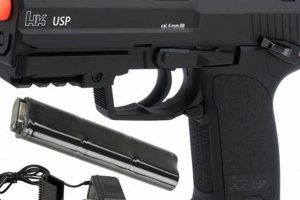
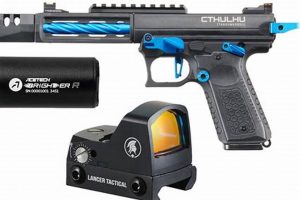
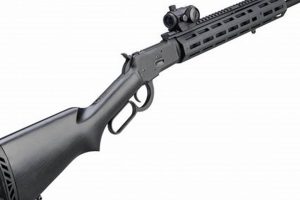
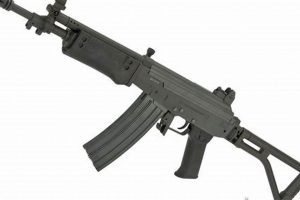
The phrase in question refers to replicas of firearms manufactured by SIG Sauer, adapted for use in airsoft sporting activities. These replicas typically utilize 6mm or 8mm plastic BBs as projectiles and are powered by compressed gas or electric mechanisms. Such devices are designed to simulate the appearance and handling characteristics of their real-steel counterparts, offering a realistic training or recreational experience.
The significance of these replicas lies in their ability to provide a safe and controlled environment for individuals to practice firearm handling skills, engage in tactical simulations, or participate in recreational skirmishes. Their availability contributes to the accessibility of these activities, allowing participants to experience the realism of firearm operation without the inherent dangers associated with live ammunition. Historically, demand for these types of products has grown in parallel with the increasing popularity of airsoft as a hobby and training tool.
The following discussion will delve into various aspects, including specific models, performance characteristics, maintenance procedures, and legal considerations relevant to participation in the activity. Subsequent sections will also explore the ethical responsibilities associated with owning and operating these realistic training devices.
Enhancing Performance and Longevity
The following guidelines address critical aspects of usage, maintenance, and responsible handling to optimize the performance and extend the lifespan of replica SIG Sauer firearms utilized in airsoft activities.
Tip 1: Battery Maintenance. Proper battery care is essential for electric-powered models. Avoid overcharging or deep discharging lithium polymer (LiPo) or nickel-metal hydride (NiMH) batteries. Use a smart charger with automatic cutoff to prevent damage. Store batteries in a cool, dry place, disconnected from the device when not in use.
Tip 2: Gas System Optimization. For gas blowback models, ensure the magazine and internal components are adequately lubricated with silicone oil. This prevents leaks and maintains consistent gas pressure. Regular cleaning of the nozzle and hop-up unit is also crucial to preventing malfunctions.
Tip 3: Hop-Up Adjustment. The hop-up unit affects the range and trajectory of the BB. Adjust the hop-up incrementally until the BB flies straight and level for the desired distance. Over-hopping can cause the BB to curve upward excessively, while under-hopping will result in a rapid drop.
Tip 4: Barrel Cleaning. Regular cleaning of the inner barrel is paramount for accuracy. Use a cleaning rod with a soft cloth patch and isopropyl alcohol to remove dirt and debris. Avoid using abrasive materials that could scratch the inner surface of the barrel.
Tip 5: Responsible Storage. Store the replica unloaded and in a secure location, inaccessible to unauthorized individuals, particularly children. Use a gun case or lockable container to prevent accidental discharge or misuse.
Tip 6: Regular Inspection. Conduct routine inspections to identify signs of wear or damage. Check for loose screws, cracks in the body, or any other anomalies that could compromise performance or safety. Address any issues promptly to prevent further deterioration.
Implementing these measures will contribute significantly to the safe, reliable, and enduring operation of the product. Adherence to these guidelines fosters a responsible and enjoyable airsoft experience.
The subsequent section will address common troubleshooting scenarios and advanced maintenance procedures.
1. Model Variety

Model variety constitutes a foundational element of the range of products inspired by SIG Sauer firearms. This characteristic extends beyond mere aesthetic replication. It encompasses functional diversity mirroring the broad spectrum of real-world firearm applications. The availability of various modelspistols, rifles, and specialized configurationsdirectly influences the end-user’s ability to simulate specific tactical scenarios or training exercises. For example, the P320 pistol variant facilitates close-quarters combat simulations, whereas rifle platforms offer capabilities for longer-range engagements. This breadth of choice is instrumental in attracting a diverse user base, from recreational enthusiasts to law enforcement agencies seeking cost-effective training alternatives.
The significance of model variety is further underscored by its impact on customizing and upgrading existing platforms. Different models often possess unique internal and external components, enabling users to tailor the product to their specific preferences or operational requirements. This modularity promotes a sense of ownership and encourages experimentation, contributing to the product’s sustained appeal. Moreover, the existence of numerous models drives innovation within the aftermarket sector, fostering the development of enhanced parts and accessories. This continuous cycle of improvement ultimately benefits the end-user by providing access to increasingly refined and capable training devices.
In conclusion, model variety is not merely a superficial feature; it is a central determinant of its utility, adaptability, and long-term viability. The availability of diverse platforms empowers users to engage in a wider range of activities, facilitating both recreational enjoyment and professional training applications. Overcoming the challenge of maintaining quality and realism across a diverse product line remains critical to sustaining its appeal and expanding its reach within the market.
2. Realistic Simulation
Realistic simulation forms a cornerstone of the appeal and utility related to replicas of SIG Sauer firearms employed in airsoft. The degree to which these replicas accurately replicate the form, function, and handling characteristics of their real-steel counterparts directly impacts their effectiveness as training tools and recreational devices. A high level of realism enhances the immersive experience for participants, fostering a more engaging and challenging environment. For example, a replica with realistic weight, dimensions, and trigger pull allows users to develop muscle memory and refine firearm handling skills that can potentially translate to real-world applications. Conversely, a replica lacking in these characteristics diminishes the training value and overall experience.
The pursuit of realistic simulation extends beyond mere physical appearance. Internal mechanisms, such as gas blowback systems or realistic recoil simulation, further contribute to the immersive experience. These features mimic the operation of a real firearm, providing users with a more authentic sense of feedback and control. Practical applications of this enhanced realism are evident in law enforcement training, where accurate replicas are used to simulate real-world scenarios, allowing officers to practice tactical maneuvers and decision-making in a safe and controlled environment. Similarly, recreational airsoft enthusiasts value the heightened realism for its ability to create a more immersive and enjoyable gaming experience. However, there is a constant challenge in balancing realism with safety and cost considerations.
In conclusion, realistic simulation represents a critical factor influencing the value and appeal. Its presence elevates these products from mere toys to effective training tools and engaging recreational devices. The ongoing pursuit of enhanced realism drives innovation in manufacturing techniques and internal mechanisms, ultimately benefiting end-users by providing access to increasingly accurate and capable replicas. Addressing the ongoing challenge of accurately replicating real-world firearm characteristics while maintaining safety and affordability remains paramount for the continued success of this segment.
3. Performance Characteristics

The performance characteristics of airsoft replicas, particularly those modeled after SIG Sauer firearms, directly determine their suitability for various applications, ranging from recreational skirmishes to professional training exercises. These characteristics encompass a range of measurable attributes that influence a device’s accuracy, range, reliability, and overall effectiveness.
- Velocity and Power Output
Measured in feet per second (FPS), velocity defines the projectile’s speed upon leaving the barrel. This attribute directly correlates with the potential energy delivered upon impact and influences the range and penetration capability of the BB. Airsoft fields typically impose FPS limits to ensure player safety, dictating the permissible power output of a given device. Higher FPS values may be desirable for outdoor engagements where longer ranges are required; however, they must remain within the stipulated safety regulations. The gas system efficiency of gas blowback models or the motor torque of electric-powered models influences FPS consistency.
- Accuracy and Range
Accuracy reflects the ability to consistently hit a target at a given distance. Several factors influence accuracy, including the quality of the inner barrel, the consistency of the hop-up system, and the quality of the ammunition used. Range, the maximum distance the projectile can travel, is affected by FPS, hop-up adjustment, and environmental conditions such as wind. A well-tuned system will exhibit both accuracy and range, allowing users to effectively engage targets at varying distances. For the discussed replicas, accuracy contributes to their viability as training devices for firearm manipulation and target acquisition.
- Rate of Fire and Trigger Response
Rate of fire (ROF), measured in rounds per minute (RPM), indicates the speed at which the replica can fire projectiles. This attribute is particularly relevant in automatic and burst firing modes. Trigger response refers to the delay between pulling the trigger and the replica firing a projectile. A faster trigger response allows for quicker follow-up shots. The gear ratio, motor type, and battery voltage influence ROF in electric-powered models, while gas pressure and valve design impact gas blowback models. The replica SIG Sauer firearms’ design for rapid and precise action requires these characteristics for maintaining realistic simulation.
- Durability and Reliability
Durability refers to the device’s ability to withstand repeated use and potential impacts without suffering damage or malfunction. Reliability refers to the consistency with which the replica functions as intended. High-quality materials, robust construction, and proper maintenance contribute to durability and reliability. Internal components, such as gears, pistons, and valves, are subjected to significant stress during operation. The replica’s suitability for extended use in demanding environments depends on these attributes. Material and construction quality significantly influence the long-term performance of these products.
These performance characteristics, when combined, determine the overall effectiveness of an airsoft replica in its intended application. Balancing these attributes while adhering to safety regulations and maintaining realistic aesthetics represents a significant engineering challenge. The long-term success of these replicas hinges on continuous improvements in performance, reliability, and durability. These enhancements contribute to their continued viability as both recreational devices and training tools.
4. Maintenance Requirements

The operational longevity and performance consistency are directly contingent upon adherence to defined maintenance protocols. Lack of appropriate maintenance invariably precipitates diminished performance, increased component wear, and a heightened risk of malfunction. For instance, neglecting lubrication of gas-powered pistol models can lead to seal degradation, resulting in gas leakage and reduced firing power. Similarly, failure to clean the inner barrel of electric rifle variants compromises accuracy due to accumulated debris obstructing projectile trajectory. Such examples underscore the cause-and-effect relationship between proper care and sustained functionality.
The maintenance requirements constitute an indispensable component, ensuring both its safe and reliable operation. Regular inspection of critical components, such as the hop-up unit and the trigger mechanism, enables the early detection of potential issues. Addressing these issues promptly prevents escalation into more significant problems requiring extensive repairs. Moreover, adherence to recommended maintenance schedules, including disassembly, cleaning, and lubrication, optimizes the performance and extends the lifespan, thereby maximizing the return on investment. Airsoft teams that prioritize proper equipment upkeep experience fewer instances of mid-game failures, resulting in enhanced strategic effectiveness and a more enjoyable experience.
In summary, understanding and consistently executing the maintenance requirements for models is paramount. This practice not only safeguards the investment but also contributes to a safer and more reliable operating experience. While the specific maintenance procedures may vary depending on the model and power source, the fundamental principle remains constant: proactive maintenance is essential for preserving the performance and longevity. Overcoming the common challenges of neglecting maintenance, due to time constraints or perceived complexity, is crucial for realizing the full potential.
5. Safety Protocols

Rigorous adherence to established safety protocols is paramount when engaging in activities involving replicas of SIG Sauer firearms. The realistic appearance and functionality of these devices necessitate strict adherence to guidelines designed to prevent accidents and misuse. Failure to comply with these protocols can result in serious injury, property damage, or legal repercussions.
- Protective Gear Requirements
The mandatory use of appropriate protective gear serves as a primary safeguard against potential injury. Full-seal eye protection, specifically designed to withstand the impact of airsoft projectiles, is non-negotiable. Additional protective equipment, such as face masks, gloves, and body armor, further mitigate the risk of injury. The selection of protective gear must align with the anticipated intensity of the activity and the potential for close-range engagement. Consistent enforcement of protective gear requirements is crucial for minimizing the incidence of preventable injuries.
- Field Regulations and Designated Areas
Designated playing fields adhere to established rules and regulations governing gameplay, permissible projectile velocities, and acceptable conduct. These regulations are designed to create a safe and controlled environment for participants. Chronograph testing of each device before gameplay ensures compliance with velocity limits. Boundaries and safe zones delineate areas where firing is prohibited. Strict adherence to field regulations is essential for maintaining a safe and enjoyable experience for all participants. Failure to abide by these rules can result in expulsion from the playing field and potential liability for any resulting damages.
- Responsible Handling and Storage
Responsible handling of a replica extends beyond the playing field and encompasses secure storage practices. When not in use, these devices must be stored unloaded and in a secure location, inaccessible to unauthorized individuals, particularly children. Utilizing gun cases or lockable containers prevents accidental discharge or misuse. Responsible handling also includes treating every replica as if it were a real firearm, emphasizing muzzle awareness and trigger discipline. These practices promote a culture of safety and prevent the accidental or intentional misuse. The similarity in appearance necessitates adherence to standards of safe handling and storage comparable to those applied to real firearms.
- Legal Compliance and Ethical Considerations
Compliance with local, regional, and national laws governing the ownership, transportation, and use of airsoft replicas is mandatory. Regulations vary widely depending on jurisdiction, encompassing aspects such as age restrictions, permissible modifications, and transportation requirements. Ethical considerations dictate the responsible use, avoiding any actions that could cause alarm or misrepresentation. The user needs to understand the potential consequences of irresponsible handling, and refrain from displaying or using the item in public places. The ethical imperative to prevent misidentification and maintain public safety must guide the actions of all users.
The multifaceted nature of these safety protocols underscores the commitment to responsible engagement. While participation in airsoft activities offers both recreational and training benefits, the inherent risks associated with realistic firearm replicas necessitate unwavering adherence to these guidelines. Maintaining a culture of safety through education, enforcement, and ethical considerations remains paramount for mitigating potential risks and ensuring the continued responsible and safe use of models.
Frequently Asked Questions Regarding Replicas
The following section addresses common inquiries and clarifies misconceptions surrounding the usage, maintenance, and legal aspects.
Question 1: What distinguishes these replicas from real firearms?
These items are designed to discharge plastic projectiles, typically 6mm or 8mm BBs, propelled by compressed gas or electric mechanisms. They lack the capacity to fire lethal ammunition and are not subject to the same regulatory controls as real firearms, though some regulations do apply. The core distinction resides in their intended purpose: recreation and training, not inflicting harm.
Question 2: What constitutes appropriate protective gear for airsoft activities?
Full-seal eye protection, rated to withstand the impact of airsoft projectiles, is mandatory. Additional protective equipment may include face masks, gloves, and appropriate clothing to minimize the risk of skin abrasions or other injuries. The specific protective gear requirements often depend on the playing field and the intensity of the activity.
Question 3: What are the common causes of malfunction?
Malfunctions can arise from various factors, including inadequate lubrication, improper battery maintenance, use of substandard ammunition, or component wear. Regular cleaning, inspection, and adherence to recommended maintenance schedules are critical for preventing such issues.
Question 4: What legal restrictions apply to the ownership and use of the product?
Legal restrictions vary significantly by jurisdiction. Some regions may have age restrictions, while others may regulate the public display or transportation of these replicas. Users are responsible for understanding and complying with all applicable laws in their area.
Question 5: What is the optimal method for storing these replicas when not in use?
The device must be stored unloaded, with the magazine removed (if applicable), and in a secure location inaccessible to unauthorized individuals, especially children. A gun case or lockable container is recommended. The storage area should also be dry and free from extreme temperature fluctuations.
Question 6: How does one maintain the operational lifespan of batteries utilized in electric-powered models?
Employ a smart charger with automatic cutoff to prevent overcharging. Avoid deep discharging batteries. Store batteries in a cool, dry place, disconnected from the replica when not in use. Regularly inspect batteries for signs of damage, such as swelling or corrosion. Follow the manufacturer’s instructions for optimal charging and storage practices.
The information provided clarifies key aspects related to usage, maintenance, and legal considerations, fostering responsible engagement.
The subsequent section will delve into advanced troubleshooting and modification techniques for advanced users.
Conclusion
This exposition has comprehensively addressed the multifaceted aspects encompassing models, ranging from historical context and operational characteristics to maintenance requirements and legal considerations. An emphasis has been placed on ensuring responsible use, promoting safety, and fostering a thorough understanding of the technology’s capabilities and limitations. The information presented serves to equip individuals with the knowledge necessary for informed decision-making and ethical engagement.
Continued advancements in manufacturing techniques and regulatory frameworks will undoubtedly shape the future. Ongoing vigilance and a commitment to responsible practices remain essential to realizing the full potential while mitigating potential risks. Further research and development focused on enhancing safety features and promoting ethical considerations are paramount to securing the long-term viability of this technology.