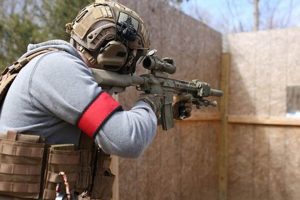
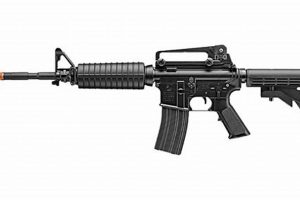
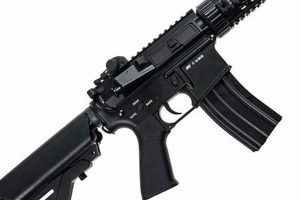
The forward portion of an airsoft MP5 replica, designed to protect the user’s hand from the heat of rapid firing and provide a gripping surface. This component also frequently houses the battery that powers the electric motor within the airsoft gun. For example, a user might upgrade this part to accommodate a larger battery or achieve a desired aesthetic.
A crucial element for both the functionality and appearance of the airsoft MP5, it enhances handling and provides a stable platform for accessories such as tactical lights, lasers, or foregrips. Historically, designs have evolved from basic polymer shells to more advanced versions incorporating rail systems, offering greater modularity. These modifications contribute to a player’s overall effectiveness and customization options during gameplay.
The following sections will detail various aspects including material compositions, attachment methods, compatibility considerations, and commonly available aftermarket options for this essential part, providing a thorough understanding for airsoft enthusiasts seeking to modify or maintain their equipment.
Airsoft MP5 Handguard
The following provides practical advice for handling, maintaining, and modifying the specified airsoft component. These tips aim to maximize performance and longevity.
Tip 1: Material Selection Matters. When replacing the stock component, consider the material. Polymer versions offer lightweight durability, while metal alternatives provide increased rigidity and a more realistic feel. The choice depends on the player’s preferred balance between weight and robustness.
Tip 2: Confirm Compatibility Before Purchase. Variations in airsoft MP5 models exist. Ensure the chosen replacement is compatible with the specific brand and model of the airsoft gun to avoid fitment issues. Refer to manufacturer specifications and customer reviews to verify compatibility.
Tip 3: Rail Integration Enables Accessory Mounting. Select this part with integrated rail systems (RIS/RAS) to facilitate the attachment of accessories. This allows for customization with tactical lights, foregrips, and lasers, enhancing performance in diverse scenarios.
Tip 4: Proper Installation Prevents Damage. Handle the part with care during installation. Avoid excessive force, which can damage the mounting points or the component itself. Consult instructional videos or seek assistance from experienced airsoft technicians if unsure of the procedure.
Tip 5: Battery Compartment Optimization. Some designs incorporate battery compartments. Ensure the chosen part can accommodate the specific type and size of battery required to power the airsoft gun. Check battery dimensions and voltage compatibility before installation.
Tip 6: Regular Cleaning Extends Lifespan. Clean the interior and exterior surfaces periodically to remove dirt and debris. Use a soft cloth and appropriate cleaning solutions to prevent damage to the material. Regular cleaning maintains functionality and appearance.
Tip 7: Inspect Mounting Hardware Regularly. Check the screws or pins that secure the component to the airsoft gun. Ensure they are tightened appropriately to prevent loosening during use. Replace worn or damaged hardware to maintain a secure fit.
These tips contribute to improved performance, extended lifespan, and enhanced customization options. Adhering to these guidelines ensures optimal utilization of this crucial airsoft component.
The subsequent sections will delve into specific aftermarket options and advanced modification techniques, further expanding upon the knowledge presented here.
1. Material Composition

The material composition directly affects the performance, durability, and overall feel of an airsoft MP5 handguard. The choice of material dictates its resistance to impact, temperature variations, and wear from prolonged use. Polymer-based handguards, for instance, offer a lightweight solution, reducing the overall weight of the replica, which can improve maneuverability during gameplay. A real-life example is a high-density polymer utilized in competition-grade airsoft guns, designed to withstand repeated impacts without fracturing. Conversely, metal handguards, often constructed from aluminum alloys, provide increased rigidity and a more authentic aesthetic, replicating the feel of a real firearm. These materials, however, add weight, potentially impacting the user’s fatigue level during extended engagements. The practical significance of understanding the relationship between material composition and handguard performance lies in selecting the most suitable component based on individual playing style and operational requirements.
Furthermore, the type of polymer or metal used influences the handguard’s thermal properties and ability to integrate accessories. For example, certain reinforced polymers exhibit higher heat resistance, preventing deformation when exposed to high-capacity batteries or prolonged rates of fire. Metal handguards, on the other hand, often feature integrated rail systems (RIS/RAS) that allow for the attachment of tactical lights, lasers, and foregrips, enhancing the airsoft replica’s versatility. A key consideration is the manufacturing process; injection-molded polymers offer cost-effective mass production, while CNC-machined metal components provide greater precision and durability. The presence of fiber reinforcement within polymer blends also increases structural integrity and resistance to stress fractures. These attributes consequently affect the longevity and reliability of the airsoft MP5 in demanding conditions.
In conclusion, the choice of material for an airsoft MP5 handguard is a critical decision that impacts performance characteristics, accessory compatibility, and overall durability. Balancing the trade-offs between weight, strength, heat resistance, and cost is essential. While polymer handguards provide a lightweight and economical option, metal alternatives offer a more realistic feel and enhanced rigidity. Challenges arise when attempting to replicate the exact properties of real firearm components while adhering to airsoft regulations and manufacturing constraints. Ultimately, understanding the intricacies of material composition allows airsoft enthusiasts to make informed decisions and optimize their equipment for specific gameplay scenarios, enhancing their overall experience.
2. Attachment Method

The attachment method is a fundamental consideration in selecting and installing an airsoft MP5 handguard. The security and ease with which the handguard affixes to the receiver directly influences the replica’s structural integrity and the user’s ability to quickly access or modify internal components.
- Pin Retention
Pin retention is a common and often simpler method of securing the handguard. This typically involves one or more pins that pass through corresponding holes in the handguard and receiver. This method is frequently seen in older or more budget-oriented airsoft MP5 models. While offering ease of installation, pin retention can sometimes exhibit play or wobble if the tolerances are not precise, impacting stability.
- Clamping Mechanisms
Some aftermarket handguards utilize clamping mechanisms that grip the barrel or receiver. These often involve screws or levers that tighten around the component, creating a secure fit. Clamping mechanisms offer a more robust attachment compared to simple pin retention, providing a stable platform for accessories. An example includes handguards designed with a split-clamp design, allowing for a tighter fit and reduced movement.
- Threaded Interface
Threaded interfaces involve screwing the handguard onto the receiver or barrel nut. This method provides a strong and reliable connection but necessitates compatible threading between the handguard and the airsoft MP5. This approach is less common than pin retention or clamping, but it may be seen on specific high-end or custom models where a secure and precise fit is paramount.
- Proprietary Systems
Certain manufacturers may employ proprietary attachment systems unique to their airsoft MP5 models. These systems are designed for a specific interface between the handguard and the receiver, often optimizing stability and aesthetic integration. However, proprietary systems can limit aftermarket options and require sourcing compatible components from the original manufacturer.
The selection of an airsoft MP5 handguard based on its attachment method should consider the balance between ease of installation, stability, and compatibility with the specific airsoft gun model. Each approach presents its own set of advantages and drawbacks, directly influencing the overall performance and customization potential of the replica.
3. Battery Accommodation

Battery accommodation represents a critical design consideration directly impacting the functionality of airsoft MP5 replicas, specifically related to the component housing the power source.
- Handguard Internal Volume
The internal volume within the component dictates the maximum battery size and type that can be housed. Insufficient volume restricts battery options, potentially limiting the rate of fire or operational duration of the airsoft gun. For instance, a compact model may only accommodate small-type batteries, whereas a larger design might support stick-type or even LiPo batteries, affording extended gameplay.
- Battery Connector Compatibility
The compatibility of the battery connector with the wiring within the component is essential for seamless integration. Mismatched connectors necessitate modification, potentially voiding warranties or causing electrical damage. Common connector types include Tamiya, Mini Tamiya, and Deans, each with varying current-handling capabilities and physical dimensions.
- Thermal Management
Effective thermal management within the battery compartment prevents overheating, which can degrade battery performance and lifespan. Adequate ventilation or heat sinks are crucial, especially when using high-discharge batteries. Overheating poses a safety risk and reduces the overall efficiency of the airsoft gun during prolonged use.
- Accessibility and Ease of Battery Change
The accessibility and ease of battery change influence the operational efficiency of the airsoft MP5. Complex or cumbersome battery compartments slow down reloading and can be disadvantageous during gameplay. Designs that allow for quick and tool-free battery swaps are preferred, reducing downtime and maintaining a competitive edge.
These facets, encompassing internal volume, connector compatibility, thermal management, and accessibility, directly impact the practicality and effectiveness of the design in housing the power source for airsoft MP5s. Balancing these factors ensures optimal performance and user experience.
4. Accessory Compatibility

Accessory compatibility, in the context of an airsoft MP5 handguard, dictates the expandability and adaptability of the airsoft replica. The ability to mount various tactical accessories enhances functionality, ergonomics, and aesthetic customization.
- Rail Integration Standards (RIS/RAS)
Rail Integration Systems, such as Picatinny (MIL-STD-1913) or Weaver rails, are ubiquitous standards for accessory attachment. A handguard featuring RIS/RAS allows for mounting lights, lasers, vertical grips, and other tactical devices. The presence of a standardized rail system significantly broadens the application scope of the airsoft MP5. An example is the use of a railed system to accommodate a high-lumen tactical light, essential for CQB scenarios.
- M-LOK and KeyMod Compatibility
M-LOK and KeyMod represent alternative mounting systems that prioritize weight reduction and modularity. These systems utilize direct attachment points or slots for accessories, reducing the need for bulky rail segments. An airsoft MP5 handguard with M-LOK or KeyMod offers a streamlined profile and enhanced comfort. For example, an M-LOK handguard can accommodate a bipod adapter for improved stability in outdoor environments.
- Direct Mounting Points
Certain accessories can be directly attached to the handguard via dedicated mounting points. This approach eliminates the need for rail systems altogether, offering a minimalist aesthetic and reduced weight. Examples include specific sling mounts or foregrips designed for direct integration with a compatible handguard. A benefit is the removal of unnecessary hardware, resulting in a lighter and more streamlined airsoft MP5.
- Proprietary Attachment Systems
Some manufacturers develop proprietary attachment systems specific to their accessories. These systems often offer unique benefits, such as improved aesthetics or enhanced stability. However, proprietary systems limit accessory options to those offered by the specific manufacturer. An example would be a foregrip designed exclusively for a particular brand’s handguard, providing a seamless and secure fit, but restricting compatibility with other accessories.
The type of accessory attachment mechanism integrated into the airsoft MP5 handguard directly determines the range of compatible accessories and the level of customization possible. The choice between standardized rail systems, modular alternatives, direct mounting points, or proprietary systems influences the overall versatility and adaptability of the airsoft replica to diverse tactical scenarios.
5. Ergonomic Design
Ergonomic design, as it pertains to an airsoft MP5 handguard, directly influences user comfort, weapon handling, and overall performance. A well-designed handguard reduces fatigue during prolonged use, facilitates secure weapon manipulation, and enhances the ability to accurately engage targets. A handguard with a comfortable grip and optimal texture, for instance, allows for better control, minimizing muzzle climb and improving target acquisition speed. An ill-fitting or poorly textured handguard, conversely, can lead to hand fatigue, reduced accuracy, and slower reaction times. The practical significance of ergonomic design lies in its direct impact on the player’s effectiveness during gameplay.
Specific ergonomic features include grip angle, texture, and overall shape. The angle at which the hand interfaces with the handguard affects wrist strain and hand positioning. An optimized grip angle promotes a natural and comfortable hold, reducing muscle fatigue. Texturing, such as stippling or raised patterns, enhances grip security, particularly in adverse conditions like wet or gloved hands. The shape of the handguard, including its profile and dimensions, influences its suitability for different hand sizes and grip styles. For example, a handguard with a wider profile may be more comfortable for users with larger hands, while a slimmer profile may be preferred for users with smaller hands or those prioritizing a lightweight setup.
In conclusion, ergonomic design is a crucial attribute of an airsoft MP5 handguard, impacting user comfort, weapon control, and overall performance. The integration of features like optimized grip angles, enhanced texturing, and thoughtfully designed shapes contribute to a more effective and enjoyable airsoft experience. Challenges exist in balancing ergonomic considerations with other factors, such as accessory compatibility and aesthetic preferences. The effective application of ergonomic principles in the design of airsoft MP5 handguards directly translates to improved gameplay and enhanced user satisfaction.
Frequently Asked Questions
The following section addresses common inquiries regarding the specification, selection, and maintenance of this airsoft component. The information presented aims to clarify prevalent misconceptions and provide practical guidance.
Question 1: What are the primary materials used in the construction of an airsoft MP5 handguard?
Common materials include reinforced polymers (e.g., ABS, nylon), aluminum alloys, and, less frequently, steel. Polymer options prioritize weight reduction, while metal alternatives offer increased rigidity and a more realistic aesthetic.
Question 2: How does the attachment method of the handguard impact its stability and compatibility?
Attachment methods range from simple pin retention systems to more robust clamping mechanisms and threaded interfaces. Secure attachment is critical for stability, particularly when mounting accessories. Compatibility is contingent on matching the handguard’s interface with the specific airsoft MP5 model.
Question 3: What considerations are paramount when selecting a handguard to accommodate a battery?
Internal volume, connector compatibility, and thermal management are key factors. The handguard must provide sufficient space for the intended battery type and connector. Adequate ventilation is crucial to prevent overheating during use.
Question 4: What are the advantages and disadvantages of handguards featuring rail integration systems (RIS/RAS)?
RIS/RAS handguards offer enhanced versatility for mounting tactical accessories, but they can add weight and bulk. The presence of a standardized rail system significantly expands the customization options for the airsoft MP5, though at the expense of a streamlined profile.
Question 5: How does ergonomic design influence the performance and comfort of the airsoft MP5 handguard?
Ergonomic features, such as grip angle, texture, and shape, directly impact user comfort and weapon handling. A well-designed handguard reduces fatigue, promotes secure grip, and enhances accuracy.
Question 6: What maintenance procedures are recommended to prolong the lifespan of an airsoft MP5 handguard?
Regular cleaning with appropriate solvents and inspection for damage are essential. Tightening any securing hardware and addressing any signs of wear or cracking promptly can extend the component’s operational life.
The preceding answers highlight critical aspects related to this component. Careful consideration of these factors ensures optimal performance and longevity.
The subsequent section will provide a comparative analysis of various aftermarket options, offering insights into specific brands and models available on the market.
Conclusion
The foregoing analysis underscores the critical role the airsoft MP5 handguard plays in the functionality, customizability, and user experience of the airsoft MP5 replica. This component influences not only the aesthetic appeal but also the practical application of the weapon through its impact on ergonomics, accessory compatibility, and battery accommodation. Material selection, attachment method, and the integration of rail systems are all crucial factors in determining the suitability of a given airsoft MP5 handguard for specific operational needs.
As the airsoft landscape continues to evolve, informed decision-making regarding the airsoft MP5 handguard becomes increasingly important. Selecting the appropriate component requires a comprehensive understanding of individual performance priorities and a commitment to meticulous maintenance practices. The future of airsoft customization hinges on a deeper appreciation for the nuanced interplay between component design and practical application, ensuring that airsoft enthusiasts can maximize the potential of their equipment and elevate their gameplay experience.