![Gear Up: Best Clothing for Airsoft Action [2024]](data:image/svg+xml;base64,PHN2ZyB4bWxucz0iaHR0cDovL3d3dy53My5vcmcvMjAwMC9zdmciIHdpZHRoPSI0NzQiIGhlaWdodD0iNTYiIHZpZXdCb3g9IjAgMCA0NzQgNTYiPjxyZWN0IHdpZHRoPSIxMDAlIiBoZWlnaHQ9IjEwMCUiIHN0eWxlPSJmaWxsOiNjZmQ0ZGI7ZmlsbC1vcGFjaXR5OiAwLjE7Ii8+PC9zdmc+ "Gear Up: Best Clothing for Airsoft Action [2024] Ultimate Airsoft Guide for Beginners, Tactics & Gear Reviews")
Protective apparel designed for the airsoft sport encompasses garments and accessories engineered to safeguard participants from projectiles and environmental factors encountered during gameplay. This specialized gear ranges from full-body suits to individual protective elements like vests, helmets, and eye protection. A practical example includes a durable jacket with reinforced elbows and pockets to carry essential equipment during simulated combat scenarios.
The significance of purpose-built apparel resides in its capacity to mitigate potential injuries from BB impacts, scrapes, and falls within the playing field. Its historical development traces back to the increasing popularity and realism of airsoft, necessitating the creation of more robust and functional gear. The appropriate selection enhances survivability and also contributes to a more immersive and strategically effective player experience.
The subsequent discussion will delve into specific types of such protective ensembles, material considerations for durability and comfort, and factors players should evaluate when selecting the appropriate ensemble for varying playstyles and environments.
Essential Considerations for Airsoft Garb Selection
This section outlines key considerations for selecting appropriate protective attire for engaging in airsoft activities, emphasizing functionality and safety.
Tip 1: Prioritize Eye Protection: Full-seal goggles or a mask meeting ANSI Z87.1 standards are non-negotiable. BB impacts to the eyes can cause severe injury; therefore, reliable eye wear is paramount.
Tip 2: Choose Durable Materials: Fabrics like ripstop nylon or canvas offer resistance to tearing and abrasion. Airsoft fields often involve traversing rough terrain, making material durability essential.
Tip 3: Consider Layering: Adaptability to changing weather conditions is critical. Layering allows adjustment to temperature variations, maintaining comfort and preventing overheating or chilling.
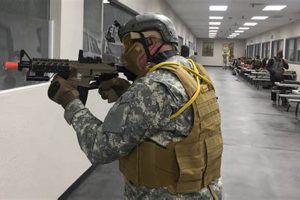
Tip 4: Invest in a Protective Vest: A tactical vest or plate carrier provides impact protection and offers modular attachment points for pouches and other gear. Consider a vest with padding to minimize bruising from BB impacts.
Tip 5: Select Appropriate Footwear: Sturdy boots with ankle support are essential for navigating uneven terrain. Traction and stability are crucial to prevent slips, trips, and ankle injuries.
Tip 6: Camouflage Considerations: Camouflage patterns can enhance concealment within specific environments. Research common vegetation and terrain in the anticipated playing area to select an effective pattern.
Tip 7: Glove Selection: Full-fingered gloves protect hands from BB impacts and abrasions. Choose gloves that offer dexterity and a secure grip for weapon handling.
Proper selection based on these tips can significantly improve safety, comfort, and performance during airsoft activities. Prioritizing protection and adaptability will enhance the overall experience.
With these crucial aspects covered, the discussion now shifts towards advanced features and customization options available in the world of airsoft protection.
1. Durability

Durability, in the context of garments designed for airsoft, represents a critical performance parameter. The capacity of these items to withstand the rigors of simulated combat scenarios directly influences their longevity, protective capabilities, and ultimately, the wearer’s safety and effectiveness.
- Fabric Strength and Resistance to Tearing
The selection of robust fabrics, such as ripstop nylon or heavy-duty canvas, directly impacts the apparel’s ability to resist tearing and abrasion. Airsoft environments often involve navigating dense vegetation, rough terrain, and simulated close-quarters combat, increasing the likelihood of snags and impacts. High-tensile strength fabrics mitigate these risks, ensuring the garments maintain structural integrity throughout extended use.
- Seam Construction and Reinforcement
The integrity of seams is paramount to overall durability. Reinforced stitching, particularly at stress points such as elbows, knees, and shoulders, prevents seam failure under strain. Double or triple stitching techniques enhance the seams’ resistance to pulling and tearing, extending the life of the garment and preserving its protective function.
- Resistance to Environmental Degradation
Exposure to sunlight, moisture, and extreme temperatures can degrade fabrics over time. Durable materials for airsoft apparel should exhibit resistance to fading, shrinking, and weakening due to environmental factors. UV resistance, water repellency, and mildew resistance contribute significantly to the long-term usability of the clothing, especially in outdoor scenarios.
- Abrasion Resistance and Protective Layering
The outer layers of airsoft apparel are subjected to significant abrasion from contact with the environment and other gear. Abrasion-resistant coatings or the incorporation of durable overlays in high-wear areas prolong the lifespan of the garment and maintain its protective qualities. This is particularly relevant for items such as tactical vests and knee pads, which experience constant friction and impact.
Collectively, these facets underscore the fundamental role of durability in airsoft apparel. The selection of appropriate materials, robust construction techniques, and resistance to environmental factors are essential for ensuring the longevity, protective function, and overall effectiveness of garments used in this demanding activity. Investment in durable options translates to reduced replacement costs, enhanced safety, and a more reliable performance in the field.
2. Protection

Protection constitutes a primary consideration in the design and selection of apparel intended for airsoft activities. The nature of the sport, involving projectile impacts, dictates the necessity of specialized garments engineered to mitigate potential injuries.
- Impact Resistance
The core protective function of encompasses the ability to absorb and disperse the kinetic energy of BB projectiles. Tactical vests, padded jackets, and reinforced trousers offer varying degrees of impact resistance, reducing the severity of bruising and potential skin penetration. The effectiveness of this protection depends on material composition, padding thickness, and the area of coverage provided by the garment.
- Eye and Face Shielding
Integral to comprehensive protection, full-seal goggles and face masks guard against direct BB impacts to the eyes and face. These components must meet or exceed established safety standards (e.g., ANSI Z87.1) to ensure adequate resistance to high-velocity projectiles. The material used, typically polycarbonate, must be impact-resistant and shatterproof to prevent fragmentation upon impact.
- Joint and Extremity Safeguarding
Apparel featuring integrated or add-on padding protects vulnerable joints and extremities from abrasions, impacts, and joint strain. Knee pads, elbow pads, and gloves mitigate the risk of injuries associated with falls, crawling, and maneuvering through challenging terrain. The level of protection offered depends on the type and thickness of padding used, as well as the secureness of the fit.
- Environmental Hazard Mitigation
Beyond direct impact protection, functional ensembles offer protection against environmental hazards encountered during gameplay. Long-sleeved shirts and trousers shield against insect bites, thorny vegetation, and sunburn. Weather-resistant fabrics provide protection from rain, wind, and cold, maintaining player comfort and minimizing the risk of hypothermia or heatstroke.
The convergence of these protective facets highlights the importance of careful apparel selection for airsoft. Prioritizing garments designed with robust impact resistance, comprehensive eye and face shielding, joint safeguarding, and environmental hazard mitigation directly enhances player safety and contributes to a more confident and enjoyable airsoft experience.
3. Camouflage

Camouflage constitutes a critical element within the realm of apparel designed for airsoft, directly influencing a player’s ability to effectively integrate into and manipulate the game environment. The selection of appropriate camouflage patterns serves as a tactical advantage, hindering detection by opposing players and improving maneuverability within the simulated combat zone. The effectiveness of camouflage hinges on its ability to mimic or disrupt the visual patterns prevalent within the operating area. For instance, woodland camouflage patterns, characterized by greens, browns, and blacks, excel in forested environments, while desert patterns, featuring tans and sandy hues, prove more effective in arid landscapes. A misapplication of camouflage, such as wearing woodland patterns in a desert setting, renders the player more conspicuous, negating any potential benefit.
The practical application of camouflage extends beyond mere pattern selection. Factors such as lighting conditions, viewing distance, and the presence of movement significantly impact camouflage effectiveness. A camouflage pattern that appears effective under direct sunlight may become less so under overcast skies or at greater distances. Movement, regardless of camouflage effectiveness, draws the eye; therefore, employing stillness and slow, deliberate movements further enhances concealment. Military snipers, for example, utilize ghillie suits elaborate camouflage garments incorporating natural vegetation to achieve near-perfect concealment in specific environments. Similarly, airsoft players often modify their apparel with foliage or netting to adapt to the immediate surroundings, enhancing their blending capabilities.
In summary, camouflage within the context of outfits significantly contributes to a player’s tactical proficiency by minimizing visual detection. Optimal pattern selection, coupled with an understanding of environmental factors and movement control, maximizes the benefits of camouflage, enabling players to execute maneuvers with greater stealth and effectiveness. The continuous evolution of camouflage technology and patterns reflects the ongoing pursuit of enhanced concealment capabilities in both military and recreational contexts, including the sport of airsoft.
4. Comfort
Comfort, often an overlooked factor in tactical gear considerations, plays a crucial role in sustained performance during airsoft engagements. Ill-fitting or uncomfortable attire can impede movement, distract focus, and ultimately diminish a player’s effectiveness over prolonged periods. Prioritizing comfort enhances endurance, allowing players to maintain peak performance throughout extended matches.
- Breathability and Moisture Management
Fabric breathability directly impacts a player’s ability to regulate body temperature and manage moisture accumulation. Materials with inherent breathability properties or moisture-wicking capabilities facilitate the evaporation of sweat, preventing overheating and maintaining a comfortable internal climate. Examples include fabrics incorporating synthetic fibers like polyester or nylon, engineered with open weaves to enhance airflow. Garments lacking these features trap moisture, leading to discomfort, chafing, and an increased risk of heat-related illness, particularly in warm weather conditions.
- Ergonomic Design and Freedom of Movement
The design of apparel should prioritize ergonomic fit and unrestricted movement. Articulated joints, gusseted crotches, and strategically placed stretch panels enable a full range of motion without binding or restricting the wearer. Ill-fitting garments or those with constrictive designs can hinder mobility, impede tactical maneuvers, and contribute to fatigue. Apparel should conform to the body’s natural contours while allowing for layering of undergarments or protective gear.
- Weight Distribution and Load Carriage
Tactical vests and load-bearing equipment should distribute weight evenly across the torso to minimize strain and discomfort. Uneven weight distribution can lead to muscle fatigue, back pain, and reduced mobility. Padded shoulder straps, adjustable torso straps, and strategically placed pouches contribute to a more balanced and comfortable load carriage system. Lightweight materials and streamlined designs further minimize the overall burden on the wearer.
- Skin Irritation and Chafing Prevention
The selection of fabrics and construction techniques directly impacts the potential for skin irritation and chafing. Rough or abrasive materials, poorly designed seams, and tight-fitting garments can cause discomfort and skin damage, particularly during prolonged activity. Smooth, low-friction fabrics, flatlock seams, and moisture-wicking liners minimize these risks, ensuring a comfortable fit even under strenuous conditions. Attention to detail in garment construction contributes significantly to overall comfort and long-term wearability.
In conclusion, the integration of comfort-enhancing features within apparel is not merely a matter of preference but a critical factor influencing player performance and well-being. Prioritizing breathability, ergonomic design, weight distribution, and chafing prevention ensures that wearers can focus on the game without being hindered by discomfort or physical limitations. The selection of comfortable, well-designed contributes directly to enhanced endurance, improved maneuverability, and a more enjoyable airsoft experience.
5. Modularity

In the context of attire designed for airsoft, modularity refers to the capacity of garments and accessories to be adapted and reconfigured to meet specific operational requirements. This adaptability stems from the incorporation of attachment systems, such as PALS (Pouch Attachment Ladder System) webbing or hook-and-loop panels, which allow the user to affix or remove pouches, holsters, and other gear as needed. The cause is the variable nature of airsoft scenarios, ranging from open field engagements to close-quarters combat, demanding different equipment loadouts. Modularity’s importance lies in its provision of a customizable platform, enabling players to tailor their attire to the mission, enhancing efficiency and tactical flexibility. For example, a player anticipating breaching operations might attach additional magazine pouches for increased ammunition capacity, while one focused on reconnaissance could opt for a streamlined setup with minimal gear to reduce weight and profile.
Practical applications of modularity extend beyond simple pouch attachment. Integrated systems within tactical vests, such as adjustable cummerbunds and shoulder straps, allow for a tailored fit, accommodating varying body sizes and ensuring secure gear placement. Furthermore, some apparel incorporates removable armor inserts, enabling users to increase protection levels in high-risk areas or reduce weight when enhanced mobility is paramount. Real-world examples include plate carriers with modular side plates for added ballistic protection, or combat shirts with removable elbow pads for versatility in different operating environments. The significance of this understanding allows players to strategically adapt their attire to optimize performance and safety based on the specific demands of each airsoft scenario.
Modularity in such apparel represents a vital component, allowing for dynamic adaptation to evolving tactical situations. Challenges associated with modular systems include potential weight overload and the complexity of managing numerous attachments. Despite these challenges, the ability to customize loadouts and protective measures offers a distinct advantage, contributing to enhanced effectiveness and survivability in the airsoft arena. The increasing sophistication of modular systems reflects a broader trend towards adaptable and mission-specific gear in both recreational and professional fields.
6. Mobility
Effective movement is paramount in airsoft engagements; therefore, the design and selection of apparel must prioritize unrestricted mobility. Garments that impede movement can hinder tactical maneuvers, reduce reaction time, and ultimately compromise a player’s effectiveness within the simulated combat environment.
- Range of Motion and Articulation
The cut and construction of garments directly affect the range of motion available to the wearer. Articulated elbows and knees, gusseted crotches, and strategically placed stretch panels enable a full spectrum of movement without binding or restriction. For example, a combat shirt with articulated sleeves allows for unimpeded arm movement during weapon handling, while trousers with a gusseted crotch facilitate kneeling and crouching without straining the fabric. Apparel lacking these features can restrict movement, leading to fatigue and reduced agility.
- Weight and Bulk Reduction
Excessive weight and bulk can significantly impede mobility, particularly during prolonged activity. Lightweight materials, streamlined designs, and the elimination of unnecessary features minimize the overall burden on the wearer. Modular systems, while offering versatility, can also contribute to weight and bulk if not carefully managed. A practical example is the use of lightweight plate carriers constructed from advanced composite materials, reducing the overall weight without sacrificing protection. Minimizing weight allows players to move more quickly and efficiently, conserving energy and enhancing endurance.
- Fabric Flexibility and Stretch
The inherent flexibility and stretch of fabrics contribute to overall comfort and freedom of movement. Stretch-woven materials and knit fabrics conform to the body’s contours without restricting movement, allowing for a greater range of motion. For instance, a base layer constructed from a moisture-wicking stretch fabric allows for comfortable movement and temperature regulation, while an outer layer constructed from a rigid, non-stretch fabric can hinder mobility. Fabric flexibility is particularly important in areas that experience a high degree of movement, such as the shoulders, elbows, and knees.
- Interface with Other Gear
The interaction between apparel and other gear, such as tactical vests, plate carriers, and backpacks, can impact mobility. Garments should be designed to integrate seamlessly with these items, minimizing interference and ensuring unrestricted movement. For example, a combat shirt with a slim profile and minimal bulk allows for comfortable wear under a plate carrier, while a bulky jacket can restrict movement and create discomfort. Proper integration of apparel and gear is essential for maintaining optimal mobility and comfort during airsoft activities.
These interconnected factors highlight the crucial role of mobility in the design and selection of outfits. Prioritizing range of motion, weight reduction, fabric flexibility, and seamless gear integration ensures that players can move freely and effectively within the simulated combat environment, enhancing their performance and overall experience. The continuous development of advanced materials and ergonomic designs reflects the ongoing emphasis on optimizing mobility in both recreational and professional applications.
Frequently Asked Questions
The following section addresses common inquiries regarding appropriate attire for engaging in airsoft activities, emphasizing safety and tactical considerations.
Question 1: What constitutes the minimum essential elements of a safe ensemble?
The minimum requirements include full-seal eye protection meeting ANSI Z87.1 standards, appropriate footwear providing ankle support, and head protection to mitigate potential impacts from low-hanging obstacles. Coverage of exposed skin is also advisable to minimize potential abrasions.
Question 2: How does camouflage selection impact tactical effectiveness?
Camouflage patterns enhance concealment by disrupting the wearer’s visual profile within a specific environment. Selecting a pattern that closely matches the predominant colors and textures of the playing field increases the likelihood of evading detection by opposing players.
Question 3: What materials offer optimal durability and longevity in protective apparel?
Durable materials commonly used in such items include ripstop nylon, heavy-duty canvas, and reinforced synthetic fabrics. These materials exhibit resistance to tearing, abrasion, and environmental degradation, ensuring the garment maintains its integrity under demanding conditions.
Question 4: How can a player balance protection with freedom of movement?
Achieving a balance between protection and mobility necessitates selecting garments with articulated joints, gusseted crotches, and strategically placed stretch panels. This design allows for a full range of motion without compromising protective coverage in critical areas.
Question 5: What are the key considerations when choosing a tactical vest or plate carrier?
Factors to consider include weight distribution, modularity, adjustability, and the level of protection provided. The vest should distribute weight evenly across the torso, offer modular attachment points for pouches and gear, and provide a secure and comfortable fit.
Question 6: How does weather impact appropriate attire selection?
Weather conditions necessitate adjustments to layering and material selection. In warm weather, breathable and moisture-wicking fabrics are essential to prevent overheating. In cold or wet conditions, insulated layers and waterproof outerwear are necessary to maintain comfort and prevent hypothermia.
These FAQs provide a foundation for understanding key aspects of protective attire selection for airsoft. Prioritizing safety, functionality, and environmental considerations will enhance the overall playing experience.
The subsequent section will examine the future trends and innovations anticipated within the realm of protective garments for airsoft activities.
Conclusion
This exploration has underscored the multifaceted nature of appropriate ensembles. Garments designed for the sport must prioritize protection against projectile impacts, ensure durability to withstand demanding field conditions, facilitate camouflage within varied environments, and optimize user comfort and mobility. Effective equipment is thus a synthesis of safety engineering and tactical design.
The selection of purpose-built protective apparel represents a critical investment for any serious participant. A commitment to informed decision-making, based on a thorough understanding of individual needs and environmental factors, maximizes both safety and competitive advantage. The continued evolution of materials and design principles promises further advancements in this specialized field, shaping the future of airsoft experiences.