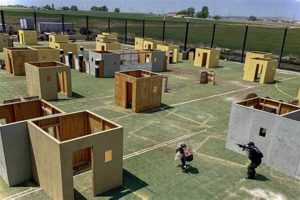
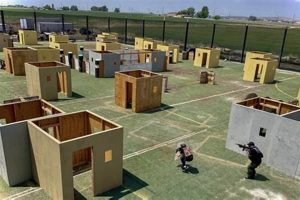
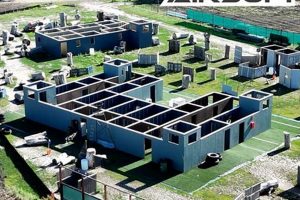
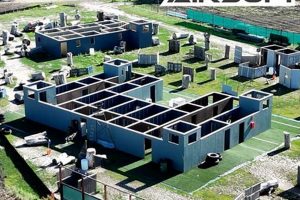
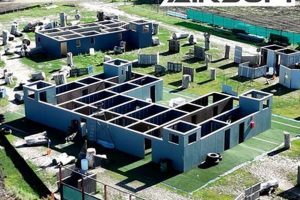
The confluence of global health crises and recreational activities has led to adaptations in various pastimes. One such adaptation involves outdoor simulated combat sports held on designated arenas. These arenas, typically expansive and offering diverse terrain, have faced unique challenges and opportunities in maintaining operations and participant safety.
The significance of open-air venues for these activities has become more pronounced, offering a potential alternative to indoor recreation. Historically, these fields have provided a setting for team-based strategy and physical exercise. Their capacity to facilitate socially distanced gameplay, with modified rules and hygiene protocols, is a benefit during periods of widespread illness. Maintaining mental well-being through engagement in physical activity and social interaction, albeit modified, contributes to overall community health.
The following sections will detail the operational adjustments implemented at these locations, examine the impact on player participation and community dynamics, and analyze the long-term viability of such recreational options in a changing public health landscape. Furthermore, legal and ethical considerations surrounding safe operation will be explored.
Maintaining safe and engaging airsoft experiences requires careful planning and adherence to public health guidelines. The following tips provide guidance for field operators seeking to minimize risk and sustain operations during periods of widespread illness.
Tip 1: Implement Enhanced Sanitation Protocols: Establish frequent cleaning schedules for all high-touch surfaces, including staging areas, restrooms, and rental equipment. Provide readily accessible hand sanitizing stations throughout the field.
Tip 2: Enforce Social Distancing Measures: Modify gameplay to encourage physical distancing between participants. Consider limiting the number of players per game and expanding the field of play to reduce congestion.
Tip 3: Promote Pre-Event Health Screening: Implement a system for pre-screening participants for symptoms of illness. This may include temperature checks or health questionnaires submitted prior to arrival. Deny entry to individuals exhibiting symptoms.
Tip 4: Mandate Personal Protective Equipment (PPE): Require all participants and staff to wear appropriate PPE, such as face masks or coverings, in all areas of the field, including during gameplay where feasible and doesn’t compromise safety gear.
Tip 5: Revise Gameplay Rules: Adapt game rules to minimize close contact situations. Eliminate or modify game modes that involve physical contact or require players to congregate in confined spaces. Communicate these changes clearly to all participants.
Tip 6: Manage Field Capacity: Limit the number of participants allowed on the field at any given time to ensure adequate space for social distancing. Consider implementing a reservation system to manage capacity and prevent overcrowding.
Tip 7: Educate and Communicate: Clearly communicate all safety protocols and guidelines to participants through pre-event briefings, signage, and online resources. Emphasize the importance of individual responsibility in maintaining a safe environment.
By diligently implementing these practices, airsoft field operators can significantly reduce the risk of transmission and provide a safer environment for players to engage in this recreational activity. These measures contribute to the overall well-being of the airsoft community during challenging times.
The next section will explore the long-term implications of these adaptations and the potential for continued innovation in the airsoft industry.
1. Modified Gameplay Rules

The operational paradigm of an airsoft field during a pandemic necessitates significant alterations to traditional gameplay. These modifications are not merely cosmetic adjustments but represent fundamental shifts in how the sport is conducted, directly impacting player interaction and risk mitigation. The primary causal factor driving these changes is the need to minimize close contact and potential transmission of infectious diseases within the confines of the field. Modified rules serve as a crucial component of ensuring a safer environment in this context.
Examples of such modified rules include increased minimum engagement distances, prohibiting physical contact during gameplay, and restructuring game objectives to reduce player clustering. Some fields have implemented “medic” rules that allow for virtual revivals achieved through distanced verbal communication, rather than physical tagging. Other modifications include pre-set spawn points to prevent congestion and staggered game starts to reduce the number of players congregating simultaneously. The practical significance lies in the direct reduction of opportunities for viral transmission, thereby increasing the perceived and actual safety of the venue. Moreover, these adjustments can often lead to strategic adaptations within the sport, fostering new approaches to teamwork and tactics.
In conclusion, the implementation of modified gameplay rules is an indispensable aspect of operating an airsoft field during a pandemic. These changes, while potentially altering the traditional experience, directly contribute to risk mitigation and player safety. The continued refinement and adaptation of these rules, based on public health guidelines and player feedback, is essential for the sustained operation and viability of such recreational venues within the current global context.
2. Enhanced Sanitation Protocols
During periods of widespread infectious disease, the implementation of rigorous sanitation protocols is a critical component of operating any public venue, including recreational spaces such as airsoft fields. The following explores key facets of enhanced sanitation and their specific application within the context of maintaining safe operation of a pandemic airsoft field.
- Frequent Disinfection of High-Touch Surfaces
The regular cleaning and disinfection of commonly touched surfaces represents a primary defense against fomite transmission. At airsoft fields, this includes staging areas, tables, benches, restroom fixtures, door handles, and rental equipment such as masks and weapons. Disinfectants with proven efficacy against the prevailing pathogen must be used according to manufacturer instructions. The frequency of disinfection should be determined by usage patterns and applicable guidelines, with more heavily used areas requiring more frequent attention. Failure to consistently disinfect high-touch surfaces elevates the risk of transmission among participants.
- Provision of Hand Sanitizing Stations
Accessible hand hygiene is paramount for mitigating the spread of infectious agents. Strategically placed hand sanitizing stations, containing alcohol-based sanitizers with at least 60% alcohol content, should be provided throughout the airsoft field. Locations include entrances, exits, staging areas, restrooms, and near food and beverage vendors. Signage should encourage frequent hand sanitization, particularly after touching shared surfaces or equipment. The availability of hand sanitizing stations complements handwashing and empowers participants to practice personal hygiene, thereby reducing transmission risk.
- Equipment Sanitization Procedures
Airsoft fields that offer rental equipment, such as protective eyewear and airsoft guns, bear a particular responsibility for ensuring thorough sanitization between users. Rental equipment should be cleaned and disinfected using appropriate methods, such as wiping with disinfectant solutions or utilizing UV sanitization devices. Fabric components, like straps, may require laundering between uses. Clear procedures for equipment sanitization must be established and consistently followed by staff. Failure to properly sanitize rental equipment can result in direct transmission of pathogens from one user to the next.
- Waste Management and Disposal
Proper waste management is essential for preventing the accumulation of potentially contaminated materials. Covered trash receptacles should be strategically located throughout the airsoft field, and emptied frequently. Disposable gloves, masks, and other PPE used by staff and participants should be disposed of in designated biohazard containers, as appropriate. Regular cleaning and disinfection of waste disposal areas is also necessary. Neglecting waste management can create unsanitary conditions and increase the risk of exposure to infectious agents.
Collectively, these sanitation measures form a critical shield against pathogen transmission within a pandemic airsoft field environment. Their diligent implementation, alongside other safety protocols, is essential for maintaining a safe and responsible recreational experience during periods of heightened public health concern.
3. Capacity Management
Effective capacity management is paramount for responsible operation of any public gathering space during a pandemic, especially recreational venues such as airsoft fields. It involves implementing strategies to control the number of individuals present at any given time, thereby reducing the risk of pathogen transmission and ensuring adherence to public health guidelines. This necessitates careful planning and the adoption of various measures.
- Limiting Total Player Count
A fundamental aspect of capacity management is setting a maximum allowable number of players on the field. This limit should be determined based on factors such as the size of the playing area, the nature of gameplay, and prevailing social distancing recommendations. Setting a lower limit ensures that participants can maintain adequate physical separation, reducing the likelihood of close contact and subsequent transmission. The challenge lies in balancing the desire for participation with the imperative of safety.
- Implementing Reservation Systems
To effectively enforce capacity limits, many airsoft fields have adopted online reservation systems. These systems allow players to book their participation in advance, ensuring that the field does not exceed its designated capacity on any given day. Reservation systems also facilitate contact tracing efforts, should the need arise. Walk-in participation may be restricted or eliminated entirely to maintain control over the number of individuals present. Moreover, reservation systems provide operators with valuable data for forecasting demand and adjusting schedules accordingly.
- Staggered Game Start Times
Even with limitations on total player count, simultaneous game starts can lead to crowding in staging areas and other common spaces. Staggering game start times helps to mitigate this risk by distributing player arrival and departure times. This reduces congestion and allows for more effective social distancing. Staggered starts may require adjustments to game formats and durations, but the benefits in terms of reduced crowding outweigh the logistical challenges.
- Zoning and Designated Areas
Within the airsoft field, designating specific zones and limiting the number of individuals allowed in each zone can further enhance capacity management. For example, staging areas may be divided into smaller sections with maximum occupancy limits. Food and beverage vending areas can be similarly managed to prevent crowding. Clear signage and enforcement by staff are essential for ensuring that participants adhere to zone restrictions. By controlling density within specific areas, the overall risk of transmission can be significantly reduced.
The effective implementation of capacity management strategies is not merely a matter of compliance with regulations; it is a demonstration of responsible operation and a commitment to protecting the health and well-being of participants. The strategies discussed above, when implemented thoughtfully and consistently, can enable airsoft fields to continue providing recreational opportunities while minimizing the risks associated with pandemic conditions.
4. PPE Requirements

The operational landscape of a pandemic airsoft field is inextricably linked to mandated Personal Protective Equipment (PPE) for participants and staff. This connection stems from the need to mitigate the risk of respiratory droplet transmission during physical activity and social interaction, inherent components of the airsoft experience. The requirement for PPE is not merely a suggestion; it is a proactive measure designed to protect individual health and preserve the viability of the airsoft field as a recreational outlet. The absence of stringent PPE requirements would substantially increase the risk of viral spread, potentially leading to outbreaks and field closures. Real-world examples have demonstrated the effectiveness of widespread mask usage in reducing transmission rates in various settings, providing a rationale for similar mandates at airsoft fields. This understanding emphasizes the practical significance of PPE as an essential tool in safeguarding public health within the context of recreational activities.
Specific PPE requirements at these venues typically include, at a minimum, face masks or coverings that effectively filter respiratory droplets. These masks must be worn consistently throughout the field, including during gameplay where possible without compromising existing eye and face protection mandated by the sport itself. Some fields may also require the use of disposable gloves, particularly when handling rental equipment or shared items. Staff members, due to their increased interaction with participants, may be required to wear additional PPE, such as face shields or gowns. Enforcement of PPE requirements is paramount and may involve signage, verbal reminders, and, in some cases, refusal of entry to non-compliant individuals. Successful implementation depends not only on mandating PPE but also on educating participants about its proper use and disposal.
In summary, PPE requirements are an indispensable component of pandemic airsoft field operations. They represent a tangible measure to reduce transmission risk, protect individual health, and maintain the sustainability of this recreational activity. Challenges remain in ensuring consistent compliance and addressing potential discomfort associated with prolonged PPE use, however the benefits of mitigating viral spread outweigh these concerns. The integration of appropriate PPE protocols is a demonstration of responsible management and a commitment to providing a safer and more sustainable airsoft experience within a challenging public health environment.
5. Health Screening
Health screening represents a critical intervention strategy for mitigating the risks associated with infectious disease transmission within recreational settings, particularly in the context of a pandemic airsoft field. Its implementation aims to identify potentially infected individuals before they enter the venue, thereby minimizing the likelihood of outbreaks and safeguarding the health of all participants.
- Pre-Entry Symptom Assessment
This facet involves collecting information from participants regarding the presence of symptoms commonly associated with the prevailing infectious disease. This may take the form of a self-administered questionnaire completed prior to arrival or a verbal screening conducted by trained personnel upon entry. The assessment typically covers symptoms such as fever, cough, sore throat, and loss of taste or smell. Individuals reporting any of these symptoms may be denied entry to the field. Real-world examples include temperature checks and symptom questionnaires implemented at sporting events and workplaces to identify potentially infected individuals. The implication for a pandemic airsoft field is that it serves as the first line of defense in preventing the introduction of the virus.
- Temperature Screening
Temperature screening involves the use of non-contact thermometers to measure the body temperature of participants. Elevated body temperature is a common symptom of many infectious diseases, making temperature screening a readily deployable method for identifying potentially infected individuals. Individuals with a temperature exceeding a pre-determined threshold may be subject to further assessment or denied entry. Temperature screening has been widely adopted at airports, hospitals, and other public venues during the pandemic. However, it’s essential to acknowledge its limitations. Not all infected individuals exhibit elevated temperatures, and environmental factors can influence readings. The implication is that it should be used in conjunction with other screening methods for optimal effectiveness.
- Exposure History Inquiries
Inquiring about recent exposure to confirmed or suspected cases of the infectious disease is another component of a comprehensive health screening protocol. This involves asking participants whether they have had close contact with individuals who have tested positive for the virus or are experiencing symptoms. Individuals who report such exposure may be required to quarantine for a specified period before being allowed to participate at the airsoft field. Contact tracing efforts often rely on similar inquiries to identify and isolate individuals at risk of infection. The implication is that it helps identify individuals who may be asymptomatic carriers but still pose a risk of transmission.
- Documentation and Record Keeping
Maintaining accurate records of health screening data is crucial for monitoring the effectiveness of the screening process and for facilitating contact tracing efforts in the event of a confirmed case. This involves securely storing participant responses to symptom assessments, temperature readings, and exposure history inquiries. Data privacy and confidentiality must be carefully considered when implementing documentation procedures. The implication is that it is essential for monitoring the effectiveness of screening protocols and for informing public health officials in the event of an outbreak.
The aforementioned facets of health screening, when implemented in a coordinated and consistent manner, contribute to a safer and more responsible recreational environment at a pandemic airsoft field. While not foolproof, health screening represents a proactive measure that can significantly reduce the risk of infection and protect the health of all participants. The continuous refinement of screening protocols, based on evolving scientific understanding and public health guidelines, is essential for maximizing their effectiveness.
Frequently Asked Questions Regarding Pandemic Airsoft Field Operations
The following addresses common inquiries concerning the safe operation of outdoor simulated combat arenas during periods of widespread illness, providing information on specific measures and their rationale.
Question 1: What specific modifications to gameplay are typically implemented at a pandemic airsoft field?
Gameplay adaptations often include increased minimum engagement distances to reduce close proximity, revised objectives to minimize player clustering, and the elimination of game modes involving physical contact. Virtual medic rules and staggered respawn points may also be implemented.
Question 2: What constitutes enhanced sanitation protocols at such a venue?
Enhanced sanitation protocols encompass frequent disinfection of high-touch surfaces (staging areas, rental equipment, restrooms), provision of readily accessible hand sanitizing stations, and stringent cleaning procedures for shared equipment between users.
Question 3: How is capacity managed to ensure social distancing?
Capacity management typically involves limiting the total number of players allowed on the field, implementing reservation systems to control attendance, staggering game start times to prevent crowding, and designating specific zones with occupancy limits within the playing area.
Question 4: What types of Personal Protective Equipment (PPE) are commonly required?
Mandatory PPE typically includes face masks or coverings that effectively filter respiratory droplets, worn consistently throughout the field. Some locations may also require disposable gloves, especially when handling rental equipment. Staff may be required to wear additional protection, such as face shields.
Question 5: What does health screening entail, and is it mandatory?
Health screening protocols often involve pre-entry symptom assessments (questionnaires), temperature checks, and inquiries about recent exposure to confirmed or suspected cases. Participation may be contingent upon successful completion of screening requirements and adherence to associated protocols.
Question 6: How are these measures enforced, and what are the consequences of non-compliance?
Enforcement mechanisms typically include signage, verbal reminders from staff, and, in some cases, refusal of entry to individuals who fail to comply with established safety protocols. Consistent non-compliance may result in expulsion from the venue.
The information presented above provides a general overview of common practices at recreational venues during periods of widespread illness. Specific protocols may vary depending on location and prevailing public health guidelines.
The subsequent discussion will address legal and ethical considerations pertinent to the responsible operation of outdoor simulated combat arenas during such times.
Pandemic Airsoft Field
This exploration has detailed the operational adjustments necessary for the sustainable function of a pandemic airsoft field. These adaptations encompass modified gameplay rules, enhanced sanitation protocols, rigorous capacity management strategies, mandatory personal protective equipment, and comprehensive health screening procedures. Each measure contributes to a reduction in potential disease transmission risks, thereby prioritizing participant safety and community well-being.
The continued viability of recreational activities, such as airsoft, during times of widespread illness depends upon the diligent implementation and consistent enforcement of these safety measures. Adherence to established protocols is not merely a matter of compliance but a demonstration of individual and collective responsibility. A commitment to these practices will be essential for ensuring the long-term sustainability of such venues and the overall health of the airsoft community.