



The practice involves using additive manufacturing techniques to create components, accessories, or entire replicas related to the airsoft sport. These items can range from simple replacement parts to complex custom-designed guns and tactical gear. As an example, a user might design and fabricate a unique grip for their airsoft pistol, tailoring it precisely to their hand.
The significance of this approach lies in its ability to provide personalized solutions, cost-effective alternatives to commercially available products, and opportunities for innovation within the airsoft community. Historically, modifications and customization were limited by machining capabilities and access to specialized manufacturers. Now, enthusiasts can create intricate designs at home, fostering a culture of experimentation and self-reliance.
The following sections will delve into the materials commonly employed, the design considerations crucial for successful fabrication, and the legal and ethical implications associated with this emerging trend.
3D Print Airsoft
Achieving optimal results in the realm requires careful planning and execution. The following tips are designed to guide individuals through critical aspects of the process, ensuring both functionality and durability of the fabricated components.
Tip 1: Material Selection is Paramount: The choice of filament significantly impacts the final product’s strength, flexibility, and resistance to impact. Consider ABS for its durability, PETG for its balance of strength and ease of printing, or Nylon for its superior toughness. Evaluate the specific application and environmental conditions when making this selection.
Tip 2: Adhere to Strict Dimensional Accuracy: Airsoft components often require precise fitting and alignment. Design files must accurately reflect the dimensions of the original parts, accounting for potential shrinkage or warping during the printing process. Calibration of the printer and meticulous slicing parameters are crucial.
Tip 3: Optimize Print Settings for Strength: Layer height, infill density, and wall thickness directly affect the structural integrity of the printed item. Lower layer heights generally produce smoother surfaces and stronger bonds. Higher infill percentages, particularly for load-bearing components, are recommended to withstand the stresses of gameplay.
Tip 4: Post-Processing Techniques Enhance Durability: Following fabrication, consider employing techniques such as sanding, painting, or coating to improve the finish and protect the item from wear and tear. Applying a sealant can also enhance resistance to moisture and UV exposure.
Tip 5: Validate Designs Through Rigorous Testing: Before deploying custom-fabricated components in an actual airsoft game, subject them to thorough testing in a controlled environment. This includes stress tests, impact tests, and functionality tests to identify any weaknesses or potential failure points.
Tip 6: Comply with Local Regulations and Field Rules: Adherence to all applicable laws and regulations regarding airsoft replica ownership, modification, and use is imperative. Furthermore, familiarize yourself with the specific rules and guidelines of the airsoft fields or events in which the items will be used.
Tip 7: Prioritize Safety Throughout the Process: When operating 3D printers and handling associated materials, prioritize safety. Wear appropriate protective gear, ensure adequate ventilation, and follow manufacturer guidelines. Improper handling of heated elements or chemical substances can lead to injury.
Successful application of these strategies results in high-quality, functional components capable of withstanding the demands of airsoft gameplay, contributing to enhanced performance and customization options.
The subsequent sections will explore the legal and ethical aspects of this technology, addressing responsible use and community standards.
1. Material Strength
Material strength is a critical determinant of the viability and performance of components fabricated through 3D printing for airsoft applications. The forces experienced during gameplay, including impact from BBs, stress from repeated cycling of mechanisms, and environmental exposure, necessitate materials possessing sufficient tensile strength, impact resistance, and dimensional stability. A failure to adequately consider material strength can result in premature component failure, rendering the fabricated item unusable and potentially causing damage to other parts of the airsoft replica. For example, a magazine well printed from a brittle polymer may crack upon repeated magazine insertions, while a piston printed from a low-strength material may shatter during firing.
The selection of appropriate materials requires careful consideration of the intended function of the printed part. Components subjected to high stress, such as gears or pistons, typically require materials like Nylon or carbon fiber-reinforced polymers, known for their enhanced strength and durability. Conversely, purely cosmetic parts or low-stress accessories may be adequately fabricated from materials like PLA or PETG, which prioritize ease of printing and aesthetic qualities. Furthermore, print parameters such as infill density and layer height can be adjusted to further optimize the strength characteristics of the final product, even within a chosen material category. Therefore, understanding the interplay between material properties and manufacturing processes is essential for achieving desired performance levels.
In summary, the connection between material strength and success in this domain cannot be overstated. Properly accounting for the mechanical demands placed on printed components, coupled with a judicious selection of materials and printing techniques, is essential for creating durable, reliable, and functional enhancements. While the technology offers unparalleled customization potential, prioritizing the structural integrity of fabricated items is paramount to ensuring both user satisfaction and the longevity of modified airsoft replicas. Challenges remain in accurately predicting material behavior under dynamic loading conditions, highlighting the need for ongoing research and testing within this niche field.
2. Design Accuracy
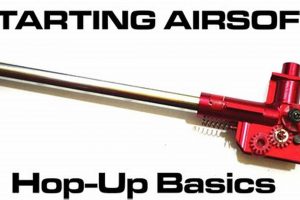
Within the realm of 3D-printed airsoft components, design accuracy exerts a direct influence on the functionality, reliability, and overall performance of the fabricated item. Inaccurate designs introduce dimensional discrepancies that can manifest as poor fitment, impaired mechanical function, or structural weaknesses. For instance, a hop-up unit with an inaccurately dimensioned BB channel may exhibit inconsistent shot groupings, rendering the airsoft replica less effective. Similarly, a gear with improperly spaced teeth will likely experience premature wear or complete failure, disrupting the operation of the gearbox.
The importance of design accuracy is magnified by the nature of airsoft replicas, which often rely on tight tolerances and precise interactions between components. CAD software, coupled with accurate measurement tools such as calipers or coordinate measuring machines, plays a crucial role in achieving the required level of precision. Furthermore, simulation software can be employed to predict the behavior of the designed part under various stress conditions, allowing for iterative design improvements to address potential weaknesses. A real-world example illustrates this point: a user designing a custom trigger for an airsoft rifle must ensure that the trigger’s dimensions precisely match the existing trigger mechanism to guarantee proper engagement with the sear and prevent malfunctions. Any deviation from the original specifications can result in the trigger failing to actuate or, conversely, causing unintended firing.
In summary, design accuracy represents a fundamental prerequisite for successful implementation. The pursuit of dimensional fidelity and functional correctness necessitates meticulous attention to detail, the employment of appropriate design tools, and rigorous validation through testing and simulation. While 3D printing offers unprecedented opportunities for customization and innovation, the practical value of these advancements hinges on the ability to create designs that meet stringent performance requirements. Future progress in this area will likely be driven by the development of more sophisticated design software and improved measurement techniques, further enhancing the precision and reliability of fabricated parts.
3. Printer Calibration
Effective fabrication of airsoft components through 3D printing necessitates meticulous printer calibration. This process ensures the dimensional accuracy and consistency crucial for proper fit and function within complex airsoft replicas. Deviations resulting from improperly calibrated printers can lead to unusable parts, wasted materials, and compromised performance.
- Extruder Calibration
Extruder calibration regulates the precise amount of filament deposited by the printer. Under-extrusion results in weak parts with gaps between layers, while over-extrusion leads to dimensional inaccuracies and potential nozzle clogs. For airsoft applications, where tight tolerances are often required, inaccuracies in extrusion can prevent components from fitting together correctly. For instance, a barrel mount that is over-extruded may not properly align with the receiver, impacting the replica’s accuracy.
- Bed Leveling
Proper bed leveling ensures consistent adhesion of the first layer to the build plate. An uneven bed can cause warping, incomplete prints, or poor layer adhesion, particularly for larger airsoft components. Consider a handguard: if the bed is not level, the handguard may warp during printing, making it impossible to attach securely to the airsoft replica.
- Temperature Control
Maintaining accurate temperature control is vital for material properties and dimensional stability. Inconsistent temperatures can lead to layer delamination, warping, or poor surface finish. For example, ABS, a common material for durable airsoft components, requires a heated bed and enclosure to prevent warping. Insufficient temperature control can cause parts like gears or pistons to fail prematurely under stress.
- Axis Calibration
Precise axis calibration ensures accurate movement of the print head along the X, Y, and Z axes. Misaligned axes result in distorted parts that deviate from the intended design. For airsoft replicas, axis misalignment can prevent internal components like magazines or hop-up units from functioning correctly. Regular axis calibration is necessary to maintain the printer’s geometric accuracy.
In essence, printer calibration forms the foundation upon which the entire 3D printing process rests. Achieving functional and reliable airsoft components demands a well-calibrated printer, capable of consistently producing parts that adhere to the design specifications. Neglecting this crucial step introduces unacceptable risks and undermines the potential benefits of this technology.
4. Component Durability

Within the context of 3D-printed airsoft components, durability constitutes a paramount consideration influencing both the longevity and functional efficacy of fabricated parts. The inherent stresses and dynamic forces associated with airsoft gameplay place significant demands on component integrity, necessitating careful attention to design, material selection, and manufacturing techniques.
- Material Selection and Environmental Resistance
The choice of filament significantly dictates a components capacity to withstand environmental factors such as moisture, UV radiation, and temperature fluctuations. Materials like ABS and Nylon exhibit enhanced resistance to impact and abrasion compared to PLA, rendering them more suitable for external parts subjected to rigorous use. Conversely, internal components shielded from direct exposure may adequately utilize more readily printable materials. For instance, a 3D-printed pistol grip constructed from ABS will likely withstand the physical stresses of handling and exposure to sunlight more effectively than one made from PLA, thereby extending its operational lifespan.
- Design Optimization for Stress Mitigation
Component geometry plays a pivotal role in distributing stress and minimizing potential failure points. Incorporating rounded edges, reinforcing ribs, and strategically placed fillets can significantly enhance a part’s ability to withstand impact and cyclic loading. A magazine well designed with sharp corners is more prone to cracking under stress from repeated magazine insertions, while a design featuring rounded transitions distributes the load more evenly, increasing durability. Utilizing finite element analysis software can aid in identifying stress concentrations and optimizing designs accordingly.
- Infill Density and Layer Adhesion
The internal structure, determined by infill density and layer adhesion, directly affects a component’s overall strength and resistance to fracture. Higher infill percentages provide greater support against compressive forces, while strong layer adhesion prevents delamination under tensile stress. A 3D-printed gearbox shell with low infill is more susceptible to cracking or shattering under the stress of the gears than one with a high infill percentage and strong layer adhesion, resulting in a significant difference in operational lifespan.
- Post-Processing Techniques for Enhanced Strength
Applying post-processing techniques, such as chemical smoothing or epoxy coating, can improve surface finish and impart additional strength and resistance to abrasion. Smoothing processes can reduce stress concentrations arising from layer lines, while coatings provide a protective barrier against moisture and UV degradation. A 3D-printed outer barrel treated with an epoxy coating will exhibit increased resistance to scratches and weathering compared to an untreated counterpart, contributing to its longevity and aesthetic appeal.
These elements collectively emphasize the intricate relationship between component durability and the successful integration of 3D printing within the airsoft domain. Consideration of these factors enables the creation of components that not only meet the functional requirements of airsoft replicas but also withstand the environmental and mechanical stresses encountered during gameplay, ensuring long-term reliability and user satisfaction.
5. Regulation compliance
Adherence to pertinent regulations is a non-negotiable aspect of utilizing 3D printing technology for airsoft-related purposes. The intersection of additive manufacturing and airsoft weaponry raises critical legal and ethical considerations that demand meticulous attention.
- Firearms Laws and Replicas
Many jurisdictions have laws that strictly regulate the manufacturing, sale, and possession of firearms. While airsoft replicas are generally not considered firearms under these laws, modifications or enhancements achieved through 3D printing may blur the lines, potentially leading to legal ramifications. For instance, altering an airsoft replica to resemble a real firearm more closely could violate regulations regarding imitation firearms. Moreover, producing parts that could be used to convert an airsoft replica into a functional firearm would be a clear violation of most firearms laws.
- Import/Export Restrictions
The import and export of airsoft replicas and their components are subject to customs regulations and international trade agreements. 3D printing allows individuals to circumvent traditional manufacturing and distribution channels, potentially leading to violations of these regulations. Printing components in one country and exporting them to another without proper permits or documentation could result in seizure of the goods and legal penalties.
- Intellectual Property Rights
Designs for airsoft replicas and their components are often protected by patents, trademarks, and copyrights. Reproducing these designs without permission, even for personal use, may infringe on these intellectual property rights. 3D printing facilitates the unauthorized replication of proprietary designs, potentially leading to legal action from the rights holders. Downloading and printing a replica of a patented hop-up unit, for example, constitutes a violation of patent law.
- Field-Specific Regulations
Airsoft fields and events often have their own specific rules and regulations regarding the types of replicas allowed, velocity limits, and prohibited modifications. Using 3D-printed components that violate these rules can result in expulsion from the field or event. A common example is exceeding the maximum allowed muzzle velocity due to a 3D-printed modification to the internal components.
Navigating these regulations requires thorough research and a commitment to ethical conduct. Failing to comply can result in legal penalties, damage to reputation, and disruption of the airsoft community. Therefore, responsible utilization of 3D printing technology in the airsoft context necessitates a comprehensive understanding of all applicable laws and regulations.
6. Ethical considerations

Ethical considerations constitute a crucial dimension of the practice. The ease of replication afforded by 3D printing technology raises concerns regarding responsible innovation and the potential for misuse. A primary ethical challenge centers on the faithful reproduction of real-world firearms components or the creation of airsoft replicas indistinguishable from actual weapons. Such practices can contribute to public safety risks and complicate law enforcement efforts to differentiate between genuine firearms and their non-lethal counterparts. For example, fabricating a 3D-printed receiver for an airsoft rifle that mimics the appearance and dimensions of a real firearm receiver could lead to misidentification in public spaces, potentially triggering unwarranted alarm or police intervention.
Another significant ethical concern lies in the realm of intellectual property. Designs for airsoft replicas and associated components are often protected by patents, copyrights, and trademarks. Unauthorized reproduction of these protected designs, even for personal use, represents a violation of intellectual property rights. The widespread availability of 3D printing technology exacerbates the challenge of enforcing these rights, as individuals can easily create and distribute infringing designs without detection. The production and distribution of a 3D-printed replica of a patented internal gear design for an airsoft gearbox, for instance, would constitute an infringement of patent law, potentially subjecting the perpetrator to legal action. The ethical imperative in such cases dictates respecting intellectual property rights and seeking permission before reproducing or modifying protected designs.
The practical significance of understanding these ethical dimensions extends beyond legal compliance. Embracing ethical considerations fosters a culture of responsible innovation within the airsoft community. By promoting awareness of intellectual property rights, discouraging the creation of overly realistic replicas, and advocating for safe practices, the community can mitigate potential risks and ensure the long-term sustainability of this dynamic hobby. Navigating the ethical landscape requires ongoing dialogue, education, and a commitment to upholding the highest standards of conduct.
Frequently Asked Questions About 3D Print Airsoft
This section addresses common inquiries and misconceptions surrounding the application of additive manufacturing techniques in the airsoft sport. Clarity on these points is essential for responsible and informed engagement.
Question 1: Is it legal to fabricate airsoft components using 3D printing technology?
The legality hinges on specific jurisdictions and the nature of the fabricated components. Generally, producing replacement parts or purely cosmetic modifications is permissible. However, manufacturing components that could potentially convert an airsoft replica into a functional firearm or violate existing firearms laws is illegal. Consultation with legal counsel familiar with local regulations is advisable.
Question 2: What materials are best suited for creating durable components?
The selection of appropriate materials depends on the intended use of the component. ABS (Acrylonitrile Butadiene Styrene) offers good impact resistance and heat resistance. PETG (Polyethylene Terephthalate Glycol) provides a balance of strength and ease of printing. Nylon is known for its high strength and abrasion resistance. For purely aesthetic parts, PLA (Polylactic Acid) may suffice.
Question 3: How can dimensional accuracy be ensured when fabricating airsoft parts?
Achieving dimensional accuracy requires careful printer calibration, precise design modeling, and appropriate slicing parameters. Thoroughly calibrating the printer’s extruder, bed leveling, and axis alignment is essential. Utilizing CAD (Computer-Aided Design) software and accurate measurement tools ensures the design reflects the intended dimensions. Adjusting slicing parameters such as layer height and infill density optimizes the final product.
Question 4: Can 3D-printed airsoft components match the performance of commercially manufactured parts?
The performance of 3D-printed components can approach, and in some cases exceed, that of commercially manufactured parts, contingent upon material selection, design optimization, and manufacturing precision. However, mass-produced components often benefit from economies of scale and specialized manufacturing processes, potentially offering cost advantages. The primary benefit lies in customization and the ability to create parts not readily available commercially.
Question 5: Does utilizing 3D printing for airsoft void any warranties?
Modifying an airsoft replica with 3D-printed components may void the manufacturer’s warranty. The act of disassembling and altering the original product often constitutes a breach of the warranty agreement. Reviewing the specific terms and conditions of the warranty is crucial before undertaking any modifications.
Question 6: Are there ethical considerations associated with creating airsoft parts using 3D printing?
Ethical considerations encompass respecting intellectual property rights, avoiding the creation of overly realistic replicas, and adhering to all applicable laws and regulations. Replicating patented designs without permission or producing parts that could be misused or misidentified raises ethical concerns. Responsible utilization of this technology mandates a commitment to ethical conduct and adherence to established community standards.
These FAQs highlight key considerations for those engaging with this fabrication method within the airsoft hobby. Careful attention to legal, technical, and ethical aspects is paramount.
The next article section will delve into the future of this technology and its potential impact on the airsoft community.
Concluding Remarks on 3d print airsoft
This exploration has illuminated diverse facets of the practice: design considerations, material selection, regulatory compliance, and ethical implications. It has emphasized the transformative potential alongside the imperative for responsible implementation. Successfully navigating this landscape necessitates meticulous planning, thorough understanding, and unwavering adherence to established standards.
The continued evolution promises further innovation and customization opportunities within the airsoft community. However, realizing its full potential demands a sustained commitment to ethical conduct, legal compliance, and the pursuit of technical excellence. The ongoing dialogue and collaborative efforts among enthusiasts, manufacturers, and regulatory bodies will shape its future trajectory, ensuring its responsible integration into the sport.

![Redwolf Airsoft: Find Discount Codes & Save [Year] | Ultimate Airsoft Guide for Beginners, Tactics & Gear Reviews](https://airsoftica.com/wp-content/uploads/2026/04/th-288-300x200.jpg "Redwolf Airsoft: Find Discount Codes & Save [Year] Ultimate Airsoft Guide for Beginners, Tactics & Gear Reviews")