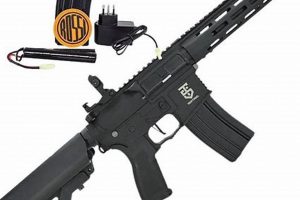
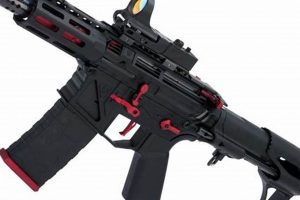
The process of preparing an airsoft electric gun (AEG) for lithium polymer (LiPo) batteries involves modifications that enhance the AEG’s ability to safely and effectively utilize the higher voltage and discharge rates of LiPo batteries compared to traditional nickel-metal hydride (NiMH) batteries. LiPo batteries offer advantages such as increased trigger response and rate of fire, making them a popular upgrade for airsoft enthusiasts. For instance, one might install a MOSFET unit to protect the trigger contacts and upgrade wiring for better electrical flow.
Adapting an AEG for LiPo batteries can significantly improve performance. The higher energy density of LiPo batteries allows for more shots per charge and a more consistent power delivery. Historically, AEGs were designed primarily for NiMH batteries; however, the increased demand for higher performance has led to the widespread adoption of LiPo batteries and the necessary modifications to support their use. These modifications protect internal components and optimize the AEG for the unique characteristics of LiPo power.
The primary considerations include installing a MOSFET, upgrading the wiring, and ensuring the gearbox is properly shimmed. Each of these steps contributes to the AEG’s overall reliability and performance when operating with LiPo batteries. Subsequent sections will detail each of these processes.
Essential Considerations for LiPo Conversion
Successfully adapting an airsoft electric gun for LiPo batteries requires careful attention to several key areas. These tips offer guidance to ensure safe and optimal performance.
Tip 1: Install a MOSFET (Metal-Oxide-Semiconductor Field-Effect Transistor): A MOSFET protects the AEG’s trigger contacts from electrical arcing, which is more prevalent with LiPo batteries due to their higher voltage. Without a MOSFET, trigger contacts can degrade quickly, leading to malfunction.
Tip 2: Upgrade Wiring: Replace the stock wiring with lower-resistance, higher-gauge wire (e.g., 16AWG or 18AWG). This allows for better current flow and reduces heat buildup, improving efficiency and reliability. Silver-plated wiring is a further enhancement.
Tip 3: Check and Correct Shimming: Proper shimming of the gearbox ensures smooth gear operation and reduces mechanical stress. LiPo batteries deliver power more rapidly, which can exacerbate issues caused by poor shimming, leading to premature wear or gearbox failure.
Tip 4: Motor Compatibility: Consider the motor’s ability to handle the increased voltage and RPM. High-torque motors are generally recommended as they provide better performance and longevity with LiPo batteries. Evaluate motor heat during initial testing.
Tip 5: Battery Selection: Choose a LiPo battery with an appropriate voltage (typically 7.4V or 11.1V) and continuous discharge rate (C-rating) suitable for the AEG. Exceeding the AEG’s electrical limits can cause damage. Consult the AEG manufacturer’s recommendations.
Tip 6: Connector Upgrade: Replace the standard Tamiya connector with a higher-quality connector such as a Deans or XT60 connector. These connectors offer lower resistance and a more secure connection, minimizing power loss and preventing connector meltdown.
Tip 7: Fuse Installation: Implement a fuse in the circuit to protect against overcurrent situations. Select a fuse amperage rating appropriate for the AEG’s power consumption. Regularly inspect the fuse for signs of wear or damage.
Implementing these tips provides a more robust and reliable AEG setup when utilizing LiPo batteries. These enhancements are designed to protect the internal components and maximize performance.
The subsequent sections will explore more advanced considerations and potential troubleshooting steps.
1. MOSFET installation

MOSFET (Metal-Oxide-Semiconductor Field-Effect Transistor) installation is a critical step in adapting an airsoft electric gun (AEG) for LiPo battery use. The higher voltage and discharge rates of LiPo batteries can rapidly degrade the AEG’s trigger contacts without proper protection. A MOSFET acts as an electronic switch, diverting the high current away from the trigger contacts, thereby preserving their functionality and extending their lifespan.
- Trigger Contact Protection
The primary function of a MOSFET is to protect the trigger contacts from electrical arcing. Arcing occurs when the electrical circuit is completed or broken by the trigger contacts. LiPo batteries exacerbate this phenomenon due to their increased power output. The MOSFET redirects the current flow through itself, minimizing arcing at the trigger contacts. Without a MOSFET, the trigger contacts can become pitted and carbonized, leading to inconsistent performance and eventual failure.
- Improved Trigger Response
A MOSFET can enhance trigger response by allowing the AEG to deliver power to the motor more efficiently. This is achieved through lower resistance in the circuit compared to a traditional mechanical switch system. Some advanced MOSFET units also incorporate active braking, which rapidly stops the motor after the trigger is released. This reduces overspin, where the gears continue to turn after the trigger is released, leading to more consistent shot-to-shot performance.
- Enhanced Rate of Fire
The increased efficiency of the MOSFET can lead to a higher rate of fire (ROF) in the AEG. This is due to the MOSFET’s ability to provide a more consistent and rapid power supply to the motor. However, it is crucial to ensure that the gearbox and other internal components are robust enough to handle the increased stress associated with a higher ROF, as this can lead to premature wear or failure if not properly addressed.
- Additional Features and Customization
Many advanced MOSFET units offer programmable features, such as burst modes, pre-cocking, and adjustable active braking. Burst modes allow the AEG to fire a pre-determined number of rounds with each trigger pull, while pre-cocking partially compresses the spring before the trigger is pulled, further improving trigger response. These customizable features allow users to fine-tune the AEG’s performance to their specific preferences and play styles.
The implementation of a MOSFET is therefore a fundamental step in the process of preparing an AEG for LiPo batteries. It safeguards the trigger contacts, enhances performance characteristics, and unlocks additional customization options. Ignoring this step can significantly reduce the AEG’s reliability and lifespan when using LiPo batteries.
2. Wiring Upgrade
A wiring upgrade is a fundamental modification when preparing an airsoft gun for LiPo batteries. Stock wiring is often inadequate for the higher current demands of LiPo batteries, leading to potential performance issues and component damage. Upgrading the wiring ensures efficient power delivery and enhances the reliability of the AEG system.
- Reduced Resistance
Stock wiring typically exhibits higher resistance, which restricts current flow and generates heat. Upgrading to lower-resistance wiring, such as 16 or 18 AWG silicone-insulated wire, minimizes voltage drop and allows the motor to receive more consistent power. This results in improved trigger response and a higher rate of fire. Lower resistance also reduces the risk of overheating, which can damage the wiring and other components.
- Enhanced Current Capacity
LiPo batteries are capable of delivering significantly higher currents than traditional NiMH batteries. Stock wiring may not be able to handle these high currents safely, leading to insulation breakdown and potential short circuits. Upgrading to higher-gauge wiring increases the current-carrying capacity of the circuit, ensuring that it can handle the demands of LiPo batteries without risk of failure. This is particularly important for AEGs with high-torque motors or upgraded gearboxes.
- Improved Connector Reliability
The wiring upgrade often involves replacing the stock Tamiya connector with a higher-quality connector, such as a Deans or XT60 connector. These connectors offer lower resistance and a more secure connection, minimizing power loss and preventing connector meltdown. Tamiya connectors are known to be a bottleneck in the electrical system, especially with high-discharge LiPo batteries. Upgrading the connector ensures a more efficient and reliable power transfer.
- Protection Against Overheating
Inefficient wiring can generate significant heat, which can damage the wiring insulation and surrounding components. Upgraded wiring, combined with improved connectors, reduces heat buildup and minimizes the risk of overheating. This not only improves the reliability of the electrical system but also extends the lifespan of other components, such as the motor and MOSFET. Heatshrink tubing should be used to insulate connections and further protect against shorts.
The wiring upgrade is an essential step in the adaptation process. It is integrated to the AEGs performance, promoting enhanced power delivery, improved reliability, and greater safety when utilizing LiPo batteries. Ignoring this step can compromise the AEG’s performance and potentially lead to component failure.
3. Gearbox Shimming

Gearbox shimming plays a crucial role in the longevity and performance of an airsoft gun adapted for LiPo batteries. Properly shimmed gears ensure smooth operation and reduced stress on internal components, particularly important given the increased power output and higher cycle rates associated with LiPo batteries.
- Reduced Mechanical Stress
Incorrect shimming leads to excessive friction and stress on the gears within the gearbox. This is amplified when using LiPo batteries due to their ability to deliver power more rapidly. Proper shimming minimizes this friction, allowing the gears to rotate freely and efficiently. This, in turn, reduces wear and tear on the gears themselves, as well as on the bushings or bearings that support them. For example, gears that are too tightly meshed will generate excessive heat and require more energy to turn, while gears that are too loosely meshed may skip or strip under load.
- Improved Efficiency and Power Transfer
Correct shimming optimizes the alignment and meshing of the gears, maximizing the transfer of power from the motor to the piston assembly. This results in a more efficient use of energy, leading to improved trigger response and a higher rate of fire. Conversely, poorly shimmed gears waste energy due to friction, reducing the overall performance of the AEG. An efficiently shimmed gearbox allows the AEG to operate more smoothly and consistently, making full use of the potential offered by LiPo batteries.
- Extended Component Lifespan
The reduced stress and friction resulting from proper shimming contribute to a longer lifespan for the internal components of the gearbox, including the gears, bushings/bearings, and piston. LiPo batteries, with their higher power output, can quickly expose weaknesses in a poorly maintained gearbox. By ensuring that the gears are properly aligned and supported, shimming helps to prevent premature wear and failure of these critical components. This reduces the need for frequent repairs and maintenance, saving time and money in the long run.
- Noise Reduction
A properly shimmed gearbox operates more quietly than one that is not. Excessive noise often indicates that the gears are not meshing smoothly or that there is excessive play within the gearbox. Shimming corrects these issues, resulting in a quieter and more refined operation. While noise reduction may not directly impact performance, it contributes to a more enjoyable airsoft experience and can be an indicator of the overall health and efficiency of the gearbox.
In summary, gearbox shimming is a critical aspect of adapting an airsoft gun for LiPo battery use. It directly impacts the AEG’s efficiency, reliability, and longevity. Neglecting this step can lead to increased wear and tear, reduced performance, and premature failure of internal components, negating many of the benefits that LiPo batteries offer.
4. Motor compatibility

Motor compatibility is a crucial consideration when preparing an airsoft gun for LiPo battery use. The motor is responsible for driving the gearbox and ultimately propelling the BB, and its ability to handle the increased voltage and discharge rates of LiPo batteries directly impacts the AEG’s performance and reliability.
- Voltage Rating
Airsoft motors are designed to operate within specific voltage ranges. LiPo batteries typically come in 7.4V and 11.1V configurations. Using a LiPo battery with a voltage rating that exceeds the motor’s specifications can lead to overheating, reduced lifespan, or even catastrophic failure. For example, a motor designed for 7.4V may burn out quickly when subjected to 11.1V. Ensuring that the motor is rated for the intended LiPo voltage is paramount. Many aftermarket motors are designed to handle the higher voltages and stresses associated with LiPo batteries, making them a suitable upgrade.
- Torque and Speed
The motor’s torque and speed characteristics significantly influence the AEG’s performance. High-torque motors generally provide better trigger response and the ability to pull heavier springs, while high-speed motors offer a higher rate of fire. LiPo batteries can enhance both torque and speed, but it is essential to select a motor that is appropriately matched to the gearbox and intended use. For instance, using an extremely high-speed motor with a weak gearbox can lead to premature wear or even breakage. A balanced approach is necessary to optimize performance without sacrificing reliability.
- Heat Management
LiPo batteries can cause motors to generate more heat due to the increased power delivery. Overheating can damage the motor’s windings and reduce its efficiency. Motors designed for LiPo use often incorporate features such as enhanced ventilation or high-temperature wire insulation to mitigate heat buildup. Monitoring motor temperature during initial testing is crucial to ensure that it remains within safe operating limits. Implementing a MOSFET can also reduce heat generation in the motor by improving electrical efficiency.
- Brushless vs. Brushed Motors
Traditional airsoft motors use brushes to conduct electricity to the rotor. Brushless motors, on the other hand, use electronic controllers to achieve the same effect. Brushless motors generally offer higher efficiency, longer lifespan, and better torque compared to brushed motors. While more expensive, brushless motors are increasingly popular for LiPo-powered AEGs due to their superior performance and reliability. The absence of brushes reduces friction and heat, making them well-suited for the demands of high-voltage and high-discharge LiPo batteries.
In conclusion, motor compatibility is a critical factor in successfully adapting an airsoft gun for LiPo batteries. Selecting a motor with an appropriate voltage rating, torque and speed characteristics, and heat management capabilities is essential to ensuring optimal performance and longevity. Careful consideration of these factors, along with the choice between brushed and brushless motors, contributes significantly to the overall success of the LiPo conversion.
5. Battery Selection

Battery selection is a critical determinant of performance and safety when adapting an airsoft gun for LiPo batteries. The battery must be appropriately matched to the AEG’s electrical system and intended use to prevent damage and ensure optimal operation.
- Voltage Compatibility
Selecting a LiPo battery with the correct voltage is paramount. AEGs typically operate with 7.4V or 11.1V batteries. Exceeding the AEG’s voltage rating can lead to immediate component failure, particularly in the motor or MOSFET. Conversely, using a battery with insufficient voltage may result in underperformance. Checking the AEG manufacturer’s recommendations is essential. For instance, using an 11.1V LiPo in an AEG designed for 7.4V can cause the motor to burn out or the gearbox to strip gears.
- Discharge Rate (C-Rating)
The C-rating indicates the battery’s ability to deliver current. A higher C-rating allows for a faster discharge rate, providing improved trigger response and rate of fire. However, excessively high C-ratings can stress the AEG’s electrical system if not properly upgraded. The AEG’s wiring, motor, and MOSFET must be capable of handling the current delivered by the battery. A 20C battery, for example, can deliver 20 times its capacity in amps. Selecting an appropriate C-rating ensures that the AEG receives sufficient power without exceeding its electrical limits.
- Capacity (mAh)
Capacity, measured in milliampere-hours (mAh), determines the battery’s runtime. A higher mAh rating translates to longer play times between charges. However, larger capacity batteries may be physically larger and may not fit within the AEG’s battery compartment. It is essential to verify that the battery’s dimensions are compatible with the AEG. For instance, a 2200mAh battery will provide more shots per charge than a 1200mAh battery, but its size may prevent it from fitting in certain AEG models.
- Physical Dimensions and Connector Type
The physical dimensions of the battery must be compatible with the AEG’s battery compartment. LiPo batteries come in various shapes and sizes, and it is crucial to select one that fits properly. Additionally, the battery’s connector type must match the AEG’s connector, or an adapter may be required. Common connector types include Tamiya, Deans, and XT60. Ensuring physical compatibility and connector compatibility is essential for seamless integration of the LiPo battery into the AEG.
Proper battery selection is not merely a matter of convenience but a fundamental aspect of how to make an airsoft gun LiPo ready. Choosing a battery that is voltage-compatible, has an appropriate C-rating and capacity, and fits within the AEG ensures safe, reliable, and optimal performance. Neglecting these considerations can lead to component damage, reduced lifespan, or even hazardous situations.
6. Connector Upgrade
Connector upgrades represent a critical step in adapting an airsoft electric gun (AEG) for lithium polymer (LiPo) battery use. The stock connectors often found in AEGs are typically insufficient to handle the increased current demands of LiPo batteries. Upgrading these connectors ensures efficient power delivery and enhances the overall reliability of the AEG system.
- Reduced Resistance and Improved Current Flow
Stock connectors, such as Tamiya connectors, exhibit higher electrical resistance compared to upgraded connectors like Deans or XT60. This resistance restricts current flow, causing a voltage drop and generating heat. Upgraded connectors offer lower resistance, allowing for a more efficient transfer of power from the LiPo battery to the AEG’s motor. For example, replacing a Tamiya connector with a Deans connector can significantly reduce resistance, resulting in improved trigger response and rate of fire. This directly impacts the AEG’s performance, particularly under sustained use.
- Prevention of Connector Meltdown
The increased current demands of LiPo batteries can cause stock connectors to overheat and melt. This not only disrupts the flow of power but can also pose a safety hazard. Upgraded connectors are designed to handle higher currents without overheating, providing a more reliable and safer connection. Consider an AEG used extensively in rapid-fire scenarios; a stock connector may melt under the prolonged stress, whereas an upgraded connector is designed to withstand such conditions. This enhances the AEG’s reliability and prevents potential damage to other components.
- Enhanced Connection Security
Stock connectors often provide a less secure connection, which can lead to intermittent power loss. Upgraded connectors typically feature a more robust design that ensures a tighter and more reliable connection. This is especially important during gameplay, where vibrations and movement can dislodge a loose connector. For instance, an AEG with a loose connector may experience inconsistent firing or sudden power loss during a skirmish. Upgraded connectors mitigate this risk, providing a more stable and dependable power supply.
- Long-Term Reliability and Durability
Upgraded connectors are generally constructed from higher-quality materials, offering greater durability and a longer lifespan compared to stock connectors. They are designed to withstand repeated use and the stresses associated with high-performance AEGs. Replacing the connector with a quality part will enhance the reliability of the system and prevent future failures. This ensures that the AEG remains operational for longer periods, reducing the need for frequent maintenance and repairs.
In conclusion, connector upgrades are an integral part of preparing an AEG for LiPo batteries. The enhanced performance, improved safety, and increased reliability provided by upgraded connectors are essential for maximizing the benefits of LiPo power. By addressing the limitations of stock connectors, these upgrades contribute significantly to the overall effectiveness and longevity of the AEG system.
7. Fuse Protection
Fuse protection is a critical safety component when adapting an airsoft gun for LiPo battery use. It is an essential safeguard against electrical overloads and short circuits, preventing potential damage to the AEG and ensuring user safety. Integrating a fuse into the electrical system provides a necessary layer of protection when utilizing the increased power output of LiPo batteries.
- Overcurrent Protection
The primary function of a fuse is to protect the AEG from overcurrent situations. LiPo batteries can deliver significantly higher currents than traditional NiMH batteries, and a short circuit or component failure can lead to a rapid and uncontrolled surge of current. The fuse is designed to break the circuit when the current exceeds a predetermined threshold, preventing damage to the wiring, motor, MOSFET, and battery. For instance, if a wire becomes damaged and shorts to the metal frame of the AEG, the fuse will blow, preventing a potential fire or component meltdown.
- Prevention of Component Damage
Without fuse protection, an overcurrent event can quickly damage or destroy the AEG’s internal components. The heat generated by excessive current can melt wiring insulation, damage the motor windings, and destroy the MOSFET. Replacing these components can be costly and time-consuming. A properly sized fuse will sacrifice itself to protect these more expensive components. Consider a scenario where the motor becomes jammed; the increased current draw will cause the fuse to blow, preventing the motor from burning out.
- Enhancement of User Safety
Fuse protection also enhances user safety by mitigating the risk of electrical fires or battery explosions. LiPo batteries are particularly sensitive to overcharging, short circuits, and physical damage, all of which can lead to thermal runaway and potentially dangerous situations. A fuse provides an additional layer of safety by interrupting the circuit in the event of a fault, reducing the risk of these hazardous events. For example, if a LiPo battery is accidentally shorted, the fuse will blow, preventing the battery from overheating and potentially exploding.
- Fuse Selection and Placement
Selecting the correct fuse amperage rating is crucial for effective protection. The fuse should be rated slightly higher than the AEG’s normal operating current but low enough to blow before damage occurs. The fuse should also be placed as close to the battery as possible to protect the entire circuit. A common practice is to use a 20- or 25-amp fuse for most AEGs, but this can vary depending on the specific setup. Incorrect fuse selection or placement can render the fuse ineffective. Proper fuse selection and placement are therefore essential for reliable protection.
In conclusion, fuse protection is an indispensable safety measure when adapting an airsoft gun for LiPo batteries. It protects the AEG from overcurrent events, prevents component damage, and enhances user safety. Implementing a properly sized and correctly placed fuse is a critical aspect of how to make an airsoft gun LiPo ready, ensuring a safer and more reliable airsoft experience.
Frequently Asked Questions
This section addresses common inquiries regarding the process of adapting airsoft electric guns (AEGs) for use with lithium polymer (LiPo) batteries. The information provided aims to clarify key considerations and dispel potential misconceptions.
Question 1: Why is a MOSFET considered essential for LiPo conversions?
A MOSFET (Metal-Oxide-Semiconductor Field-Effect Transistor) protects the AEG’s trigger contacts from electrical arcing, which is significantly more pronounced with the higher voltage and discharge rates of LiPo batteries. Without a MOSFET, trigger contacts degrade rapidly, leading to inconsistent performance and eventual failure.
Question 2: What gauge wiring is recommended for upgrading an AEG for LiPo batteries?
It is generally recommended to replace the stock wiring with lower-resistance, higher-gauge wire, such as 16 or 18 AWG (American Wire Gauge). This allows for better current flow and reduces heat buildup, improving the overall efficiency and reliability of the electrical system. Silver-plated wiring offers further performance enhancement.
Question 3: How does proper gearbox shimming contribute to LiPo battery compatibility?
Proper shimming of the gearbox ensures smooth gear operation and minimizes mechanical stress on internal components. Given the rapid power delivery of LiPo batteries, any existing issues caused by poor shimming can be exacerbated, leading to premature wear or gearbox failure. Correct shimming ensures optimal power transfer and extends the lifespan of critical components.
Question 4: What factors should be considered when selecting a LiPo battery for an AEG?
Key factors include voltage compatibility (typically 7.4V or 11.1V), continuous discharge rate (C-rating), capacity (mAh), and physical dimensions. The battery’s voltage must match the AEG’s specifications, the C-rating should be appropriate for the AEG’s power consumption, the capacity determines runtime, and the physical dimensions must fit within the AEG’s battery compartment.
Question 5: Why is upgrading the connector considered beneficial when using LiPo batteries?
Stock connectors, such as Tamiya connectors, often exhibit high resistance, which restricts current flow and generates heat. Upgrading to higher-quality connectors, such as Deans or XT60 connectors, reduces resistance and provides a more secure connection, minimizing power loss and preventing connector meltdown, particularly under the high current demands of LiPo batteries.
Question 6: What purpose does a fuse serve in an AEG using LiPo batteries?
A fuse protects the AEG’s electrical system from overcurrent situations, such as short circuits or component failures. The fuse is designed to break the circuit when the current exceeds a predetermined threshold, preventing damage to the wiring, motor, MOSFET, and battery. It serves as a critical safety measure to prevent potential fires or component meltdown.
These FAQs provide essential information to address initial concerns regarding the process. Thorough preparation and careful attention to detail are paramount for safe and effective integration of LiPo batteries.
The following sections will delve into advanced topics and potential troubleshooting measures.
Conclusion
This exploration of how to make an airsoft gun LiPo ready has detailed the essential modifications and considerations necessary for safe and optimal performance. Key areas include MOSFET installation for trigger contact protection, wiring upgrades for efficient power delivery, gearbox shimming for mechanical stress reduction, appropriate motor selection, careful battery selection, connector upgrades for minimizing power loss, and fuse protection against electrical overloads. Each of these modifications contributes significantly to the AEG’s reliability and effectiveness when utilizing LiPo batteries.
Adhering to these guidelines is paramount for ensuring the longevity and performance of the AEG. The implementation of these procedures empowers airsoft enthusiasts to harness the benefits of LiPo batteries while minimizing the risk of component damage or safety hazards. Careful consideration and diligent execution of these adaptations are crucial for a successful transition to LiPo power.