The legality and advisability of discharging airsoft weapons on private residential property hinge on a confluence of local ordinances, property rights, and safety considerations. Absent specific regulations, the permissibility often rests on whether the activity constitutes a nuisance or poses a danger to others. Responsible ownership and operation are paramount.
Understanding the parameters surrounding this activity is crucial for responsible airsoft enthusiasts. It promotes safety, prevents legal complications, and fosters positive community relations. Prioritizing these aspects ensures that enjoyment of the sport does not infringe upon the rights and well-being of others. Furthermore, awareness of potential liabilities mitigates risks associated with improper handling or use.
This analysis will delve into the key factors that determine the suitability of airsoft usage within a residential setting. The discussion will encompass legal restrictions, safety protocols, and best practices, offering a framework for making informed decisions on this subject.
Guidelines for Airsoft Gun Use on Private Property
These guidelines aim to provide a framework for the responsible discharge of airsoft weapons within a private residential setting, minimizing risks and adhering to legal standards.
Tip 1: Verify Local Ordinances: Thoroughly research and understand all applicable city, county, and homeowner association regulations regarding airsoft guns, BB guns, or similar projectile-launching devices. Some jurisdictions may explicitly prohibit their use, regardless of property ownership.
Tip 2: Establish a Secure Backstop: Implement a robust backstop to contain projectiles and prevent them from leaving the property. This may involve using multiple layers of tarp, netting, or other impact-absorbing materials. Regularly inspect and maintain the backstop to ensure its integrity.
Tip 3: Mandate Eye Protection: Enforce the mandatory use of ANSI-rated Z87.1 or equivalent eye protection for all participants and spectators. This is non-negotiable and crucial in preventing severe eye injuries.
Tip 4: Supervise Minors: If minors are involved, constant adult supervision is required. Adults must be knowledgeable about airsoft gun safety and responsible for enforcing safety rules.
Tip 5: Communicate with Neighbors: Inform neighbors of the planned activity in advance. Open communication can prevent misunderstandings and address any concerns proactively. Consider scheduling sessions at reasonable hours to minimize disruption.
Tip 6: Use Appropriate Projectile Weight: Utilize the recommended projectile weight for the specific airsoft gun model. Using incorrect weights can lead to decreased accuracy and increased risk of injury due to higher velocities.
Tip 7: Regularly Inspect Equipment: Before each use, inspect the airsoft gun for any signs of damage or malfunction. Ensure the safety mechanism is functioning correctly. Damaged equipment should be repaired or replaced immediately.
Adhering to these guidelines promotes safe and responsible airsoft gun use, mitigating potential risks and ensuring compliance with local regulations. Prioritizing safety is paramount.
The subsequent section will address potential legal consequences and liabilities associated with negligent or reckless airsoft gun handling.
1. Local Ordinances

The permissibility of backyard airsoft gun usage is fundamentally determined by local ordinances. These legal frameworks, enacted at the city, county, or municipal level, dictate the specific regulations governing the discharge of projectile weapons, including airsoft guns. Failure to comply with these ordinances can result in fines, legal repercussions, or confiscation of equipment. The absence of an explicit prohibition does not inherently grant permission; broader ordinances related to noise, public safety, or weapons discharge may still apply.
Numerous municipalities have implemented ordinances specifically addressing airsoft guns due to safety concerns and public complaints. Some ordinances categorize airsoft guns as “nuisance weapons” or regulate them similarly to firearms, thereby restricting their use to designated areas such as shooting ranges or licensed facilities. Conversely, some locales may have no specific ordinances, but noise complaints or incidents of projectiles leaving the property could prompt enforcement action under existing public nuisance or reckless endangerment laws. For instance, a community experiencing frequent disturbances from airsoft activities may subsequently enact stricter regulations, highlighting the dynamic interplay between local concerns and legal responses.
Therefore, before engaging in airsoft activities on private residential property, individuals must conduct thorough research into local ordinances. This research should encompass not only explicit airsoft gun regulations but also relevant laws pertaining to noise levels, public safety, and weapons discharge. Understanding and adhering to these ordinances is paramount to ensuring legal compliance and minimizing the risk of legal or social repercussions, thereby reinforcing the importance of local regulations in determining the feasibility of backyard airsoft gun usage. Ignorance of the law is not a defense, and assuming legality based solely on the lack of a specific prohibition is ill-advised.
2. Property Boundaries

The delineation of property boundaries represents a fundamental consideration when assessing the permissibility of discharging airsoft guns within a residential backyard. Projectiles crossing these boundaries can instigate legal and civil liabilities, transforming a recreational activity into a source of conflict and potential litigation.
- Trespassing Projectiles
The act of an airsoft projectile traversing property lines constitutes a technical trespass, regardless of intent or demonstrable damage. While the likelihood of significant legal action for a single, unintentional incident may be low, repeated occurrences or projectiles causing injury or property damage on a neighboring property significantly increase the risk of legal repercussions. Homeowners are generally responsible for ensuring that activities on their property do not infringe upon the rights of adjacent property owners.
- Local Regulations and Boundary Setbacks
Many municipalities incorporate boundary setbacks into their regulations concerning projectile weapons. These setbacks mandate a minimum distance between the point of discharge and any property line. Failure to adhere to these setbacks can result in fines or other penalties. Furthermore, homeowner association (HOA) rules may impose additional restrictions on airsoft gun usage, including outright prohibitions or specific limitations based on proximity to property lines.
- Establishing Buffer Zones
To mitigate the risk of projectiles leaving the property, establishing buffer zones is crucial. This involves creating a physical barrier, such as netting or dense vegetation, along property lines to contain stray shots. Additionally, aiming away from property lines during airsoft activities minimizes the possibility of projectiles crossing boundaries. Consistent monitoring of the perimeter during gameplay is essential to promptly address any instances of projectiles leaving the designated area.
- Civil Liability and Negligence
Even in the absence of specific ordinances, individuals can be held liable for negligence if their airsoft activities cause injury or property damage on a neighboring property. Negligence claims often hinge on whether the individual exercised reasonable care in preventing foreseeable harm. Factors considered include the type of airsoft gun used, the proximity to property lines, the implementation of safety measures, and the level of supervision provided. Adequate insurance coverage is advisable to mitigate potential financial exposure resulting from such claims.
In summation, respecting property boundaries is paramount to responsible airsoft gun usage within a residential setting. Understanding and adhering to local regulations, establishing buffer zones, and exercising due diligence in preventing projectiles from crossing property lines are crucial steps in minimizing legal risks and fostering positive relationships with neighbors. The ramifications of boundary transgressions extend beyond mere inconvenience, potentially leading to significant legal and financial consequences.
3. Safety Protocols
The safe and responsible discharge of airsoft guns within residential backyards is intrinsically linked to the implementation and consistent adherence to comprehensive safety protocols. These protocols serve as a mitigating factor, reducing the risk of injuries, property damage, and legal liabilities associated with airsoft activities. Without robust safety measures, the permissibility of such activities is questionable, regardless of local ordinances.
- Mandatory Eye Protection
The cornerstone of airsoft safety lies in the mandatory use of appropriate eye protection. ANSI Z87.1 rated goggles or full-face masks are essential to protect against projectile impacts, which can cause severe and permanent eye injuries. This requirement must be enforced without exception for all participants and spectators within the designated playing area. Real-world incidents underscore the critical need for this protocol; reports of corneal abrasions, retinal detachments, and even blindness resulting from airsoft projectiles highlight the potential consequences of inadequate eye protection. The absence of mandatory eye protection renders backyard airsoft activities inherently unsafe and indefensible.
- Designated Playing Area and Backstops
Establishing a clearly defined playing area with effective backstops is crucial to prevent projectiles from leaving the property and potentially causing harm or damage to neighboring properties. Backstops can consist of multiple layers of heavy tarps, netting, or other impact-resistant materials capable of containing airsoft pellets. The playing area should be designed to minimize the risk of accidental exposure to individuals not participating in the activity. Examples of effective backstop implementation include constructing a dedicated shooting range with reinforced walls or utilizing natural barriers such as dense vegetation. Failing to establish these safeguards significantly increases the risk of unintended injuries and property damage, thereby undermining the safety and legality of backyard airsoft activities.
- Safe Gun Handling Practices
Proper handling of airsoft guns is paramount to preventing accidental discharges and injuries. This includes treating all airsoft guns as if they are loaded, keeping the finger off the trigger until ready to fire, and maintaining muzzle awareness at all times. Airsoft guns should be stored unloaded and secured when not in use, preventing unauthorized access by children or individuals unfamiliar with their operation. Real-world examples of negligent gun handling include accidental shootings resulting from improper storage or careless handling, emphasizing the importance of strict adherence to safe gun handling practices. Without these practices, the potential for accidental injuries is significantly elevated, making backyard airsoft activities inherently dangerous.
- Age-Appropriate Supervision and Equipment
When minors are involved in airsoft activities, constant adult supervision is essential. Supervisors must be knowledgeable about airsoft safety protocols and capable of enforcing them effectively. Age-appropriate equipment should be selected, considering the size and strength of the user. Airsoft guns with excessively high velocities can pose a greater risk of injury to younger participants. Real-world cases of injuries involving minors highlight the importance of responsible supervision and the selection of appropriate equipment. Neglecting these aspects can lead to preventable injuries and legal liabilities, making backyard airsoft activities unsuitable and potentially unlawful.
In conclusion, the viability of engaging in airsoft activities within a residential backyard hinges directly on the rigorous enforcement of comprehensive safety protocols. These protocols, encompassing mandatory eye protection, designated playing areas, safe gun handling practices, and age-appropriate supervision, collectively mitigate the inherent risks associated with airsoft guns. Failure to implement and consistently adhere to these measures not only jeopardizes the safety of participants and bystanders but also exposes individuals to potential legal and civil liabilities. The presence and enforcement of robust safety protocols are therefore not merely recommended but essential for responsible and legally defensible backyard airsoft activities.
4. Noise Levels

The auditory impact generated by airsoft guns constitutes a significant consideration when evaluating the appropriateness of their usage in residential backyards. Sound propagation from these devices can disrupt neighborhood tranquility, potentially violating noise ordinances and generating conflicts with nearby residents. The degree to which airsoft activities intrude upon the auditory environment directly influences their permissibility.
- Decibel Levels and Municipal Ordinances
Many municipalities enforce noise ordinances that establish permissible decibel levels at property boundaries. Airsoft guns, particularly those utilizing high-pressure air systems, can produce sharp, impulsive sounds that exceed these thresholds. Violations can result in fines, warnings, or restrictions on airsoft activities. For instance, a town ordinance may stipulate a maximum noise level of 60 decibels during daytime hours and 50 decibels during nighttime hours, measured at the property line. Airsoft gun discharge exceeding these levels would constitute a violation, underscoring the importance of understanding and adhering to local noise regulations.
- Sound Propagation and Backyard Configuration
The physical characteristics of a backyard significantly influence sound propagation. Factors such as yard size, landscaping, and the presence of reflective surfaces (e.g., fences, walls) can amplify or redirect sound waves, increasing their impact on neighboring properties. A small, enclosed backyard with hard surfaces will likely generate more noise pollution than a large, open yard with ample vegetation that absorbs sound. Therefore, assessing the backyard’s acoustic properties is essential in determining whether airsoft activities are likely to disturb neighbors.
- Time of Day Restrictions and Community Impact
Noise ordinances often include time-of-day restrictions, prohibiting loud noises during specific hours, typically late evenings and early mornings. Discharging airsoft guns during these restricted periods is more likely to generate complaints and trigger enforcement action. Furthermore, the cumulative impact of repeated airsoft activities, even during permitted hours, can create ongoing disturbances for neighbors, potentially leading to strained relationships and community discord. Scheduling airsoft activities during reasonable hours and limiting their frequency can mitigate these negative impacts.
- Mitigation Strategies and Sound Dampening
Several strategies can be employed to mitigate noise generated by airsoft guns. Utilizing lower-powered devices, implementing sound-dampening materials (e.g., sound blankets, acoustic fencing), and directing the discharge away from neighboring properties can reduce the auditory impact. Constructing a dedicated shooting range with sound-absorbing walls is another option, albeit a more involved and costly one. These measures demonstrate a commitment to responsible airsoft practices and can help maintain peaceful coexistence with neighbors.
These considerations highlight the integral relationship between noise levels and the feasibility of discharging airsoft guns in residential backyards. Adherence to noise ordinances, awareness of sound propagation patterns, responsible scheduling, and implementation of mitigation strategies are all crucial elements in minimizing auditory disturbances and ensuring that airsoft activities do not infringe upon the peace and quiet of the surrounding community. Failure to address these aspects can lead to legal repercussions and strained relationships with neighbors, ultimately jeopardizing the permissibility of such activities.
5. Neighbor Notification

Neighbor notification represents a pivotal element in determining the viability of discharging airsoft guns within a residential backyard. Its significance extends beyond mere courtesy, encompassing legal considerations, risk mitigation, and the cultivation of positive community relations. The act of informing neighbors about planned airsoft activities can preempt potential conflicts, address concerns proactively, and demonstrate a commitment to responsible conduct.
- Prevention of Misunderstandings and Alarms
Unannounced airsoft activities can easily be misconstrued as more dangerous or illicit activities, leading to alarm and potential calls to law enforcement. Notifying neighbors in advance clarifies the nature of the activity, preventing unnecessary anxiety and potential misinterpretations. For example, the sound of rapid firing or the sight of individuals carrying replica firearms can be alarming if unexpected. Prior notification allows neighbors to understand the context and avoid jumping to conclusions. The absence of such communication significantly increases the likelihood of misunderstandings and negative reactions.
- Compliance with Homeowner Association (HOA) Rules and Community Standards
Many HOAs have specific rules regarding noise levels, recreational activities, and the use of projectile weapons. Neighbor notification can serve as a proactive measure to ensure compliance with these rules and maintain community standards. Some HOAs may even require formal notification before engaging in activities that could potentially disturb neighbors. Failure to comply with HOA rules can result in fines, warnings, or even legal action. Therefore, informing neighbors and seeking their input can help avoid such complications and foster a sense of community cooperation.
- Mitigation of Noise Complaints and Conflict Resolution
Airsoft guns, particularly those with high-pressure systems, can generate noise levels that disturb nearby residents. Notifying neighbors in advance allows them to anticipate the noise and potentially adjust their schedules or take mitigating measures, such as closing windows. Furthermore, it opens a line of communication for addressing any concerns or complaints that may arise. A proactive approach to noise management can prevent minor disturbances from escalating into formal complaints or neighborly disputes. Conversely, failing to notify neighbors can foster resentment and exacerbate conflicts, ultimately jeopardizing the permissibility of backyard airsoft activities.
- Demonstration of Responsible Conduct and Good Faith Efforts
In the event of an accident or injury resulting from airsoft activities, the fact that neighbors were notified in advance can be viewed as a demonstration of responsible conduct and good faith efforts to minimize risks. This can be particularly relevant in legal proceedings or insurance claims. Notifying neighbors shows that the individual took steps to ensure the safety and well-being of those in the vicinity. Conversely, a lack of notification can be interpreted as a sign of negligence or disregard for the concerns of others, potentially increasing liability in the event of an incident.
The act of notifying neighbors significantly influences the permissibility of discharging airsoft guns on private property. Proactive communication fosters positive relationships, prevents misunderstandings, and mitigates potential conflicts. It’s a crucial step in promoting safe and responsible airsoft practices within a residential environment, increasing the likelihood of peaceful coexistence between airsoft enthusiasts and their neighbors.
6. Liability Insurance
Liability insurance assumes a critical role in mitigating financial risks associated with airsoft gun activities conducted on private residential property. Understanding its scope and implications is essential for responsible ownership and operation.
- Coverage for Accidental Injuries
Standard homeowner’s insurance policies may offer limited liability coverage for accidental injuries sustained by guests or neighbors as a result of airsoft activities. This coverage can extend to medical expenses, lost wages, and legal fees if a claim is filed. However, it is imperative to review policy exclusions carefully, as some insurers may specifically exclude coverage for activities involving projectile weapons. Obtaining supplemental liability insurance may be necessary to ensure adequate protection against potential claims. For example, if a neighbor’s child is struck by an airsoft pellet and suffers an eye injury, the homeowner could be held liable for medical expenses and potential long-term care. Liability insurance could provide financial protection in such a scenario.
- Property Damage Coverage
Liability insurance can also provide coverage for accidental property damage caused by airsoft projectiles. This may include damage to neighboring homes, vehicles, or landscaping. The extent of coverage will depend on the specific terms of the policy. For instance, if an errant airsoft pellet breaks a neighbor’s window or damages their car, liability insurance could cover the cost of repairs or replacement. Without adequate insurance coverage, the homeowner would be personally responsible for covering these expenses. Careful assessment of potential property damage risks and appropriate policy selection are crucial.
- Legal Defense Costs
Even if a claim for damages is ultimately unsuccessful, defending against a lawsuit can incur significant legal expenses. Liability insurance typically includes coverage for legal defense costs, regardless of the outcome of the case. This can provide invaluable financial protection, as legal fees can quickly escalate. For example, even if a homeowner is ultimately found not liable for an airsoft-related injury, the cost of hiring an attorney and defending the case can be substantial. Liability insurance can cover these legal fees, preventing a significant financial burden on the homeowner.
- Supplemental Liability Policies and Umbrella Coverage
Given the potential risks associated with airsoft activities, standard homeowner’s insurance may not provide sufficient coverage. Supplemental liability policies, often referred to as umbrella policies, offer additional layers of protection above the limits of the primary homeowner’s policy. These policies can provide coverage for claims exceeding the primary policy limits, offering enhanced financial security. For instance, if a claim for damages exceeds the liability limits of the homeowner’s insurance policy, an umbrella policy can step in to cover the remaining amount, protecting the homeowner’s assets from being seized to satisfy the claim.
The financial protection afforded by liability insurance provides a safeguard against potential financial losses resulting from accidents or injuries associated with backyard airsoft gun activities. It is crucial to understand the limitations of standard homeowner’s policies and to consider supplemental coverage to ensure adequate protection against potential liabilities, ultimately promoting responsible ownership and risk management. Selecting the appropriate coverage level is a key factor in safeguarding assets and securing peace of mind.
Frequently Asked Questions
This section addresses common inquiries regarding the discharge of airsoft guns within a private residential setting, focusing on legal, safety, and community considerations.
Question 1: Are airsoft guns considered firearms under the law?
The legal classification of airsoft guns varies by jurisdiction. Some locales classify them as toys, while others regulate them similarly to firearms due to their projectile-launching capabilities. Thoroughly researching local ordinances is essential to determine the specific legal status of airsoft guns in the relevant area.
Question 2: What safety precautions are necessary when using airsoft guns in a backyard?
Mandatory eye protection, a designated playing area with a secure backstop, adherence to safe gun handling practices, and responsible adult supervision (if minors are involved) are paramount. These measures mitigate the risk of injuries and property damage.
Question 3: How can noise complaints from neighbors be avoided?
Utilizing lower-powered airsoft guns, implementing sound-dampening materials, scheduling activities during reasonable hours, and notifying neighbors in advance can minimize noise disturbances and prevent conflicts.
Question 4: What type of liability insurance is needed to cover airsoft activities?
Standard homeowner’s insurance may offer limited coverage, but it is crucial to review policy exclusions and consider supplemental liability insurance or an umbrella policy to ensure adequate protection against potential claims for injuries or property damage.
Question 5: What are the potential legal consequences of projectiles leaving the property?
Projectiles crossing property lines constitute a technical trespass, regardless of intent or demonstrable damage. Repeated occurrences or projectiles causing injury or property damage significantly increase the risk of legal repercussions, including civil lawsuits.
Question 6: Is it permissible to shoot airsoft guns at targets within the confines of a backyard?
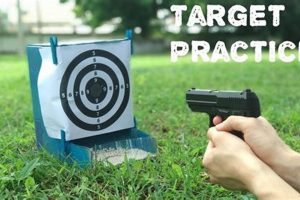
Target practice within a backyard is permissible, contingent upon adherence to all local ordinances, safety protocols, and community considerations. Ensuring projectiles remain within the property boundaries and do not pose a danger to individuals or property is essential.
Understanding these factors is essential for responsible airsoft gun usage. Prioritizing safety, adhering to local regulations, and fostering positive community relationships are key to preventing negative outcomes.
The following section will summarize the key takeaways discussed throughout this article.
Assessing the Feasibility of Backyard Airsoft Activities
The exploration of whether one “can you shoot airsoft gun in backyard” reveals a complex interplay of legal constraints, safety obligations, and community considerations. This analysis underscores that the act is not inherently permissible or prohibited. Instead, the legality hinges on strict adherence to local ordinances, the implementation of comprehensive safety protocols, and a proactive engagement with neighbors to mitigate potential disruptions. The absence of any single element undermines the feasibility and increases the risk of legal or social repercussions.
Prudent individuals will conduct thorough due diligence before engaging in such activities. A comprehensive understanding of local regulations, coupled with a commitment to responsible conduct, is paramount. The decision to engage in backyard airsoft activities should be weighed against the potential consequences, prioritizing the safety and well-being of both participants and the surrounding community. This approach reflects a commitment to responsible citizenship and mitigates the risks associated with negligent or ill-considered actions.

![Your Best Airsoft Gun Target Store Near Me - [Location] | Ultimate Airsoft Guide for Beginners, Tactics & Gear Reviews](https://airsoftica.com/wp-content/uploads/2026/04/th-20-300x200.jpg "Your Best Airsoft Gun Target Store Near Me - [Location] Ultimate Airsoft Guide for Beginners, Tactics & Gear Reviews")