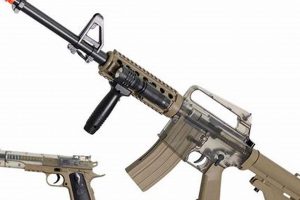
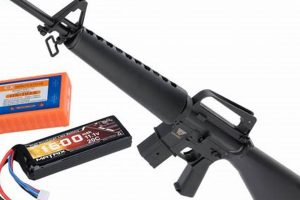
The practice of attaching a buttstock designed for an airsoft replica to a firearm intended to discharge live ammunition presents a complex issue. Airsoft components, including stocks, are typically manufactured from materials with significantly lower tolerances and structural integrity than those used in firearms. An attempt to interchange these parts raises concerns about functionality and safety due to the disparity in recoil forces and operational stresses.
The utilization of incompatible components can compromise the firearm’s reliability and potentially lead to malfunctions. The discrepancy in materials and manufacturing standards can result in premature failure of the stock, potentially causing injury to the user. Furthermore, any modification to a firearm must adhere to all applicable federal, state, and local laws, which may restrict or prohibit the use of non-standard or modified parts. The historical context of firearm modification underscores the need for careful consideration of safety and legal implications.
Given the aforementioned concerns regarding structural integrity, legal ramifications, and potential safety hazards, a comprehensive examination of suitable buttstock options for firearms is warranted. This exploration should include analysis of materials, manufacturing processes, and regulatory compliance considerations. Furthermore, a discussion of the potential liabilities associated with firearm modification is essential for responsible gun ownership.
Important Considerations Regarding Airsoft Stocks on Firearms
This section provides crucial guidance concerning the inappropriate and potentially dangerous practice of utilizing airsoft stocks on real firearms. These points address safety, legality, and functionality to emphasize the importance of using correct, compatible parts.
Tip 1: Material Incompatibility: Airsoft stocks are constructed from materials lacking the strength and durability required to withstand the forces generated by a discharging firearm. Polymer blends used in airsoft often differ significantly from the reinforced polymers or metals used in firearm stocks, leading to potential failure.
Tip 2: Structural Weakness: The internal structure of an airsoft stock is not engineered to manage recoil effectively. Firearm stocks have reinforced mounting points and internal supports absent in airsoft counterparts. Installing an airsoft stock can cause cracking, shattering, or complete detachment during firing.
Tip 3: Mounting Inconsistencies: Attachment mechanisms differ significantly between airsoft replicas and real firearms. Attempting to force an airsoft stock onto a firearm’s buffer tube or mounting point can damage both components, leading to an unstable and unsafe assembly.
Tip 4: Legal Ramifications: Modifying a firearm with incompatible or non-approved parts can violate federal, state, and local laws. Such alterations may render the firearm illegal, resulting in severe penalties, including fines and imprisonment.
Tip 5: Safety Hazard: A failing or broken stock can cause the user to lose control of the firearm, potentially leading to accidental discharge or injury. The unpredictable nature of a compromised stock makes safe handling impossible.
Tip 6: Functional Impairment: An airsoft stock may not provide the correct length of pull or cheek weld necessary for accurate shooting. This compromise in ergonomics can negatively impact aim and overall firearm performance.
The key takeaway is that using components designed for airsoft replicas on live-firing firearms represents a significant safety risk, legal violation, and degradation of firearm performance. Adherence to proper firearm maintenance and the use of manufacturer-approved parts are essential for responsible gun ownership.
Therefore, the following sections will detail appropriate stock selection criteria and approved modification practices to ensure both safety and legal compliance.
1. Material Incompatibility
The core incompatibility between airsoft stocks and firearms stems from fundamental differences in material composition and engineering. Airsoft components prioritize cost-effectiveness and aesthetic similarity over structural integrity, leading to a situation where their use on a firearm introduces significant safety and reliability concerns.
- Polymer Composition Variance
Airsoft stocks often employ lower-grade polymers and plastics, chosen for ease of manufacturing and reduced cost. These materials possess inferior tensile strength, impact resistance, and thermal stability compared to the reinforced polymers, composites, or metallic alloys used in firearm stocks. The difference is crucial; a firearm stock must withstand repeated recoil forces and environmental stressors that an airsoft stock is simply not designed to handle.
- Reinforcement Structures Absence
Firearm stocks frequently incorporate internal reinforcement structures, such as metal inserts or strategically placed ribs, to enhance rigidity and prevent deformation under stress. Airsoft stocks typically lack these reinforcements, making them susceptible to cracking or complete failure when subjected to the recoil of a live firearm. This absence directly compromises the user’s control and safety.
- Stress Resistance Thresholds
The operating environment of a firearm demands high stress resistance. Heat generated during firing, coupled with the repeated impact of recoil, places immense stress on the stock. Airsoft stocks, designed for negligible impact forces and ambient temperatures, possess stress resistance thresholds far below those required for safe and reliable firearm operation. This discrepancy leads to a heightened risk of catastrophic failure during use.
- Mounting Point Integrity
The points where a stock attaches to the firearm’s receiver are critical for stability and secure operation. Firearm manufacturers design these mounting points with tight tolerances and robust materials to ensure a secure and reliable connection. Airsoft stocks, on the other hand, often feature less precise mounting interfaces made from weaker materials. Consequently, attempting to attach an airsoft stock to a firearm can result in a loose, unstable, and ultimately unsafe connection.
The material incompatibility detailed above presents a clear and present danger when considering the use of airsoft stocks on real firearms. This is not merely a matter of aesthetics or convenience; it is a fundamental issue of safety and operational integrity. The vast differences in material properties and structural design render airsoft stocks wholly unsuitable for use on live-firing weapons, leading to potential injury, legal repercussions, and compromised firearm functionality.
2. Structural Failure Risk

The utilization of an airsoft stock on a firearm introduces a significant risk of structural failure. These components are designed and manufactured to withstand vastly different operational parameters, rendering the airsoft stock unsuitable for the forces generated by a live-firing weapon. The resulting structural weaknesses can lead to catastrophic failure, jeopardizing user safety and firearm functionality.
- Material Degradation Under Stress
Airsoft stocks typically employ polymers selected for cost-effectiveness and aesthetic resemblance, not structural integrity. The repetitive stress of recoil and the heat generated during firing can cause rapid material degradation in these polymers. Cracking, warping, and eventual disintegration of the stock material are likely outcomes, leading to instability and potential loss of control.
- Compromised Mounting Point Integrity
Firearm stocks feature robust mounting systems designed to withstand significant shear and tensile forces. Airsoft stocks often have less secure attachment points, constructed from weaker materials. When subjected to the forces generated by a firearm, these mounting points are prone to failure, resulting in a loose or detached stock. This instability impairs aiming accuracy and can create hazardous handling conditions.
- Inadequate Recoil Absorption Capacity
A primary function of a firearm stock is to absorb and distribute recoil energy. Firearm stocks are engineered with specific geometries and internal structures to effectively mitigate recoil. Airsoft stocks lack these features, offering minimal recoil absorption. This deficiency results in increased stress on the user’s shoulder and wrist, potentially leading to injury. Furthermore, the increased recoil can accelerate the deterioration of the stock material.
- Vulnerability to Impact Damage
The operational environment of a firearm often involves exposure to rough handling and potential impact damage. Firearm stocks are constructed from durable materials capable of withstanding such impacts. Airsoft stocks, designed for less demanding conditions, are highly vulnerable to impact damage. Cracks or fractures can compromise the stock’s structural integrity, increasing the likelihood of catastrophic failure during subsequent use.
These factors underscore the inherent dangers of interchanging airsoft and firearm components. The structural inadequacies of an airsoft stock render it wholly unsuitable for use on a real firearm. The potential for material degradation, mounting point failure, inadequate recoil absorption, and vulnerability to impact damage all contribute to an unacceptable risk of structural failure, with potentially severe consequences for the user.
3. Legal Violations Possible

The intersection of airsoft stocks and real firearms introduces a complex web of potential legal violations. The substitution of a component designed for a non-lethal replica onto a regulated firearm can trigger a cascade of legal repercussions, varying based on jurisdiction but generally centered on unauthorized modification and potential creation of an illegal weapon. Modifying a firearm often necessitates adherence to specific regulations concerning permissible alterations and component compatibility. Failure to comply with these regulations, such as using a non-approved airsoft stock, can result in severe penalties, including fines, confiscation of the firearm, and even imprisonment. The cause-and-effect relationship is direct: the act of replacing a firearm component with an incompatible, non-firearm-rated part like an airsoft stock establishes a clear violation.
The importance of understanding the legal ramifications cannot be overstated. Many jurisdictions define what constitutes a “firearm” based on its operational characteristics and component integrity. An unauthorized modification, such as installing an airsoft stock, could alter these characteristics in a way that violates these definitions. For example, if the altered firearm no longer meets minimum length requirements or compromises its safety mechanisms, it could be classified as an illegal short-barreled rifle or an unsafe weapon. Real-life examples include instances where individuals have faced charges for possessing firearms modified with non-standard parts, even without malicious intent, simply due to a lack of awareness of the applicable laws and regulations. The practical significance lies in the need for firearm owners to be fully informed about permissible modifications and to adhere strictly to legal standards.
In conclusion, the seemingly simple act of attaching an airsoft stock to a real firearm can open a Pandora’s Box of legal troubles. The potential for unauthorized modification, creation of an illegal weapon, and violation of firearm regulations makes it imperative for gun owners to exercise extreme caution and seek expert advice before undertaking any alterations. The challenges lie in the complexity of firearm laws and the varying interpretations across different jurisdictions. A thorough understanding of these laws and a commitment to responsible gun ownership are essential to avoid unintentional legal violations. The core message remains: unauthorized modifications carry significant legal risks and should be avoided at all costs.
4. User Safety Compromised
The replacement of a factory-standard firearm stock with a component designed for airsoft replicas directly and negatively impacts user safety. This substitution introduces a cascade of potential failures, stemming from the inherent disparity in material properties, structural integrity, and recoil management capabilities. The ramifications extend beyond mere firearm malfunction, posing a genuine risk of injury or even fatal outcomes for the user and bystanders.
- Unreliable Recoil Absorption
Airsoft stocks are not engineered to manage the recoil forces generated by live ammunition. Their construction typically involves weaker polymers or plastics that lack the density and reinforcement needed to effectively absorb and distribute recoil energy. Consequently, the user experiences significantly increased recoil, leading to reduced control over the firearm and a higher risk of unintentional discharge or misdirected shots. Real-world examples include instances where users have reported shoulder and wrist injuries after firing firearms with improperly installed or inadequate stocks. This deficiency in recoil management creates a hazardous scenario, particularly for inexperienced shooters.
- Catastrophic Stock Failure
The structural integrity of an airsoft stock is insufficient to withstand the stresses associated with firearm operation. The polymers used are prone to cracking, shattering, or complete detachment under the repeated impact of recoil. This catastrophic failure can occur unexpectedly during firing, causing the user to lose control of the weapon and potentially sustain injuries from flying debris or the uncontrolled movement of the firearm. Instances of such failures have been documented in online forums and shooting ranges, underscoring the real and present danger posed by this modification.
- Compromised Mounting Stability
The mounting interfaces on airsoft stocks are often less precise and robust than those found on firearm-grade stocks. Attempting to attach an airsoft stock to a firearm can result in a loose, unstable, or improperly aligned connection. This instability compromises the user’s ability to maintain a consistent cheek weld and sight picture, leading to inaccurate shooting and an increased risk of accidental injury. Furthermore, the insecure mounting can cause the stock to detach during firing, potentially disrupting the firearm’s operation and endangering the user and those nearby.
- Increased Risk of Accidental Discharge
The combination of inadequate recoil absorption, potential stock failure, and compromised mounting stability creates a situation where the risk of accidental discharge is significantly elevated. The user’s reduced control over the firearm, coupled with the possibility of the stock failing during firing, increases the likelihood of unintended trigger pulls or muzzle deviations. This is particularly concerning in environments where other individuals are present, as an accidental discharge can have devastating consequences. The safety mechanisms built into firearms are designed to function in conjunction with properly installed and maintained components. Substituting an airsoft stock compromises these safeguards and introduces an unacceptable level of risk.
The aforementioned factors converge to create a hazardous situation for any user attempting to employ an airsoft stock on a real firearm. The compromised structural integrity, unreliable recoil absorption, and increased risk of accidental discharge collectively render this modification inherently unsafe. The potential for injury, firearm malfunction, and legal repercussions far outweighs any perceived benefit, underscoring the critical importance of using only manufacturer-approved components and adhering to safe firearm handling practices.
5. Mounting System Discrepancies
The attempt to utilize an airsoft stock on a real firearm is immediately complicated by inherent mounting system discrepancies. These discrepancies arise from differing design philosophies and manufacturing tolerances. Firearm stocks are engineered for secure and reliable attachment, prioritizing safety and recoil management. Airsoft stocks, however, prioritize aesthetics and cost-effectiveness, resulting in less precise and robust mounting interfaces. The buffer tube threading, receiver extensions, and locking mechanisms frequently vary in dimension and material strength. This incompatibility leads to a compromised connection, lacking the stability required for safe firearm operation. A loose or improperly secured stock negatively impacts accuracy and creates a dangerous handling condition. For example, the diameter or thread pitch of an airsoft buffer tube may not match that of a firearm, preventing secure attachment, or the locking mechanism may be too weak to handle the firearm’s recoil, leading to failure.
The practical significance of these discrepancies is multi-faceted. Firstly, a poorly mounted stock degrades the firearm’s ergonomic properties, affecting the shooter’s ability to maintain proper cheek weld and eye relief. This directly impairs accuracy and control, especially during rapid firing or under stressful conditions. Secondly, the instability introduced by an incompatible mounting system increases the risk of accidental discharge or unintended weapon manipulation. A stock that detaches unexpectedly during firing can cause the shooter to lose control, leading to injury or property damage. Thirdly, attempting to force-fit an airsoft stock onto a firearm can damage both components, potentially requiring costly repairs or rendering the firearm unusable. Examples of these issues are readily found within online gun forums and communities, where users share their experiences and cautionary tales about the dangers of using mismatched parts. This highlights the importance of adhering to manufacturer-specified components and avoiding improvisational modifications.
In summary, mounting system discrepancies represent a significant obstacle to the safe and effective integration of an airsoft stock onto a real firearm. The lack of standardization in dimensions, materials, and locking mechanisms creates a fundamental incompatibility that compromises both the firearm’s functionality and the user’s safety. The consequences range from impaired accuracy to accidental discharge and potential injury. The key takeaway is that only components specifically designed and tested for use on a particular firearm should be employed, ensuring a secure and reliable connection. The focus must remain on responsible firearm ownership and the avoidance of potentially dangerous modifications.
6. Recoil Force Disparity
The fundamental connection between recoil force disparity and the practice of using an airsoft stock on a real firearm lies in the dramatically different forces each component is designed to withstand. Airsoft replicas generate negligible recoil compared to the significant force produced when a firearm discharges live ammunition. The disparity creates a situation where the airsoft stock is subjected to stresses far exceeding its design parameters, leading to potential structural failure and compromised user safety. Real-life examples of this include airsoft stocks cracking or completely detaching from firearms upon firing, resulting in a loss of control and potential injury. The practical significance is that an airsoft stock cannot effectively manage the recoil of a real firearm, making its use not only dangerous but also counterproductive to accurate shooting.
Further analysis reveals that the material properties of airsoft stocks contribute directly to this issue. Typically constructed from lightweight polymers or plastics, these stocks lack the tensile strength and impact resistance necessary to absorb and distribute the intense recoil energy. In contrast, firearm stocks are often manufactured from reinforced polymers, composites, or even metal alloys specifically chosen for their ability to withstand repeated recoil forces. This contrast highlights the importance of using components engineered for the specific operational environment. Practical applications are apparent in the design and selection criteria for firearm stocks, where recoil management is a primary consideration, dictating material choice, internal reinforcement, and attachment methods.
In conclusion, the recoil force disparity renders the use of airsoft stocks on real firearms inherently unsafe and functionally unsound. The potential for structural failure, coupled with compromised user control and increased risk of injury, necessitates the strict adherence to manufacturer-recommended components. The challenges of preventing such substitutions lie in user education and awareness of the inherent dangers involved. By understanding the critical differences in recoil forces and material properties, firearm owners can make informed decisions that prioritize safety and responsible gun ownership, linking back to the broader theme of firearm safety and modification regulations.
7. Functional Reliability Issues
The integration of components designed for airsoft replicas onto real firearms raises significant concerns regarding functional reliability. These concerns stem from fundamental differences in design, materials, and intended use, ultimately compromising the firearm’s performance and dependability.
- Compromised Accuracy and Stability
Airsoft stocks typically lack the rigidity and precision required for consistent accuracy in firearms. Their flexible construction and imprecise mounting interfaces introduce movement and vibration, negatively impacting the shooter’s ability to maintain a stable sight picture. This translates to reduced accuracy, particularly at longer ranges, and increased difficulty in controlling the firearm during rapid firing. For instance, the looser fit of an airsoft stock on a firearm’s buffer tube can create a wobble that degrades the shooter’s ability to consistently hit targets.
- Malfunctioning Adjustment Mechanisms
Adjustable airsoft stocks often utilize less robust mechanisms than their firearm counterparts. These mechanisms, designed for minimal stress, are prone to failure under the forces generated by firearm recoil. A malfunctioning adjustment mechanism can result in unintended changes to the stock’s length of pull or cheek weld, disrupting the shooter’s ergonomics and further compromising accuracy. Furthermore, a complete failure of the adjustment mechanism can render the stock unusable, requiring immediate replacement.
- Interference with Fire Control Components
The dimensions and geometry of airsoft stocks may not perfectly align with the firearm’s fire control components, such as the safety selector or charging handle. This misalignment can result in interference, hindering the shooter’s ability to quickly and effectively manipulate these controls. For example, an oversized airsoft stock may obstruct the safety selector, making it difficult to engage or disengage, potentially leading to a delay in responding to critical situations. Similarly, an improperly shaped airsoft stock could interfere with the charging handle, making it difficult to chamber a round quickly and efficiently.
- Accelerated Wear and Tear
The inherent incompatibility between airsoft stocks and firearms can accelerate wear and tear on both the stock and the firearm’s receiver extension or buffer tube. The increased stress and vibration can cause the airsoft stock to develop cracks or fractures, while the firearm components may experience accelerated erosion or deformation. This accelerated wear and tear ultimately reduces the overall lifespan and reliability of the firearm system, requiring more frequent maintenance and potentially leading to costly repairs. Examples include the buffer tube threading being stripped or damaged due to the improper fit of an airsoft stock.
The culmination of these functional reliability issues underscores the inherent risks associated with employing airsoft stocks on real firearms. The compromised accuracy, malfunctioning adjustment mechanisms, interference with fire control components, and accelerated wear and tear collectively diminish the firearm’s performance and dependability. These issues highlight the critical importance of using only manufacturer-approved components and adhering to safe firearm modification practices.
Frequently Asked Questions
The following questions address common concerns regarding the dangerous and potentially illegal practice of attaching airsoft stocks to real firearms. The information provided emphasizes safety, legality, and functional integrity.
Question 1: Is it safe to use an airsoft stock on a real firearm?
No. Airsoft stocks are manufactured with materials and construction methods unsuitable for handling the recoil and stress of a live-firing weapon. Using an airsoft stock can lead to catastrophic failure and potential injury.
Question 2: Is it legal to modify a firearm with an airsoft stock?
Modifying a firearm with non-approved components, such as an airsoft stock, can violate federal, state, and local laws. Such alterations may render the firearm illegal, leading to serious legal consequences.
Question 3: Will using an airsoft stock improve the performance of my firearm?
No. Airsoft stocks are not designed to enhance firearm performance. Their use will likely compromise accuracy, stability, and overall functionality. It is advisable to seek manufacturer-approved parts for upgrades.
Question 4: What are the potential consequences of using an airsoft stock on a real firearm?
Potential consequences include firearm malfunction, structural failure of the stock, injury to the user or bystanders, and legal penalties for illegal firearm modification.
Question 5: How can I identify if a stock is designed for airsoft or a real firearm?
Firearm stocks typically feature markings indicating their intended use and manufacturing standards. Airsoft stocks often lack these markings and are made of noticeably weaker materials. Consult with a qualified gunsmith if uncertain.
Question 6: What are the alternatives to using an airsoft stock on a real firearm?
The appropriate alternative is to use a stock specifically designed and manufactured for the intended firearm. These stocks are available from reputable manufacturers and gunsmiths and are engineered for safe and reliable operation.
In summary, substituting airsoft components for firearm parts represents a serious safety risk and potential legal violation. Adherence to manufacturer specifications and responsible gun ownership are paramount.
The following section delves into the ethical considerations surrounding firearm modifications.
Airsoft Stock on Real Gun
This exploration of “airsoft stock on real gun” has revealed significant safety, legal, and functional concerns. The inherent material and structural differences between airsoft components and those designed for firearms render such substitutions inherently dangerous. Potential outcomes include catastrophic failure, user injury, legal penalties, and compromised firearm reliability. The discrepancies in recoil management, mounting systems, and overall design underscore the incompatibility of these parts. Ignoring these factors places individuals at risk and undermines responsible firearm ownership.
The decision to modify a firearm carries substantial weight and demands meticulous adherence to established safety protocols and legal regulations. The information presented should serve as a firm deterrent to the ill-advised practice of using airsoft stocks on real firearms. Prioritizing personal safety, upholding legal standards, and maintaining the functional integrity of firearms are paramount. Future discussions should continue to emphasize responsible gun ownership and the importance of using only manufacturer-approved components.