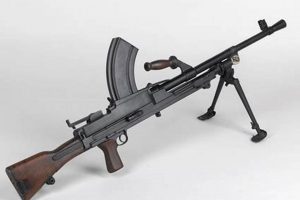
A common issue encountered with airsoft guns involves the failure of BBs to properly load from the magazine into the firing chamber. This malfunction prevents the gun from shooting and can stem from a variety of factors affecting the mechanism responsible for transporting ammunition. When an airsoft gun experiences this problem, it essentially renders the equipment unusable until the underlying cause is identified and resolved.
The proper functioning of the feeding mechanism is crucial for consistent performance and overall user satisfaction. A reliable feeding system ensures uninterrupted gameplay and enhances the realism of the airsoft experience. Understanding the causes of feeding problems allows players to troubleshoot issues quickly, minimizing downtime and maintaining the operability of their equipment. Historically, feeding problems have been a consistent area of improvement for airsoft gun manufacturers, leading to advancements in magazine design and internal mechanics.
Several elements can contribute to the inability of an airsoft gun to load properly. These factors range from magazine-related problems to issues with the internal components of the gun itself, including the hop-up unit, nozzle, and tappet plate. A systematic examination of these potential causes is necessary to diagnose and ultimately resolve the feeding problem effectively.
Troubleshooting Ammunition Delivery Failure in Airsoft Guns
Addressing the problem of ammunition not properly loading in airsoft guns requires a methodical approach. These tips outline potential causes and corresponding solutions.
Tip 1: Magazine Spring Tension: Insufficient spring tension within the magazine is a common cause. Ensure the magazine spring is properly wound or, if applicable, replace a worn-out spring. A weak spring cannot reliably push BBs up into the feeding tube.
Tip 2: Magazine Compatibility: Verify that the magazine is specifically designed for the airsoft gun model in use. Using an incompatible magazine can result in improper alignment and failure to feed. Consult the manufacturer’s specifications for compatible magazine types.
Tip 3: BB Quality and Size: Low-quality or incorrectly sized BBs can cause jams and feeding issues. Use only high-quality, seamless BBs of the correct diameter (typically 6mm). Avoid using BBs with visible imperfections or irregular shapes.
Tip 4: Hop-Up Unit Adjustment: An improperly adjusted hop-up unit can obstruct the BB’s path into the barrel. Experiment with slight adjustments to the hop-up setting. Ensure the hop-up rubber is clean and free of debris.
Tip 5: Nozzle and Tappet Plate Function: The nozzle and tappet plate work in tandem to load BBs. Inspect these components for damage, wear, or misalignment. A damaged or malfunctioning nozzle/tappet plate assembly will prevent proper BB loading.
Tip 6: Barrel Obstructions: A blockage in the barrel can prevent BBs from entering and exiting. Use a cleaning rod to thoroughly clear any obstructions from the barrel. Regular cleaning is essential for maintaining consistent performance.
Tip 7: Magazine Seating: Ensure the magazine is fully and securely seated in the magazine well. A loose or improperly seated magazine may not align correctly with the feeding mechanism, leading to malfunctions.
Implementing these tips methodically should assist in diagnosing and resolving most issues related to ammunition delivery failure. Addressing these potential causes will contribute to improved airsoft gun functionality and user experience.
Following these troubleshooting steps allows for a systematic approach to resolving feeding issues and restoring the airsoft gun to proper working order.
1. Magazine Spring Tension

Magazine spring tension is a critical factor in the efficient loading of ammunition in airsoft guns. Insufficient tension is a primary contributor to feeding malfunctions, preventing the reliable delivery of BBs into the firing chamber.
- Inadequate Force for BB Propulsion
The magazine spring’s primary function is to exert upward force on the BBs, pushing them towards the feeding lips of the magazine. When spring tension diminishes, the force propelling the BBs becomes insufficient, causing them to fail to reach the loading position within the airsoft gun. This deficiency directly impairs the feeding process.
- Impact of Worn or Damaged Springs
Over time, magazine springs can lose their elasticity and strength through repeated use and compression cycles. Physical damage, such as bending or corrosion, can also compromise spring integrity. A compromised spring is less capable of maintaining consistent pressure on the BB stack, exacerbating feeding problems.
- Influence of Magazine Capacity
High-capacity magazines require a stronger spring to ensure that BBs at the bottom of the stack are effectively pushed upwards as the magazine empties. A spring that is adequate for a low-capacity magazine may be insufficient for a high-capacity magazine, leading to feeding issues as the BB count decreases.
- Interaction with BB Weight and Quality
Heavier BBs necessitate greater spring tension to overcome their inertia and maintain a consistent feeding rate. Low-quality BBs with inconsistent shapes or sizes can also increase friction within the magazine, placing additional demands on the spring and potentially hindering the feeding process.
Therefore, maintaining adequate magazine spring tension is essential for consistent and reliable ammunition delivery in airsoft guns. Replacing worn or damaged springs, using magazines appropriate for the gun’s design, and employing high-quality BBs are crucial steps in mitigating feeding problems related to insufficient spring tension.
2. BB Quality
The quality of BBs directly impacts the consistent loading and firing of an airsoft gun. Deformities, size variations, or surface imperfections in low-quality BBs disrupt the feeding mechanism, preventing proper alignment within the magazine and the gun’s internal components. As a result, the loading process is impeded, and the gun fails to cycle ammunition effectively.
An instance of this occurs when using BBs with visible seams or uneven surfaces. These irregularities create friction as the BBs attempt to move through the magazine and into the hop-up unit. This friction slows or stops the BB’s progress, culminating in a failure to feed. Utilizing high-quality, seamless BBs minimizes these problems, ensuring a smoother trajectory within the airsoft gun’s system and fostering more consistent feeding. Furthermore, variations in BB size can also contribute to feeding problems, as rounds can jam within the magazine or barrel. Maintaining consistency in BB dimensions is therefore critical for reliable operation.
In summary, using high-quality BBs, free of imperfections and conforming to precise size standards, is paramount for preventing feeding malfunctions in airsoft guns. While other factors also contribute, neglecting BB quality significantly elevates the risk of impaired functionality, diminishing overall performance and user experience. Therefore, quality BBs contribute to consistent performance of the airsoft gun.
3. Hop-Up Adjustment

The hop-up unit imparts backspin on BBs as they exit the barrel, extending their range and improving trajectory. However, an improperly adjusted hop-up system can directly impede the feeding process. Over-adjustment creates excessive backspin, generating significant upward force on the BB. This force can press the BB against the upper portion of the magazine well or the nozzle, creating resistance and hindering its smooth entry into the chamber. Conversely, insufficient hop-up may not directly block feeding, but by causing poor trajectory and reduced range, it may lead users to incorrectly diagnose a feeding issue when the actual problem is inadequate lift.
Excessive hop-up adjustment manifests as BBs curving sharply upwards shortly after leaving the barrel. This upward trajectory is a clear indicator of excessive backspin. In such instances, the feeding issue arises because the hop-up rubber is effectively acting as a brake, preventing the next BB from properly seating in the chamber. A real-world example involves airsoft rifles where the hop-up dial is inadvertently set to maximum. Upon firing, BBs exhibit erratic flight paths and intermittent feeding, requiring immediate adjustment to alleviate the obstruction. If the hop-up unit is adjusted so that the bb is curved too much then the next bb will have trouble coming into chamber.
In summary, while the primary function of the hop-up is range and accuracy enhancement, its incorrect adjustment can directly contribute to feeding problems. Over-adjustment creates resistance that physically blocks the BB’s path, while under-adjustment may mask feeding problems with range issues. Proper adjustment, ensuring a balance between lift and smooth feeding, is therefore crucial for optimal airsoft gun performance. The ideal hop-up setting allows for a flat trajectory without causing noticeable upward or downward curve, thus enabling reliable ammunition delivery. Maintaining the correct balance helps prevent the gun from experiencing issues during firing, in return, the gun will shoot smoothly.
4. Nozzle Alignment

Nozzle alignment is a critical factor in ensuring proper BB feeding within an airsoft gun. The nozzle’s precise positioning and movement are essential for consistently loading ammunition from the magazine into the hop-up chamber. Misalignment disrupts this process, leading to feeding malfunctions.
- Lateral Misalignment
Lateral misalignment occurs when the nozzle is not centered with respect to the hop-up chamber. This prevents the nozzle from properly engaging and pushing the BB into the correct position. Examples include situations where the gearbox is slightly offset within the receiver or where the magazine well is not perfectly aligned. The result is often incomplete or inconsistent loading, with BBs either jamming or failing to enter the chamber entirely.
- Vertical Misalignment
Vertical misalignment manifests as the nozzle sitting too high or too low relative to the magazine’s feeding lips. A nozzle positioned too high may fail to pick up a BB from the magazine, while a nozzle positioned too low may cause the BB to become lodged between the nozzle and the hop-up unit. This form of misalignment often stems from improper gearbox shimming or incorrect magazine height relative to the receiver.
- Nozzle Length and Seal
Even with proper alignment, an incorrect nozzle length can disrupt feeding. A nozzle that is too short may not fully engage the hop-up bucking, resulting in air leaks and inconsistent BB velocity. Conversely, a nozzle that is too long can cause excessive wear on the bucking or prevent the BB from seating correctly. The nozzle seal is equally important, as a worn or damaged o-ring will lead to air loss and reduced pressure, affecting the force with which the BB is propelled into the chamber.
- Tappet Plate Timing
The tappet plate controls the nozzle’s movement, retracting it to allow BBs to feed and then pushing it forward to load the BB into the hop-up chamber. Incorrect tappet plate timing can cause the nozzle to move too quickly or too slowly, disrupting the feeding cycle. For instance, if the nozzle retracts too slowly, it may not clear the BB stack in the magazine, leading to a missed feed. If the nozzle advances too quickly, it may jam the BB against the hop-up bucking. Proper tappet plate timing is therefore crucial for synchronized and reliable BB loading.
These facets of nozzle alignment highlight the importance of precise engineering and assembly in airsoft gun construction. Any deviation from optimal alignment can cause feeding malfunctions. Addressing these potential issues, whether through careful inspection, component replacement, or adjustment of internal mechanisms, is essential for resolving feeding problems and ensuring reliable operation.
5. Barrel Obstruction
A barrel obstruction directly prevents an airsoft gun from feeding BBs because it physically blocks the path of the ammunition. This blockage can arise from various sources, including debris accumulation, the presence of deformed BBs, or the breakdown of internal components. If a foreign object or accumulation of residue restricts the barrel’s internal diameter, the BB cannot pass through, effectively halting the feeding process. This issue manifests as a complete stoppage of firing or inconsistent, low-powered shots as the BB struggles to overcome the obstruction.
For instance, mud or dirt entering the barrel during outdoor use can create a significant impediment. Similarly, if a BB shatters within the barrel due to low quality or excessive pressure, the fragments accumulate and form a blockage. The hop-up unit, situated near the barrel’s entrance, can also contribute to obstructions if its rubber bucking deteriorates, shedding small pieces into the barrel. The importance of a clear barrel lies in its direct impact on the gun’s ability to load and fire ammunition. Regular cleaning and maintenance are thus paramount in preventing such obstructions and ensuring the continuous feeding of BBs.
In conclusion, barrel obstructions represent a primary cause of feeding problems in airsoft guns. These obstructions can stem from environmental factors, ammunition quality, or component degradation. The consequence is an inability of the gun to properly load and fire, highlighting the necessity of regular barrel cleaning and the use of high-quality BBs to maintain optimal performance. Recognizing the connection between a clear barrel and consistent feeding is crucial for effective troubleshooting and preventative maintenance, ultimately extending the airsoft gun’s lifespan and ensuring a reliable user experience.
6. Magazine Compatibility

Magazine compatibility is a fundamental factor influencing the feeding performance of an airsoft gun. The firearm and magazine constitute an integrated system; mismatches between these components frequently result in ammunition delivery failures. Using an incompatible magazine disrupts the alignment of the feeding lips with the hop-up chamber, impeding the consistent transfer of BBs. This incompatibility often manifests as a failure to load, inconsistent firing, or jams, directly impacting the operability of the airsoft gun. An example is the use of a G36 magazine in an M4 platform; the differing magazine dimensions and feed angles prevent proper BB loading.
The intricacies of magazine design and manufacturing standards significantly contribute to compatibility issues. Airsoft gun manufacturers may adhere to proprietary specifications, rendering magazines from different brands or models incompatible, even if they appear visually similar. For example, while various M4-style magazines exist, subtle variations in their dimensions, feed lip geometry, or magazine well locking mechanisms can lead to feeding problems. A magazine designed for a high-torque motor setup might not feed correctly in a gun with a standard motor due to differences in the rate of BB consumption. This requires meticulous attention to the product specifications before integrating disparate components. A well-matched magazine ensures smooth, consistent loading of BBs into the chamber, maximizing performance and reliability.
In conclusion, ensuring magazine compatibility is a prerequisite for preventing feeding issues in airsoft guns. Subtle variations in design and manufacturing render the use of non-compatible magazines a primary cause of loading malfunctions. Therefore, verifying compatibility based on manufacturer recommendations and product specifications is critical for maintaining reliable airsoft gun performance. Failure to do so results in diminished effectiveness and potential damage to the gun’s internal mechanisms, highlighting the practical significance of adhering to compatibility guidelines.
Frequently Asked Questions
This section addresses common queries regarding the failure of airsoft guns to properly load ammunition, providing concise and informative answers.
Question 1: Why does magazine brand affect the feeding of an airsoft gun?
Different manufacturers employ varying tolerances and designs. These variations can influence how the magazine interfaces with the gun’s internal mechanisms, affecting BB alignment and feeding efficiency.
Question 2: How often should airsoft gun magazines be cleaned to prevent feeding problems?
The frequency depends on usage. However, a recommended practice is to clean magazines after each day of play, or after every 2000-3000 rounds fired, to remove debris and maintain proper function.
Question 3: Can using heavier BBs resolve certain feeding malfunctions?
In some instances, heavier BBs may provide a more consistent load due to their increased mass. However, this is not a universal solution, and the gun must be compatible with the heavier weight for optimal performance.
Question 4: How does ambient temperature impact airsoft gun feeding?
Extreme temperatures can affect the magazine spring’s performance and the BB’s physical properties. Cold temperatures can reduce spring elasticity, while high temperatures can cause BBs to swell, potentially hindering the feeding process.
Question 5: Is it possible for an airsoft gun’s gearbox to cause feeding issues?
Yes, a misaligned or damaged gearbox, specifically the tappet plate and nozzle assembly, can disrupt the timing and mechanics of the feeding process, leading to inconsistent or failed loading.
Question 6: Can a worn-out hop-up bucking cause feeding problems, and how?
Yes, a deteriorated hop-up bucking can cause fragments to enter the barrel, creating obstructions that impede the smooth passage of BBs. Replacement is recommended when wear is evident.
Troubleshooting feeding issues in airsoft guns often requires a systematic approach, considering various factors from magazine compatibility to internal component wear. Regular maintenance and informed component selection are key.
The succeeding section will explore preventative maintenance strategies to minimize future feeding problems.
Conclusion
The preceding analysis has addressed various causes of ammunition delivery failure in airsoft guns. Factors ranging from magazine spring tension and BB quality to hop-up adjustment, nozzle alignment, barrel obstruction, and magazine compatibility were examined. Each element plays a critical role in ensuring the reliable operation of the feeding mechanism. Understanding the interplay of these factors is essential for effective troubleshooting and proactive maintenance.
Consistent performance of airsoft equipment depends on a commitment to quality components, diligent maintenance practices, and a comprehensive understanding of potential failure points. Addressing the issues discussed promotes a more reliable and enjoyable user experience, while neglecting these considerations increases the likelihood of recurrent malfunctions and reduced operational lifespan of the airsoft gun.