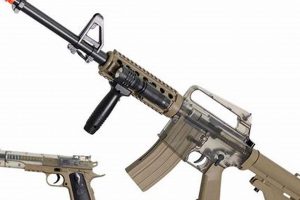
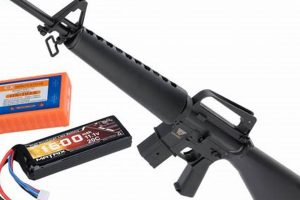
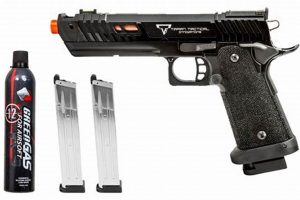
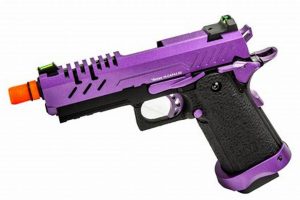
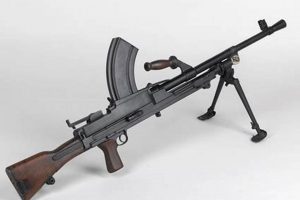
Selecting the appropriate coating for airsoft weaponry is crucial for both aesthetic customization and protection of the underlying materials. The diverse range of available paints necessitates careful consideration of factors such as adhesion, durability, and resistance to environmental conditions. Examples include spray paints formulated for plastics and metals, as well as specialized airbrush paints designed for intricate camouflage patterns.
Employing a suitable finish enhances the realism of the replica and safeguards against scratches, wear, and tear encountered during gameplay. This extends the lifespan of the airsoft gun and maintains its value. Historically, the practice of modifying and painting these devices evolved from military simulation and recreational activities, driven by a desire for authentic representation and personalized equipment.
The subsequent sections will delve into specific paint types and application techniques that produce optimal results. Considerations will also be given to surface preparation, safety precautions, and the selection of appropriate tools for achieving a professional and lasting finish on airsoft guns.
Guidance on Suitable Coatings for Airsoft Weaponry
The following recommendations offer practical advice for achieving a durable and aesthetically pleasing finish on airsoft guns.
Tip 1: Surface Preparation is Paramount: Prior to any painting, meticulous cleaning and degreasing are essential. Remove all traces of oil, dirt, and silicone lubricant. Isopropyl alcohol or a specialized degreaser is recommended.
Tip 2: Employ Primer for Enhanced Adhesion: A primer specifically formulated for plastics or metals, depending on the airsoft gun’s construction, should be applied. This ensures adequate adhesion of the subsequent color coats and prevents chipping.
Tip 3: Opt for Paints Designed for Plastics or Metals: Standard spray paints may not adhere properly or may damage the plastic components. Paints formulated for plastics offer flexibility and resist cracking. Metal-specific paints provide superior durability and corrosion resistance for metallic parts.
Tip 4: Apply Thin, Even Coats: Multiple thin coats are preferable to a single thick coat. This prevents runs, drips, and uneven drying, resulting in a smoother and more professional finish.
Tip 5: Allow Adequate Drying Time Between Coats: Refer to the paint manufacturer’s instructions for recommended drying times. Rushing the process can lead to imperfections in the final finish.
Tip 6: Consider Camouflage Patterns: Stencils and masking techniques can be used to create effective camouflage patterns. A variety of camouflage patterns exist, allowing for customization to specific environments.
Tip 7: Apply a Clear Coat for Protection: A clear coat sealant provides a protective layer against scratches, abrasion, and UV damage, extending the lifespan of the paint job.
The successful application of suitable coatings requires diligent preparation, appropriate material selection, and adherence to proper application techniques. The resulting finish will enhance the airsoft gun’s appearance and provide long-lasting protection.
The concluding section will address specific paint brands and availability of the materials.
1. Adhesion to substrate
Adhesion to substrate, in the context of finishes for airsoft weaponry, refers to the paint’s ability to bond securely with the material of the airsoft gun itself. This is paramount because airsoft guns are frequently constructed from diverse materials, including ABS plastic, polymers, and various metals. The selection of coatings depends directly on the surface properties of the gun’s components. Poor adhesion leads to premature chipping, peeling, and overall degradation of the painted surface, rendering the cosmetic enhancement ineffective and potentially compromising the firearm’s aesthetics and protective qualities.
Consider the application of a generic enamel paint to an ABS plastic airsoft gun. Without proper surface preparation or the use of a primer formulated for plastics, the paint is likely to exhibit weak adhesion. Flexing or impacts encountered during gameplay can cause the paint to separate from the plastic, resulting in unsightly damage. In contrast, the application of a specialized polymer paint, preceded by appropriate cleaning and priming, will create a durable bond that resists these stresses, ensuring the longevity of the finish. Similarly, on metal components, using a paint without anti-corrosive properties or proper etching can allow rust to form beneath the coating, leading to paint failure and substrate damage.
Ultimately, understanding and prioritizing adhesion to the substrate is fundamental when selecting coatings for airsoft weaponry. Neglecting this aspect results in aesthetic flaws and reduces the firearm’s lifespan. A carefully chosen paint system, tailored to the materials of the airsoft gun and properly applied, ensures a durable, visually appealing, and long-lasting finish that can withstand the rigors of regular use.
2. Durability under stress

Durability under stress is a critical factor when selecting a coating for airsoft weaponry. These devices are subjected to impacts, abrasion, and environmental factors that can compromise the finish. The chosen paint must withstand these conditions to maintain its aesthetic appearance and protective properties.
- Impact Resistance
Impact resistance refers to the paint’s ability to absorb and dissipate the energy from sudden impacts without chipping, cracking, or peeling. Airsoft guns often encounter impacts during gameplay, such as collisions with obstacles or other players. Paints with low impact resistance will quickly deteriorate, exposing the underlying material and detracting from the firearm’s appearance. Epoxy-based paints and coatings containing impact modifiers offer superior impact resistance compared to standard acrylic paints.
- Abrasion Resistance
Abrasion resistance measures the paint’s ability to withstand wear and tear from repeated rubbing or contact with abrasive surfaces. Airsoft guns are frequently handled, carried, and stored, exposing the finish to constant abrasion. Paints with poor abrasion resistance will quickly develop scratches and scuff marks, diminishing the aesthetic appeal. Polyurethane-based coatings and paints containing ceramic particles exhibit excellent abrasion resistance.
- Environmental Resistance
Environmental resistance encompasses the paint’s ability to withstand exposure to various environmental factors, such as moisture, UV radiation, and temperature fluctuations. Airsoft games often take place outdoors, exposing the finish to these elements. Moisture can cause corrosion of metal parts and blistering of the paint film. UV radiation can fade the paint’s color and degrade its chemical structure. Temperature fluctuations can cause expansion and contraction of the materials, leading to cracking or peeling of the paint. Paints formulated with UV absorbers and moisture-resistant resins provide enhanced environmental resistance.
- Flexibility
Flexibility refers to the paint’s ability to bend without cracking. Airsoft guns made of plastic are often subjected to minor flexing. Inflexible paints are prone to cracking under stress. Choosing a product specifically designed for flexible substrates, such as those advertised for automotive bumpers or flexible plastics can improve lifespan.
The selection of a paint that exhibits high durability under stress is paramount for ensuring the longevity and aesthetic appeal of airsoft weaponry. Factors such as impact resistance, abrasion resistance, and environmental resistance should be carefully considered when choosing the appropriate coating.
3. Resistance to solvents
Resistance to solvents constitutes a critical characteristic when selecting coatings for airsoft weaponry. The necessity arises from the frequent use of cleaning agents, lubricants, and other chemicals in the maintenance and operation of these devices. The integrity of the paint finish is directly influenced by its ability to withstand exposure to these substances without degradation.
- Type of Solvents Encountered
Airsoft guns are routinely cleaned with isopropyl alcohol, silicone oil, and various degreasers to remove dirt, grime, and lubricant buildup. These solvents can dissolve or soften certain types of paint, leading to blistering, peeling, or discoloration. Some specialized airsoft lubricants may also contain solvents that can affect the paint finish. The selection of a paint that is resistant to the specific solvents encountered in airsoft gun maintenance is crucial.
- Impact on Paint Integrity
When a paint lacks adequate solvent resistance, exposure to cleaning agents can cause the paint film to swell, soften, or dissolve. This can result in a compromised finish, making it more susceptible to scratches, chipping, and other forms of damage. In severe cases, the paint may completely detach from the substrate, necessitating a complete repaint. The structural integrity of the paint is therefore directly tied to its solvent resistance.
- Paint Composition and Solvent Resistance
The chemical composition of the paint plays a significant role in its resistance to solvents. Epoxy-based paints and two-part urethane coatings generally exhibit superior solvent resistance compared to acrylic or lacquer-based paints. The cross-linking structure of these paints provides a barrier against solvent penetration, minimizing the risk of damage. Reviewing the paint manufacturer’s specifications regarding solvent resistance is essential before selecting a product.
- Testing and Verification
Prior to applying a paint to an entire airsoft gun, it is advisable to test its solvent resistance on a small, inconspicuous area. This can be accomplished by applying a small amount of the cleaning agent or lubricant to the painted surface and observing any changes or damage over a period of time. This simple test can help to prevent costly and time-consuming repainting efforts.
The durability and longevity of a paint finish on airsoft weaponry are inextricably linked to its resistance to solvents. By carefully considering the types of solvents encountered, the impact on paint integrity, the paint’s composition, and conducting thorough testing, the selection of a solvent-resistant coating contributes significantly to the overall performance and aesthetic appeal of the airsoft gun.
4. Color fastness/UV Stability

Color fastness and UV stability represent critical attributes when evaluating coatings intended for use on airsoft weaponry. The exposure of these devices to sunlight during outdoor gameplay makes the paint’s resistance to fading and degradation under ultraviolet (UV) radiation a significant factor in maintaining its aesthetic appeal and functional integrity. The selection of paint with inadequate color fastness results in premature fading, discoloration, and a reduction in the overall visual quality of the painted surface. This directly impacts the realism and professional appearance of the airsoft gun, especially those intended for reenactments or competitive events. For instance, a camouflage pattern painted with a non-UV stable paint may quickly lose its effectiveness as the colors shift and become muted, diminishing its ability to blend into the environment.
Paints formulated with UV-resistant pigments and additives exhibit superior color fastness. These specialized paints minimize the absorption of UV radiation, thereby preventing the breakdown of the pigment molecules responsible for the paint’s color. Automotive-grade paints, often used in airsoft customization, are formulated to withstand prolonged exposure to sunlight and offer good color fastness. Similarly, certain acrylic paints specifically designed for outdoor use incorporate UV absorbers that protect the pigment from degradation. However, even with UV-resistant paints, a clear coat containing UV inhibitors can provide an additional layer of protection, further extending the lifespan of the painted finish. The practical application of this understanding is evident in the longevity and vibrant appearance of airsoft guns that have been painted with UV-stable coatings, compared to those that have faded and discolored after minimal exposure to sunlight.
In conclusion, color fastness and UV stability are indispensable characteristics of any paint intended for use on airsoft guns. The selection of paints with inherent UV resistance or the application of protective clear coats is paramount for preserving the visual appeal and long-term value of the customized airsoft weapon. Although the initial cost of UV-resistant paints may be slightly higher, the extended lifespan and sustained aesthetic quality outweigh the expense, making it a worthwhile investment for serious airsoft enthusiasts. The challenge lies in properly identifying paints with verifiable UV resistance claims and applying them according to the manufacturer’s recommendations to achieve optimal results.
5. Application method efficiency
The efficiency of the application method exerts a direct influence on the ultimate quality and longevity of coatings used on airsoft weaponry. The selection of “what paint to use on airsoft guns” cannot be considered in isolation from the chosen application technique, as the two are inextricably linked. Inefficient application methods can negate the benefits of even the highest-quality paints, leading to premature failures, aesthetic imperfections, and increased material waste. For instance, the use of an inappropriate spray nozzle or incorrect air pressure when applying spray paint can result in uneven coverage, runs, and orange peel texture, regardless of the paint’s inherent properties. Similarly, improper surface preparation or a lack of environmental control can compromise the paint’s adhesion and durability, regardless of the application method. A meticulous approach ensures an even and consistent coat, maximizing the paint’s inherent properties and minimizing the risk of defects.
Practical examples highlight the importance of application method efficiency. Consider the application of Cerakote, a high-performance ceramic coating often used on firearm components, to an airsoft gun. While Cerakote offers exceptional durability and chemical resistance, its application requires specialized equipment, precise temperature control, and skilled operators. Inefficient application, such as insufficient surface preparation or incorrect curing temperatures, will compromise the coating’s performance, leading to premature wear or failure. Conversely, the use of airbrushing techniques allows for intricate camouflage patterns and detailed designs on airsoft guns. However, the efficiency of this method depends on the operator’s skill, the quality of the airbrush, and the viscosity of the paint. Inefficient airbrushing can result in overspray, uneven coverage, and a lack of definition in the pattern. Another key component that impacts the efficiency is the skill of the user in surface preparation, as it directly affects how many coats are necessary to apply.
In summary, the efficiency of the application method is a crucial determinant of the success of any paint job on airsoft guns. The selection of “what paint to use on airsoft guns” should always be considered in conjunction with the available application methods and the skills of the operator. While high-quality paints offer numerous benefits, their potential can only be fully realized through efficient and proper application techniques. A balanced approach that prioritizes both material selection and application method is essential for achieving a durable, aesthetically pleasing, and long-lasting finish. One of the challenges, in the context, is bridging the gap of user expectations, due to lack of skills needed, with marketing promises from product descriptions. The best approach is education and awareness of the painting community.
6. Appropriate finish type

The selection of an appropriate finish type is integral to achieving a durable and aesthetically pleasing coating on airsoft guns. The decision is directly linked to the desired performance characteristics, the intended use environment, and the substrate material. Determining the correct finish precedes the choice of “what paint to use on airsoft guns,” as the finish type dictates the necessary paint properties.
- Matte Finish
A matte finish minimizes light reflection, offering a non-glossy appearance suitable for camouflage applications and tactical scenarios. It reduces glare, preventing the airsoft gun from being easily spotted. Examples include military simulations and outdoor skirmishes where concealment is paramount. The selection of “what paint to use on airsoft guns” for a matte finish prioritizes products with flattening agents or those specifically formulated for a non-reflective surface. The paint should exhibit excellent adhesion and durability to withstand field use.
- Satin Finish
A satin finish provides a low-luster appearance, balancing aesthetic appeal with practical considerations. It offers a slightly smoother surface than matte finishes and is easier to clean. Suitable for general airsoft gameplay and display purposes, it presents a compromise between visibility and ease of maintenance. In terms of “what paint to use on airsoft guns,” a satin finish necessitates paints with moderate gloss levels and good abrasion resistance. The paint should also be resistant to fingerprints and smudges.
- Gloss Finish
A gloss finish maximizes light reflection, creating a shiny and vibrant appearance. It enhances the visual appeal of the airsoft gun but can increase its visibility, making it less suitable for tactical scenarios. Typically chosen for display pieces, replicas, or airsoft guns intended for indoor use. Choosing “what paint to use on airsoft guns” for a gloss finish requires paints with high-gloss properties and excellent leveling characteristics to achieve a smooth, reflective surface. The paint should also be resistant to scratches and fading.
- Textured Finish
A textured finish provides a tactile surface, improving grip and handling. It can also add visual interest and a rugged aesthetic. Suitable for airsoft guns used in adverse conditions or where enhanced grip is desired. The selection of “what paint to use on airsoft guns” for a textured finish involves paints containing texturing agents or those designed to create a rough surface. The paint should offer excellent adhesion, durability, and resistance to wear and tear. It can be achieved with specialized spray paints or by adding texture mediums to standard paints.
The aforementioned finishes represent distinct options for airsoft gun coatings. The determination of the proper finish type plays a vital role in not only the look, but also the lifespan of “what paint to use on airsoft guns” and the performance characteristics. The user requirements and the intended application are crucial in making the correct determination. The user requirements and the intended application are crucial in making the correct determination.
Frequently Asked Questions
This section addresses common queries regarding the selection and application of paints for airsoft weaponry, providing guidance for achieving optimal results.
Question 1: What types of paint are generally unsuitable for airsoft guns?
Standard household paints are typically unsuitable due to their poor adhesion to plastics and metals commonly used in airsoft guns. Enamel paints may become brittle and crack under stress, while latex paints lack the necessary durability for outdoor use. These paints often lack the flexibility required to withstand impacts and temperature fluctuations.
Question 2: Is surface preparation truly necessary before painting an airsoft gun?
Surface preparation is absolutely essential. Failure to properly clean and degrease the surface will result in poor paint adhesion and premature chipping. Sanding may also be necessary to create a textured surface that promotes better paint bonding. Neglecting this step significantly reduces the lifespan of the paint job.
Question 3: How can the durability of the paint finish be maximized?
Durability is enhanced through the application of multiple thin coats of paint, followed by a clear coat sealant. The clear coat provides a protective layer against scratches, abrasion, and UV damage. Additionally, selecting paints specifically formulated for plastics or metals, depending on the gun’s construction, is crucial.
Question 4: What safety precautions should be observed during the painting process?
Adequate ventilation is paramount. Painting should be performed in a well-ventilated area or with the use of a respirator. Eye protection is also essential to prevent paint from entering the eyes. Following the manufacturer’s instructions for paint application and disposal is crucial for safety and environmental responsibility.
Question 5: How does one achieve a camouflage pattern on an airsoft gun?
Camouflage patterns can be achieved through the use of stencils, masking tape, and airbrushing techniques. Applying multiple layers of different colors allows for the creation of complex and effective camouflage schemes. Researching real-world camouflage patterns can provide inspiration and guidance.
Question 6: Can a painted airsoft gun be disassembled after painting?
Disassembly after painting can potentially damage the finish, particularly in areas where parts fit tightly together. Careful planning and masking of critical areas may allow for limited disassembly. However, it is generally recommended to complete all necessary modifications and repairs prior to painting.
Proper paint selection and application techniques, along with adherence to safety guidelines, are crucial for achieving a durable and aesthetically pleasing finish on airsoft guns. The information provided aims to assist individuals in making informed decisions and achieving professional-quality results.
The following section will explore potential modifications to enhance airsoft gun performance.
The Significance of Appropriate Coatings on Airsoft Weaponry
This exploration has underscored the critical nature of selecting appropriate coatings for airsoft guns. Factors such as adhesion, durability, solvent resistance, UV stability, application efficiency, and finish type are paramount. The synthesis of these considerations determines the longevity, aesthetic appeal, and overall performance of the customized airsoft weapon.
Ultimately, a commitment to informed selection and meticulous application processes will yield a superior product. Continued research and development in coating technologies promise further advancements in the durability and customization options available for airsoft weaponry, driving a continuing demand for information on what paint to use on airsoft guns and the importance of appropriate coating choices. This commitment will not only ensure the longevity of the airsoft weaponry, but also increase the realism of the sport.