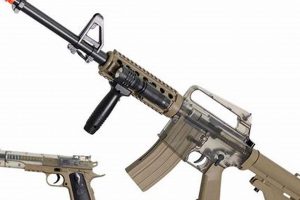
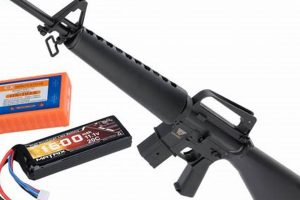
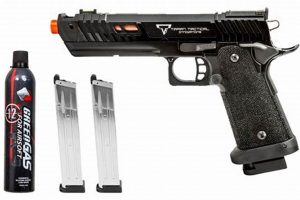
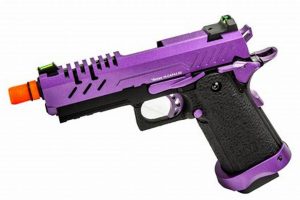
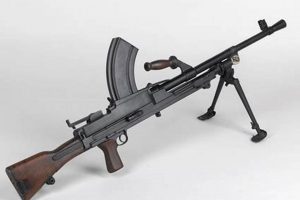
The kinetic energy output of an airsoft gun, a critical performance metric, is typically measured in Joules (J) or Feet Per Second (FPS) using 0.20 gram BBs. This measurement dictates the projectile’s velocity and, consequently, its potential impact force. Regulations and field rules often impose limits on this energy output to ensure player safety and fair gameplay. Exceeding these limits can result in disqualification or, more seriously, pose a safety hazard.
The careful consideration of airsoft gun performance is vital for maintaining a safe and enjoyable recreational activity. Historically, early iterations of airsoft devices were less regulated. Over time, as the sport evolved, safety concerns necessitated the establishment of standardized power limits and protective gear requirements. This has led to a responsible environment where enthusiasts can participate with minimal risk of serious injury.
Understanding the factors influencing the projectile velocity of these devices, the relevant legal and field regulations, and the potential for injury associated with excessive force are all crucial aspects of responsible airsoft participation. Further discussion will address these key areas in detail.
Understanding Airsoft Gun Power
This section offers crucial information concerning the kinetic energy output of airsoft guns, vital for both safety and compliance with field regulations.
Tip 1: Chronograph Testing is Essential: Regularly test airsoft guns using a chronograph to accurately measure FPS with 0.20g BBs. This verifies adherence to field limits and ensures consistent performance.
Tip 2: Understand Field Regulations: Familiarize oneself with the specific FPS and Joule limits mandated by the airsoft field or event organizer. These limits vary and compliance is non-negotiable.
Tip 3: Consider BB Weight Impact: Using heavier BBs increases the Joule output, even if the FPS appears within acceptable limits. Joule meters provide a more accurate measure of energy output.
Tip 4: Upgrade Components Cautiously: Upgrading internal components, such as springs or barrels, can significantly alter the power output. Always re-chronograph after any modifications.
Tip 5: Prioritize Protective Gear: Regardless of an airsoft gun’s power, always wear appropriate protective gear, including full-seal eye protection, to mitigate potential injury.
Tip 6: Maintain Airsoft Guns Properly: Consistent maintenance ensures consistent performance and helps prevent unexpected power increases due to component wear or malfunction.
Tip 7: Recognize DMR Power Restrictions: Designated Marksman Rifle (DMR) roles often have higher FPS limits but frequently require a minimum engagement distance. Awareness of these restrictions is crucial.
Adhering to these guidelines promotes a safe and responsible airsoft experience, safeguarding participants and maintaining the integrity of the sport.
With a firm grasp of these principles, the following sections will explore the potential hazards associated with excessive airsoft gun power and the steps necessary to mitigate those risks.
1. Kinetic Energy (Joules)

Kinetic energy, measured in Joules, is the definitive metric for quantifying the output of an airsoft gun, directly correlating with its potential impact force. An airsoft gun’s capacity to impart kinetic energy onto a projectile is a fundamental component. The relationship between mass and velocity, as expressed in the kinetic energy equation (KE = 1/2 m v^2), dictates the energy transferred upon impact. Higher kinetic energy values translate directly to increased impact force, posing a greater risk of injury. For instance, an airsoft gun generating 1 Joule of kinetic energy is considered relatively safe for close-quarters engagements, whereas a device producing 2 Joules or more presents a significantly elevated risk of causing pain, welts, or, in extreme cases, eye damage if appropriate protective gear is not worn.
Regulations governing airsoft fields and events universally utilize Joule limits to constrain the potential for injury. Chronographs equipped with Joule meters measure the kinetic energy output more accurately than FPS alone, as the former accounts for the projectile’s mass. The type of ammunition used can significantly affect the result. For example, a heavier BB propelled at the same FPS as a lighter BB will yield a higher Joule reading, potentially exceeding field limits and necessitating adjustments to the airsoft gun’s power settings. Compliance with these regulations demonstrates a commitment to safety and fair play within the airsoft community.
In summary, the kinetic energy, measured in Joules, serves as the quantifiable expression of an airsoft gun’s potential for impact and injury. Understanding and adhering to Joule limits is critical for responsible airsoft participation. Failure to do so compromises safety and can lead to serious consequences. The responsible management of an airsoft gun’s kinetic energy output is thus a paramount consideration for all participants.
2. Velocity (Feet Per Second)

Velocity, measured in Feet Per Second (FPS), is a frequently cited metric regarding the potential of an airsoft gun. Higher FPS values generally indicate a greater potential for impact and, consequently, increased perceived “power.” However, FPS alone does not provide a complete picture of the airsoft gun’s capabilities, as it fails to account for the projectile’s mass. For example, two airsoft guns might fire BBs at the same FPS, yet the one using heavier BBs will impart more energy upon impact. This nuance makes FPS a somewhat incomplete measure of an airsoft gun’s overall performance.
Airsoft field regulations frequently specify FPS limits as a simplified method of controlling the energy output. These limits are often based on the use of 0.20g BBs, a standard projectile weight. Violating the specified FPS limits can result in expulsion from the field, as it suggests a potential risk of increased injury. Furthermore, discrepancies can arise due to variations in chronograph devices or the precise weight of the BBs used. As a result, while FPS provides a useful reference point, it’s essential to recognize its limitations and understand that it only represents one aspect of the kinetic energy equation.
In conclusion, while FPS offers a convenient and easily understood indicator of an airsoft gun’s projectile speed, it is not a direct measure of its potential for impact or injury. The understanding of FPS must be paired with a broader knowledge of factors such as BB weight and kinetic energy to accurately assess the power capabilities of an airsoft gun. Understanding and following established velocity limits protects player’s health.
3. BB Weight Influence
The mass of the projectile, specifically the BB weight, exerts a significant influence on the overall output of an airsoft gun. While velocity, measured in FPS, is often the first metric considered, the kinetic energy delivered upon impact is directly proportional to both the mass and the square of the velocity (KE = 1/2 m v^2). Consequently, a heavier BB, even at a comparable velocity, will deliver a greater amount of energy, increasing the potential for discomfort or injury. An airsoft gun chronographed with 0.20g BBs might appear compliant with field regulations, but using heavier 0.25g, 0.28g, or even 0.30g BBs in gameplay can result in a substantial, and potentially dangerous, increase in kinetic energy. This is particularly relevant in scenarios involving close-quarters combat, where minimal engagement distances and unprotected areas of the body are more likely to be targeted.
Understanding the impact of BB weight is not merely theoretical. In practice, many airsoft fields have begun implementing Joule-based limits to account for this factor. A Joule meter measures the actual energy output of the airsoft gun, regardless of the BB weight used. This provides a more accurate assessment of the potential risk. A player upgrading to heavier BBs without re-chronographing using a Joule meter risks exceeding the legal limit, resulting in disqualification or, more seriously, posing a safety hazard. Moreover, employing heavier BBs without adjusting hop-up settings can lead to decreased range and accuracy, negating the potential advantages gained from the increased mass. It’s also crucial to consider the design of the airsoft gun itself; some platforms are optimized for specific BB weights and may experience performance issues or even internal damage if excessively heavy projectiles are used.
In conclusion, BB weight is a critical determinant of an airsoft gun’s true output, playing a vital, though often overlooked, role. Neglecting to account for its influence can lead to both regulatory non-compliance and an increased risk of injury. Embracing a comprehensive understanding of the relationship between BB weight, velocity, and kinetic energy is essential for responsible airsoft participation. Compliance is maintained by the careful selection of ammunition and regular chronograph testing that accurately reflects field conditions.
4. Regulatory Limits
The imposition of regulatory limits directly addresses the issue of projectile velocity and its resulting impact force. These regulations serve to define permissible kinetic energy levels, thereby establishing safety parameters for airsoft activities.
- Jurisdictional Variations
Regulations pertaining to airsoft gun usage differ significantly across geographic locations. Some countries or regions may impose strict restrictions on ownership, requiring permits or licenses, while others maintain more lenient policies. The legal framework influences the maximum allowable FPS and Joule output. For instance, some jurisdictions may cap FPS at 350 with 0.20g BBs, while others may permit higher velocities. These variations necessitate thorough research into local laws prior to purchasing or using an airsoft gun.
- Field-Specific Rules
Even within the same jurisdiction, individual airsoft fields or event organizers often institute their own set of rules governing allowable projectile speeds and kinetic energy. These rules are designed to ensure player safety and promote fair gameplay. Fields may categorize airsoft guns based on their FPS or Joule output, assigning different minimum engagement distances to each category. Failure to comply with these field-specific rules can result in expulsion from the premises.
- Equipment Inspection and Enforcement
Airsoft fields typically employ chronographs to measure the velocity and kinetic energy of airsoft guns. These devices are used to verify compliance with established limits. Regular chronograph testing is often mandatory prior to engaging in gameplay. Airsoft guns that exceed the specified limits are typically prohibited from use until modified to meet regulatory standards. Some fields may also conduct random chronograph tests during gameplay to ensure ongoing compliance.
- Consequences of Non-Compliance
Violating regulatory limits can result in a range of penalties, from temporary suspension from gameplay to permanent expulsion from the airsoft field. Furthermore, in jurisdictions with strict gun control laws, possessing or using an airsoft gun that exceeds legal velocity or kinetic energy limits may lead to criminal charges. Responsible airsoft participants prioritize safety and adhere to all applicable regulations to prevent accidents and maintain the integrity of the sport.
The intersection of these regulatory facets establishes a safety framework that aims to mitigate the risks associated with airsoft projectiles. Adherence to these limits directly correlates with the overall safety of airsoft engagements, reducing the potential for injury and promoting a responsible and enjoyable recreational activity. Ignoring these limits compromises the integrity of the sport and poses a demonstrable safety risk.
5. Injury Potential

The degree to which an airsoft gun is potent directly correlates with the potential for causing harm. An understanding of this relationship is paramount for responsible airsoft participation.
- Eye Injuries
Ocular damage represents the most severe potential consequence. Projectiles traveling at excessive velocities, or impacting unprotected eyes, can cause corneal abrasions, retinal detachment, or even permanent vision loss. Full-seal eye protection, meeting industry-standard safety ratings (e.g., ANSI Z87.1), is therefore mandatory and serves as the primary defense against this type of injury. The kinetic energy of the projectile, not simply its velocity, determines the severity of ocular trauma.
- Skin and Soft Tissue Trauma
Impact from an airsoft BB can result in welts, bruises, and abrasions, particularly at close range or with high-powered devices. While these injuries are generally less severe than ocular damage, repeated impacts to the same area can cause significant discomfort. The use of appropriate clothing, including long sleeves and pants, can help mitigate the risk of these superficial injuries. Thicker clothing provides more effective protection against the force of impact.
- Dental Injuries
While less common, dental injuries can occur if a projectile strikes the mouth or jaw area. Fractured teeth or damage to dental work may result, particularly with higher-powered airsoft guns and insufficient facial protection. A lower face mask, covering the mouth and jaw, provides additional protection against this type of injury. The force required to cause dental trauma varies based on the strength and health of an individual’s teeth.
- Risk Mitigation Strategies
Minimizing the potential for injury requires a multi-faceted approach. This includes strict adherence to field rules regarding FPS and Joule limits, the consistent use of appropriate protective gear, and responsible engagement distances. Awareness of the surroundings and communication with other players are also crucial for preventing accidental close-range impacts. Furthermore, responsible airsoft participants prioritize safety over achieving a tactical advantage, ensuring that the well-being of all participants is paramount.
Ultimately, the extent to which an airsoft gun can inflict injury is directly proportional to its output and the safety precautions employed. While the sport inherently carries some risk, a conscientious approach, emphasizing protective measures and adherence to regulations, minimizes the likelihood of serious harm.
6. Safe Engagement Distances
The concept of safe engagement distances is inextricably linked to the output of an airsoft gun. As projectile velocity and kinetic energy increase, so too does the potential for injury at close range. Establishing and adhering to minimum engagement distances is, therefore, a critical safety measure in mitigating risk and ensuring responsible participation in airsoft activities.
- Energy Levels and Minimum Distances
Airsoft fields typically categorize airsoft guns based on their energy output, expressed in FPS or Joules, and assign corresponding minimum engagement distances. Higher output airsoft guns, such as those classified as DMRs (Designated Marksman Rifles) or sniper rifles, often require a minimum engagement distance of 50-100 feet. This distance allows the projectile to lose some of its velocity before impact, reducing the potential for injury. Conversely, lower-powered airsoft guns used in CQB (Close Quarters Battle) scenarios may have a minimum engagement distance of 0 feet, reflecting the reduced risk.
- Circumventing Safe Engagement Distances
Intentional disregard for established minimum engagement distances constitutes a severe breach of safety protocols and can have significant consequences. “MED,” or Minimum Engagement Distance, is a term used to refer to keeping safe distance. Intentionally circumventing these rules poses an elevated risk of injury, particularly to vulnerable areas such as the face and eyes. Furthermore, such behavior undermines the integrity of the sport and can lead to expulsion from the field or even legal repercussions in certain jurisdictions. Responsible players prioritize safety and adhere to all established rules.
- Variable Power Systems and Distance Awareness
Some airsoft guns feature variable power systems that allow users to adjust the projectile speed. In such cases, it is essential to adjust the power setting appropriately based on the engagement distance. Using a high-power setting at close range is irresponsible and significantly increases the risk of injury. Furthermore, players should be constantly aware of their surroundings and the proximity of other participants, adjusting their engagement tactics accordingly. Maintaining clear lines of communication with teammates can also help prevent accidental close-range engagements.
- Terrain and Environmental Considerations
The terrain and environment can also influence safe engagement distances. In densely wooded areas or environments with limited visibility, it may be necessary to increase minimum engagement distances to account for the difficulty of accurately assessing distances and identifying potential targets. Furthermore, ricochets off of hard surfaces can alter the trajectory and velocity of projectiles, increasing the risk of unintended impacts. Players should be mindful of these environmental factors and adjust their tactics accordingly.
Safe engagement distances are not arbitrary rules but rather calculated measures designed to mitigate the inherent risks associated with airsoft guns. The stringency of these measures depends directly on the power and performance characteristics of the airsoft gun in question. Compliance with these guidelines is paramount to maintaining a safe and enjoyable airsoft environment. For instance, a higher-powered sniper rifle necessitates a greater minimum engagement distance than a standard AEG (Automatic Electric Gun) to ensure the safety of opposing players. Neglecting this consideration directly increases the likelihood of causing harm and diminishes the overall integrity of the sport.
Frequently Asked Questions
This section addresses common inquiries regarding the power output of airsoft guns, aiming to provide clear and informative answers.
Question 1: How powerful is an airsoft gun in relation to its potential to cause injury?
The potential for injury is directly proportional to the kinetic energy, measured in Joules, transferred upon impact. Higher kinetic energy values increase the risk of welts, bruises, or, in extreme cases, eye damage. Appropriate protective gear is paramount in mitigating these risks.
Question 2: What metrics are used to measure how powerful is an airsoft gun?
The primary metrics are Feet Per Second (FPS), measured with 0.20g BBs, and Joules. FPS indicates projectile velocity, while Joules provide a more accurate measure of kinetic energy, accounting for projectile mass.
Question 3: Why are field regulations necessary for regulating how powerful is an airsoft gun?
Field regulations establish safety parameters by limiting the maximum permissible FPS and Joule output. These limits aim to minimize the potential for injury and ensure fair gameplay. Strict adherence to these regulations is crucial for maintaining a safe environment.
Question 4: How does BB weight influence how powerful is an airsoft gun?
Using heavier BBs increases the kinetic energy delivered upon impact, even if the FPS remains within acceptable limits. A heavier BB at the same FPS imparts more energy than a lighter BB, potentially exceeding safe thresholds.
Question 5: What role do safe engagement distances play in mitigating the risks associated with how powerful is an airsoft gun?
Minimum engagement distances allow projectiles to lose velocity before impact, reducing the potential for injury. Higher-powered airsoft guns require greater minimum engagement distances to ensure safety.
Question 6: What are the consequences of exceeding the regulatory limits of how powerful is an airsoft gun?
Violating regulatory limits can result in suspension from gameplay, expulsion from the airsoft field, or even legal repercussions in certain jurisdictions. Responsible airsoft participants prioritize safety and adhere to all applicable regulations.
Understanding the factors influencing airsoft gun power, the relevant regulations, and the potential for injury is essential for responsible airsoft participation.
The next section will summarize the key takeaways from this discussion.
Conclusion
This exploration of “how powerful is an airsoft gun” has demonstrated the critical importance of understanding the factors influencing the output of these devices. Projectile velocity, kinetic energy, BB weight, and adherence to established regulations all contribute to the overall safety and integrity of the sport. Disregarding these factors increases the potential for injury and undermines the responsible participation expected within the airsoft community.
Ultimately, the responsible use of airsoft guns hinges on a commitment to safety, a thorough understanding of equipment capabilities, and unwavering adherence to established rules and regulations. Continued education and vigilant enforcement are essential for ensuring a safe and enjoyable environment for all participants. Prioritizing player safety strengthens the community as a whole.