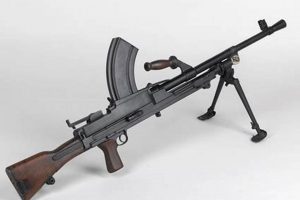
The practice concerns the strategic use of advantageous positions within the game of airsoft to gain a tactical edge over opposing players. It often involves finding elevated locations, well-defended areas, or areas with clear lines of sight to effectively engage the opposition. This strategic positioning allows for controlled engagements and can significantly influence the outcome of simulated combat scenarios. For example, a player might secure a rooftop to provide covering fire for teammates advancing on the ground.
Effective tactical positioning is crucial for success in airsoft, providing benefits such as improved field awareness, enhanced defensive capabilities, and increased opportunities for offensive maneuvers. Understanding the importance of terrain and sightlines dates back to the early days of military strategy and is a core component of realistic simulation in airsoft. Utilizing advantageous positions allows for safer and more effective team operations and contributes to the overall strategic depth of the game.
The following sections will explore specific positional tactics, considerations for selecting advantageous areas, and strategies for countering opponents who employ similar techniques. This includes detailed analysis of defensive and offensive positional play, as well as methods to adapt strategies to varying terrain and game modes.
Strategic Positioning Tips
The following guidelines outline fundamental principles for effective tactical positioning, focusing on maximizing field control and minimizing vulnerability during airsoft engagements.
Tip 1: Terrain Assessment: Prioritize a thorough assessment of the surrounding terrain. Identify natural cover, elevated positions, and potential flanking routes. Utilizing topographical features allows for strategic advantages.
Tip 2: Sightline Management: Control and maximize lines of sight from designated locations. Minimize exposure to enemy fire while maintaining the ability to effectively engage opposing players. Anticipate potential enemy movement to preemptively control key sightlines.
Tip 3: Concealment and Cover: Distinguish between concealment (hiding from view) and cover (protection from fire). Prioritize positions offering substantial cover, such as reinforced structures or dense obstacles. Avoid relying solely on concealment, as it offers no protection against direct fire.
Tip 4: Flanking Maneuvers: Exploit opportunities to flank enemy positions. Utilize concealed routes and terrain features to approach opponents from unexpected angles, disrupting their defensive formations and creating tactical advantages.
Tip 5: Defensive Fortification: When occupying a defensive position, prioritize fortification efforts. Create barriers, barricades, and interlocking fields of fire to enhance the position’s defensibility and deter enemy assaults. Ensure clear communication among teammates regarding overlapping zones of control.
Tip 6: Adaptability: Maintain adaptability and adjust positional strategies based on evolving battlefield dynamics. React to enemy movements, changing objectives, and unexpected events to maintain tactical superiority. Rigidity in strategy can lead to vulnerabilities.
Tip 7: Team Communication: Effective communication is crucial for coordinating positional strategies. Relay information regarding enemy positions, movement patterns, and potential threats. Coordinate team movements to maximize the effectiveness of positional play.
Mastery of these positional principles significantly enhances survivability and effectiveness within airsoft engagements. Consistent application of these strategies contributes to improved team performance and a greater capacity for achieving objectives.
The subsequent discussion will address common errors in positional play and strategies to counteract effective enemy positioning.
1. Elevation dominance

Elevation dominance, in the context of strategically utilizing advantageous positions in airsoft, constitutes a critical element. Securing higher ground provides several tangible benefits. Primarily, it offers improved visibility of the surrounding battlefield, enabling players to identify enemy movements and positions earlier than would be possible from ground level. This enhanced situational awareness allows for proactive tactical decisions, such as anticipating ambushes or identifying flanking opportunities. Moreover, elevated positions often provide superior firing angles, allowing players to engage opponents from positions of relative safety. The cause and effect relationship is straightforward: securing the high ground results in increased visibility, improved firing angles, and, consequently, a tactical advantage.
The importance of elevation dominance as a component of positional tactics can be illustrated by historical military examples. From ancient sieges to modern warfare, control of terrain height has consistently proven decisive. In airsoft, a player positioned on a rooftop overlooking a street gains significant control over that area. Opponents attempting to cross the street are exposed and vulnerable, while the player on the roof benefits from cover and a clear field of fire. This scenario mirrors real-world tactical situations, highlighting the practical significance of understanding and exploiting elevation advantages. The practical application extends beyond simply occupying high ground; it involves understanding the terrain and selecting positions that maximize the advantages offered by elevation.
In conclusion, elevation dominance is an integral aspect of effective tactical play. Its influence on visibility, firing angles, and overall field control makes it a key consideration in positional strategy. While challenges exist in securing and maintaining elevated positions, the potential benefits are substantial. Understanding and exploiting elevation dominance is crucial for maximizing tactical effectiveness and achieving success in airsoft engagements. Mastery of this principle contributes significantly to the broader goal of strategic positioning and can greatly enhance a player’s overall performance.
2. Cover utilization
Cover utilization, within the framework of strategically advantageous positioning, is a fundamental principle governing survivability and tactical effectiveness. The prudent employment of cover, defined as physical structures capable of providing protection from projectile impact, directly impacts a player’s ability to withstand enemy fire and maintain a sustained presence on the field. A cause-and-effect relationship exists: insufficient cover usage results in increased vulnerability and potential elimination, while skillful cover employment enhances survivability and enables sustained engagement. For example, correctly positioning oneself behind a concrete barrier significantly reduces the likelihood of being struck by incoming rounds.
The importance of cover utilization as a component of strategically advantageous positioning is highlighted by military doctrine and historical combat scenarios. Soldiers are trained to prioritize finding and utilizing cover to minimize exposure to enemy fire. In airsoft, this translates to consciously selecting positions that offer substantial protection, such as walls, bunkers, or natural terrain features. The practical significance of this understanding is that it allows players to engage opponents from a position of relative safety, maximizing their offensive capabilities while minimizing their vulnerability. Without effective cover utilization, even the most strategically advantageous position can be rendered ineffective. Utilizing available cover strategically, such as employing pieing techniques to clear corners, is critical.
In conclusion, cover utilization is an indispensable element. Its impact on survivability and tactical effectiveness makes it a central consideration in positional strategy. While challenges exist in identifying and accessing adequate cover, the benefits are substantial. Understanding and prioritizing cover utilization is critical for maximizing tactical advantage and achieving success. This principle, alongside other positional considerations, enables players to create a more resilient and effective presence on the battlefield. Skillful cover employment contributes to sustained engagement and increased opportunities to achieve objectives, linking directly to the overall objective of optimizing strategic positioning.
3. Flanking opportunities
Flanking opportunities represent a critical tactical element directly influenced by advantageous positioning. Strategic placement allows for the observation and exploitation of vulnerabilities in opposing players’ formations. The correlation between achieving a favorable position and creating flanking maneuvers is direct: advantageous locations often provide lines of sight and avenues of approach that permit an attack from an unexpected angle. This, in turn, creates tactical discord and forces opponents to react defensively, diverting resources and attention. The significance of flanking opportunities lies in their ability to disrupt established defenses and create imbalances, thereby shifting the tactical advantage.
The effective execution of flanking maneuvers depends on the strategic utilization of available terrain and the ability to anticipate enemy movements. For example, securing an elevated position on the periphery of an engagement area may reveal an unprotected side or rear to the opponent. This allows a player, or team, to initiate a flanking attack, forcing the opponent to divide their focus and potentially exposing them to crossfire. Furthermore, the understanding of potential flanking routes informs defensive positioning. Players aware of common flanking vectors can preemptively establish defensive measures to mitigate the risk of being outmaneuvered.
The exploitation of flanking opportunities, therefore, is intrinsically linked to the broader strategy of positional dominance. The ability to identify, create, and execute flanking attacks represents a significant tactical advantage. Success hinges on situational awareness, coordinated team movements, and the effective utilization of the environment. Understanding the relationship between positioning and flanking opportunities is paramount for players seeking to optimize their tactical performance.
4. Sightline control

Sightline control, a key aspect of advantageous positioning within airsoft, dictates the ability to monitor and engage designated areas of the battlefield. Effective management of sightlines directly impacts the outcome of engagements and contributes significantly to overall tactical superiority.
- Strategic Placement for Observation
Optimizing sightline control necessitates the strategic placement of personnel and equipment to maximize observation capabilities. Elevated positions, windows, and gaps in cover provide vantage points for monitoring enemy movements and identifying potential threats. Pre-planning and knowledge of the terrain are crucial for selecting advantageous locations. For example, positioning a player at a window overlooking a chokepoint allows for early detection of approaching enemies, enabling preemptive action and potentially preventing an assault.
- Denying Enemy Sightlines
Controlling sightlines involves not only maximizing one’s own observational capabilities but also denying the enemy the same advantage. This can be achieved through the use of smoke grenades, strategically placed cover, and aggressive maneuvering to force opponents into disadvantageous positions. By limiting the enemy’s ability to observe and react, tactical superiority can be established. A practical example is deploying smoke to obscure a doorway, preventing defenders from effectively targeting advancing players.
- Weapon Selection and Sightline Optimization
The choice of weapon directly influences the effectiveness of sightline control. Rifles with magnified optics provide enhanced accuracy at longer ranges, allowing players to effectively engage targets from distant vantage points. Conversely, shotguns and submachine guns are better suited for close-quarters engagements where sightlines are limited. The selection of appropriate weaponry based on anticipated engagement ranges is crucial for maximizing the benefits of sightline control. Utilizing a sniper rifle to control a long, open sightline demonstrates this principle.
- Communication and Coordination
Effective sightline control requires seamless communication and coordination among team members. Players must relay information regarding enemy positions, movement patterns, and potential threats to teammates, enabling a coordinated response. Shared intelligence allows for a more comprehensive understanding of the battlefield and facilitates the effective allocation of resources. For instance, a designated spotter communicating enemy movements to a sniper enhances the sniper’s effectiveness in controlling a critical sightline.
The facets of strategic placement, sightline denial, weapon selection, and team communication collectively contribute to effective sightline control. Mastery of these aspects enables a player or team to dominate key areas of the battlefield, control the flow of engagement, and ultimately achieve tactical superiority. These principles, when applied effectively, exemplify key components of strategic positioning within airsoft engagements.
5. Defensive fortification

Defensive fortification, as a strategic element within the context of airsoft, directly correlates with advantageous positioning. The establishment of fortified positions enhances a team’s ability to control key areas, withstand enemy assaults, and maintain a tactical advantage. Fortifications serve as force multipliers, increasing the effectiveness of defending players and hindering enemy advances. The act of creating and utilizing fortified positions represents a proactive approach to battlefield management, allowing for the controlled engagement of opposing forces. The cause and effect relationship is evident: well-designed fortifications provide a tangible defensive advantage, leading to increased survivability and a higher probability of objective defense. For instance, a sandbagged bunker overlooking a strategic chokepoint provides a significant defensive advantage compared to simply holding the same location without fortification.
The importance of defensive fortification stems from its ability to maximize the efficiency of defensive resources. By strategically placing cover, barriers, and interlocking fields of fire, a smaller number of defending players can effectively repel a larger attacking force. Real-world examples of this principle can be seen in military history, where fortified positions have played a crucial role in delaying or defeating enemy offensives. In airsoft, this translates to the construction of barricades, the use of natural terrain features for cover, and the creation of kill zones that funnel enemy players into predictable engagement areas. The practical significance of understanding defensive fortification lies in its ability to transform static defense into a proactive strategy, allowing players to not only withstand attacks but also to inflict significant casualties on the opposing force.
In summary, defensive fortification is an integral component of advantageous positioning within airsoft scenarios. Its implementation directly contributes to improved survivability, enhanced defensive capabilities, and the potential for achieving tactical superiority. While the construction and maintenance of fortifications require resources and planning, the benefits derived from a well-fortified position far outweigh the investment. Mastering the principles of defensive fortification allows teams to control critical areas of the battlefield, effectively defend objectives, and ultimately increase their chances of success. The challenges of resource management and adaptation to changing battlefield conditions are mitigated by the strategic advantages gained through effective fortification strategies, contributing directly to overall tactical effectiveness.
Frequently Asked Questions Regarding Strategic Positional Play
This section addresses common inquiries related to the tactical advantages derived from utilizing advantageous positions within airsoft engagements. The responses aim to provide clear and informative explanations to enhance understanding of this strategic element.
Question 1: What are the primary benefits derived from prioritizing tactical positioning?
Prioritizing tactical positioning yields multiple benefits, including enhanced situational awareness, improved defensive capabilities, increased offensive opportunities, and greater control over engagement zones. Effective positioning also contributes to improved survivability and a reduced risk of casualties.
Question 2: How does elevation contribute to tactical advantage in airsoft scenarios?
Elevation provides improved visibility of the battlefield, enabling early detection of enemy movements. It also allows for superior firing angles, facilitating engagement from positions of relative safety. This vertical advantage can significantly influence the outcome of firefights.
Question 3: What distinguishes effective cover from mere concealment?
Effective cover provides physical protection from projectile impact, while concealment only hides a player from visual detection. Prioritizing positions offering substantial cover is essential for mitigating the risk of injury. Relying solely on concealment provides no defense against direct fire.
Question 4: How can flanking maneuvers be effectively executed in airsoft engagements?
Flanking maneuvers require a thorough assessment of the terrain and the identification of potential avenues of approach. Utilizing concealed routes and terrain features to approach opponents from unexpected angles can disrupt defensive formations and create tactical advantages. Coordination and communication are crucial for successful flanking.
Question 5: Why is communication essential for effective positional play?
Communication facilitates the coordinated movement of team members, the sharing of intelligence regarding enemy positions, and the effective allocation of resources. Clear and concise communication enhances situational awareness and enables a more cohesive and effective tactical response.
Question 6: What are some common errors to avoid when employing positional tactics?
Common errors include neglecting terrain assessment, failing to utilize available cover, neglecting communication with teammates, and remaining static in predictable locations. Adaptability and continuous evaluation of positional strategies are crucial for avoiding these pitfalls.
In summary, strategic positional play is a multifaceted concept that requires a thorough understanding of terrain, cover, communication, and adaptable tactics. Mastery of these elements enhances individual and team performance within airsoft engagements.
The subsequent section will delve into advanced techniques for utilizing strategically advantageous positions to maximize tactical effectiveness.
Conclusion
This exploration of strategic positional play, often termed “airsoft guna” within the community, underscores its fundamental role in achieving tactical superiority. Proficiency in selecting and utilizing advantageous positions directly influences engagement outcomes, survivability, and the overall success of airsoft operations. The deliberate consideration of terrain, cover, sightlines, and defensive fortifications are essential for players seeking to maximize their effectiveness on the field.
Further study and practice are encouraged to refine individual and team-based positional strategies. A comprehensive understanding of these principles will contribute to a higher level of competitive play and a greater appreciation for the strategic depth inherent in airsoft engagements. Continual adaptation and analysis remain paramount for maintaining a competitive edge in this dynamic environment.