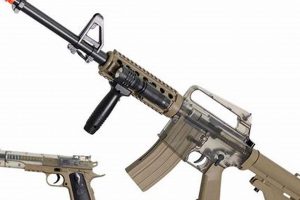
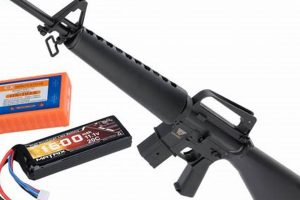
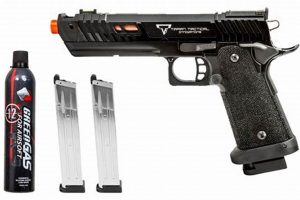
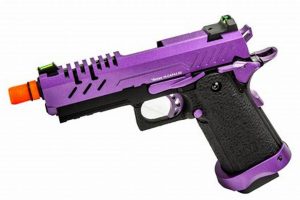
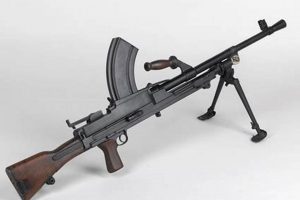
A replica firearm designed to discharge spherical plastic projectiles, typically 6mm or 8mm in diameter, using compressed gas or a spring-powered mechanism. These devices are commonly employed in recreational skirmishes and tactical simulations, mirroring real-world weapon platforms in appearance and operation. For instance, a model mimicking a specific military rifle would launch plastic pellets, providing users with a similar aesthetic experience without the dangers associated with live ammunition.
The significance of these devices lies in their role as training tools, recreational sports equipment, and collectibles. They offer a relatively safe avenue for practicing firearm handling skills, engaging in team-based strategic games, and appreciating firearm designs. Their historical development reflects an evolution from simple toy mechanisms to sophisticated, high-performance replicas, catering to diverse interests ranging from casual hobbyists to serious tactical enthusiasts. The appeal stems from the realistic experience coupled with the mitigated risk compared to real firearms.
The following sections will delve into the various types of these devices, explore their operational mechanics, discuss safety protocols, and examine the legal considerations surrounding their use and ownership. Understanding these facets provides a complete overview of their function and context within recreation and training.
Guidance on Selecting and Utilizing an Airsoft Replica
This section outlines essential considerations for individuals seeking to acquire or operate a replica firearm, often used in recreational skirmishes and tactical simulations. Adherence to these guidelines promotes safe and responsible usage.
Tip 1: Prioritize Safety Gear: Eye protection is paramount. Select ANSI Z87.1 rated goggles or a full-face mask to prevent injury from projectiles. Furthermore, consider wearing a mouth guard and protective clothing to minimize potential impact discomfort.
Tip 2: Understand Local Laws and Regulations: Familiarize oneself with the legal requirements regarding ownership, transportation, and usage in one’s specific jurisdiction. Some regions impose restrictions on replica firearm appearance, power output, and permitted usage areas. Compliance is crucial.
Tip 3: Choose the Appropriate Model for the Intended Use: The market offers various types, including electric-powered (AEGs), gas blowback (GBB), and spring-powered models. Select the model that best aligns with the intended gameplay style and field regulations. Consider factors such as range, rate of fire, and maintenance requirements.
Tip 4: Maintain the Device Regularly: Consistent maintenance prolongs the lifespan and ensures optimal performance. This includes cleaning the barrel, lubricating moving parts, and inspecting for damage. Refer to the manufacturer’s instructions for specific maintenance procedures.
Tip 5: Handle the Device with Respect: Treat the replica as if it were a real firearm. Never point it at individuals not participating in gameplay, and always keep the safety engaged when not actively engaged in a skirmish.
Tip 6: Store the Device Securely: When not in use, store the replica in a secure location, inaccessible to unauthorized individuals, particularly children. Use a lockable case or container to prevent accidental use or theft.
Tip 7: Participate in Responsible Gameplay: Adhere to established field rules and regulations. Avoid excessive firing rates, maintain safe engagement distances, and respect the boundaries of the playing area.
Following these recommendations cultivates a culture of safety, responsible usage, and respect for the device’s potential implications. This contributes to a positive and sustainable environment for enthusiasts.
The subsequent discussion will address advanced techniques and strategic considerations for utilizing these devices effectively in competitive scenarios.
1. Replica Firearm
The essence of this recreational device is inextricably linked to its nature as a replica firearm. The very concept hinges on mirroring the appearance and, to a degree, the functionality of actual firearms. This mimicry serves as the primary draw for many users, providing a tangible connection to military or law enforcement equipment without the associated dangers of lethal ammunition. The realism contributes to the immersive nature of the sport and the effectiveness of these devices as training tools for firearm handling.
Consider, for example, a model replicating a specific AR-15 variant. The external dimensions, weight distribution, and manipulation of controls like the selector switch, magazine release, and charging handle closely resemble the real firearm. This allows users to practice weapon manipulation drills, target acquisition, and tactical maneuvers in a controlled environment. The success of the sport is entirely dependent on the device’s convincing representation of real firearms, fueling the demand for increasingly accurate replicas.
Understanding the “replica firearm” aspect is crucial for appreciating the responsibilities associated with owning and using this equipment. It necessitates adherence to safety protocols, respect for legal restrictions, and awareness of the potential for misidentification. The degree to which an airsoft gun resembles a real firearm directly influences the level of scrutiny it receives from law enforcement and the public. This underscores the importance of responsible ownership and the ethical considerations surrounding the use of replica weapons.
2. Plastic Projectiles
The use of plastic projectiles is fundamental to the operational safety and recreational viability of these devices. These projectiles, typically spherical and made of biodegradable or non-biodegradable plastic, define the nature of the sport, differentiating it from the use of actual firearms and potentially lethal ammunition.
- Composition and Design
These projectiles commonly consist of acrylonitrile butadiene styrene (ABS) or polylactic acid (PLA). Their spherical shape is critical for consistent flight trajectory when propelled through the smoothbore barrel. The weight, typically ranging from 0.12g to 0.40g, impacts range, accuracy, and kinetic energy upon impact. Heavier projectiles generally offer greater stability and resistance to wind drift, while lighter projectiles are used in lower-powered models or indoor settings.
- Safety Considerations
The non-lethal nature of plastic projectiles is crucial for minimizing injury risk. However, potential for harm exists, particularly to the eyes and exposed skin. Therefore, mandatory use of protective eyewear and appropriate attire is standard in organized skirmishes. Projectile velocity is also regulated at organized events to maintain a safe energy level. Excessive velocity could result in bruising, welts, or, in rare cases, more serious injuries.
- Environmental Impact
The environmental impact of plastic projectiles has become an increasing concern. Biodegradable PLA options have gained popularity to mitigate long-term environmental contamination. However, the degradation rate of these materials varies depending on environmental conditions, and improper disposal can still contribute to pollution. Responsible players strive to collect spent projectiles, minimizing their environmental footprint.
- Performance Characteristics
The performance characteristics of these projectiles, including range, accuracy, and consistency, are influenced by several factors, including the quality of the projectile itself, the propulsion mechanism, and environmental conditions. High-quality projectiles exhibit consistent size and shape, minimizing variations in flight trajectory. Backspin, imparted by hop-up systems, extends range by counteracting gravity. These characteristics contribute significantly to the immersive experience and competitive dynamics of airsoft games.
The dependence on plastic projectiles is the defining characteristic that makes this a recreational activity rather than a dangerous undertaking. The properties of these projectiles influence the safety, gameplay dynamics, and environmental responsibility associated with airsoft, shaping the sport’s culture and regulations.
3. Compressed Gas/Spring

The propulsion mechanism, whether employing compressed gas or a spring-powered system, is a fundamental component defining how an airsoft device functions. This system dictates the energy source used to propel plastic projectiles and, consequently, influences performance characteristics such as range, accuracy, and rate of fire.
- Compressed Gas Systems
These systems utilize compressed gases, such as carbon dioxide (CO2), green gas (propane with silicone lubricant), or high-pressure air (HPA), to propel the projectile. The gas is stored in a reservoir, and a valve releases a controlled burst of gas behind the projectile, forcing it down the barrel. These systems typically offer higher power output and more realistic recoil compared to spring-powered models. Gas blowback (GBB) models, common in pistol replicas, simulate the slide action of a real firearm.
- Spring-Powered Systems
Spring-powered mechanisms utilize a spring-loaded piston to compress air within a cylinder. When the trigger is pulled, the piston is released, rapidly compressing the air and propelling the projectile. These systems are generally less expensive and require no external gas source. They are common in entry-level rifles and sniper rifle replicas. Operation requires manually cocking the mechanism before each shot.
- Performance Implications
The choice between compressed gas and spring power significantly impacts the performance of an airsoft device. Compressed gas systems offer higher and more consistent power output, resulting in greater range and accuracy. However, they require a consistent supply of gas and are more susceptible to temperature fluctuations. Spring-powered systems are simpler and more reliable but offer lower power output and require manual cocking between shots.
- Maintenance and Reliability
Maintenance requirements differ significantly between the two systems. Compressed gas systems require regular lubrication and seal maintenance to prevent leaks and ensure consistent performance. Spring-powered systems typically require less maintenance but are more prone to mechanical failure due to the constant stress on the spring and piston. The complexity of gas systems can make repairs more challenging.
The propulsion system, whether relying on compressed gas or a spring, is an integral aspect. The choice of system affects performance, maintenance requirements, and overall operational characteristics. Both systems serve the fundamental purpose of propelling plastic projectiles, enabling participation in recreational skirmishes and tactical simulations. The selection depends on individual preferences, budget considerations, and intended gameplay style.
4. Recreational/Training

The intersection of recreation and training forms a crucial aspect. This facet underscores the dual-purpose nature of these devices, highlighting their application in both leisure activities and skill development scenarios.
- Recreational Skirmishes
The primary recreational application involves organized skirmishes, often simulating military or law enforcement scenarios. Participants engage in team-based objectives, utilizing their airsoft devices to eliminate opposing players through projectile impact. This promotes physical activity, strategic thinking, and teamwork in a safe and controlled environment. The popularity of this application derives from its immersive nature and accessibility for individuals of varying skill levels.
- Tactical Training
These devices serve as valuable tools for tactical training exercises, particularly for law enforcement and military personnel. They allow for the practice of firearm handling, weapon manipulation, and close-quarters combat techniques without the risks associated with live ammunition. The realism of airsoft replicas facilitates effective simulation of real-world scenarios, enhancing training efficacy.
- Firearm Safety Education
The utilization of airsoft platforms in firearm safety education provides a safe and controlled environment for learning proper handling techniques, aiming principles, and responsible firearm ownership. This application is particularly beneficial for introducing younger individuals to firearms in a non-threatening manner, fostering responsible attitudes and preventing accidents.
- Competitive Shooting Sports
Emerging competitive shooting sports centered around airsoft offer structured environments for testing marksmanship skills and tactical proficiency. These events typically involve timed courses of fire, requiring participants to accurately engage targets while navigating challenging obstacles. This fosters precision, speed, and strategic decision-making, catering to individuals seeking a competitive shooting experience without the expense and regulations associated with real firearms.
These diverse applications demonstrate the versatility of these devices in both recreational and training contexts. They underscore the importance of responsible usage, adherence to safety protocols, and awareness of legal restrictions governing their ownership and use. The duality of the device necessitates a balanced approach, acknowledging its potential for both enjoyable recreation and effective skill development.
5. Various Replicas

The diverse array of available replicas directly shapes the experience and utility. This variety encompasses models mimicking a wide range of real-world firearms, catering to diverse preferences and specialized applications within the sport and training.
- Modern Sporting Rifles
Replicas of AR-15 style rifles are exceptionally prevalent. These models feature modular designs, customizable components, and compatibility with various accessories. Their use extends from recreational skirmishes to tactical training scenarios, reflecting the widespread adoption of the AR-15 platform in military and law enforcement contexts.
- Handguns
Handgun replicas mirror popular pistol designs such as the Glock 17, SIG Sauer P226, and Beretta M9. These models are often employed in close-quarters combat scenarios and training exercises, simulating real-world handgun deployment tactics. The realism of these replicas contributes to the authenticity of the experience.
- Submachine Guns
Submachine gun replicas, including models mimicking the MP5 and P90, offer a compact and high-rate-of-fire option for close-quarters engagements. These models are frequently used in indoor airsoft arenas and specialized tactical simulations, providing users with a maneuverable and effective weapon platform.
- Sniper Rifles
Sniper rifle replicas, often modeled after bolt-action rifles like the Remington M24 or Accuracy International Arctic Warfare, offer a long-range precision option. These models demand careful aiming and tactical positioning, simulating the role of a sniper in real-world combat scenarios. Users often customize these models with upgraded components to enhance accuracy and range.
These varied replicas collectively define the extensive range available to users. The continuous development of new models mirroring emerging real-world firearms ensures that the options evolve, thereby maintaining the realism and relevance. Such models can be spring powered, gas powered, and electric powered. These can be easily found online and local shops, and are commonly known as replica airsoft guns.
6. Safety Gear Essential

The inherent operational characteristics necessitate the use of appropriate safety gear when employing an airsoft replica. The discharge of plastic projectiles, though non-lethal, poses a potential risk of injury, particularly to vulnerable areas. Thus, the implementation of adequate protective measures is paramount for responsible and safe participation.
- Eye Protection
Eye protection is the most critical safety component. Airsoft projectiles, even at relatively low velocities, can cause severe eye damage. ANSI Z87.1 rated goggles or full-face masks provide adequate protection against projectile impact. These devices should fit securely and provide unobstructed vision. Failure to wear appropriate eye protection constitutes negligence and can lead to irreversible injury.
- Facial Protection
In addition to eye protection, facial protection is highly recommended. Mesh masks or full-face masks offer protection against direct projectile impact to the face, preventing lacerations, contusions, and dental injuries. Lower face protection is particularly important in close-quarters combat scenarios, where the risk of direct hits to the face is elevated. Some fields mandate full-face protection for all players.
- Body Protection
While not always mandatory, body protection can significantly reduce the discomfort associated with projectile impact. Vests, padded clothing, and gloves provide cushioning against projectile strikes, minimizing bruising and welts. The level of body protection required depends on individual preferences and the intensity of gameplay. Thicker clothing layers also offer some protection, but specialized gear is more effective.
- Appropriate Attire
Appropriate attire extends beyond specialized protective gear. Sturdy footwear, such as boots or athletic shoes, provides adequate ankle support and traction on varied terrain. Loose-fitting clothing allows for unrestricted movement and reduces the risk of overheating. Brightly colored clothing may be advisable in outdoor settings to enhance visibility and prevent accidental misidentification.
The consistent and diligent use of appropriate safety gear is a fundamental aspect of responsible airsoft participation. The risk of injury, though mitigated by non-lethal projectiles, remains a factor that necessitates proactive protective measures. Prioritizing safety ensures a positive and sustainable environment for all players, promoting responsible conduct and minimizing the potential for harm when operating an airsoft replica.
7. Legal Considerations

The operational definition is inextricably linked to legal frameworks. Varying jurisdictions impose specific regulations governing their ownership, use, transportation, and modification. Understanding these legal parameters is crucial for responsible ownership and avoids potential legal ramifications.
- Federal Laws and Regulations
Federal laws, particularly those relating to imitation firearms, often impact the manufacture, importation, and sale. Certain federal regulations may mandate the inclusion of orange tips or other markings to visually distinguish airsoft devices from actual firearms. Failure to comply with federal regulations can result in fines, confiscation of the device, and potential criminal charges.
- State and Local Laws
State and local laws concerning airsoft ownership and use exhibit significant variation. Some states may restrict or prohibit ownership by minors, while others may impose restrictions on public display or transportation. Local ordinances may also regulate the permissible areas for airsoft use. Strict adherence to state and local laws is essential, as ignorance of these regulations does not absolve individuals of legal responsibility.
- Brandishing and Public Display
Brandishing or publicly displaying an airsoft device can result in serious legal consequences, even if the device is legally owned. Law enforcement officers may misinterpret an airsoft device as a real firearm, leading to potentially dangerous encounters. Avoiding public display and transporting the device in a concealed manner minimizes the risk of misidentification and potential legal repercussions.
- Modification and Alteration
Modifying or altering an airsoft device can have significant legal ramifications. Altering the device to increase its velocity or remove required markings may violate federal or state laws. Modifications that transform the airsoft device into a functional firearm can result in severe criminal charges. Exercise caution and seek legal guidance before undertaking any modifications or alterations.
These legal considerations directly influence the accessibility, usage, and ownership. Compliant operation involves understanding and adhering to the pertinent regulations. Disregarding these considerations may lead to legal sanctions and compromise the responsible use that is fundamental. Such legal consequences are easily avoidable with proper adherence to legal guidelines.
Frequently Asked Questions
The following questions and answers address common inquiries and concerns regarding airsoft devices, providing essential information for prospective users and the general public.
Question 1: Are airsoft devices considered firearms?
No. These devices are generally classified as replica firearms or air guns, not firearms, due to their use of plastic projectiles rather than lethal ammunition. However, legal classifications vary by jurisdiction, so it is important to consult local laws.
Question 2: What is the typical range of an airsoft projectile?
The effective range depends on factors such as the device’s power, the projectile’s weight, and environmental conditions. The practical range generally extends from 50 to 200 feet, varying across models.
Question 3: Is parental supervision necessary for minors using airsoft devices?
Yes. Parental supervision is imperative to ensure safe handling, adherence to safety protocols, and compliance with legal restrictions. Responsible adult oversight minimizes the risk of accidents and promotes responsible usage.
Question 4: What safety precautions must be observed when using airsoft devices?
Mandatory safety precautions include wearing ANSI Z87.1 rated eye protection, avoiding aiming at unprotected individuals, and adhering to established field rules. Responsible handling prevents injuries and fosters a safe environment.
Question 5: Can airsoft devices be legally transported in public?
Transportation regulations vary by location. The device should be transported in a case or bag, unloaded, and out of plain sight to minimize the risk of misidentification and potential legal repercussions. Consult local laws for specific transportation requirements.
Question 6: What are the potential consequences of misusing an airsoft device?
Misuse, such as brandishing or illegal modification, can lead to serious legal penalties, including fines, confiscation, and potential criminal charges. Responsible handling and adherence to legal restrictions are crucial for avoiding legal repercussions.
These FAQs provide a brief overview of pertinent aspects related to airsoft. Further research and consultation with relevant authorities are encouraged for comprehensive understanding.
The subsequent article will discuss the future trends in this sport, including technological advancements and evolving regulatory landscape.
Conclusion
This examination has established that this device is, at its core, a replica firearm engineered to discharge plastic projectiles via compressed gas or spring mechanisms. It functions primarily within recreational skirmishes and tactical training exercises. Critical considerations include the imperative use of safety gear, understanding the diversity of available replicas, and adhering to the specific legal constraints imposed by various jurisdictions. This comprehensive approach is critical to ensure responsible ownership and operation.
The future development of these platforms relies on continuous technological innovation coupled with heightened regulatory oversight. A commitment to promoting safety, ethical handling, and legal compliance is vital for ensuring the continued viability of this sport, training tool, and hobby. Stakeholders bear the responsibility of upholding responsible practices to maintain the integrity and legitimacy of this field.