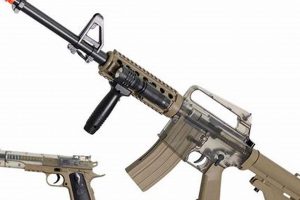
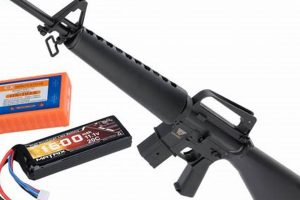
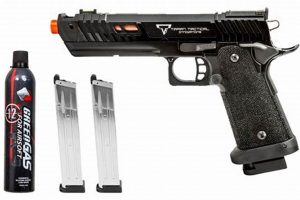
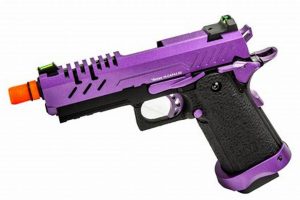
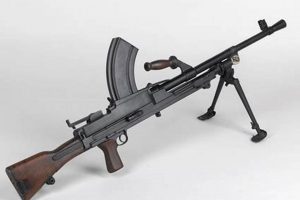
Airsoft replicas that closely mimic the appearance, weight, and operation of real firearms are highly sought after within the airsoft community. These models often feature authentic external dimensions, realistic materials, and functional controls, offering a more immersive and training-oriented experience. For example, certain airsoft rifles replicate the takedown procedure of their real-steel counterparts, enhancing the level of realism.
The appeal of these detailed replicas stems from a desire for enhanced immersion and a closer approximation to real firearms handling. This can be beneficial for tactical training simulations, film and television prop usage, and collectors seeking accurate representations. Historically, airsoft technology has advanced significantly, allowing manufacturers to produce increasingly realistic and detailed models, driving a growing demand for this level of authenticity.
The subsequent sections will explore the features contributing to realism, detail specific models known for their accuracy, and discuss the considerations involved in selecting a replica with the highest fidelity to its real-world counterpart. Attention will be given to both internal mechanisms and external construction that impact the perceived realism.
Enhancing Realism with Airsoft Replicas
Achieving a higher degree of realism in airsoft play requires careful consideration of several factors. Selection of appropriate equipment and techniques can significantly enhance the overall experience.
Tip 1: Material Selection is Paramount: Prioritize replicas constructed from materials that closely resemble those used in real firearms. Metal alloy receivers, steel barrels, and reinforced polymer furniture contribute substantially to a realistic feel and weight.
Tip 2: Examine Operational Realism: Models that replicate the functions of their real counterparts offer a more immersive experience. Look for features such as realistic blowback action, functional bolt catch, and magazine release mechanisms.
Tip 3: Weight and Balance Considerations: The weight and balance of a replica greatly influence its handling characteristics. Research the weight specifications of the real firearm and select an airsoft model that closely matches these parameters.
Tip 4: Opt for Licensed Replicas: Licensed airsoft models often incorporate accurate trademarks and dimensions, enhancing visual authenticity. These models are generally produced with a higher level of attention to detail.
Tip 5: Modify and Customize: Aftermarket parts allow for further customization and improvement of realism. Consider upgrading internal components, such as the hop-up unit or inner barrel, to enhance performance and accuracy. Externally, add realistic accessories such as weapon lights, optics, and slings.
Tip 6: Camouflage and Loadout: Utilizing appropriate camouflage patterns and tactical gear can significantly enhance the sense of immersion. Research the equipment used by real military units or law enforcement agencies to create a realistic loadout.
Realistic airsoft experiences are heightened by careful attention to detail and informed equipment choices. By prioritizing accurate materials, operational realism, and appropriate customization, players can significantly enhance the immersion and authenticity of their airsoft engagements.
The subsequent sections will delve into specific airsoft models renowned for their exceptional realism and discuss advanced techniques for further enhancing the immersive experience.
1. Materials

The selection of materials is paramount in determining the realism of airsoft guns. The closer the materials match those of the real firearm, the more authentic the airsoft replica feels and performs. For example, the use of stamped steel for receivers, rather than polymer, provides a realistic weight and texture that directly impacts the user’s perception of the gun’s quality. Similarly, using real wood or high-quality polymer for furniture (stocks, handguards, grips) significantly enhances the visual and tactile realism.
Manufacturers prioritizing realism often utilize aluminum alloys for outer barrels, receivers, and other key components. This replicates the heft and feel of a genuine firearm more accurately than lower-cost alternatives. Furthermore, specific surface treatments such as parkerization or anodizing, applied to metal parts, not only enhance the aesthetic but also improve durability and resistance to wear, mirroring real-world firearm finishing processes. The choice of materials also has implications for the gun’s longevity and robustness, adding to the overall sense of authenticity. For example, a Zinc alloy is common in airsoft but degrades quickly compared to Aluminum alloy which is stronger.
In conclusion, material selection is a critical determinant of realism in airsoft guns. The correlation between the materials used and the resulting level of authenticity directly influences the user’s experience. While cost considerations often dictate material choices, models striving for the highest degree of realism consistently prioritize materials that closely emulate their real-world counterparts. This commitment to material accuracy translates to a more immersive, training-oriented, and satisfying experience for the user, although a challenge is finding airsoft guns that use the exact same materials as the real steel while keeping a reasonable price.
2. Weight
Weight, in the context of airsoft replicas, serves as a critical factor influencing the perceived realism of the gun. The closer the weight matches the real firearm, the more authentic the feel and handling become, contributing significantly to the overall experience.
- Material Density and Realistic Mass
The selection of high-density materials directly impacts the final weight of the replica. Metal components, such as receivers, barrels, and magazines, contribute significantly to achieving a realistic mass. The internal mechanisms also play a role; gearboxes and motors add weight. By replicating the distribution of weight found in real firearms, airsoft models can offer a more authentic tactile experience.
- Impact on Handling and Manipulation
The weight of an airsoft replica directly affects handling characteristics, including balance and maneuverability. Heavier models can feel more stable when aiming and firing, reducing perceived recoil, while lighter models are easier to carry for extended periods. A weight discrepancy between an airsoft model and its real counterpart can reduce the effectiveness of training simulations or degrade the overall sense of realism during recreational play.
- Influence on Training Applications
For training purposes, a realistic weight profile is essential to accurately simulate the experience of handling a real firearm. The proper weight allows users to develop muscle memory and refine their weapon-handling skills. Using a lighter airsoft model can lead to incorrect techniques and poor transfer of training to real-world scenarios.
- Subjective Perception of Quality
Weight is often associated with quality. Users commonly perceive heavier airsoft guns as more durable and well-made, even if the internal components are comparable to lighter models. A heavier weight can instill confidence and enhance the user’s feeling of ownership and satisfaction. Manufacturers capitalize on this perception by prioritizing weight in their designs to enhance the overall perceived value of their products.
The nuances of weight in airsoft replicas go beyond simple mass. Weight distribution, material choices, and the subjective perception of quality all contribute to the feeling of realism. For individuals prioritizing authenticity, weight is a critical attribute that must be considered when evaluating airsoft models. Achieving a weight profile that closely matches the real firearm is essential for training applications and enhancing the overall user experience. Therefore, the weight of the airsoft gun is a very important attribute in relation to realistic replicas.
3. Operation
The operational fidelity of an airsoft replica significantly contributes to its overall realism. Mimicking the functions of a real firearm enhances immersion and provides a valuable training tool. Replicating the operational sequence, controls, and feedback mechanisms is essential for achieving a high degree of authenticity.
- Blowback Action and Recoil Simulation
Blowback action, where the slide or bolt reciprocates upon firing, is a crucial element. This action not only simulates the visual recoil of a real firearm but also introduces a tactile element that enhances the sense of realism. High-end replicas often incorporate adjustable blowback systems, allowing users to fine-tune the intensity of the recoil. This feature is particularly valuable for training scenarios, where simulating recoil is essential for developing proper shooting techniques. Examples of manufacturers offering realistic blowback include Tokyo Marui and GHK, known for their gas blowback rifle systems.
- Fire Control Mechanisms and Manipulation
Realistic fire control mechanisms, such as functional safety selectors, magazine releases, and bolt catches, are vital components. These mechanisms must function similarly to their real-world counterparts. The manipulation of these controls, including magazine changes and clearing malfunctions, should closely mirror the actions required with a real firearm. Airsoft guns with realistic trigger pulls and reset characteristics further enhance the training experience, allowing users to develop proper trigger control. VFC airsoft guns are generally known for having realistic controls that are very close to real steel firearms.
- Disassembly and Maintenance Procedures
The ability to disassemble an airsoft replica in a manner similar to the real firearm adds a layer of realism appreciated by enthusiasts and trainers. Replicating the disassembly process allows users to familiarize themselves with the internal components and understand the maintenance procedures. This feature is valuable for individuals seeking a more in-depth understanding of firearm mechanics. Furthermore, realistic disassembly can facilitate the installation of aftermarket upgrades and modifications. An example of this is the Umarex (VFC) Glock replicas which are very accurate to the real steel firearms.
- Ammunition and Magazine Realism
The use of realistic magazines, including correct capacity and dimensions, contributes to the operational authenticity. Magazine changes should feel similar to those performed with a real firearm. Some airsoft models utilize realistic shell ejecting systems, further enhancing the visual and auditory experience. Accurately simulating the weight and handling of magazines enhances the realism of tactical reloads. Brands like PTS Magpul are known for making airsoft magazines that are very close to real steel magazines.
In summary, the degree to which an airsoft replica replicates the operation of a real firearm is a critical determinant of its realism. Blowback action, realistic fire control mechanisms, accurate disassembly procedures, and attention to magazine details all contribute to a more immersive and training-oriented experience. Prioritizing these operational aspects enhances the value of airsoft replicas for both recreational users and individuals seeking realistic training tools.
4. Dimensions
Dimensional accuracy is a cornerstone of realism in airsoft replicas. The precision with which an airsoft gun replicates the physical size and proportions of its real firearm counterpart directly impacts its appearance, handling, and compatibility with accessories.
- Overall Size and Proportions
The overall length, height, and width of an airsoft gun must closely match the real firearm to achieve a convincing level of realism. Discrepancies in these dimensions can be immediately apparent and detract from the authenticity. Manufacturers committed to realism invest in accurate measurements and tooling to ensure their replicas conform to the specifications of the original firearm. This extends beyond just the overall dimensions to encompass the relative proportions of individual components, such as the receiver, barrel, and stock.
- Component Dimensions and Interchangeability
Realistic dimensions are also critical for the compatibility of airsoft guns with real firearm accessories, such as optics, grips, and weapon lights. If the dimensions of the airsoft gun deviate significantly from the real firearm, these accessories may not fit properly or function as intended. Some high-end airsoft replicas are designed to accept certain real firearm accessories directly, further enhancing their realism and utility. For example, replicas of AR-15-pattern rifles are often designed to accept real AR-15 handguards, stocks, and pistol grips.
- Internal Dimensions and Mechanism Fit
While external dimensions are visually apparent, the accuracy of internal dimensions is also important. Internal dimensions affect the fit and function of the internal mechanisms, such as the gearbox, hop-up unit, and inner barrel. If the internal dimensions are not accurate, the gun’s performance and reliability may be compromised. Some manufacturers utilize Computer-Aided Design (CAD) data from the real firearm to ensure that the internal dimensions of their replicas are as accurate as possible.
- Ergonomics and Handling
Dimensional accuracy directly influences the ergonomics and handling characteristics of an airsoft gun. If the grip angle, trigger reach, and overall size of the gun deviate significantly from the real firearm, the user’s handling and manipulation of the gun will be affected. This can be particularly important for training purposes, where the goal is to replicate the feel and handling of a real firearm as closely as possible. Accurate dimensions ensure that the airsoft gun feels natural and comfortable in the user’s hands, promoting proper shooting techniques.
The pursuit of realistic dimensions is a key differentiator among airsoft guns. Manufacturers who prioritize dimensional accuracy are more likely to produce replicas that offer a truly immersive and authentic experience. The commitment to precision in both external and internal dimensions is essential for achieving a high degree of realism and functionality in airsoft replicas. Therefore, dimensions is a high priority when manufacturers are trying to create the most realistic airsoft gun.
5. Markings

The presence and accuracy of markings on airsoft replicas significantly contribute to their realism. Markings include manufacturer logos, model designations, proof marks, and other identifiers typically found on real firearms. Their precision and authenticity are critical for achieving visual fidelity.
- Trademark Licensing and Authenticity
Official licensing agreements with firearm manufacturers allow airsoft companies to accurately replicate trademarks and logos. The absence of licensing often results in generic or altered markings, diminishing the replica’s realism. Licensed models offer precise visual replication, enhancing their collectibility and appeal to enthusiasts seeking accuracy. For example, Umarex holds licensing agreements with companies such as Glock, allowing the company to accurately replicate their guns.
- Proof Marks and Identification Codes
Beyond trademarks, realistic airsoft guns often feature proof marks, inspection stamps, and unique serial numbers mirroring those found on real firearms. These markings provide a sense of authenticity and detail. The presence and correct placement of these marks indicate a higher level of attention to detail during the manufacturing process. An example of this is Cyma Standard, which manufactures more affordable, but less realistic airsoft guns.
- Material and Application Methods
The method by which markings are applied influences their realism and durability. Engraved markings, whether laser-engraved or roll-marked, offer a more permanent and authentic appearance compared to simple paint or decals. The depth, font, and clarity of the markings contribute to their overall visual impact. Proper application techniques ensure that the markings withstand handling and environmental conditions without fading or wearing off prematurely.
- Historical Accuracy and Model Variations
For replicas of historical firearms, accurate markings are crucial for representing specific production periods or model variations. Markings can indicate the manufacturer, year of production, and intended use of the firearm. Replicating these historical markings requires extensive research and attention to detail. Correct markings enhance the educational value of the airsoft replica, making it a more accurate representation of its real-world counterpart.
The accurate replication of markings is a key element in the pursuit of realism in airsoft guns. From licensed trademarks to historical proof marks, these details contribute significantly to the visual fidelity and overall authenticity of the replica. Prioritizing accurate markings is essential for manufacturers seeking to produce high-quality, realistic airsoft guns that appeal to discerning collectors and enthusiasts.
6. Sound
The auditory component of an airsoft replica’s operation contributes significantly to the overall perception of realism. The sound produced during firing, cycling, and other mechanical actions directly influences the immersive experience. Replicas striving for authenticity often incorporate features designed to mimic the sound characteristics of their real firearm counterparts. This includes considerations for the report generated upon firing, the mechanical clatter of internal components, and the sound of magazine manipulation. Sound engineering, therefore, becomes a critical factor in differentiating between a standard airsoft gun and one designed to emulate real firearm dynamics. For instance, a gas blowback rifle with a properly designed gas system can produce a sharp, metallic report approximating the sound of a real rifle being fired. Without such auditory feedback, the experience is noticeably less convincing.
The practical application of sound realism extends beyond mere aesthetic appeal. In training scenarios, the auditory cues provided by a realistic-sounding airsoft gun can enhance the effectiveness of the simulation. These cues aid in developing situational awareness and provide feedback to the user regarding the operation of the weapon. Furthermore, the accurate replication of sound can be crucial in film and television productions, where visual authenticity must be complemented by a convincing auditory experience. For example, using realistic sound effects in a combat scene creates a more immersive and engaging experience for viewers.
Achieving realistic sound in airsoft replicas presents certain engineering challenges. Balancing the need for realistic sound with durability and performance requires careful material selection and design considerations. Internal components must be robust enough to withstand the stresses of operation while producing the desired auditory feedback. Moreover, legal regulations regarding noise levels in certain jurisdictions can restrict the extent to which sound realism can be pursued. Despite these challenges, the incorporation of realistic sound remains a key factor in the design and evaluation of authentic airsoft replicas. The sound of an airsoft gun is a critical indicator in realistic airsoft guns.
Frequently Asked Questions
This section addresses common inquiries regarding airsoft replicas designed for maximum realism, clarifying misconceptions and providing authoritative answers.
Question 1: What specific features define the realism of an airsoft gun?
Realism in airsoft guns is characterized by accurate external dimensions, authentic weight, realistic materials, functional controls mirroring real firearms, and appropriately replicated markings. The presence of blowback action, realistic disassembly procedures, and accurate sound production further enhance the overall sense of authenticity.
Question 2: Are “most realistic airsoft guns” suitable for professional training?
High-fidelity airsoft replicas are increasingly utilized for force-on-force training by law enforcement and military personnel. Their realistic weight, handling, and operational characteristics offer a safe and cost-effective alternative to live-fire exercises. However, airsoft should be viewed as a supplement to, not a replacement for, proper firearms training.
Question 3: What materials contribute most significantly to realistic weight and feel?
The use of metal alloys, such as aluminum and steel, is paramount in achieving realistic weight and feel. High-quality polymers, mimicking the texture and density of real firearm furniture, are also important. The specific blend of materials will vary depending on the model, but the goal is always to replicate the tactile and weight properties of the real firearm.
Question 4: Are licensed airsoft guns inherently more realistic than unlicensed models?
Licensed airsoft guns, produced under agreement with firearm manufacturers, typically feature more accurate trademarks, logos, and dimensional specifications. This licensing ensures that the replica closely resembles the real firearm in terms of appearance and markings. Unlicensed models may lack these details, compromising their realism.
Question 5: How does blowback action enhance the realism of an airsoft gun?
Blowback action simulates the recoil and cycling of a real firearm, enhancing both the visual and tactile experience. The reciprocating movement of the slide or bolt adds a dynamic element that contributes significantly to the overall sense of realism. The strength and crispness of the blowback can often be adjusted to meet user preference.
Question 6: What are the legal considerations surrounding “most realistic airsoft guns?”
Airsoft guns are often subject to regulations regarding muzzle velocity, orange tip requirements, and possession restrictions. These laws vary by jurisdiction. It is the responsibility of the owner to be aware of and comply with all applicable laws and regulations pertaining to airsoft guns. The realistic appearance of these replicas necessitates responsible handling and storage to avoid confusion with real firearms.
Realistic airsoft guns are a culmination of meticulous design, high-quality materials, and accurate replication of firearm features. They offer a compelling experience for enthusiasts, trainers, and collectors.
The next section will delve into the specific brands and models recognized for their dedication to producing the most authentic airsoft replicas.
Concluding Remarks on Replicas
This analysis has elucidated the crucial elements that define replicas, from material composition and operational fidelity to dimensional precision and authentic markings. Achieving a convincing level of realism necessitates a comprehensive approach, incorporating both visual and functional accuracy.
The continued advancement in airsoft technology suggests a future where the line between replica and real firearm blurs further. Responsible ownership and adherence to legal regulations remain paramount, ensuring that these sophisticated devices are utilized safely and ethically. Further exploration of specific models and brands is encouraged for those seeking the zenith of airsoft realism.