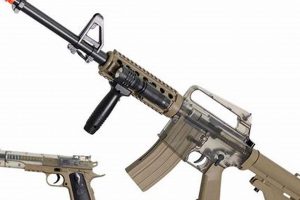
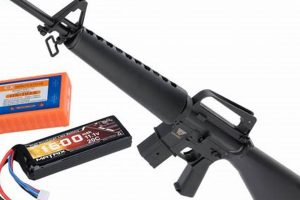
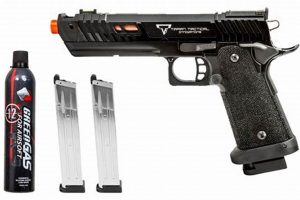
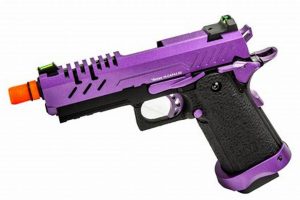
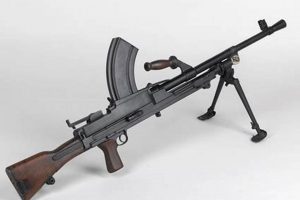
These are replica firearms designed to fire spherical plastic projectiles, typically 6mm or 8mm in diameter. These projectiles, often referred to as BBs, are propelled by compressed gas, spring mechanisms, or electric motors. The devices are primarily used in recreational skirmishes and training exercises.
Their value lies in providing a safe and relatively inexpensive means for individuals to engage in simulated combat scenarios. Historically, they have been utilized for military and law enforcement training to simulate real-world engagement without the risks associated with live ammunition. The realism they offer promotes strategic thinking and teamwork.
This introduction provides context for a more in-depth exploration of the different types available, their operational mechanisms, safety considerations, and the legal frameworks governing their use and ownership.
Airsoft Gun Usage
The safe and responsible operation of these devices necessitates adherence to specific guidelines. Prioritizing safety and understanding operational nuances are paramount.
Tip 1: Eye Protection is Mandatory: The potential for projectile impact necessitates the consistent use of ANSI-rated eye protection. Neglecting this precaution can result in severe ocular injury.
Tip 2: Adhere to Velocity Limits: Chronograph these devices before gameplay to ensure compliance with field-specific velocity restrictions. Exceeding these limits can cause injury and is strictly prohibited.
Tip 3: Understand Safe Zones: Safe zones, where eye protection may be removed, are designated areas free from the risk of projectile fire. Strict adherence to these zones is crucial.
Tip 4: Use Appropriate Ammunition: Utilize high-quality, seamless BBs of the correct weight and size. Inferior or mismatched ammunition can damage the device and compromise accuracy.
Tip 5: Secure Transportation: When transporting, these devices should be stored in a case or bag, ensuring they are not readily visible to the public. This minimizes the risk of misinterpretation and potential legal repercussions.
Tip 6: Regular Maintenance is Essential: Clean and lubricate these devices regularly to ensure optimal performance and longevity. Neglecting maintenance can lead to malfunctions and reduced effectiveness.
Tip 7: Respect Local Laws and Regulations: Familiarize yourself with all applicable local, state, and federal laws regarding ownership, transportation, and use. Non-compliance can result in legal penalties.
These guidelines emphasize the importance of responsible ownership and usage. Adherence to these recommendations ensures a safer and more enjoyable experience.
These principles serve as a foundation for a deeper understanding of safe practices, which will be expanded upon in subsequent sections.
1. Replica firearms

The classification as “replica firearms” directly influences perceptions, regulations, and acceptable usage. The resemblance to actual firearms necessitates responsible handling and storage to avoid misidentification and potential legal repercussions. The realistic aesthetic, while appealing for simulation purposes, also requires manufacturers and users to prioritize safety features and markings that differentiate them from real weapons. The level of realism varies across models, affecting both their appeal and the associated responsibilities.
The design and manufacturing processes are shaped by the need to balance realism with safety considerations. Examples include the use of orange tips, translucent materials, or other visual indicators to clearly distinguish them from lethal weapons. Furthermore, import and export regulations often hinge on the degree of similarity to actual firearms, influencing distribution and availability in different regions. Some jurisdictions impose stricter controls, requiring licensing or restricting ownership based on age or other criteria.
In summary, the “replica firearms” designation profoundly impacts the legal, social, and practical aspects. Responsible handling, adherence to regulations, and a clear understanding of their limitations are paramount. This understanding is essential to mitigate potential risks and ensure their use remains within legal and ethical boundaries, emphasizing the user must aware of the product.
2. Plastic projectiles

The utilization of plastic projectiles is intrinsically linked to the function and safety profile. These projectiles, typically spherical and ranging from 6mm to 8mm in diameter, serve as the ammunition. Their construction from plastic, as opposed to metal or other more dense materials, directly reduces the potential for severe injury upon impact. The kinetic energy transferred by these projectiles is significantly lower, making them suitable for simulated combat and training scenarios where safety is paramount. The choice of plastic as the primary material is a deliberate design feature to mitigate risk.
Different grades and types of plastic BBs exist, each impacting performance characteristics such as range, accuracy, and biodegradability. For example, heavier BBs tend to offer greater stability in flight, resulting in improved accuracy, particularly in outdoor environments. Biodegradable options are favored in environmentally conscious venues, promoting responsible use. Furthermore, the manufacturing process plays a crucial role in ensuring consistent size and shape, which directly affects the reliability and performance. Irregularities in the projectiles can lead to malfunctions and inaccuracies, emphasizing the importance of quality control in production.
In summary, the employment of plastic projectiles is a fundamental element dictating its usability and safety. The material’s properties and the projectile’s quality directly influence both the device’s performance and the potential for harm. A thorough understanding of these aspects is crucial for responsible participation and mitigating potential risks, while following local law usage.
3. Recreational Simulation
The term “recreational simulation” encapsulates the primary function for which these devices are designed and employed. It refers to the act of engaging in mock combat scenarios for entertainment, skill development, and social interaction. The devices provide the tools to enact these simulated battles, mimicking the aesthetics and dynamics of real-world combat without the inherent dangers of live ammunition. This simulated environment allows participants to experience elements of tactical planning, teamwork, and marksmanship in a controlled and relatively safe setting.
The importance of this connection lies in its accessibility and cost-effectiveness. Compared to paintball or live firearms training, this hobby offers a more affordable entry point for individuals interested in tactical simulations. Organized events, often held at dedicated fields or indoor facilities, provide structured scenarios and rules of engagement, enhancing the realism and challenge. These events range from small-scale skirmishes to large-scale MilSim (Military Simulation) operations that can span several days and involve complex objectives. For example, teams may engage in simulated capture-the-flag, search-and-destroy, or hostage rescue missions, fostering strategic thinking and collaborative problem-solving.
In conclusion, “recreational simulation” is not merely an activity associated with it; it is the core purpose that defines their existence and shapes their design. This understanding is crucial for responsible engagement, emphasizing the importance of safety precautions, adherence to regulations, and ethical conduct. Recognizing this foundational connection allows users to appreciate their potential for entertainment and skill development while minimizing the risks associated with simulated combat.
4. Training applications

The utilization of the devices in training contexts extends beyond recreational skirmishes, offering practical applications for military, law enforcement, and security personnel. Their ability to replicate the look, feel, and handling of actual firearms provides a valuable tool for realistic training simulations.
- Force-on-Force Training
These devices facilitate force-on-force training exercises, allowing trainees to engage in simulated combat scenarios with real-world consequences. This method provides invaluable experience in tactical decision-making, teamwork, and stress management under pressure. Unlike traditional live-fire exercises, the non-lethal nature minimizes the risk of serious injury, enabling more aggressive and dynamic training methodologies. For example, law enforcement agencies employ them to simulate active shooter scenarios, allowing officers to practice their response protocols in a safe and controlled environment.
- Weapon Handling and Familiarization
The devices allow for safe and cost-effective weapon handling and familiarization exercises. Trainees can practice loading, unloading, aiming, and firing techniques without the dangers associated with live ammunition. This is particularly beneficial for introducing new recruits to firearms safety and basic marksmanship principles. The reduced recoil and noise levels also contribute to a less intimidating learning environment, fostering confidence and skill development. For instance, military recruits often use them to master the fundamentals of weapon handling before progressing to live-fire training.
- Close Quarters Battle (CQB) Simulations
These devices are commonly used in CQB simulations, providing a realistic environment for practicing room clearing, hostage rescue, and other close-range tactical maneuvers. The ability to replicate the confined spaces and dynamic scenarios of urban warfare allows trainees to develop their situational awareness, communication skills, and reaction times. The relatively low cost and safety of these devices make them an ideal tool for repetitive training drills, enabling trainees to refine their techniques and build muscle memory. Special forces units often utilize them to hone their CQB skills in realistic and challenging simulations.
- Scenario-Based Training
These devices support scenario-based training, enabling instructors to create realistic simulations that mimic real-world operational environments. These scenarios can be tailored to address specific threats, such as terrorist attacks, civil unrest, or natural disasters. Trainees are required to apply their knowledge and skills to solve problems, make decisions, and react to evolving situations. This type of training promotes critical thinking, adaptability, and leadership skills, preparing them to effectively respond to complex and unpredictable events. Emergency response teams utilize them to practice their coordination and communication during simulated disaster relief operations.
In conclusion, the training applications represent a significant aspect of their value, extending beyond recreational use to encompass professional development and preparedness for high-stakes situations. By providing a safe, cost-effective, and realistic training platform, these devices contribute to the effectiveness and readiness of military, law enforcement, and security personnel.
5. Velocity regulations

Velocity regulations are inextricably linked to safe operation. These regulations dictate the maximum speed at which projectiles can be propelled, directly influencing the potential for injury upon impact. Adherence to established velocity limits is a fundamental aspect of responsible usage, minimizing the risk of harm to participants and bystanders. Failure to comply with these regulations can result in serious consequences, including permanent bodily harm.
- Field-Specific Limits
Different playing fields and organized events often impose their own velocity limits, tailored to the specific environment and the anticipated level of engagement. Indoor fields, for example, typically enforce lower velocity limits due to the closer engagement distances and the increased risk of close-range impacts. Outdoor fields may allow for slightly higher limits, but these are still strictly controlled to ensure safety. Field operators utilize chronographs to measure the velocity of each device before allowing participation, ensuring compliance with the established rules.
- Energy Measurement
Velocity regulations are frequently expressed in terms of feet per second (FPS), but energy measurements in joules are increasingly common. Joules provide a more accurate representation of the impact force, accounting for both the projectile’s velocity and its mass. Some regulations specify both FPS and joule limits, providing a comprehensive safety standard. Understanding the relationship between FPS and joules is crucial for ensuring compliance and responsible operation. Certain fields may require heavier BBs to lower the FPS while maintaining a specific joule limit.
- Device Modifications
Modifying the internal components of a device can significantly alter its velocity. While some modifications may enhance performance, they can also inadvertently increase the velocity beyond legal or safe limits. Individuals who modify their devices must exercise extreme caution and ensure they remain within established velocity limits. Chronographing after any modification is essential to verify compliance and prevent accidental injury. Some fields prohibit modifications altogether to maintain a consistent safety standard.
- Legal Ramifications
In some jurisdictions, exceeding established velocity limits can have legal ramifications. Classifying a device as a firearm, leading to more stringent regulations and potential criminal penalties. It is imperative to familiarize oneself with all applicable local, state, and federal laws regarding velocity limits and the classification of these devices. Non-compliance can result in fines, confiscation of equipment, and even imprisonment.
Velocity regulations serve as a cornerstone of responsible engagement, directly mitigating the risk of injury and ensuring a safe playing environment. These regulations require ongoing vigilance and adherence from all participants. Prioritizing safety and understanding the legal implications are paramount for responsible participation. These are part of its role and function as a weapon.
6. Safety Equipment
The utilization of appropriate safety equipment is paramount when engaging in activities involving these devices. These devices, while designed for recreational or training purposes, project non-lethal projectiles at velocities that can cause injury, particularly to vulnerable areas of the body. Therefore, the consistent and proper use of dedicated safety equipment is not merely recommended, but essential for mitigating potential harm.
- Eye Protection
ANSI-rated goggles or full-face masks are indispensable. The eyes are particularly susceptible to injury from projectile impacts, potentially resulting in corneal abrasions, retinal damage, or even blindness. Eye protection must meet or exceed ANSI Z87.1 standards, ensuring sufficient impact resistance to withstand direct hits from BBs at typical velocities. Full-seal goggles are preferred to prevent BBs from entering around the edges. Mesh goggles, while offering ventilation, may not provide adequate protection against fragmented BBs.
- Face and Head Protection
Full-face masks or lower-face protection, in conjunction with a helmet or other headgear, provides comprehensive protection against facial and cranial injuries. Impacts to the face can result in broken teeth, nasal fractures, or other soft tissue damage. Helmets offer protection against head injuries, particularly in outdoor environments where falls or collisions are possible. The material and construction of these items are crucial for absorbing impact energy and preventing penetration.
- Body Armor and Protective Clothing
While not always mandatory, body armor and protective clothing can significantly reduce the risk of bruising, welts, and other minor injuries. Tactical vests, plate carriers, and padded clothing offer an additional layer of protection against projectile impacts. Thicker clothing, such as long sleeves and pants made from durable materials, can also help to absorb impact energy. Gloves protect the hands from injuries, especially during close-quarters engagements or when navigating rough terrain.
- Mouth and Ear Protection
Mouthguards are valuable for preventing dental injuries, particularly in close-quarters combat. Ear protection, such as earplugs or earmuffs, can reduce the risk of hearing damage from the loud reports of gas-powered. Although not always prioritized, these forms of protection contribute to overall safety and well-being during gameplay. Custom-fitted mouthguards offer a higher level of protection and comfort compared to generic models.
The preceding facets highlight the multifaceted nature of safety equipment and its direct relevance. Utilizing appropriate safety measures is not optional; it is a fundamental responsibility that ensures a safer and more enjoyable experience. Understanding the specific risks associated with these devices and selecting the appropriate safety gear is crucial for mitigating potential harm and promoting responsible participation.
Frequently Asked Questions
This section addresses common inquiries concerning the nature, use, and regulation.
Question 1: What are the primary components?
They typically consist of a body, internal firing mechanism (pneumatic, spring, or electric), barrel, and magazine. The body often mimics a real firearm, while the firing mechanism propels the plastic projectiles.
Question 2: What types of ammunition are utilized?
They employ spherical plastic projectiles, commonly referred to as BBs. These BBs are available in various weights and materials, including biodegradable options.
Question 3: Are they legal?
Legality varies significantly by jurisdiction. Some regions regulate their ownership, sale, and use, while others impose restrictions based on velocity or appearance. It is imperative to research and comply with all applicable local, state, and federal laws.
Question 4: How does one ensure safe usage?
Safe usage necessitates adherence to established safety protocols, including the consistent use of ANSI-rated eye protection, adherence to velocity limits, and responsible handling practices.
Question 5: What are typical power sources?
Power sources include compressed gas (CO2 or green gas), spring mechanisms, and electric motors. Gas-powered models offer realistic recoil, while electric models provide consistent performance. Spring-powered models are manually cocked before each shot.
Question 6: Where are they typically used?
They are primarily utilized in designated playing fields, indoor facilities, and organized events. These environments often have established rules and safety guidelines to ensure responsible gameplay.
This FAQ aims to provide clarity regarding the common concerns and misconceptions surrounding. Responsible ownership and usage are paramount, requiring a thorough understanding of applicable laws and safety precautions.
The following section will provide guidance on how to maintain them properly for optimal performance and longevity.
Conclusion
The preceding exploration has elucidated the nature, functionality, applications, and regulatory landscape of airsoft guns. These devices, designed as replica firearms, project plastic projectiles for recreational simulation and training purposes. Safety regulations and legal frameworks govern their usage, necessitating responsible handling and strict adherence to established protocols.
Continued vigilance regarding safety, coupled with a commitment to ethical gameplay and legal compliance, is paramount. Understanding the core features and the responsible use of airsoft guns is a collective responsibility, fostering a safe and enjoyable environment for all participants. Future discourse should focus on promoting education and raising awareness to ensure its place in the community will have a standard use.