![Guide: How to Buy a Airsoft Gun Safely [2024]](data:image/svg+xml;base64,PHN2ZyB4bWxucz0iaHR0cDovL3d3dy53My5vcmcvMjAwMC9zdmciIHdpZHRoPSI0NzQiIGhlaWdodD0iMTAwIiB2aWV3Qm94PSIwIDAgNDc0IDEwMCI+PHJlY3Qgd2lkdGg9IjEwMCUiIGhlaWdodD0iMTAwJSIgc3R5bGU9ImZpbGw6I2NmZDRkYjtmaWxsLW9wYWNpdHk6IDAuMTsiLz48L3N2Zz4= "Guide: How to Buy a Airsoft Gun Safely [2024] Ultimate Airsoft Guide for Beginners, Tactics & Gear Reviews")
Acquiring an airsoft replica involves several key considerations. These range from understanding local regulations regarding ownership and use to evaluating the different types of available models based on intended application and budget. Making informed choices ensures both safety and satisfaction with the purchased item. For example, a prospective buyer might research different power sources, such as electric, gas, or spring-powered mechanisms, each offering varying performance characteristics.
The benefits of carefully approaching the acquisition process extend beyond mere ownership. Understanding the nuances of airsoft replicas promotes responsible usage and adherence to safety protocols within the airsoft community. Furthermore, selecting an appropriate model enhances the overall experience, allowing participants to fully engage in the sport or recreational activity. Historically, the evolution of these replicas has led to a diverse market with options catering to a wide spectrum of user needs and skill levels.
Therefore, this article will delve into essential aspects to consider before acquiring an airsoft replica. These include legal compliance, replica types, performance characteristics, safety equipment, and responsible usage guidelines. A thorough understanding of these elements will contribute to a positive and safe airsoft experience.
Essential Considerations Before Acquisition
This section outlines crucial factors to evaluate prior to purchasing an airsoft replica. Careful consideration of these points will help ensure a suitable and safe acquisition.
Tip 1: Research Local Regulations: Prior to any purchase, ascertain and comply with all applicable laws and regulations pertaining to airsoft replica ownership, transportation, and usage within the intended jurisdiction. Failure to do so can result in legal repercussions. Many localities have age restrictions, storage requirements, or restrictions on public display.
Tip 2: Determine Intended Use: Identify the primary purpose for the replica. Whether for target practice, competitive games, or historical reenactments, the intended use case will dictate the necessary performance characteristics and features. A model designed for close-quarters combat, for instance, may not be optimal for long-range engagements.
Tip 3: Evaluate Power Source Options: Airsoft replicas utilize various power sources, including electric (AEG), gas (GBB/NBB), and spring-powered mechanisms. Each power source offers distinct advantages and disadvantages in terms of performance, cost, and maintenance requirements. Electric models offer consistency, gas models provide realism, and spring models are often more affordable.
Tip 4: Assess Build Quality and Durability: Prioritize replicas constructed from durable materials capable of withstanding regular use and potential impacts. Consider the quality of internal components as well, as these directly impact performance and longevity. Researching reputable brands known for producing reliable replicas is advisable.
Tip 5: Budget Appropriately: Establish a realistic budget that accounts for not only the initial cost of the replica, but also essential accessories such as protective eyewear, ammunition, and maintenance supplies. A lower initial price point may be offset by higher long-term maintenance costs.
Tip 6: Prioritize Safety Equipment: Always acquire and utilize appropriate safety equipment, including ANSI-rated eye protection and face protection. Compliance with safety standards is paramount in preventing injuries. Consider additional protective gear such as gloves, vests, and appropriate clothing.
Tip 7: Research Reputable Retailers: Purchase from established and reputable retailers specializing in airsoft equipment. These retailers typically offer knowledgeable customer service, warranty support, and a wider selection of quality products. Avoid purchasing from unverified sources.
Careful adherence to these tips will improve the likelihood of a safe, legal, and satisfying airsoft acquisition, contributing to a positive experience. Furthermore, remember that understanding the factors influencing selection is fundamental to long-term enjoyment.
Following these guidelines provides a strong foundation for the subsequent steps, which include exploring specific airsoft replica categories in greater detail.
1. Regulations

The intersection of “Regulations” and the process outlines how legal frameworks directly influence the permissibility, accessibility, and parameters governing the purchase and ownership of airsoft replicas. These regulations, varying significantly by jurisdiction, may encompass age restrictions, permissible power levels (measured in feet per second, or FPS), restrictions on modifications, requirements for safe storage and transportation, and limitations on usage locations. The causal link is clear: regulations dictate whether an individual can legally acquire an airsoft replica and how that replica can be used. For instance, some regions mandate that all airsoft replicas be brightly colored to distinguish them from real firearms, directly impacting the available aesthetic choices and the potential for realistic simulation. Ignoring these regulations can lead to legal penalties, including fines and confiscation of the airsoft replica.
The importance of understanding regulations as an integral component of acquiring an airsoft replica is underscored by the potential for unintentional violations. A buyer might unknowingly purchase a replica that exceeds the permissible FPS limit in their locality, rendering it illegal to use. Similarly, failing to properly store or transport the replica according to local laws could result in criminal charges. The practical significance lies in the need for proactive research. Prospective buyers must thoroughly investigate the specific regulations in their region before making a purchase. This includes consulting local law enforcement agencies, reviewing relevant statutes, and seeking guidance from established airsoft retailers who are knowledgeable about local legal requirements.
In summary, regulations form a crucial gating factor determining the feasibility and legality of acquiring an airsoft replica. Challenges arise from the variability of these regulations across different jurisdictions, necessitating diligent research. Failure to address this aspect poses significant risks, impacting not only the individual buyer but also the broader perception and acceptance of the sport and hobby. Therefore, compliance with all relevant regulations is the first and most important step in the process.
2. Intended Use
The selection of an airsoft replica is directly contingent upon its intended application. Defining the primary purpose whether for casual target practice, competitive skirmishes, MilSim (Military Simulation) events, or historical reenactments dictates the necessary features, performance characteristics, and overall configuration. The intended use acts as a foundational element in the acquisition process, influencing decisions ranging from power source selection to accessory compatibility. For instance, a replica intended for indoor CQB (Close Quarters Battle) environments will prioritize maneuverability and a lower FPS to comply with field regulations, while a replica intended for outdoor engagements may necessitate a higher FPS and longer effective range.
The significance of aligning the airsoft replica with its intended use is underscored by its impact on gameplay effectiveness and user satisfaction. A replica ill-suited to its purpose can result in a subpar experience, hindering performance and diminishing enjoyment. Consider, for example, a user attempting to utilize a low-powered pistol designed for close-range engagements in an outdoor field where rifles and machine guns dominate; their effectiveness would be severely limited. Conversely, a high-powered sniper rifle would be unwieldy and impractical in a tight, indoor environment. Therefore, a thorough assessment of the anticipated scenarios and play styles is crucial to identifying the most appropriate replica type.
In conclusion, the concept of “intended use” serves as a cornerstone of the acquisition process. Challenges arise when users fail to accurately assess their needs or consider the specific demands of their chosen activities. A proactive approach, involving research into different gameplay styles and corresponding replica types, is essential to ensure a purchase that aligns with practical application. Addressing this aspect effectively contributes to a more fulfilling and effective airsoft experience, directly impacting the user’s overall satisfaction and performance within the sport.
3. Power Source
The power source of an airsoft replica is a critical determinant of its performance characteristics, maintenance requirements, and overall cost. Understanding the available power source options is therefore essential for informed decision-making. Selection directly impacts the replica’s suitability for specific gameplay scenarios and the user’s long-term satisfaction.
- Electric (AEG – Automatic Electric Gun)
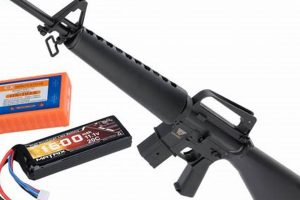
AEGs utilize rechargeable batteries to power an internal motor that drives a gearbox, cycling the piston and propelling BBs. This system provides consistent performance, relatively low noise, and a high rate of fire. AEGs are versatile and suitable for various gameplay styles, including CQB and outdoor engagements. The initial cost may be higher, but the operational cost is lower compared to gas-powered replicas. Battery maintenance and potential gearbox failures are considerations.
- Gas (GBB/NBB – Gas Blowback/Non-Blowback)
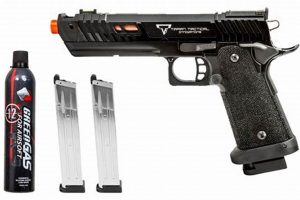
Gas-powered replicas use compressed gas, typically green gas, propane, or CO2, to propel BBs. GBB models simulate the recoil action of real firearms, offering enhanced realism. NBB models lack this feature, resulting in higher gas efficiency and quieter operation. Gas replicas offer higher power potential, but performance can be affected by ambient temperature. Gas consumption and the cost of gas canisters contribute to higher operational expenses. Regular maintenance of gas seals is essential.
- Spring-Powered
Spring-powered replicas require manual cocking before each shot. These are generally the most affordable option and offer simple operation. Spring replicas are often less powerful and have a lower rate of fire compared to electric or gas-powered models. They are suitable for beginners, target practice, or as backup weapons. Reliability is high due to the simplicity of the mechanism.
- HPA (High-Pressure Air)
HPA systems utilize an external compressed air tank connected to the replica via a hose. This provides consistent pressure and allows for adjustable FPS. HPA systems offer high performance and reliability, but require an external air tank and regulator, which adds to the initial cost and limits mobility. HPA is popular for serious players due to precision and customization.
The choice of power source significantly influences the overall ownership experience. Electric replicas offer convenience and versatility, gas replicas emphasize realism, spring replicas provide affordability, and HPA systems prioritize performance. Evaluating individual needs, budget constraints, and intended gameplay style is paramount in determining the most suitable power source. This decision is a central step in ensuring a satisfying and effective airsoft experience.
4. Build Quality

The correlation between build quality and the process of acquiring an airsoft replica is direct and significant. The construction materials, assembly precision, and component durability of an airsoft replica directly impact its longevity, performance consistency, and overall user experience. Higher build quality translates to increased resistance to wear and tear, fewer malfunctions, and improved accuracy. For example, a replica constructed with a metal receiver and reinforced gearbox is likely to withstand greater stresses and offer a longer service life compared to a replica made primarily of plastic. The practical consequence is a reduction in the frequency of repairs and replacements, ultimately resulting in lower long-term ownership costs.
The practical implications of prioritizing build quality extend beyond simple cost savings. A well-constructed airsoft replica offers enhanced reliability, allowing for consistent performance during gameplay. This is particularly crucial in competitive scenarios where performance inconsistencies can be detrimental. Furthermore, superior build quality often implies tighter tolerances and more precise internal components, leading to improved accuracy and range. The choice of materials also plays a significant role in the replica’s weight and handling characteristics, influencing maneuverability and user comfort during extended periods of use. Therefore, evaluating the materials used, the quality of assembly, and the reputation of the manufacturer are vital steps in the acquisition process.
In summary, build quality is an indispensable consideration when acquiring an airsoft replica. It affects durability, performance, and the overall ownership experience. Challenges may arise in accurately assessing build quality based solely on visual inspection; however, researching manufacturer reputations, reading product reviews, and seeking recommendations from experienced players can mitigate these challenges. Neglecting this aspect can lead to premature failure, increased maintenance costs, and a less enjoyable experience. The investment in a replica with robust build quality is therefore a critical component of responsible acquisition.
5. Budget

Financial constraints significantly influence the acquisition process of airsoft replicas. Establishing a realistic budget is paramount, dictating the range of viable options and impacting subsequent decisions regarding replica type, features, and accessories. The allocated budget functions as a critical constraint, necessitating a prioritization of needs and a careful evaluation of value propositions.
- Initial Purchase Price
The initial purchase price represents the most immediate financial commitment. This encompasses the cost of the airsoft replica itself, which can vary widely depending on the power source, build quality, brand, and included features. Budget allocation must account for this upfront investment, potentially requiring trade-offs between desired features and affordability. For example, opting for a more basic model may allow for the allocation of funds towards essential accessories.
- Essential Accessories and Safety Gear
Beyond the replica itself, a budget must incorporate essential accessories and safety equipment. This includes, at minimum, ANSI-rated eye protection, appropriate ammunition, and potentially a battery and charger for electric models. Ignoring these costs can result in an incomplete or unsafe setup. Furthermore, additional accessories such as magazines, slings, and tactical gear should be factored into the budget based on individual needs and preferences.
- Maintenance and Consumables
The long-term costs associated with maintenance and consumables should not be overlooked. Gas-powered replicas require a regular supply of gas, while electric models necessitate periodic battery replacements. Furthermore, all replicas require cleaning and lubrication to maintain optimal performance. Setting aside a portion of the budget for these recurring expenses ensures continued operation and prevents unexpected financial burdens. Neglecting maintenance can lead to premature component failure and costly repairs.
- Upgrades and Customization (Optional)
While not initially essential, upgrades and customization can significantly enhance the performance and aesthetics of an airsoft replica. However, these modifications can also represent a substantial financial investment. Budget allocation for upgrades should be considered separately from the initial purchase and essential accessories. Prioritizing fundamental needs before exploring optional enhancements ensures a balanced approach to spending. For instance, upgrading the hop-up unit or inner barrel can improve accuracy, but these modifications are only beneficial if the replica is otherwise in good working order.
In conclusion, a well-defined budget is crucial for a successful acquisition of an airsoft replica. Careful consideration of the initial purchase price, essential accessories, maintenance costs, and potential upgrades allows for a balanced approach to spending. Failure to plan adequately can result in overspending, an incomplete setup, or unexpected financial burdens. Prioritizing needs and making informed decisions within the established budget contributes to a more satisfying and sustainable airsoft experience.
6. Safety Gear

The acquisition of suitable safety gear is an inseparable component of responsible airsoft replica ownership. Prioritizing safety minimizes the risk of injury and promotes a safe and enjoyable experience. Integrating safety gear considerations into the initial buying process is essential for both novice and experienced users.
- Eye Protection
Eye protection is the most critical piece of safety equipment. ANSI-rated goggles or full-face masks provide essential shielding against projectile impacts, preventing potentially severe eye injuries. Examples include polycarbonate lenses that meet or exceed ANSI Z87.1 standards. Neglecting adequate eye protection poses a significant risk of permanent vision impairment. The buying process should include verifying the protective rating and ensuring a secure and comfortable fit.
- Face Protection
While eye protection safeguards the eyes, face protection mitigates the risk of injuries to the nose, mouth, and other facial areas. Mesh masks or lower face masks, often used in conjunction with goggles, offer protection against direct impacts. Examples include steel mesh masks that allow for breathability and prevent fogging. The selection of appropriate face protection should consider comfort, breathability, and compatibility with eye protection.
- Protective Clothing
Appropriate clothing can offer a degree of protection against BB impacts, reducing the potential for welts and minor abrasions. Long sleeves, long pants, and thick fabric can provide a buffer against projectile energy. Examples include tactical clothing made from durable materials such as ripstop nylon or padded vests designed specifically for airsoft. While not as critical as eye or face protection, protective clothing contributes to overall safety and comfort.
- Head Protection
Head protection, such as helmets or head wraps, can mitigate the risk of head injuries, particularly in outdoor environments where falls or collisions are possible. Tactical helmets, often used in MilSim scenarios, offer impact resistance and can provide mounting points for accessories such as cameras or lights. Examples include bump helmets or ballistic helmets depending on the desired level of protection. The need for head protection depends on the intended use and playing environment.
The selection of safety gear should be an integral part of the airsoft replica acquisition process. Prioritizing quality and ensuring a proper fit are crucial for effective protection. Investing in appropriate safety equipment is not merely an optional expense but rather a fundamental responsibility that contributes to a safer and more enjoyable airsoft experience. The financial outlay for robust safety gear is insignificant compared to the potential cost and long-term consequences of an injury.
Frequently Asked Questions
This section addresses common inquiries and misconceptions surrounding the acquisition of airsoft replicas, providing factual and objective information.
Question 1: Is a license required to purchase an airsoft replica?
Licensing requirements vary significantly depending on the jurisdiction. Some localities may require a permit or license for ownership, while others have no such restrictions. Prospective buyers must investigate and comply with all applicable local laws.
Question 2: What is the acceptable age for purchasing an airsoft replica?
Age restrictions are imposed by both legal regulations and retailer policies. Many jurisdictions require purchasers to be at least 18 years of age, while some retailers may enforce stricter age limits. Verification of age may be required at the point of sale.
Question 3: Can an airsoft replica be modified to increase its power?
Modifying an airsoft replica to exceed legal power limits is generally prohibited and can result in legal penalties. Furthermore, modifications can compromise the replica’s safety and reliability. Adherence to manufacturer specifications and legal restrictions is essential.
Question 4: How can one distinguish an airsoft replica from a real firearm?
Distinguishing features may include orange tip requirements, brightly colored bodies, or specific markings indicating that the item is an airsoft replica. However, relying solely on visual cues is insufficient. Proper identification and responsible handling are crucial to avoid misidentification.
Question 5: What are the storage requirements for airsoft replicas?
Storage requirements often mandate that airsoft replicas be stored securely, unloaded, and inaccessible to unauthorized individuals, particularly minors. Some jurisdictions may require replicas to be stored in locked containers. Compliance with storage regulations is essential for preventing accidents and theft.
Question 6: Where can airsoft replicas be legally used?
Legal usage locations are typically restricted to private property with the owner’s permission or designated airsoft fields and ranges. Public display or use in unauthorized areas may be prohibited and can result in legal consequences. Understanding and adhering to local regulations regarding usage locations is critical.
These answers provide a concise overview of key considerations when acquiring airsoft replicas. Prospective buyers are encouraged to conduct thorough research and seek professional guidance to ensure compliance with all applicable laws and regulations.
This information provides a solid foundation for responsible airsoft replica ownership. The following sections will provide additional insights into the safe handling and maintenance of airsoft replicas.
Conclusion
The process detailed herein aims to provide a comprehensive guide regarding how to buy a airsoft gun responsibly and legally. Considerations encompassing local regulations, intended use, power source selection, build quality assessment, budgetary constraints, and safety equipment procurement have been thoroughly examined. Adherence to these guidelines is paramount for mitigating potential risks and ensuring a positive experience.
Effective navigation of the acquisition process relies on informed decision-making and a commitment to responsible usage. The information presented serves as a foundational resource; continued education and adherence to evolving regulations are essential for all airsoft replica owners. Prioritizing safety and legal compliance will contribute to the continued acceptance and responsible enjoyment of the sport.