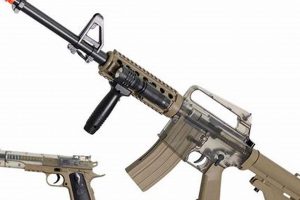
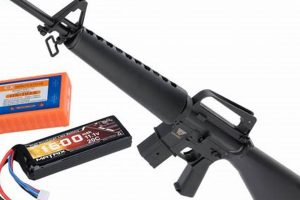
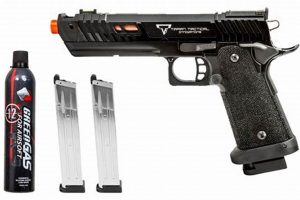
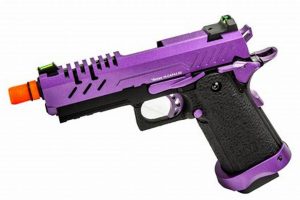
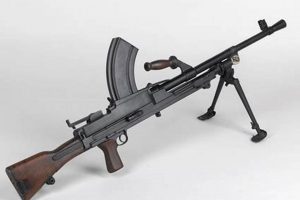
The central purpose of airsoft devices revolves around recreational simulation of tactical scenarios. These devices, resembling real firearms, are designed to fire non-lethal, spherical plastic projectiles. The primary aim is to provide a safe and controlled environment for participants to engage in mock combat and team-based objectives.
The utilization of these replicas offers a variety of benefits, including strategic thinking development, physical activity, and team-building skills. Airsoft activities encourage cooperation, communication, and tactical decision-making under simulated pressure. Historically, the development of these devices can be traced back to Asia, where restrictions on real firearms were stricter, leading to the creation of realistic training tools.
Understanding the intended use of these devices is fundamental to appreciating their role in various leisure activities and training exercises. Subsequent sections will delve into the specific materials and manufacturing processes involved, as well as the ethical considerations surrounding their use and responsible handling practices.
Responsible Use of Airsoft Devices
Proper handling and understanding of these devices are crucial for ensuring safety and maintaining the integrity of the sport. These tips address responsible practices when employing these recreational tools.
Tip 1: Prioritize Eye Protection: The use of ANSI-rated goggles or a full-face mask is non-negotiable. Projectiles, even at relatively low velocities, can cause serious eye injury. Verify the protective gear’s impact resistance before use.
Tip 2: Adhere to Velocity Limits: All airsoft fields enforce velocity limits, typically measured in feet per second (FPS) using 0.20g BBs. Chronograph devices should be employed to ensure compliance, preventing excessive force and potential injury.
Tip 3: Employ Barrel Socks or Plugs: When the device is not actively in use, a barrel sock or plug must be utilized. This prevents accidental discharge and clearly indicates that the replica is not a threat.
Tip 4: Respect Designated Safe Zones: Airsoft fields have designated safe zones where eye protection may be removed. Handling of the device, including magazines insertion/removal, is strictly prohibited within these areas. Airsoft devices must have the magazine removed and the action open in safe zones.
Tip 5: Transport with Discretion: When transporting the device, it should be stored in a case or bag and out of sight. Avoid brandishing or displaying it in public, as it may be mistaken for a real firearm, leading to legal consequences.
Tip 6: Educate Participants: Ensure all participants are fully briefed on the rules of engagement, safety regulations, and responsible handling procedures. A comprehensive understanding minimizes the risk of accidents.
Tip 7: Maintain the Device Properly: Regular cleaning and maintenance are essential for optimal performance and safety. Follow the manufacturer’s instructions for disassembly, lubrication, and inspection to prevent malfunctions.
By consistently implementing these practices, participants can significantly reduce the risk of injury and contribute to a safer and more enjoyable airsoft experience. Responsible device handling fosters a positive image of the sport.
Adhering to these guidelines is a crucial step towards ensuring the continuation of the sport in a safe and responsible manner. The following section will discuss the long-term outlook and impact of airsoft within recreational activities.
1. Recreational tactical simulation

Recreational tactical simulation, as a core function, directly determines the design and construction of airsoft devices. The need for realistic and engaging scenarios dictates key aspects of their functionality and appearance.
- Realistic Aesthetics and Handling
The external appearance and weight distribution of airsoft devices closely mimic real firearms. This immersion enhances the simulation experience and demands that participants handle the devices with a degree of realism, promoting responsible firearm safety practices. This replication is achieved through specific materials and manufacturing processes.
- Simulated Ballistics and Range
The firing mechanisms and projectile systems are designed to simulate realistic ballistics and range, albeit at a reduced scale and velocity. This involves carefully calibrated air compression systems and the use of standardized ammunition (BBs) to create predictable and controllable firing characteristics, all optimized for recreational use.
- Scenario-Driven Customization
The modular design of many airsoft devices allows for customization with accessories such as scopes, lasers, and tactical grips. This adaptability supports a diverse range of simulated tactical roles and scenarios, allowing participants to configure their devices to match specific mission requirements. This also caters to individual preferences and customization is a very popular part of the hobby.
- Emphasis on Teamwork and Communication
Airsoft environments are not intended for solo participation; emphasis is placed on effective communication and teamwork to achieve objectives. Device features such as selective fire (semi-automatic, automatic) enable coordinated tactical maneuvers. As such, airsoft serves as a recreational platform where participants engage in realistic teamwork under simulated pressure.
The facets of realistic aesthetics, simulated ballistics, scenario-driven customization, and teamwork integration, are carefully integrated into the design and functionality of airsoft devices. This deliberate approach ensures that the devices effectively serve the purpose of recreational tactical simulation, providing a safe and engaging means for participants to experience realistic tactical scenarios.
2. Team-based objective scenarios

The inherent function of airsoft devices is inextricably linked to team-based objective scenarios. Airsoft is not simply about target practice; its design and practical application center on recreating tactical situations that require coordinated teamwork. The replicas are designed to facilitate these scenarios by offering a safe method for simulating combat and strategic maneuvers. Their construction, power, and accuracy are all calibrated to allow for engaging, yet safe, team-oriented gameplay. The very existence of airsoft as a recreational activity is predicated on these scenarios, dictating the need for reliability, maneuverability, and user-friendly operation across the replicas involved. An example can be seen at large-scale milsim events, where hundreds of players coordinate to achieve complex objectives over extended periods, their success dependent on the capabilities of their equipment to perform reliably under simulated combat stress.
The reliance on team-based objectives directly influences design considerations such as magazine capacity, rate of fire, and compatibility with tactical accessories. These factors contribute to the immersive nature of the scenarios and enable players to fulfill specific roles within a team structure, such as reconnaissance, assault, or support. Furthermore, the need for fair play and clear identification promotes the use of team-specific markings and uniform requirements. This level of scenario-driven design extends beyond mere aesthetics and enters the realm of practical utility, influencing the strategic choices and tactical execution employed by players.
In summary, airsoft replicas are tools specifically crafted to support team-based objective gameplay. The features, performance, and customization options inherent in these devices directly contribute to the immersive and engaging nature of these activities. A clear understanding of this fundamental connection is essential for appreciating the intended purpose of airsoft and its role in fostering teamwork, strategic thinking, and responsible engagement within recreational activities. The key challenge lies in maintaining the delicate balance between realistic simulation and ensuring the safety of all participants.
3. Training exercise replica

Airsoft devices function as training exercise replicas by providing a safe and cost-effective alternative to live-fire simulations. Their design closely mimics real firearms, allowing participants to develop weapon-handling skills, tactical awareness, and decision-making abilities within controlled environments.
- Law Enforcement and Military Drills
Airsoft replicas facilitate realistic training scenarios for law enforcement and military personnel, enabling them to practice room clearing, close-quarters combat, and hostage rescue techniques. This reduces the risk of injury associated with live ammunition while maintaining a high degree of realism. Certain units incorporate modified airsoft devices into their training programs to emphasize weapon manipulation and tactical movement.
- Security Personnel Training
Private security firms utilize airsoft for training guards and security personnel in de-escalation tactics, threat assessment, and response protocols. The realistic appearance of the replicas helps to instill a sense of urgency and seriousness during training exercises, while the non-lethal projectiles minimize the potential for serious injury. This allows for repeated drills to improve response times.
- Film and Stage Combat Simulation
Airsoft replicas are employed in the film and theater industries to simulate gunfire and combat sequences, enhancing realism without compromising the safety of actors and crew members. The replicas can be modified to fire blanks or non-projectile charges, creating visual and auditory effects that mimic real firearms. Film armorer use these devices to safely create the visual of a gun fight.
- Force-on-Force Scenario Training
Airsoft allows for the creation of “force-on-force” training scenarios, where participants engage in realistic combat simulations against opposing forces. This provides valuable experience in tactical decision-making, communication, and coordination under pressure. Such training can be tailored to specific objectives and environments, allowing for targeted skill development.
The utilization of airsoft devices as training exercise replicas highlights their versatility and effectiveness as tools for developing practical skills in various professional fields. The emphasis on safety, realism, and cost-effectiveness makes them a valuable asset for organizations seeking to enhance their training programs. The effectiveness of training with airsoft replicas depends heavily on the realism of the environment and the quality of instruction provided.
4. Safe projectile delivery

The design and manufacture of airsoft devices are fundamentally intertwined with the concept of safe projectile delivery. These devices are engineered to propel non-lethal projectiles within defined velocity and energy parameters. This inherent limitation directly impacts material selection, construction techniques, and operational mechanisms. The intended use of airsoft devices necessitates that projectile delivery remains controlled and predictable, minimizing the risk of injury to participants. Instances where these parameters are disregarded, either through modification or misuse, can lead to severe consequences, undermining the very purpose for which these devices are intended.
The importance of safe projectile delivery is underscored by regulations governing the manufacture, sale, and use of airsoft devices in many jurisdictions. These regulations often specify maximum projectile velocity, require the use of protective gear, and mandate responsible handling practices. The practical application of these principles is evident in the standardized testing and certification processes employed by manufacturers to ensure compliance with safety standards. Furthermore, the availability of chronographs at airsoft fields, used to measure projectile velocity, allows for immediate verification of compliance, preventing devices exceeding safe limits from being used in gameplay. This dedication to safety promotes the responsible engagement that airsoft aims to provide.
In conclusion, safe projectile delivery constitutes a foundational principle governing the design and function of airsoft devices. Maintaining this principle requires strict adherence to manufacturing standards, responsible handling practices, and ongoing monitoring of device performance. Failure to prioritize safe projectile delivery not only jeopardizes participant safety but also undermines the legitimacy and acceptance of airsoft as a recreational activity. The continued success and positive perception of airsoft are contingent upon a unwavering commitment to these safety considerations.
5. Skill development tool

Airsoft devices, beyond their recreational function, serve as tools for developing various skills relevant in tactical and strategic contexts. The realistic simulation they provide offers opportunities for honing abilities applicable in fields ranging from leadership to communication.
- Strategic Thinking and Planning
Airsoft scenarios necessitate strategic thinking and planning. Participants must analyze the playing field, anticipate opponent movements, and coordinate team actions to achieve objectives. The dynamic nature of gameplay forces adaptation and improvisation, cultivating strategic problem-solving skills. Examples include developing attack and defense strategies, resource management (ammunition, cover), and predicting enemy behavior based on available information.
- Communication and Teamwork
Effective communication is paramount in airsoft. Teams must communicate effectively to coordinate movements, share information, and execute tactical maneuvers. This fosters teamwork and collaboration, improving communication skills applicable in various professional settings. Examples include relaying enemy positions, coordinating flanking maneuvers, and providing support to teammates under simulated fire. The consequences of miscommunication in airsoft mirror those in real-world scenarios, reinforcing the importance of clarity and precision.
- Leadership and Decision-Making
Airsoft environments often require individuals to assume leadership roles and make critical decisions under pressure. Whether leading a squad, directing a defense, or coordinating an attack, participants develop leadership skills and the ability to make timely and effective decisions in dynamic situations. These skills are transferrable to real-world leadership roles where quick thinking and decisiveness are valued.
- Weapon Handling and Safety
While airsoft devices are not lethal, they require responsible handling and adherence to safety protocols. Participants learn to handle the devices safely, maintain them properly, and follow established rules of engagement. This fosters a respect for safety and responsible behavior, skills applicable to handling any potentially dangerous equipment. Proper handling enhances device performance, prolongs lifespan, and ensures that safety measures are always prioritized.
These skills developed through airsoft participation have practical applications beyond the playing field. Strategic thinking, communication, leadership, and responsible handling are valuable assets in various professional and personal contexts, extending the utility of airsoft devices beyond mere recreation. The realistic simulation inherent in airsoft provides a valuable platform for skill development and personal growth.
6. Responsible engagement environment

The design and purpose of airsoft devices are fundamentally intertwined with the creation and maintenance of a responsible engagement environment. The construction of these replicas, their velocity limitations, and the safety protocols surrounding their use are all dictated by the need to provide a safe and controlled platform for recreational activities. The presence of a responsible engagement environment is not merely a desirable addendum, but rather a crucial component that dictates the very feasibility of these devices for recreational purposes. For example, regulated airsoft fields impose strict rules regarding eye protection, velocity limits, and safe zones, demonstrating the practical application of responsible engagement principles.
Furthermore, the existence of a responsible engagement environment encourages ethical behavior and promotes a positive image of the sport. Participants are compelled to adhere to a code of conduct that emphasizes fair play, respect for fellow players, and responsible use of equipment. The absence of such an environment can lead to unsafe practices, legal repercussions, and a negative perception of airsoft within the broader community. The prevalence of online communities dedicated to responsible airsoft practices highlights the widespread recognition of its importance. Manufacturers who prioritize safety features and educational resources contribute directly to this environment.
In summary, the creation and sustenance of a responsible engagement environment is indispensable for the intended purpose of airsoft devices. The design, regulations, and ethical considerations surrounding airsoft are all inextricably linked to the need for a safe and controlled recreational activity. The challenge lies in consistently enforcing these principles and ensuring that all participants actively contribute to maintaining a responsible engagement environment. The future of airsoft as a legitimate and enjoyable pastime relies on the continued prioritization of these principles.
Frequently Asked Questions Regarding the Intended Use of Airsoft Devices
This section addresses common inquiries regarding the fundamental purpose and application of airsoft devices, providing clarity and addressing potential misconceptions.
Question 1: Are airsoft devices intended for self-defense purposes?
Airsoft devices are not designed or intended for self-defense. Their low projectile velocity and non-lethal projectiles render them ineffective for personal protection. Utilizing airsoft devices for self-defense could result in serious legal consequences, as they may be mistaken for real firearms.
Question 2: Can airsoft devices be modified to increase their power?
Modifying airsoft devices to increase their power is strongly discouraged and may be illegal in certain jurisdictions. Increased power levels can result in serious injury and negate the safety features inherent in the device’s design. Such modifications also void any warranties and may render the device unreliable.
Question 3: Are airsoft devices suitable for children?
Airsoft devices are not generally suitable for young children. They require responsible handling and an understanding of safety protocols. Adult supervision is essential when minors are involved in airsoft activities. Age restrictions may vary depending on local regulations.
Question 4: What is the typical range of an airsoft device?
The effective range of an airsoft device varies depending on the specific model and configuration. However, the typical effective range is generally between 50 and 150 feet. Accuracy diminishes significantly beyond this range. Environmental conditions such as wind can also affect range and accuracy.
Question 5: Are there specific legal restrictions governing airsoft devices?
Yes, legal restrictions governing airsoft devices vary depending on local, state, and federal laws. These restrictions may include age limits, transportation regulations, and prohibitions on brandishing or displaying the devices in public. It is imperative to familiarize oneself with applicable laws before purchasing or using an airsoft device.
Question 6: How should airsoft devices be stored when not in use?
Airsoft devices should be stored unloaded and in a secure location, out of reach of children and unauthorized individuals. It is advisable to store them in a case or bag to prevent accidental damage and to avoid alarming the public during transportation. Batteries should be removed and stored separately to prevent accidental discharge or damage.
Understanding the intended use and responsible handling of airsoft devices is crucial for ensuring safety and promoting a positive image of the sport. Adherence to established guidelines and regulations is paramount.
The following section will address the ethical considerations surrounding airsoft activities and the importance of fair play.
The Fundamental Purpose Defined
This exploration into the question “what are airsoft guns made for” has revealed a multi-faceted purpose. These devices are engineered not merely as toys, but as tools for recreational tactical simulation, team-based objective scenarios, and training exercises. Their design, safety features, and operational parameters are all carefully calibrated to support these intended functions. Responsible handling and adherence to established guidelines are essential for maintaining the integrity of the sport and ensuring participant safety.
The continued responsible use and evolution of airsoft hinge on a commitment to ethical conduct and a thorough understanding of the device’s intended purpose. Future advancements in technology and regulations will undoubtedly shape the trajectory of airsoft, demanding continuous adaptation and vigilance to ensure its enduring relevance and safety within the broader recreational landscape. A comprehensive understanding of the intended use will lead to a safer and more enriching experience for all participants.