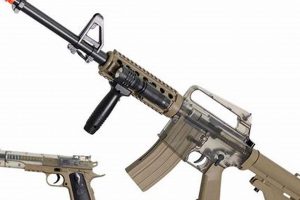
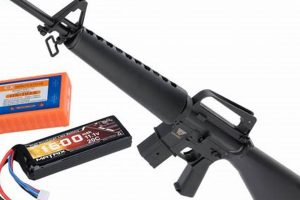
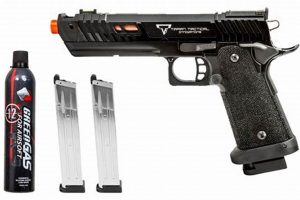
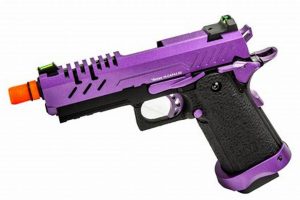
The legality of these recreational devices, designed to resemble firearms and project plastic projectiles, varies considerably across jurisdictions. Regulations governing their ownership, use, and transportation are often determined by a combination of federal, state, and local laws. For example, some areas may treat them as toys, while others categorize them similarly to firearms, imposing restrictions on age, purchase, and permissible locations for use.
Understanding the specific regulations pertaining to these items is crucial for avoiding legal complications. The proliferation of realistic-looking replicas necessitates awareness of local statutes addressing imitation firearms. History reveals a gradual evolution of legislation, reflecting growing concerns about public safety and potential misuse. Compliance with the law ensures responsible participation in the sport and avoids unintended consequences.
The following sections will explore the nuances of relevant regulations, focusing on age restrictions, permissible usage areas, transportation guidelines, and potential penalties for non-compliance. Furthermore, the discussion will analyze the challenges in distinguishing these recreational devices from actual firearms and address the implications for law enforcement and public safety.
The following recommendations aim to assist in maintaining compliance with legal statutes regarding the ownership, use, and transport of airsoft devices. These are suggestions only and do not constitute legal advice.
Tip 1: Research Local Ordinances: Prior to purchase or use, investigate municipal and county regulations concerning these devices. Many localities impose restrictions beyond state or federal law.
Tip 2: Confirm Age Requirements: Adhere to the minimum age requirements for purchase and use, as established by federal, state, or local law. Be aware that some jurisdictions may require parental supervision for minors.
Tip 3: Confine Use to Permitted Areas: Utilize these devices only in designated areas such as private property or authorized airsoft fields. Public spaces are often prohibited due to safety concerns and potential misidentification.
Tip 4: Transport with Caution: When transporting these devices, keep them unloaded, preferably disassembled, and stored in a closed case or bag. This mitigates the risk of misinterpretation by law enforcement or the public.
Tip 5: Avoid Public Display: Refrain from openly displaying or brandishing these devices in public areas. This prevents alarming citizens and reduces the likelihood of triggering an emergency response.
Tip 6: Adhere to Marking Requirements: In jurisdictions mandating orange tips or other markings to distinguish these devices from actual firearms, ensure compliance with these specifications.
Tip 7: Obtain Legal Counsel if Unsure: When uncertainty arises regarding specific regulations, consult with an attorney specializing in firearms or related legal matters.
Adherence to these guidelines promotes responsible use and minimizes the possibility of legal entanglements. Awareness of local ordinances and prudent handling practices are paramount.
The subsequent sections will further elaborate on potential legal ramifications and provide additional resources for remaining informed.
1. Age Restrictions

The presence and enforcement of age restrictions significantly impact the determination of the legality surrounding airsoft devices. These restrictions are implemented to mitigate risks associated with unsupervised or immature use of devices that, while not firearms, can still cause injury if mishandled.
- Minimum Purchase Age
Many jurisdictions establish a minimum age for purchasing airsoft devices. This aims to prevent minors from acquiring these devices without parental knowledge or consent. For example, some states may require individuals to be 18 years of age to purchase, while others might set the limit at 16. Violations of minimum purchase age laws can result in fines for both the buyer and the seller.
- Usage Limitations Based on Age
Beyond purchasing, some areas have specific regulations about who can use airsoft devices, irrespective of ownership. These laws often involve parental supervision requirements for younger users. For example, children under a certain age (e.g., 14 or 16) may only be permitted to operate these devices under the direct supervision of an adult. Failure to adhere to such rules could lead to charges of negligence or endangerment.
- Age Verification Practices
Retailers selling airsoft devices are often legally obligated to verify the age of purchasers. This may involve checking identification documents or employing other age verification methods. Some online retailers might require digital age verification before completing a sale. The absence of appropriate age verification mechanisms can render a seller liable for violations related to underage sales.
- Penalties for Violations Involving Minors
Legal consequences for involving minors in the improper use of airsoft devices can be substantial. These penalties might include fines, misdemeanor charges, or even felony charges in cases involving serious injury or criminal activity. Furthermore, parents or guardians may face legal repercussions for failing to adequately supervise minors in the use of these devices.
These multifaceted age restrictions play a pivotal role in defining the legal boundaries surrounding airsoft devices. Compliance with these regulations is essential for ensuring responsible use and minimizing legal risks associated with the possession and operation of these items.
2. Federal Regulations

Federal regulations, while not directly addressing airsoft devices as firearms under the Gun Control Act of 1968 (GCA), still exert influence over aspects relevant to their legality and marketability. These regulations primarily concern importation, interstate commerce, and certain safety standards, indirectly impacting the broader question of the devices’ legal status.
- Importation Standards
The U.S. Customs and Border Protection (CBP) regulates the importation of airsoft devices. These devices must meet specific criteria to be admitted into the country, including distinct markings or colorations to differentiate them from actual firearms. For instance, an orange tip, typically spanning no more than 6mm, is generally required on the muzzle. Failure to comply with these import standards can result in seizure of the devices by CBP.
- Interstate Commerce Considerations
Federal laws govern interstate commerce, which indirectly affects the distribution and sale of airsoft devices across state lines. While the GCA does not classify these devices as firearms, regulations concerning the shipment of items resembling firearms may apply. Sellers engaging in interstate commerce of these devices must be aware of and comply with all applicable federal regulations pertaining to shipping and labeling requirements.
- Consumer Product Safety Commission (CPSC) Standards
The CPSC has the authority to regulate consumer products, including certain aspects of airsoft devices, particularly concerning safety standards. While not specifically targeting airsoft devices as firearms, the CPSC may impose requirements related to labeling, age recommendations, or other safety features to minimize the risk of injury to users. Manufacturers and distributors must ensure compliance with CPSC standards to avoid potential legal liabilities.
- Federal Trademark and Patent Laws
Federal trademark and patent laws can also indirectly influence the legal landscape surrounding airsoft devices. Companies manufacturing or distributing these devices may seek trademark protection for their brands or patent protection for innovative designs. Enforcement of these intellectual property rights can impact the market availability and legal distribution of specific airsoft products.
Although federal regulations do not directly classify airsoft devices as firearms, their impact on importation, interstate commerce, and safety standards creates a framework that indirectly affects their legality and market accessibility. Compliance with these federal regulations, in conjunction with state and local laws, is essential for manufacturers, distributors, and users to navigate the complex legal terrain surrounding these devices.
3. State Laws
State laws represent a significant layer of regulation directly influencing the legality of airsoft devices. These laws establish specific criteria governing their ownership, use, and sale within individual state boundaries. Consequently, the permissibility and restrictions surrounding airsoft devices can vary substantially from state to state.
- Classification as Firearms or Imitation Firearms
Some states classify airsoft devices as firearms or imitation firearms, subjecting them to regulations similar to those governing actual firearms. This classification often triggers background checks, registration requirements, and restrictions on where the devices can be carried or used. For example, a state might require individuals to obtain a permit to purchase an airsoft device if it is deemed an imitation firearm under state law. Failure to comply can result in criminal charges.
- Age Restrictions on Purchase and Possession
States commonly establish minimum age requirements for purchasing and possessing airsoft devices. These age limits are intended to prevent unsupervised use by minors and reduce the risk of accidental injury or misuse. For instance, a state law might prohibit the sale of airsoft devices to individuals under the age of 18. Retailers violating these restrictions face fines and potential loss of their business license.
- Restrictions on Public Display and Brandishing
Many state laws restrict the public display or brandishing of airsoft devices, particularly in a manner that could cause alarm or be mistaken for the possession of a real firearm. These laws are designed to prevent public panic and reduce the likelihood of police intervention. A person openly carrying an airsoft device in a threatening manner might be charged with disorderly conduct or a similar offense under state law.
- Permissible Use Locations
State laws often regulate the locations where airsoft devices can be legally used. These laws typically restrict the use of airsoft devices in public parks, school zones, or other areas where their use could pose a safety risk or create a disturbance. Individuals using airsoft devices in prohibited locations may be subject to fines or other penalties under state law.
These diverse state laws underscore the importance of researching and understanding the specific regulations in one’s jurisdiction. The legality of airsoft devices is not uniform across the United States; therefore, awareness of state-specific requirements is essential for responsible ownership and use, mitigating the risk of legal repercussions.
4. Local Ordinances

The legality of airsoft devices is significantly influenced by local ordinances, representing a nuanced layer of regulation beyond federal and state laws. These ordinances, enacted at the city or county level, often impose restrictions tailored to address specific community concerns, potentially further limiting or expanding the permissible use and ownership of airsoft devices within their jurisdictions. The absence of understanding of these ordinances directly leads to unwitting violations.For instance, while a state law may permit the use of airsoft devices on private property, a specific city ordinance might prohibit their use within residential areas due to noise complaints or safety concerns. This demonstrates how local ordinances act as a critical component in determining whether “are airsoft guns legal” and where.
The specificity of local ordinances also extends to the enforcement of orange tip requirements. While many states mandate orange tips to distinguish airsoft devices from actual firearms, individual cities or counties may establish stricter standards regarding the size, color, or placement of these markings. Failure to comply with these localized standards can result in fines, confiscation of the device, or other penalties. Several real-world cases illustrate the practical significance of understanding local ordinances. Individuals have faced legal action for using airsoft devices in areas deemed illegal by city laws, despite believing they were operating within the bounds of state regulations. These instances underscore the importance of consulting with local authorities or legal experts to ascertain the precise regulations applicable in a given community.
In summary, local ordinances play a pivotal role in shaping the legal landscape surrounding airsoft devices. They often impose additional restrictions beyond state and federal regulations, addressing community-specific concerns. Understanding these ordinances is crucial for responsible ownership and use, preventing unintentional violations and ensuring compliance with all applicable laws. The fragmented nature of these local regulations, however, presents a challenge for individuals seeking to navigate the complex legal terrain, necessitating proactive research and diligent adherence to community-specific rules.
5. Transportation Rules

Transportation rules pertaining to airsoft devices are integral to their legality. These regulations address how such devices are to be moved from one location to another, aiming to mitigate risks associated with public perception, potential misuse, and compliance with varying jurisdictional laws.
- Case and Packaging Requirements
Many jurisdictions mandate that airsoft devices be transported in closed cases or packaging, preventing them from being visible to the public. This practice is designed to avoid causing alarm or misidentification of the device as a real firearm. For example, some state laws require the device to be stored in a locked container during transport. Violation of these requirements can lead to fines or confiscation of the device.
- Unloaded and Secured Transport
Regulations often stipulate that airsoft devices must be transported unloaded, with any magazines or power sources detached. This precaution is intended to prevent accidental discharge during transit and to further distinguish the device from an active firearm. Some local ordinances may require batteries to be removed and stored separately. Failure to adhere to these guidelines could result in criminal charges related to improper handling of a potentially dangerous item.
- Interstate Transport Considerations
When transporting airsoft devices across state lines, individuals must be cognizant of the laws in each state through which they will be traveling. Regulations concerning permissible devices, transport methods, and required markings can differ significantly. For instance, a device legal in one state may be restricted or prohibited in another. Ignorance of these differences does not excuse non-compliance, and individuals are responsible for ensuring they meet the requirements of each jurisdiction.
- Airline and Public Transportation Restrictions
Airlines and other forms of public transportation typically have specific rules regarding the transport of items resembling firearms, including airsoft devices. These rules often necessitate advance notification, secure packaging, and adherence to specific handling procedures. Failure to comply with these regulations can result in refusal of transport, confiscation of the device, or potential legal consequences.
In conclusion, transportation rules significantly shape the legal landscape for airsoft devices. Compliance with these regulations, which encompass packaging, handling, and interstate considerations, is essential for avoiding legal complications and ensuring responsible ownership. These transportation rules are, therefore, critical in determining whether “are airsoft guns legal” under specific circumstances.
6. Permissible Use
The legality of airsoft devices is inextricably linked to their permissible use. The question of “are airsoft guns legal” is not a binary one; rather, permissibility acts as a key determinant. Legal frameworks frequently regulate where and how airsoft devices can be operated, directly impacting their overall legal status. Cause and effect are evident: improper or unauthorized use leads to legal repercussions, while adherence to designated usage guidelines maintains compliance. The importance of permissible use cannot be overstated; it defines the boundaries within which these devices can be legally owned and operated.
Real-life examples underscore this connection. Consider the instance of an individual using an airsoft device in a public park, violating a local ordinance prohibiting such activity. Despite lawful purchase and ownership of the device, the unauthorized use results in legal penalties, demonstrating that legal ownership does not automatically equate to legal operation. Similarly, sanctioned airsoft fields and arenas exist as controlled environments where permissible use is clearly defined and regulated, allowing for legal recreational activity. The practical significance of understanding permissible use lies in avoiding legal pitfalls and ensuring responsible engagement with the activity.
In summary, permissible use constitutes a fundamental component of the overall legality of airsoft devices. It dictates the acceptable contexts for their operation, influencing legal consequences and responsible ownership. This understanding necessitates careful consideration of location, manner of use, and adherence to all applicable laws and regulations, recognizing that compliance in these areas determines whether an airsoft device can be deemed legal in a specific situation. The challenges associated with navigating these diverse regulations highlight the need for continued awareness and responsible behavior among airsoft enthusiasts.
7. Marking Requirements
Marking requirements are a critical aspect of the legality surrounding airsoft devices. These regulations, often mandated by federal, state, or local laws, stipulate specific markings intended to visually distinguish airsoft devices from actual firearms. Compliance with these requirements directly impacts the legal status of these devices, influencing their permissibility and acceptance within a community.
- Orange Tip Mandates
The orange tip is the most common marking requirement, demanding that the muzzle of an airsoft device be fitted with a blaze orange marking, typically made of plastic. The size and precise shade of orange may be defined by specific regulations. The purpose is to immediately signal that the item is not a real firearm, reducing the risk of misidentification by law enforcement or the public. Non-compliance can lead to confiscation of the device and potential legal penalties.
- Coloration and Materials
Some jurisdictions extend marking requirements beyond the orange tip, dictating that the entire airsoft device be constructed of or coated in bright, non-realistic colors. This approach aims to further minimize the possibility of confusion with authentic firearms. The permissibility of realistic-looking replicas is often contingent upon meeting these coloration standards. Failure to adhere to such regulations can result in the device being deemed an illegal imitation firearm.
- Manufacturer Markings and Disclaimers
Certain laws require manufacturers to permanently mark airsoft devices with their company name, model number, and a clear statement indicating that the device is not a firearm. These markings serve as a means of tracing the origin of the device and reinforcing its non-lethal status. Omission of these markings can subject manufacturers and distributors to legal liabilities.
- Tampering and Alteration Penalties
Laws often impose penalties for tampering with or removing required markings from airsoft devices. Altering an orange tip or removing manufacturer disclaimers is considered a serious offense, as it intentionally increases the likelihood of misidentification and potential misuse. Such actions can result in significant fines and criminal charges.
The multifaceted nature of marking requirements underscores their significance in the legal landscape of airsoft devices. Adherence to these regulations is paramount for ensuring responsible ownership and mitigating the risk of legal repercussions. These requirements directly affect “are airsoft guns legal” by establishing clear visual distinctions that prevent confusion and promote public safety.
Frequently Asked Questions
The following frequently asked questions address common inquiries regarding the legal status of airsoft devices. The information provided is for general informational purposes only and does not constitute legal advice.
Question 1: Are airsoft guns legal nationwide in the United States?
The legality of airsoft devices is not uniform across the United States. Federal laws primarily regulate importation and interstate commerce, but state and local laws dictate specific regulations concerning ownership, use, and sale. Therefore, legality varies significantly by jurisdiction.
Question 2: What is the significance of the orange tip on airsoft devices?
The orange tip serves as a visual indicator that the device is not a real firearm. Many jurisdictions mandate the presence of an orange tip to prevent misidentification by law enforcement and the public. Altering or removing the orange tip is often a violation of law.
Question 3: Are there age restrictions associated with purchasing or using airsoft devices?
Age restrictions are common for both purchasing and using airsoft devices. States and localities establish minimum age requirements, often necessitating parental supervision for minors. Violations of age restrictions can result in fines and other legal penalties.
Question 4: Can airsoft devices be used in public places?
The use of airsoft devices in public places is generally restricted or prohibited. Laws typically confine permissible use to private property or designated airsoft fields. Using these devices in public areas can lead to charges of disorderly conduct or other offenses.
Question 5: How should airsoft devices be transported legally?
Proper transportation typically requires the device to be unloaded, stored in a closed case or container, and kept out of public view. Some jurisdictions mandate that batteries or magazines be detached during transport. These measures aim to prevent misinterpretation and ensure safe handling.
Question 6: What are the potential penalties for violating airsoft device regulations?
Penalties for violating airsoft device regulations vary depending on the specific infraction and jurisdiction. Potential consequences include fines, confiscation of the device, misdemeanor charges, and, in cases involving misuse or injury, more severe criminal penalties.
In summary, understanding the nuances of federal, state, and local laws is crucial for responsible airsoft device ownership and use. Due diligence and adherence to these regulations are essential for avoiding legal complications.
The concluding section will provide resources for further research and legal guidance.
Conclusion
This exploration has demonstrated the multifaceted nature of the question “are airsoft guns legal.” The answer is not a simple yes or no, but rather a complex determination influenced by federal guidelines, state statutes, and local ordinances. Age restrictions, marking requirements, permissible use locations, and transportation regulations all contribute to a jurisdictional patchwork that demands careful consideration.
Given the potential for misinterpretation and the variability of applicable laws, individuals engaging with airsoft devices bear a responsibility to remain informed and compliant. Diligence in researching local regulations and adherence to established guidelines are paramount for ensuring responsible ownership and avoiding unintended legal consequences. The evolving legal landscape surrounding these devices necessitates continuous vigilance and proactive engagement with relevant authorities.