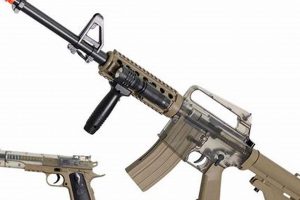
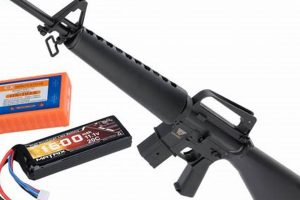
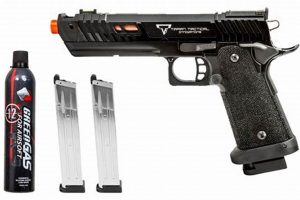
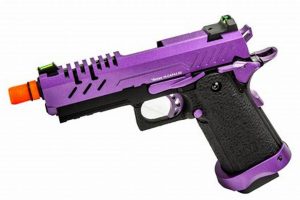
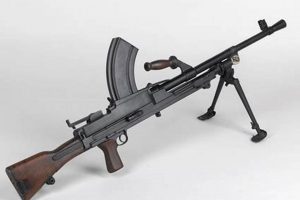
The ability to personalize and modify airsoft weaponry involves individuals or entities that provide the resources and expertise for creating tailored replicas. These can range from simple aesthetic changes to complex internal upgrades that affect performance. For example, a player might commission a specific build to mimic a firearm used by a particular military unit, or modify an existing airsoft gun to improve its range and accuracy.
This specialization is significant for enhancing the airsoft experience, offering players opportunities for deeper immersion, tactical advantages, and self-expression. Historically, modifications were limited to basic aftermarket parts, but advancements in manufacturing and accessible online communities have enabled more intricate and personalized builds. This has fostered a culture of innovation and technical skill within the airsoft community.
Subsequent discussions will explore specific customization techniques, available components, performance considerations, and relevant legal aspects related to the modification of airsoft equipment.
Essential Modification Guidelines
Achieving optimal performance and aesthetics in customized airsoft replicas requires meticulous attention to detail and a comprehensive understanding of the underlying mechanics. The following guidelines offer insights to enhance the process.
Tip 1: Prioritize Internal Upgrades First: Before addressing cosmetic modifications, ensure the replica’s internal components are optimized for desired performance. Upgrading the hop-up unit, inner barrel, and motor will yield greater improvements in accuracy, range, and rate of fire than external alterations alone.
Tip 2: Research Component Compatibility: Different brands and models of airsoft guns may have unique component dimensions and specifications. Thoroughly research compatibility before purchasing any aftermarket parts to avoid fitment issues or potential damage to the replica.
Tip 3: Consider Gearbox Reinforcement: High-performance upgrades often place increased stress on the gearbox. Reinforce the gearbox shell with stronger materials or aftermarket components to prevent cracking or failure under prolonged use.
Tip 4: Properly Shim Gears: Correctly shimming the gears within the gearbox is crucial for minimizing friction, reducing noise, and extending the lifespan of internal components. Improper shimming can lead to premature wear and failure.
Tip 5: Implement Adequate Lubrication: Regularly lubricate all moving parts within the airsoft replica to minimize friction, prevent corrosion, and ensure smooth operation. Use high-quality silicone oil or grease specifically designed for airsoft applications.
Tip 6: Test and Fine-Tune Adjustments: After completing modifications, thoroughly test the airsoft replica and fine-tune any adjustable components, such as the hop-up unit, to achieve optimal performance.
Tip 7: Understand Local Regulations: Prior to modifying any airsoft replica, become thoroughly acquainted with all local and national regulations pertaining to airsoft gun ownership, modification, and use. Non-compliance can result in legal penalties.
Adhering to these guidelines will contribute to a more successful customization process, resulting in improved performance, reliability, and longevity of the airsoft replica.
The subsequent sections will delve into specific aspects of customization, including component selection, advanced modification techniques, and troubleshooting common issues.
1. Performance Enhancement

The drive for enhanced performance is a primary motivator for engaging services. Optimizing an airsoft replica’s operational capabilities can significantly alter its effectiveness in gameplay scenarios.
- Increased Accuracy via Precision Barrels
Replacing a stock inner barrel with a precision-engineered barrel improves shot-to-shot consistency. Tighter bore tolerances reduce air leakage around the BB, resulting in a more stable trajectory. For example, a stainless-steel tightbore barrel can enhance accuracy at longer ranges, providing a competitive edge.
- Enhanced Range Through Hop-Up Upgrades
The hop-up unit imparts backspin to the BB, extending its range by counteracting gravity. Upgrading the hop-up bucking, nub, and chamber improves the consistency and effectiveness of the backspin. A well-tuned hop-up system can significantly increase the effective range of an airsoft replica.
- Improved Trigger Response with Electronic Trigger Units
Installing an electronic trigger unit (ETU) replaces the mechanical trigger switch with an electronic circuit. This allows for programmable firing modes, precocking, and faster trigger response times. An ETU can provide a significant advantage in close-quarters combat situations where rapid firing is essential.
- Increased Rate of Fire with High-Torque Motors and Gear Sets
Upgrading the motor and gear set can increase the rate of fire (ROF) of an automatic electric gun (AEG). High-torque motors provide faster cycle times, while upgraded gear sets improve durability and efficiency. These modifications can significantly increase the AEG’s suppressive fire capabilities.
These performance enhancements are central to customization. Individuals seek modifications to gain a tactical advantage or replicate the performance characteristics of real-world firearms. The pursuit of enhanced performance is a defining aspect of specialized service engagement.
2. Aesthetic Personalization
Aesthetic personalization represents a substantial facet of specialized airsoft service. This area encompasses modifications focused on visual appeal and individual expression, differentiating a standard airsoft replica from a uniquely tailored piece. The influence of video games, films, and real-world firearms often inspires these aesthetic modifications. Consequently, individuals seek services to replicate the appearance of specific weapons or create entirely original designs.
The importance of aesthetic personalization lies in its ability to enhance the user’s experience and immersion. A replica that accurately reflects a player’s preferred aesthetic increases their enjoyment of the sport and provides a greater sense of realism. Examples include custom paint jobs mimicking camouflage patterns, the addition of aftermarket accessories like scopes and grips, and the fabrication of unique external components such as suppressors and stocks. The practical significance of this understanding is evident in the demand for professional painting services, custom 3D-printed parts, and expertly installed tactical accessories. These services directly cater to the desire for a visually distinctive and personalized airsoft replica.
In conclusion, aesthetic personalization is integral to the broader concept of specialized airsoft services. While performance upgrades offer functional advantages, aesthetic modifications address the user’s desire for individuality and visual appeal. Challenges in this area include matching specific color schemes, ensuring durability of custom finishes, and complying with regulations regarding replica firearms’ appearance. Understanding the interplay between performance and aesthetics remains essential for providers seeking to comprehensively cater to the airsoft community’s needs.
3. Component Compatibility
The selection and integration of appropriate components are central to successful airsoft replica modification. Incompatible parts can lead to diminished performance, mechanical failures, or irreversible damage to the equipment. Therefore, a thorough understanding of component compatibility is crucial for anyone engaging services.
- Gearbox Standardization and Variations
Airsoft gearboxes, the core of automatic electric guns (AEGs), are manufactured in several distinct versions (e.g., Version 2, Version 3). While some components are interchangeable across versions, critical parts such as gears, pistons, and nozzles are often specific to a particular gearbox type. Attempting to install Version 2 gears in a Version 3 gearbox, for instance, will result in improper meshing and potential damage. Manufacturers also introduce subtle variations within each gearbox version, requiring careful attention to product specifications.
- Hop-Up Unit and Barrel Interfaces
The hop-up unit and inner barrel must interface correctly to ensure consistent backspin application and optimal accuracy. Different hop-up units are designed for specific barrel types (e.g., AEG barrels, VSR barrels). Using an incompatible barrel can disrupt the air seal and lead to inconsistent BB trajectories. Furthermore, the hop-up bucking, which directly contacts the BB, must be compatible with the hop-up chamber to prevent feeding issues and air leaks.
- Motor and Battery Voltage Matching
Airsoft motors are designed to operate within specific voltage ranges. Using a battery with excessive voltage can overheat and damage the motor, while insufficient voltage can result in poor performance. Additionally, the motor’s pinion gear must be compatible with the sector gear in the gearbox. Mismatched pinion and sector gears can cause premature wear and failure of the gear set.
- External Accessory Mounting Systems
External accessories, such as optics, flashlights, and foregrips, are typically mounted using standardized rail systems (e.g., Picatinny rails, M-LOK). However, not all accessories are universally compatible with every rail system. Some accessories may require specific adapters or modifications to ensure proper fitment and secure attachment. Attempting to force an incompatible accessory onto a rail can damage both the accessory and the airsoft replica.
The preceding considerations underscore the vital role of comprehensive component knowledge in the modification process. Specialized entities provide expertise in navigating these complexities, ensuring that all selected components function harmoniously and contribute to the desired outcome. Proper component matching ensures optimized performance, improved durability, and mitigation of potential safety hazards during airsoft gameplay.
4. Budget Allocation

Effective budget allocation is a fundamental determinant of the scope and quality achievable when engaging the services of a customization specialist. The available financial resources dictate the type and quantity of modifications that can be implemented, directly influencing the final performance and aesthetic characteristics of the airsoft replica. For instance, a limited budget might necessitate prioritizing essential internal upgrades, such as a high-torque motor and precision inner barrel, while foregoing cosmetic enhancements like custom paint jobs or high-end optics. Conversely, a larger budget allows for a more comprehensive approach, encompassing both performance improvements and visually striking modifications. The financial commitment, therefore, establishes the boundaries within which the customization process unfolds.
Consider two distinct scenarios. In the first, an individual allocates a modest sum, perhaps $200, for modifications. This allocation might permit the installation of a more efficient hop-up bucking, a reinforced piston, and basic shimming of the gears within the gearbox. These relatively inexpensive upgrades can noticeably improve accuracy and reliability. In contrast, an individual with a budget of $1000 or more could opt for a complete internal overhaul, including a high-end electronic trigger unit, a custom-built motor, a precision-engineered tightbore barrel, and professionally applied Cerakote finish. This expanded budget permits a far greater level of customization, yielding a replica with superior performance and a unique aesthetic profile. The cost of individual components and labor directly correlates to the final product’s overall quality and complexity.
In conclusion, budgetary considerations are integral to the process. Strategic allocation enables individuals to maximize the return on their investment, prioritizing modifications that align with their specific goals and preferences. Challenges inherent in budget allocation include accurately estimating the cost of labor and materials, identifying reliable sources for components, and resisting the temptation to overspend on non-essential modifications. Sound financial planning is therefore essential for achieving satisfactory results and avoiding disappointment.
5. Regulatory Compliance
The operation of modifying airsoft devices is inherently intertwined with regulatory mandates. Failure to adhere to these legal parameters can result in severe consequences, including confiscation of equipment, fines, and potential criminal charges. Therefore, comprehension of and adherence to applicable laws are paramount for all stakeholders involved in modification services, irrespective of the scale or nature of the alterations performed.
Legal frameworks governing airsoft devices vary significantly across jurisdictions. Some regions may classify airsoft guns as replica firearms, subjecting them to stringent regulations regarding ownership, modification, transportation, and storage. These regulations may restrict or prohibit modifications that increase the device’s power output, alter its appearance to more closely resemble a real firearm, or remove required safety features such as orange tip devices. For example, modifying an airsoft gun to exceed maximum permissible velocity limits may render it illegal and expose the owner to legal penalties. Similarly, altering an airsoft gun to resemble an actual firearm too closely may violate laws designed to prevent confusion and misuse of such devices. Entities must implement robust procedures to ensure all modifications comply with applicable regulations. This may involve conducting thorough legal research, consulting with legal counsel, and implementing quality control measures to verify compliance before releasing modified devices to customers.
In conclusion, regulatory compliance represents a non-negotiable aspect of the customized airsoft industry. Strict adherence to applicable laws is crucial for mitigating legal risks, maintaining ethical business practices, and protecting the safety of individuals and communities. Businesses must prioritize regulatory awareness and compliance to ensure their long-term sustainability and avoid potential legal repercussions.
6. Technical Skill

The successful execution of personalized airsoft replicas is fundamentally predicated upon a requisite level of technical skill. This proficiency extends beyond basic assembly, encompassing a comprehensive understanding of mechanical principles, electrical systems, and material properties. Without sufficient technical expertise, modifications risk compromising performance, durability, and even safety.
- Disassembly and Reassembly Proficiency
The ability to completely disassemble and reassemble an airsoft gun is crucial for performing any internal modifications or repairs. This requires familiarity with the intricate workings of the gearbox, hop-up unit, and other key components. Improper reassembly can lead to misalignment, air leaks, and mechanical failures. For example, incorrectly positioning the anti-reversal latch within the gearbox can prevent the gun from firing, while overtightening screws can damage plastic components.
- Component Modification and Fabrication Expertise
Customization often involves modifying existing components or fabricating new ones to meet specific requirements. This may include tasks such as cutting and threading inner barrels, shimming gears for optimal performance, or designing and 3D-printing custom external parts. These processes demand precision, attention to detail, and a thorough understanding of material properties. Attempting to modify components without the necessary skills can result in irreversible damage or compromised functionality.
- Electrical System Knowledge
Modern airsoft guns frequently incorporate sophisticated electrical systems, including electronic trigger units (ETUs) and MOSFETs. Modifying these systems requires a solid understanding of electrical circuits, soldering techniques, and safety precautions. Incorrect wiring can lead to short circuits, battery damage, or even fire hazards. Furthermore, understanding the programming options available with ETUs allows for customizing firing modes and trigger response to suit individual preferences.
- Troubleshooting and Diagnostic Abilities
Even with meticulous planning and execution, modifications can sometimes introduce unforeseen problems. The ability to effectively diagnose and troubleshoot these issues is essential for ensuring the continued functionality of the airsoft replica. This requires a systematic approach, a keen eye for detail, and a thorough understanding of how the various components interact. For instance, diagnosing a feeding problem may involve inspecting the magazine, hop-up unit, and nozzle alignment to identify the root cause.
These technical skills are not merely desirable but are indispensable for achieving successful and reliable airsoft gun personalization. Engaging services requires a careful assessment of the technician’s expertise, as substandard workmanship can negate the benefits of even the most advanced components. Therefore, a commitment to continuous learning and skill development is paramount for those seeking to excel in this specialized field.
Frequently Asked Questions
The following section addresses common inquiries regarding airsoft gun modification services, providing clarity on key aspects of the process and potential outcomes.
Question 1: What is the typical timeframe for completing modifications?
The duration required for modifications varies depending on the complexity of the project and the availability of necessary components. Simple upgrades, such as replacing the hop-up bucking, may take only a few hours. Comprehensive overhauls, involving extensive internal modifications and custom external work, can require several days or even weeks to complete. The provider will supply a more precise timeframe following a detailed consultation.
Question 2: How does customization affect the airsoft replica’s warranty?
Modifying an airsoft gun typically voids the manufacturer’s warranty. Any alterations to the original design or internal components are generally considered grounds for warranty cancellation. Before proceeding with any modifications, assess the potential impact on the warranty and weigh the benefits against the risks.
Question 3: What measures are taken to ensure safety during modifications?
Adherence to established safety protocols is paramount. This includes wearing appropriate personal protective equipment (PPE), such as eye protection and gloves, during disassembly and reassembly. Furthermore, ensuring the airsoft gun is unloaded and the battery is disconnected before commencing any work is essential for preventing accidental discharge or electrical hazards. Strict adherence to these safety measures mitigates the risk of injury or damage.
Question 4: How is compatibility ensured between different components?
Compatibility is verified through meticulous research and cross-referencing of component specifications. Prior to installation, all components are carefully inspected to confirm they meet the required dimensions and standards. Experienced technicians possess in-depth knowledge of various airsoft gun models and their respective component compatibility, minimizing the risk of incompatibility issues.
Question 5: What documentation is provided upon completion of the modifications?
Comprehensive documentation, including a detailed list of all modifications performed, a parts list with component specifications, and any relevant performance data, is provided upon completion of the project. This documentation serves as a record of the work performed and facilitates future maintenance or repairs.
Question 6: What recourse is available if the modifications do not meet expectations?
Reputable businesses typically offer a satisfaction guarantee or warranty on their workmanship. If the modifications do not meet the agreed-upon specifications or if any issues arise as a result of the work performed, the business will work to rectify the problem, either through additional adjustments or component replacements. Clear communication and a commitment to customer satisfaction are essential for resolving any concerns effectively.
In summary, engaging the services of a specialized firm involves understanding the process, potential risks, and safeguards in place. Informed decision-making and clear communication contribute to a satisfactory outcome.
The next section will delve into specific case studies showcasing successful customizations and the benefits realized by airsoft enthusiasts.
Conclusion
The foregoing analysis has explored the multifaceted domain of the specialized services concerning airsoft replicas. From enhancing performance through intricate internal upgrades to personalizing aesthetics with custom finishes, the demand for expert modification capabilities remains significant. Crucially, the discussion emphasized the necessity for budgetary planning, adherence to legal regulations, and the indispensable role of technical expertise in achieving optimal and safe outcomes.
The future of these services likely will involve further advancements in component technology, expanded utilization of 3D printing for bespoke parts, and increasing integration of sophisticated electronics for enhanced functionality. Participants are advised to prioritize compliance and seek qualified assistance to navigate the inherent complexities. These specialized providers contribute significantly to both individual enjoyment and the overall advancement of the airsoft community.