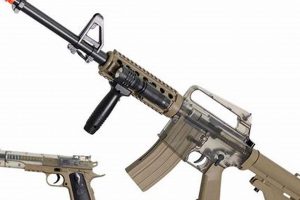
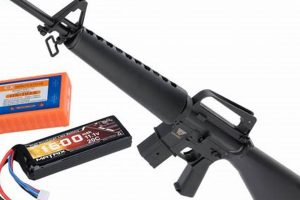
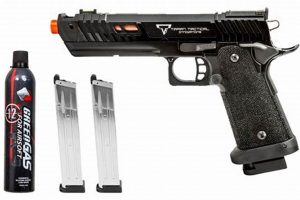
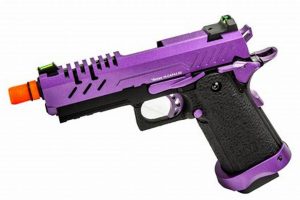
The central question concerns the permissibility of transporting replica firearms, specifically those designed to fire plastic pellets, aboard commercial aircraft. Airsoft guns, while not lethal weapons, are often realistic in appearance and therefore subject to stringent regulations by airlines and aviation security agencies. Understanding these regulations is crucial for travelers who wish to transport this type of item.
Adherence to transportation guidelines ensures both the safety and security of all passengers and crew. Historically, incidents involving realistic-looking toy or replica weapons have prompted stricter controls to prevent misidentification and potential security breaches. The potential for disruption and the need to maintain a secure environment necessitate careful management of items that could be mistaken for actual firearms.
The following sections will detail the specific regulations surrounding the carriage of airsoft guns, examining policies regarding checked baggage versus carry-on items, required procedures for declaration and packaging, and potential legal ramifications for non-compliance with these rules. It will also cover the role of the Transportation Security Administration (TSA) and individual airline policies in determining whether this item can be transported.
Airsoft Gun Transportation
Navigating the rules regarding the transport of airsoft guns on commercial flights requires careful attention. This section outlines key considerations to ensure compliance with regulations and avoid potential complications.
Tip 1: Declare the Airsoft Gun. Upon check-in, proactively inform the airline representative about the presence of the airsoft gun in checked baggage. Full transparency is essential.
Tip 2: Pack Securely. The airsoft gun must be unloaded and placed in a hard-sided case. Use padding material, such as foam or bubble wrap, to prevent movement and potential damage during transit.
Tip 3: Store Ammunition Separately. Ammunition, including BBs or pellets, should be stored in a separate, secure container. Avoid packing ammunition in the same case as the airsoft gun.
Tip 4: Comply with TSA Regulations. The Transportation Security Administration (TSA) has specific guidelines for transporting firearms and replica weapons. Review the TSA website for the most up-to-date information.
Tip 5: Check Airline Policies. Individual airlines may have additional restrictions or requirements beyond TSA regulations. Contact the airline directly to confirm their specific policies regarding airsoft guns.
Tip 6: Arrive Early. Allow ample time at the airport for check-in and security screening. The presence of an airsoft gun may require additional inspection or processing.
Tip 7: Retain Documentation. Keep copies of all relevant documentation, including airline policies, TSA regulations, and any permits or licenses associated with the airsoft gun. This documentation may be useful in resolving any potential issues.
Adhering to these guidelines minimizes the risk of delays, confiscation, or legal complications when transporting this item. Diligence in following regulations ensures a smoother travel experience.
The concluding section will summarize the essential information regarding airsoft gun transportation and provide final considerations for travelers.
1. Checked baggage only

The stipulation that airsoft guns are permitted only as checked baggage represents a cornerstone of aviation security policy concerning these items. This requirement stems directly from the potential for misidentification; an airsoft gun, regardless of its non-lethal nature, can be visually similar to a real firearm. Allowing such items in the passenger cabin presents an unacceptable risk of panic, security breaches, or hijacking attempts. The “checked baggage only” rule is a direct response to mitigating this risk by ensuring that airsoft guns are transported in a controlled and inaccessible manner during flight. For example, the 2017 incident at Fort Lauderdale-Hollywood International Airport, where a traveler retrieved a firearm from checked baggage and opened fire, underscores the critical need to maintain strict control over items with the potential to cause harm or elicit fear.
Beyond the immediate security concerns, the “checked baggage only” restriction also facilitates a more thorough screening process. When an airsoft gun is declared and transported within checked baggage, it undergoes inspection by TSA personnel, allowing for verification of its status as a non-lethal replica and adherence to packing regulations. This process includes X-ray screening and potential physical inspection to ensure that the item is unloaded, properly encased, and does not contain any prohibited components. The “checked baggage only” protocol offers the security apparatus more time and resources to identify the object if not in carry-on.
In conclusion, the “checked baggage only” rule is not merely a procedural hurdle but a fundamental element of ensuring aviation safety and security in the context of transporting airsoft guns. It addresses the inherent risk of misidentification, enables thorough screening, and minimizes the potential for in-flight incidents. Understanding this connection is vital for any traveler seeking to transport an airsoft gun legally and responsibly, highlighting the imperative of adhering to all applicable regulations.
2. Unloaded is mandatory

The mandatory requirement that an airsoft gun be unloaded before transport on a commercial aircraft is directly and inextricably linked to the possibility of transporting the item at all. Compliance with the “unloaded” stipulation is not merely a suggested safety precaution; it represents a non-negotiable condition for permissibility. The logic is straightforward: an unloaded airsoft gun poses significantly less of a security risk than one that is loaded, or potentially loaded, during transit. This reduces the potential for accidental discharge and misuse, minimizing threat to the safety and security of the aircraft and its occupants.
Real-world scenarios underscore the importance of this regulation. For example, in 2015, a man was arrested at Newark Liberty International Airport for attempting to board a plane with a loaded handgun. Although the item in question was not an airsoft gun, the incident highlights the consequences of failing to adhere to regulations regarding firearms and similar items. Had the item been an airsoft gun, even if legally owned, the presence of ammunition would have elevated the security threat and resulted in similar legal ramifications. This demonstrates that unloaded requirement is in line with general policies.
In conclusion, the “unloaded is mandatory” condition is not an arbitrary rule but a critical safeguard that enables the transport of airsoft guns within the framework of aviation security. It directly addresses the inherent risk posed by any item resembling a firearm, ensuring passenger safety and regulatory compliance. Understanding this connection is essential for responsible travelers who wish to transport an airsoft gun legally, emphasizing the importance of diligence in adhering to all applicable regulations.
3. Hard case required

The “hard case required” stipulation is a pivotal component in the regulations governing the transportation of airsoft guns on commercial airlines. This requirement directly addresses concerns related to security, damage prevention, and ease of identification during transit, ultimately influencing whether an airsoft gun can be legally transported.
- Protection Against Damage
A hard-sided case provides a robust barrier against physical damage during handling and transport. Airsoft guns, while not firearms, can contain delicate internal mechanisms and external components susceptible to breakage if subjected to impact or pressure. A hard case mitigates this risk, ensuring the item arrives at its destination in working order. For example, baggage handlers often stack and move luggage rapidly, and a soft case may not provide adequate protection against crushing or bending. The use of a hard case is an essential safeguard.
- Enhanced Security Measures
A hard case, especially when coupled with a locking mechanism, significantly enhances security. It prevents unauthorized access to the airsoft gun, reducing the likelihood of theft or tampering during transit. The presence of a locked hard case sends a clear signal to baggage handlers and security personnel that the item is being transported responsibly and in compliance with regulations. This serves as a deterrent and promotes adherence to established protocols.
- Facilitation of Identification and Inspection
A hard case simplifies the process of identifying and inspecting the airsoft gun by security personnel. The case clearly delineates the item as a separate, self-contained unit, making it easier to isolate and examine. This streamlined inspection process reduces delays and ensures that security procedures can be carried out efficiently. For instance, a hard case allows X-ray machines to provide a clearer image of the contents, enabling quicker assessment of the item’s compliance with regulations.
- Compliance with Legal Requirements
Many airlines and aviation security agencies explicitly require the use of a hard case for transporting items such as airsoft guns. Failure to comply with this requirement can result in the item being refused for transport, regardless of whether other regulations are met. Adherence to the “hard case required” rule is therefore a critical step in ensuring legal and compliant transportation.
The “hard case required” regulation plays a crucial role in ensuring secure and responsible airsoft gun transport. Through damage prevention, security enhancement, ease of identification, and legal compliance, this requirement facilitates the safe passage of these items while minimizing potential risks. Understanding and adhering to this stipulation is, therefore, essential for anyone planning to transport a airsoft gun on a commercial flight.
4. Declare at check-in

The obligation to “declare at check-in” is a fundamental pre-requisite for the legal transport of airsoft guns on commercial airlines. Failure to declare the presence of this item is often regarded as a serious breach of aviation security protocols, potentially leading to legal repercussions. The declaration serves as a critical point of communication between the passenger and airline personnel, enabling the proper handling and inspection of the airsoft gun.
- Legal Compliance and Transparency
Declaring the airsoft gun fulfills a legal obligation, ensuring transparency with the airline and relevant authorities. The act of declaration allows the airline to document the presence of the item, verify compliance with applicable regulations, and provide specific instructions regarding packaging and transportation. For example, neglecting to declare an airsoft gun may be interpreted as an attempt to conceal the item, potentially resulting in fines, confiscation, or even criminal charges. This compliance fosters safety.
- Facilitating Security Screening
Declaration at check-in initiates the security screening process for the airsoft gun. Airline personnel can alert Transportation Security Administration (TSA) officers to the presence of the item, allowing for a more thorough inspection. This may involve visual inspection of the airsoft gun, verification of its unloaded status, and assessment of its packaging to ensure compliance with TSA guidelines. A proactive declaration streamlines this process, preventing delays and ensuring that security protocols are properly followed. This adds security.
- Adherence to Airline-Specific Policies
Different airlines may have varying policies regarding the transportation of airsoft guns. Declaration at check-in allows airline personnel to inform the passenger of any specific requirements or restrictions that may apply. This ensures that the passenger is fully aware of their responsibilities and can take the necessary steps to comply with the airline’s policies. For example, some airlines may require additional documentation or specific types of hard cases for transporting airsoft guns. This facilitates compliance.
- Mitigating Potential Misunderstandings
Declaring the airsoft gun minimizes the risk of misunderstandings or misinterpretations by security personnel. Without prior notification, the discovery of an airsoft gun in checked baggage could lead to heightened scrutiny and potential delays. A proactive declaration demonstrates the passenger’s intent to comply with regulations, fostering trust and facilitating a smoother security screening process. It decreases misunderstandings.
In conclusion, the act of declaring the presence of an airsoft gun at check-in is an indispensable element of responsible and compliant air travel. By ensuring legal compliance, facilitating security screening, adhering to airline-specific policies, and mitigating potential misunderstandings, declaration is the linchpin for lawful transport.
5. Airline policy varies

The statement “airline policy varies” directly impacts the ability to transport an airsoft gun on a plane. This variation necessitates proactive research and adherence to the specific guidelines of the chosen airline, independent of general regulations.
- Conflicting Regulations
Airlines, while subject to TSA guidelines, retain the autonomy to implement stricter rules. One airline might permit airsoft gun transport in checked baggage under specific conditions, while another could completely prohibit it. For example, a budget airline might impose stricter limitations on baggage weight and dimensions, making the secure packing of a hard case containing the airsoft gun unfeasible or cost-prohibitive. This discrepancy can lead to confusion and potential denial of boarding if not addressed proactively.
- Documentation Requirements
Airlines may differ in their documentation requirements for transporting airsoft guns. Some might require a signed declaration form, a copy of the purchase receipt, or proof of membership in an airsoft association. Failure to provide the required documentation can result in the airsoft gun being refused for transport, even if all other conditions are met. A specific example could involve providing evidence the item is legally owned and not modified in any way that would elevate it beyond its intended designation.
- Packaging Specifications
While TSA mandates a hard case, airlines can impose additional packaging specifications. This might include requirements for specific types of locks, internal padding materials, or external labeling. Non-compliance with these detailed packing rules can lead to rejection of the airsoft gun. One example could be a requirement for tamper-evident seals on the hard case to guarantee that the airsoft gun remains untouched during transit.
- Liability and Insurance
Airline policies concerning liability for damage or loss of airsoft guns during transit can vary significantly. Some airlines might offer limited or no insurance coverage for these items, shifting the risk of damage or loss entirely to the passenger. It is critical to understand the airline’s liability policy before transporting an airsoft gun, as the cost of repair or replacement can be substantial. A hypothetical example involves significant damage rendering it unusable.
Consequently, “airline policy varies” is not a trivial consideration but a primary determinant in whether an airsoft gun can be transported on a plane. Thorough research and direct communication with the airline are essential to ensure compliance and prevent complications.
6. TSA guidelines apply
The phrase “TSA guidelines apply” forms an indispensable part of the question “can you take an airsoft gun on a plane.” The Transportation Security Administration (TSA) establishes the baseline security regulations for all air travel within the United States. These guidelines directly dictate the permissible methods and conditions under which an airsoft gun, or any item resembling a firearm, can be transported. Consequently, compliance with TSA guidelines is not optional; it is a prerequisite for any attempt to bring an airsoft gun onto an aircraft. For example, the TSA website explicitly states that replica firearms, including airsoft guns, must be transported in checked baggage, unloaded, and encased in a hard-sided container. Failure to meet these conditions invariably results in confiscation of the item and potential civil penalties.
The practical significance of understanding and adhering to TSA guidelines extends beyond mere compliance; it directly impacts the traveler’s experience. For instance, a passenger who is unaware of the hard-sided container requirement and attempts to check an airsoft gun in a soft-sided bag will likely face significant delays and the potential loss of the item. Conversely, a passenger who diligently follows TSA guidelines, declaring the airsoft gun at check-in and ensuring proper packaging, will experience a smoother and more efficient security screening process. Furthermore, familiarity with TSA guidelines empowers travelers to proactively address any potential issues or concerns, minimizing the risk of misunderstandings or negative interactions with security personnel.
In summary, the application of TSA guidelines is not merely a bureaucratic formality; it is the cornerstone of air travel security protocols concerning items such as airsoft guns. These guidelines establish clear expectations, facilitate effective security screening, and ultimately determine whether an airsoft gun can be legally and safely transported on a commercial aircraft. Therefore, anyone contemplating transporting a airsoft gun on a plane must first and foremost familiarize themselves with and strictly adhere to the prevailing TSA guidelines.
Frequently Asked Questions
The following questions address common concerns and provide clarification regarding the transportation of airsoft guns on commercial aircraft.
Question 1: Is it permissible to carry an airsoft gun in carry-on luggage?
No. Airsoft guns are strictly prohibited in carry-on luggage and must be transported as checked baggage.
Question 2: What type of case is required for transporting an airsoft gun?
A hard-sided case is mandatory. Soft cases are not acceptable for the transportation of airsoft guns in checked baggage.
Question 3: Must an airsoft gun be declared at check-in?
Yes. Passengers must declare the presence of an airsoft gun in their checked baggage to airline personnel during the check-in process.
Question 4: Is it necessary to unload an airsoft gun before transporting it?
Yes. The airsoft gun must be completely unloaded, and any ammunition should be stored separately from the airsoft gun itself.
Question 5: Do airline policies regarding airsoft guns differ?
Yes. It is imperative to contact the specific airline directly to confirm their policies regarding airsoft guns, as individual regulations can vary.
Question 6: Are there specific TSA regulations that must be followed?
Yes. Passengers must adhere to all applicable Transportation Security Administration (TSA) guidelines for transporting replica firearms, including airsoft guns.
Compliance with these guidelines ensures a smooth and lawful transportation process.
The concluding section will provide a comprehensive summary of the key considerations for airsoft gun transportation.
can you take a airsoft gun on a plane
The inquiry “can you take a airsoft gun on a plane” has been addressed through a detailed examination of applicable regulations and procedures. Key considerations include the necessity of transporting the item as checked baggage, the mandatory use of a hard-sided case, the requirement for declaration at check-in, adherence to TSA guidelines, and recognition of potentially varying airline policies. Strict compliance with all stipulations is essential to ensure lawful transport.
Responsible travelers must prioritize thorough preparation and adherence to established protocols. Ignoring these guidelines can result in item confiscation, legal penalties, and disruption to travel plans. Continued vigilance and awareness of evolving regulations are crucial for all individuals seeking to transport items of this nature. The traveler must be certain that they are in compliance with the current rules and regulations.