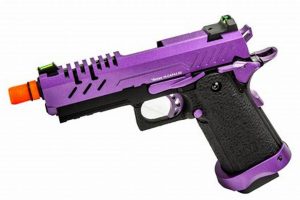
The mechanism replicates the action of a real firearm where the slide or bolt cycles backward upon firing, offering a more realistic shooting experience. This feature is generally powered by compressed gas, such as CO2 or green gas, which propels a BB and simultaneously drives the slide backward. For example, in a pistol, after a shot is fired, the slide recoils, ejects the spent cartridge (or simulates ejection), and chambers a fresh round (again, simulated) from the magazine.
This system enhances the realism of training simulations and recreational use. It provides users with tactile feedback, simulating the recoil associated with actual firearms. Historically, the incorporation of this system has been a significant selling point, appealing to enthusiasts seeking a more immersive experience. The presence of such a system can significantly influence a user’s perception of the airsoft replica’s quality and authenticity.
The ensuing discussion will elaborate on the various types of systems in airsoft replicas, the gases used to power them, performance considerations like accuracy and gas efficiency, and maintenance procedures to ensure the longevity of the firearm.
Tips for Optimal Performance and Longevity
These guidelines address optimizing the functionality and extending the operational life of airsoft replicas incorporating this specific feature. Adhering to these recommendations can minimize malfunctions and maintain consistent performance.
Tip 1: Use Recommended Gas Types: Ensure that the gas used, whether green gas or CO2, is within the manufacturer’s recommended pressure range. Overpressure can damage internal components, while underpressure can result in inconsistent cycling.
Tip 2: Regularly Lubricate Moving Parts: Apply silicone-based lubricant to the slide rails, nozzle, and other moving parts to minimize friction. Insufficient lubrication accelerates wear and can lead to decreased performance or failure.
Tip 3: Clean the Barrel Regularly: Utilize a cleaning rod and patches to remove debris and residue from the inner barrel. A dirty barrel impacts accuracy and range, potentially leading to BB jams.
Tip 4: Inspect and Maintain Magazines: Examine magazines for leaks, damage to the feed lips, and proper spring tension. Faulty magazines are a common cause of misfeeds and inconsistent performance.
Tip 5: Store Replicas Properly: When not in use, store replicas in a cool, dry environment, away from direct sunlight and extreme temperatures. This prevents degradation of seals and other components.
Tip 6: Disassemble and Inspect Periodically: Disassemble the replica according to the manufacturer’s instructions to inspect for worn or damaged parts. Replacing these components proactively prevents major failures.
Tip 7: Follow Manufacturer’s Recommendations: Always adhere to the manufacturer’s specifications for gas pressure, lubricants, and maintenance schedules. Deviating from these recommendations can void warranties and cause damage.
Implementing these procedures ensures reliable operation and extends the lifespan, reducing the need for frequent repairs or replacements.
The subsequent sections will delve into troubleshooting common issues and provide more in-depth information on maintenance procedures.
1. Realism

The incorporation of a realistic shooting experience is a primary driver for many airsoft enthusiasts. The simulated mechanical action significantly contributes to achieving a higher degree of authenticity in training and recreational scenarios.
- Visual Similarity to Real Firearms
Replicas often mirror the external appearance of actual firearms, including dimensions, markings, and finishes. This visual fidelity extends to the cycling of the slide, mimicking the action of a genuine firearm. The degree of detail in the visual reproduction contributes directly to the sense of realism.
- Tactile Feedback and Recoil Simulation
The cycling of the slide generates a tactile sensation resembling recoil. The intensity of this sensation depends on the gas pressure and the mass of the moving parts. This simulated recoil provides the user with feedback during operation, enhancing the immersive experience.
- Sound Production during Cycling
The mechanical cycling of the slide produces audible sounds similar to those of a real firearm. The sound profile, including the click of the hammer and the slide cycling, adds to the auditory realism of the experience. The presence and accuracy of these sounds further contribute to the overall sense of authenticity.
- Operational Parallels to Real Firearms
The need to load magazines, rack the slide, and manage the gas system mirrors procedures used with real firearms. These operational similarities allow users to practice firearm handling techniques in a controlled and safe environment. This is particularly relevant in training scenarios where procedural accuracy is crucial.
The culmination of these factors contributes significantly to the user’s perception of the replica’s authenticity. While not identical to the experience of firing a real firearm, the implemented actions offer a tangible and visually convincing simulation, thus satisfying the demand for realism in the airsoft community.
2. Gas Source
The selection and management of the gas source are fundamental to the operation and performance. The gas provides the energy necessary to propel the BB and actuate the simulated cycling mechanism, and thus impacts velocity, consistency, and the overall shooting experience.
- Compressed Gas Types
Commonly, airsoft replicas employ compressed green gas, CO2, or occasionally, compressed air. Green gas, a propane-based mixture with added silicone oil, provides moderate pressure suitable for many models. CO2 offers higher pressure, resulting in increased velocity, but may require reinforced internal components. The choice of gas should align with the replica’s design specifications to avoid damage or suboptimal performance.
- Pressure Regulation
Consistent pressure output is vital for achieving predictable performance. Regulators, either integrated or aftermarket, maintain a stable gas flow. Fluctuations in gas pressure can lead to variations in BB velocity and inconsistent cycling action, degrading accuracy and the simulated recoil effect.
- Gas Efficiency
The number of shots obtainable per gas fill is a critical factor. Gas efficiency is influenced by ambient temperature, the replica’s design, and the user’s shooting habits. Models designed for efficient gas usage maximize the number of shots per fill, reducing operational costs and downtime. Maintaining proper lubrication can also improve gas efficiency.
- Environmental Impact
The environmental impact associated with different gas types is a growing consideration. While green gas is generally considered less harmful than CO2 cartridges due to its biodegradable nature, all compressed gas systems require responsible disposal practices. Some users are transitioning to High-Pressure Air (HPA) systems, which use refillable air tanks and offer greater control and sustainability.
The careful consideration of gas source parameters is essential for optimizing performance and longevity. Matching the appropriate gas type to the replica, managing pressure effectively, and prioritizing gas efficiency contributes significantly to the overall satisfaction and operational effectiveness. Further advancements in gas technology and environmental awareness continue to shape the development and adoption of gas systems.
3. Slide Movement
The reciprocating action of the slide is the defining characteristic in airsoft replicas. It’s more than just an aesthetic feature; it’s integral to the functionality, realism, and user experience.
- Recoil Simulation and User Feedback
The backward motion of the slide, generated by expanding gas, creates a perceptible recoil sensation for the user. This tactile feedback mimics the recoil of a real firearm, enhancing the sense of realism and providing a more engaging shooting experience. The intensity of the perceived recoil is directly proportional to the mass of the slide and the gas pressure driving its movement.
- Loading and Chambering Simulation
As the slide cycles rearward, it resets the hammer and prepares the mechanism for the next shot. Upon returning to the forward position, the slide strips a BB from the magazine and chambers it, readying the replica for firing. This action simulates the loading process of a real firearm, adding another layer of authenticity to the experience.
- Gas Efficiency and Performance
The efficiency of the slide’s movement directly influences the overall performance of the replica. A smooth and uninhibited slide action reduces gas consumption, leading to more shots per gas fill. Conversely, friction or obstructions can increase gas usage and reduce the consistency of each shot. Regular maintenance and lubrication are crucial for maintaining optimal slide movement and gas efficiency.
- Component Wear and Durability
The constant cycling subjects the slide and associated components to significant stress. The quality of materials and construction of the slide play a crucial role in determining the replica’s long-term durability. High-quality materials, such as reinforced polymers or metal alloys, are more resistant to wear and tear, extending the lifespan of the replica. Regular inspection and replacement of worn components are essential for maintaining reliable operation.
The multifaceted role of the slide underscores its importance in the airsoft replica. Its action contributes significantly to the realism, functionality, and longevity of the airsoft gun. Understanding these intricacies allows for a more informed selection, maintenance, and overall appreciation of the nuances.
4. Recoil Simulation

Recoil simulation in airsoft replicas is directly linked to the presence of a functioning system. The cycling of the slide, powered by compressed gas, generates a backward force perceived as recoil. This force, though significantly less than that of a real firearm, provides tactile feedback to the user, enhancing the sense of realism. Without this functionality, the shooting experience lacks a crucial element of immersion, rendering the replica less engaging for users seeking authentic firearm simulation. For instance, a pistol with a robust mechanism produces a noticeable impulse, mirroring the feel of a small-caliber handgun, while a model without such a system feels inert and lacks interactive appeal.
The intensity of the simulated recoil varies depending on factors such as the gas pressure, the mass of the moving parts (primarily the slide), and the design of the replica. Higher gas pressure and heavier slides typically result in a more pronounced recoil effect. Manufacturers often experiment with these parameters to optimize the recoil sensation for specific models. Consider two examples: A competition-oriented rifle might prioritize shot consistency over recoil, resulting in a softer feel, while a replica designed for military simulation could emphasize realistic recoil to enhance training effectiveness. Proper maintenance and gas selection are also critical for maintaining consistent recoil simulation. Leaks or insufficient gas pressure can diminish the recoil effect, reducing the realism of the experience.
In summary, recoil simulation is a vital component of an airsoft system, directly contributing to the user’s sense of immersion and providing valuable tactile feedback. The effectiveness of the recoil simulation depends on various design and operational factors, highlighting the interplay between mechanics, gas dynamics, and user perception. Understanding this connection is essential for both manufacturers seeking to create realistic replicas and users looking to maximize their experience.
5. Cycling Action

Cycling action, integral to replicas featuring a blowback mechanism, refers to the sequence of mechanical events that occur after each shot. This action mimics the functionality of a real firearm, enhancing realism and providing tactile feedback to the user.
- Slide Reciprocation
Following the discharge of a BB, compressed gas propels the slide backward, compressing the recoil spring. This rearward movement extracts and (in some models) ejects a spent cartridge or a simulated cartridge. The speed and smoothness of the slide reciprocation are crucial for both realistic simulation and consistent performance.
- Hammer Reset and Sear Engagement
During the rearward travel of the slide, the hammer is reset and engages with the sear. This preloads the hammer, preparing it for the next shot. Proper sear engagement is essential for preventing accidental discharges and ensuring consistent trigger pull. Malfunctions in this mechanism can lead to inconsistent firing or complete failure of the replica.
- BB Loading and Chambering
As the slide returns forward under the force of the recoil spring, it strips a BB from the magazine and chambers it into the barrel. This loading action must be reliable to prevent misfeeds and ensure consistent firing. The design of the magazine, nozzle, and hop-up unit all contribute to the efficiency of this process. Jams or double feeds can disrupt the cycling action and require user intervention.
- Gas Routing and Nozzle Function
The nozzle, driven by the slide, regulates the flow of gas to propel the BB and actuate the. The nozzle seals against the hop-up bucking to direct the gas efficiently behind the BB. Proper alignment and sealing are critical for maximizing gas efficiency and achieving consistent velocity. Damaged or misaligned nozzles can cause gas leaks and reduced performance.
The coordinated interplay of these events defines the quality and reliability of replicas featuring the system. Proper maintenance, including lubrication and inspection of components, is essential for ensuring smooth and consistent cycling action. Deviations from optimal function can result in reduced performance, decreased realism, and potential damage to the replica.
6. Maintenance

The reliable operation of airsoft guns featuring cycling action is intrinsically linked to consistent and thorough maintenance. The intricate mechanical components subject to repeated stress and the sensitive gas system necessitate regular care to ensure optimal performance and longevity. Neglecting maintenance procedures inevitably leads to diminished functionality, increased risk of malfunctions, and ultimately, a shortened lifespan for the replica. The presence of a cycling system, while enhancing realism, also introduces additional maintenance requirements beyond those of simpler, non-cycling models. For instance, neglecting lubrication of the slide rails will cause increased friction, reduced cycling speed, and accelerated wear on both the slide and the frame.
Specifically, the gas-operated nature of cycling mechanism requires careful attention to seals, O-rings, and gas routing components. Leaks in the gas system not only reduce the number of shots obtainable per gas fill but also diminish the force driving the slide, impacting recoil simulation and potentially causing inconsistent BB velocity. Consider the example of a cracked nozzle, which, if left unaddressed, will progressively worsen, leading to complete failure of the cycling action and requiring costly repairs. Regular cleaning of the inner barrel is also crucial, as accumulated debris can obstruct BB trajectory and negatively impact accuracy. Furthermore, the build-up of residue from green gas or CO2 can corrode internal components over time, further emphasizing the need for consistent maintenance.
In conclusion, maintenance is not merely an optional addendum but an indispensable element for the long-term functionality and performance of airsoft guns. Proper lubrication, seal inspection, cleaning, and timely replacement of worn parts are crucial for preserving the realism, reliability, and overall enjoyment of these replicas. The consequences of neglecting maintenance can range from minor inconveniences, such as reduced gas efficiency, to catastrophic failures requiring extensive repairs or replacement. Therefore, a proactive approach to maintenance is essential for any owner seeking to maximize the lifespan and performance of their airsoft gun.
Frequently Asked Questions
This section addresses common inquiries regarding airsoft replicas featuring a system. The information provided aims to clarify misconceptions and enhance understanding of their operation and maintenance.
Question 1: What gases are compatible with airsoft guns blowback?
The compatibility of gases depends on the specific model and manufacturer recommendations. Green gas and CO2 are common options, but using the wrong gas can damage internal components. Consult the user manual for guidance.
Question 2: How does airsoft guns blowback increase realism?
By simulating the mechanical action of a real firearm, including slide cycling and (simulated) recoil. This tactile and auditory feedback enhances the user’s sense of immersion.
Question 3: What maintenance procedures are essential for airsoft guns blowback?
Regular lubrication of moving parts, cleaning of the barrel, inspection of seals, and adherence to manufacturer recommendations are crucial for maintaining optimal performance and preventing malfunctions.
Question 4: How do I troubleshoot common issues with airsoft guns blowback?
Common issues include gas leaks, misfeeds, and inconsistent cycling. Diagnosing these problems often requires disassembly and inspection of internal components. Consult online resources or a qualified technician for assistance.
Question 5: What is the effective range of airsoft guns blowback?
The effective range varies depending on the model, gas pressure, and hop-up system. Generally, expect accurate shots out to 50-100 feet, but environmental conditions and user skill also play a role.
Question 6: Are airsoft guns blowback safe to use?
When used responsibly and in compliance with local laws. Always wear appropriate eye protection and handle replicas with the same care and respect as real firearms.
Understanding the nuances of replicas featuring this mechanism contributes significantly to a positive user experience. Adhering to best practices for gas selection, maintenance, and safety is essential for responsible ownership and operation.
The following segment will discuss the future trends and technological advancements in system design.
Conclusion
This exploration of airsoft guns blowback has elucidated its core functionalities, maintenance needs, and contribution to realism within the airsoft sport. The mechanical simulation of a firing firearm through cycling action, gas propulsion, and recoil imitation is a key differentiator for these replicas. Consistent maintenance, appropriate gas usage, and adherence to safety protocols are critical for ensuring optimal performance and longevity.
The future of airsoft guns blowback likely resides in advancements in gas efficiency, material science, and realistic feedback mechanisms. Further improvements in these domains will continue to bridge the gap between simulation and real firearm operation, ultimately refining the user experience and expanding the appeal within the competitive environment.