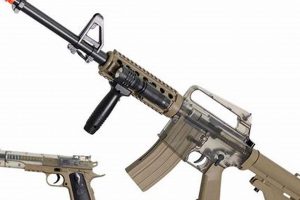
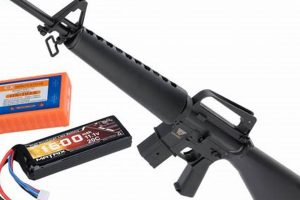
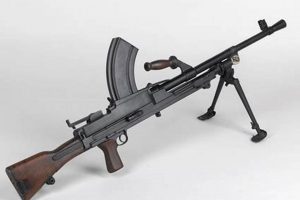
Applying camouflage to an airsoft rifle involves altering its visual appearance to blend with the surrounding environment. This process aims to reduce the weapon’s visibility, making the user less detectable during gameplay. For example, a green and brown pattern can help an airsoft rifle disappear against a woodland backdrop.
The practice of disguising equipment offers a tactical advantage. Enhanced concealment can lead to improved positioning, increased opportunities for successful engagement, and an overall improved player experience. Historically, military forces have employed similar techniques to minimize detection in combat zones, underscoring the value of effective camouflage.
The following sections will detail specific methods and materials used to achieve effective concealment, discuss factors to consider when selecting a camouflage scheme, and provide guidance on application techniques that maximize the rifle’s blending capability.
Camouflaging Airsoft Rifles
Effective rifle camouflage is a crucial element of tactical play. The following tips offer guidance on optimizing concealment in various environments.
Tip 1: Environment Assessment. Thoroughly evaluate the terrain in which the rifle will be used. Observe dominant colors, patterns, and textures. This assessment informs the selection of appropriate camouflage.
Tip 2: Stencil Application. Utilize stencils to create complex and irregular patterns. These patterns disrupt the rifle’s outline, enhancing its ability to blend into natural surroundings. Commercially available stencils or custom-cut designs are suitable.
Tip 3: Layered Painting. Apply multiple layers of paint, starting with a base coat that matches the predominant color of the environment. Subsequent layers should introduce variations in shade and pattern. This adds depth and realism.
Tip 4: Natural Vegetation. Integrate natural foliage into the rifle’s camouflage. Secure leaves, twigs, and grass using elastic bands or netting. Replace these elements regularly to maintain effectiveness and prevent decay.
Tip 5: Textured Finishes. Introduce texture to the rifle’s surface. This can be achieved by lightly dusting the wet paint with sand, dirt, or sawdust. Textured surfaces break up light reflection, further reducing visibility.
Tip 6: Attention to Detail. Focus on camouflaging all exposed surfaces of the airsoft gun. Neglecting parts like magazines, optics, or slings can compromise the entire camouflage effort.
Tip 7: Durability Considerations. Choose paints and materials that are resistant to wear and tear. Airsoft rifles are subjected to considerable handling and environmental exposure. Durable coatings ensure the camouflage remains effective over time.
Successful camouflage enhances concealment, improving the user’s tactical advantage. These tips can significantly reduce the rifle’s visual signature in operational environments.
The next section will explore specific camouflage patterns and their suitability for different terrains.
1. Environment adaptation

Environment adaptation is a foundational principle in effectively camouflaging an airsoft rifle. The success of any camouflage scheme hinges on its ability to integrate visually with the operational environment. The chosen camouflage pattern and coloration must directly reflect the dominant colors, textures, and lighting conditions of the terrain where the rifle will be used. Failure to adapt to the environment renders the camouflage ineffective, potentially increasing the user’s visibility.
Consider a scenario where an airsoft rifle is painted with a desert tan camouflage pattern but is deployed in a heavily forested area. The stark contrast between the rifle’s color and the surrounding green vegetation would make the rifle highly conspicuous. Conversely, a rifle camouflaged with a woodland pattern, incorporating greens, browns, and blacks, would blend seamlessly into the forested environment, minimizing its visual signature. The proper adaptation includes selecting paint colors and patterns that are indigenous to the operational area; using natural elements like leaves or grass tied to the rifle also demonstrates effective adaptation. These practical applications underscore the direct correlation between environment adaptation and successful concealment.
In summary, the process of effectively disguising an airsoft rifle is directly linked to environment adaptation. Overlooking this critical element diminishes the camouflage’s potential and increases the risk of detection. By meticulously analyzing the environment and tailoring the camouflage scheme accordingly, the user can significantly enhance their concealment, gaining a tactical advantage. The main challenge lies in the ability to recreate complex natural patterns, yet techniques like stenciling, layering, and incorporating natural materials help address this challenge.
2. Pattern disruption
Pattern disruption, a critical component of effective camouflage application on airsoft rifles, relies on the principle of breaking up the object’s visual form to impede recognition. It is a direct countermeasure to the human visual system’s ability to quickly identify and categorize shapes. Proper execution significantly reduces an airsoft rifle’s visibility, enhancing concealment in the operational environment.
- Irregular Shapes and Forms
The use of non-geometric shapes is fundamental to pattern disruption. Natural environments rarely exhibit perfect lines or consistent forms. Camouflage schemes incorporating irregular blotches, stripes, and textures mimic these organic patterns, making the rifle less discernible. Examples include the incorporation of fractal-like patterns found in vegetation and bark. Ineffectively implemented, the use of repetitive or predictable shapes can undermine the camouflage, making the rifle stand out against its surroundings.
- Contrast Variation
Varying the contrast within the camouflage pattern also contributes to disruption. High contrast areas break up the silhouette, while low contrast areas blend seamlessly with the background. Strategic placement of contrasting colors can draw the eye away from the overall form of the rifle. For instance, a dark shape positioned near a light area creates an illusion of depth and distorts the rifle’s outline. An example where contrast may backfire may involve areas of very high constrast in environments where that is rarely observed, such as a snowy field or deep forest.
- Multi-Layering and Depth
Applying multiple layers of patterns and colors creates a three-dimensional effect. This simulates the complex interplay of light and shadow found in natural environments. By introducing subtle variations in tone and texture, the rifle appears to recede into the background. A simple two-color pattern lacks the depth needed to effectively disrupt the rifle’s shape. Multi-layering enhances the realism and effectiveness of the camouflage.
- Texture Integration
Introducing physical texture to the surface of the rifle can further enhance pattern disruption. Applying substances like sand, dirt, or small pieces of vegetation creates a tactile dimension that complements the visual pattern. These textures break up light reflection and reduce the rifle’s overall smoothness, mimicking the roughness of natural surfaces. A smooth, uniformly painted rifle contrasts sharply with textured environments, reducing the effectiveness of the camouflage.
In conclusion, integrating irregular shapes, contrast variation, multi-layering techniques, and texture is essential for effective pattern disruption. These strategies create a complex visual that actively resists easy recognition, increasing a player’s ability to blend within their operational field. The successful implementation of these elements significantly reduces an airsoft rifle’s visibility and contributes to a tactical advantage.
3. Color selection

Color selection is a pivotal element in the effective camouflage of airsoft rifles. The strategic deployment of colors directly impacts the rifle’s ability to blend into its operational environment, influencing its detectability. Consideration of environmental factors and color theory guides the successful application of camouflage.
- Dominant Environmental Colors
The primary colors of the operational environment dictate the base colors used in the camouflage scheme. For instance, woodland environments necessitate greens, browns, and blacks, while desert environments require tans, beiges, and greys. Accurate replication of these dominant colors is essential for achieving effective blending. Deploying inappropriate colors increases the risk of visual detection, thereby negating the advantage of camouflage. Example: The U.S. military widely uses patterns based on the MultiCam design in environments where a universal camouflage is needed.
- Contrast and Shadow Simulation
Camouflage patterns should incorporate varying shades of color to simulate natural contrast and shadow. This adds depth and dimension to the pattern, disrupting the rifle’s silhouette and making it more difficult to discern. Using lighter colors to mimic highlights and darker colors to represent shadows creates a three-dimensional effect, enhancing concealment. Military equipment is often painted with patterns that contain both light and dark colors for this reason. Example: The MARPAT camouflage.
- Seasonal Variations
In environments with distinct seasonal changes, the camouflage scheme should adapt accordingly. A camouflage pattern designed for summer foliage may be ineffective during winter when the landscape is dominated by snow or bare branches. Consideration of seasonal variations ensures the camouflage remains effective year-round. In some regions, it is common practice to have multiple sets of camouflage depending on the season. This is not always cost-effective for casual players, however. A more balanced scheme is often preferred.
- Color Harmony and Blending
The selected colors should harmonize with each other to create a cohesive and natural-looking pattern. Abrupt transitions between colors can draw attention to the rifle, diminishing its camouflage effect. Blending colors smoothly and subtly enhances the overall effectiveness of the camouflage. Example: The blurring and blending of colors in digital camouflage patterns.
Strategic color selection enhances the ability to adapt an airsoft rifle to its surroundings, maximizing its effectiveness as a tool for concealment. Consideration of environmental factors, contrast, seasonal variations, and color harmony is critical in this process. Proper implementation improves a player’s ability to blend within the operational field, increasing the tactical advantage gained from camouflage. Applying these principles helps to ensure that the selected colors serve to conceal rather than reveal the airsoft rifle.
4. Material durability
Material durability plays a critical role in the longevity and effectiveness of applied camouflage on airsoft rifles. The operational environment exposes these rifles to various abrasive forces, making the selection of robust materials essential to maintaining the integrity of the camouflage.
- Paint Adhesion and Abrasion Resistance
The selected paint must exhibit strong adhesion to the rifle’s surface and possess high abrasion resistance. Airsoft rifles frequently encounter impacts from BBs, brushes with vegetation, and general handling, which can lead to paint chipping or peeling. Paints formulated with polymers or those specifically designed for firearm finishing often provide superior durability. For instance, Cerakote, commonly used on real firearms, offers exceptional resistance to abrasion and solvents, extending the lifespan of the camouflage. The paint should not dissolve easily, and should not readily flake after impact.
- Protective Clear Coats
Applying a clear coat over the camouflage paint provides an additional layer of protection against wear and tear. Clear coats, typically polyurethane-based, enhance the scratch resistance and UV protection of the underlying paint. These coatings prevent fading and discoloration caused by prolonged exposure to sunlight. Automotive clear coats can be adapted for airsoft rifle camouflage, providing a durable and glossy finish. It is important to note the type of clearcoat, and it’s effect on overall texture.
- Adhesive Strength of Camouflage Wraps
Camouflage wraps, often made of vinyl or fabric, offer an alternative to painting. The adhesive used in these wraps must possess sufficient strength to withstand environmental conditions and physical stress. Low-quality adhesives may fail, causing the wrap to peel or bubble, compromising the camouflage effect. High-performance adhesive wraps, such as those used in vehicle wraps, provide a durable and long-lasting camouflage solution. The edges of any wrap must be properly adheared to prevent pealing.
- Resistance to Solvents and Cleaning Agents
Airsoft rifles require periodic cleaning to remove dirt, grime, and lubricant residue. The camouflage finish must resist degradation from solvents and cleaning agents commonly used in airsoft maintenance. Paints and wraps that dissolve or discolor upon contact with these substances compromise the rifle’s appearance and concealment. Epoxy-based paints and solvent-resistant wraps offer enhanced durability against cleaning chemicals. Regular maintenance procedures should consider the materials used for camouflage application.
The integration of durable materials and protective coatings significantly extends the functional life of applied camouflage. Careful consideration of these elements ensures that the camouflage remains effective over time, maintaining the user’s tactical advantage. When these aspects are overlooked, the effort and resources invested in applying camouflage will yield diminished returns, requiring frequent reapplication or repairs. An airsoft rifle’s longevity in the field can then directly benefit from improved material durability.
5. Application technique

Application technique represents a decisive factor in the effectiveness of any attempt to disguise an airsoft rifle. The chosen approach directly influences the final appearance, durability, and integration of the camouflage with the rifle’s intended environment. The proficiency with which these techniques are executed determines whether the camouflage enhances concealment or, conversely, detracts from it.
- Surface Preparation and Priming
Proper surface preparation is essential for ensuring optimal paint adhesion. This involves cleaning the rifle’s exterior to remove dirt, oils, and existing finishes. Sanding the surface can create a textured profile that promotes better paint bonding. Applying a primer coat serves as an intermediary layer, further enhancing adhesion and providing a uniform base for the camouflage pattern. A failure to adequately prepare the surface can result in peeling, chipping, and a compromised camouflage effect. For example, many plastic based airsoft guns have an oily coating from the factory, so it’s important to properly degrease before painting.
- Stenciling and Pattern Layering
The use of stencils enables the creation of complex and repeatable camouflage patterns. Stencils can be commercially purchased or custom-made to achieve specific designs. Layering multiple patterns, each with different colors and textures, adds depth and realism to the camouflage. Precise alignment and careful application of each layer are crucial for achieving a cohesive and effective result. The process helps to disrupt the rifle’s outline, thereby reducing its recognizability. A poorly designed stencil will make an overall camouflage look messy.
- Airbrushing and Paint Application
Airbrushing provides a means of applying thin, even coats of paint, allowing for smooth transitions and subtle color variations. This technique facilitates the creation of realistic camouflage patterns with gradients and highlights. The airbrush’s precise control also allows for intricate detailing and fine lines. When applying paint by brush, thin coats are usually required to avoid drip marks and pooling paint. Improper airbrushing or brush techniques can lead to uneven coverage, runs, and a less effective camouflage effect. Using cheap brushes is often a common mistake.
- Sealing and Protective Coating
Applying a clear coat or sealant protects the finished camouflage from abrasion, UV damage, and chemical exposure. This protective layer enhances the durability of the paint and prevents fading or discoloration. The sealant must be compatible with the underlying paint to avoid adverse reactions, such as cracking or bubbling. A matte clear coat is typically preferred to minimize glare and maintain the camouflage’s stealthy appearance. Some people will lightly sand the clear coat to create a uniform texture. This may or may not be needed depending on the texture you require.
In conclusion, the application technique is a primary determinant of camouflage success. A combination of proper preparation, skillful application, and protective sealing directly correlates with the camouflage’s ability to conceal the airsoft rifle effectively. Mastery of these techniques leads to a durable, realistic, and environment-appropriate camouflage scheme, providing the user with a tactical advantage.
Frequently Asked Questions
This section addresses common inquiries regarding the application of camouflage to airsoft rifles, providing clarity on key processes and considerations.
Question 1: What constitutes effective camouflage for an airsoft rifle?
Effective camouflage entails minimizing the rifle’s visual signature to blend with its operational environment. This requires selecting appropriate colors, patterns, and textures that mimic the surrounding terrain, disrupting the rifle’s outline and reducing its detectability.
Question 2: Is professional application of camouflage superior to DIY methods?
Professional application typically provides greater precision, durability, and aesthetic quality. Professionals possess specialized equipment, experience, and access to high-quality materials. However, DIY methods can be effective if executed with careful planning, attention to detail, and appropriate materials.
Question 3: How does one select an appropriate camouflage pattern for varied environments?
Pattern selection should be driven by the dominant characteristics of the environment. Woodland environments require green and brown patterns, while arid environments necessitate tan and beige color schemes. Consideration of seasonal variations and micro-terrain features is crucial for optimal camouflage effectiveness.
Question 4: What materials are suitable for camouflaging an airsoft rifle?
Suitable materials include spray paints specifically designed for firearms or plastics, camouflage wraps, and natural vegetation. Paints should exhibit good adhesion, abrasion resistance, and UV protection. Wraps should adhere securely and resist tearing. Natural vegetation can be integrated for added concealment.
Question 5: How is durability ensured in airsoft rifle camouflage?
Durability is enhanced through proper surface preparation, the use of high-quality paints or wraps, and the application of protective clear coats. Regular cleaning and maintenance help to prevent degradation caused by dirt, grime, and UV exposure.
Question 6: Can camouflage negatively impact an airsoft rifle’s performance or lifespan?
If applied improperly, camouflage can potentially affect performance. Excessively thick paint layers may interfere with moving parts. A poorly chosen clear coat may degrade plastic parts. Careful application and material selection minimize these risks.
The effectiveness of airsoft rifle camouflage hinges on a thorough understanding of environmental factors, material properties, and application techniques. Adhering to established best practices ensures optimal concealment and prolongs the lifespan of the camouflage.
The following section will provide a detailed step-by-step guide to camouflaging an airsoft rifle using DIY methods.
Concluding Remarks
The preceding sections have detailed essential aspects of how to camo airsoft gun, encompassing environmental adaptation, pattern disruption, color selection, material durability, and application technique. Mastering these elements provides a tangible advantage in airsoft gameplay, enhancing concealment and facilitating tactical superiority. Thoughtful planning and meticulous execution are indispensable for achieving optimal camouflage performance.
Effective camouflage transforms the airsoft rifle from a potential liability into a strategic asset. The principles outlined herein serve as a foundation for continual refinement. Airsoft players are encouraged to adapt and innovate, developing unique camouflage schemes that reflect specific environments and personal preferences. The pursuit of improved concealment is a continuous endeavor, yielding tangible benefits on the field.