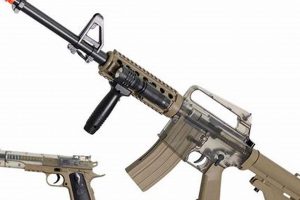
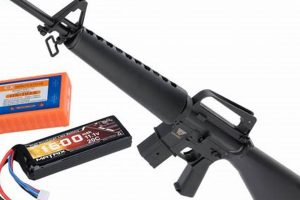
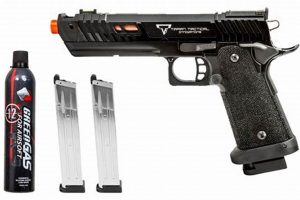
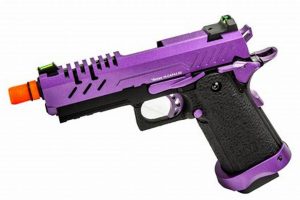
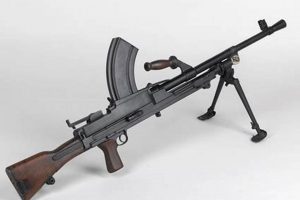
The central question revolves around the potential lethality of airsoft replicas. These devices, designed to launch plastic projectiles, are generally considered non-lethal. However, the possibility of serious injury, particularly to vulnerable areas like the eyes, should not be dismissed. Direct impact at close range can cause bruising, welts, and in extreme cases, damage to the cornea. The potential for harm increases with modifications made to the replica to increase its projectile velocity.
The significance of understanding the risks associated with these devices lies in promoting responsible usage and preventing accidents. Historically, airsoft has grown from a niche hobby to a widespread recreational activity. With this growth comes a responsibility to educate users about safe handling practices, appropriate protective gear, and the potential consequences of misuse. Understanding the legal ramifications of improper handling, especially in public spaces, is also crucial. Airsoft replicas are often mistaken for real firearms, leading to potential confrontations with law enforcement.
Therefore, a detailed examination of the factors influencing potential harm, including projectile velocity, range, target location, and protective measures, is warranted. Further analysis will address specific injury risks, legal considerations, and best practices for safe airsoft activities. This includes focusing on appropriate safety gear, field regulations, and responsible modifications, if any.
Safety Recommendations Regarding Airsoft Replicas
The following guidelines are designed to mitigate the risk of injury when utilizing airsoft devices. Adherence to these recommendations is paramount to ensuring a safe and responsible experience.
Tip 1: Mandatory Eye Protection: Proper eye protection, specifically ANSI Z87.1 rated goggles or a full-face mask, is non-negotiable. Consistent use minimizes the risk of severe eye injury from projectile impact. This protection should be worn at all times on the field of play.
Tip 2: Velocity Limits and Chronographing: Adhere to established field velocity limits for airsoft replicas, typically measured in feet per second (FPS) with 0.20g BBs. Regular chronographing of replicas ensures compliance with these limits, reducing the potential for excessive projectile force.
Tip 3: Minimum Engagement Distances: Implement and enforce minimum engagement distances for airsoft engagements. Close-range shots can cause unnecessary discomfort or injury. Establishing a minimum distance, often 10-20 feet, helps reduce the impact force on opponents.
Tip 4: Full-Face Protection (Situational): In CQB (Close Quarters Battle) environments or when using higher-powered replicas, full-face protection, including a lower face mask, is strongly advised. This safeguard protects against potential dental or facial injuries.
Tip 5: Safe Zones and Unloading: Designate safe zones where replicas must be unloaded, magazines removed, and safety mechanisms engaged. These zones provide a secure environment for rest, discussion, and equipment adjustments without the risk of accidental discharge.
Tip 6: Replica Modifications and Upgrades: Exercise caution and expertise when modifying or upgrading airsoft replicas. Improper modifications can lead to unsafe operating conditions or increased projectile velocities beyond established limits. Consult experienced technicians for guidance.
Tip 7: Responsible Storage and Transportation: Store airsoft replicas securely, out of reach of children and unauthorized individuals. When transporting replicas, utilize cases or bags to conceal them and prevent misidentification as real firearms. Comply with all applicable local laws and regulations regarding the transport of airsoft devices.
These precautions collectively contribute to a safer airsoft environment. By prioritizing safety and enforcing these guidelines, the potential for serious injury can be significantly reduced.
Following these tips helps minimize the risk associated with airsoft activities and promotes a responsible and enjoyable experience for all participants.
1. Projectile Velocity

Projectile velocity, measured in feet per second (FPS), is a critical factor in determining the potential for injury from an airsoft replica. A higher FPS translates directly to greater kinetic energy imparted upon impact. While standard airsoft replicas operate within velocity limits designed to minimize harm, typically below 400 FPS with 0.20g BBs, modifications or malfunctions can elevate projectile speeds significantly. This increase in velocity amplifies the risk of penetration injuries, particularly to sensitive areas such as the eyes or exposed skin at close range. Consequently, adherence to established velocity limits and regular chronograph testing are essential safety measures.
The connection between projectile velocity and the potential for serious injury is not merely theoretical. Instances of eye damage, broken skin, and welts resulting from airsoft impacts often correlate with replicas exceeding recommended velocity limits. For example, some fields enforce stricter limits for CQB scenarios (close quarters battle), recognizing the increased risk of injury at shorter distances where projectile energy is more concentrated. Modifications intended to increase range or accuracy often involve increasing FPS, which, if unchecked, can compromise safety. Furthermore, replicas that malfunction can unexpectedly discharge projectiles at higher-than-intended velocities, presenting an unforeseen hazard.
Understanding the relationship between projectile velocity and potential harm underscores the importance of rigorous safety protocols within the airsoft community. Maintaining replica within safe velocity ranges, using appropriate personal protective equipment (PPE), and regularly verifying replica performance are crucial steps in mitigating the risk of serious injuries. Although lethal outcomes involving airsoft replicas are extremely rare, responsible handling necessitates acknowledging and addressing the role of projectile velocity in determining potential harm. Enforcement of field regulations and ongoing education regarding safe modification practices are thus vital components of responsible airsoft gameplay.
2. Target Vulnerability

Target vulnerability plays a critical role in assessing the potential for severe injury or death resulting from airsoft projectiles. While airsoft replicas are designed to be non-lethal, certain areas of the human body are inherently more susceptible to damage. These vulnerable zones include the eyes, temples, throat, and groin. Impact to these areas, even with low-velocity projectiles, can cause significant trauma. The fragility of the eye, for example, makes it particularly susceptible to corneal abrasions, retinal detachment, or even blindness from direct impact. Similarly, strikes to the temple can cause concussions or more severe head trauma due to the relatively thin bone structure in this area. The degree of vulnerability directly influences the severity of potential harm.
The importance of target vulnerability is underscored by established safety protocols in airsoft. Mandatory eye protection is the most prevalent example, reflecting the understanding that the eyes are uniquely susceptible to irreversible damage. Minimum engagement distances are also often enforced to mitigate the concentrated force of close-range impacts, particularly to these vulnerable areas. While extremely rare, historical accounts of airsoft-related injuries often involve impacts to unprotected vulnerable zones. Furthermore, the legal ramifications of airsoft incidents frequently hinge on whether the injury occurred due to negligence in protecting vulnerable areas. Understanding target vulnerability, therefore, is not merely an academic exercise, but a crucial component of safe airsoft practices and legal responsibility.
In summary, while the majority of airsoft impacts result in minor discomfort, the potential for serious harm is disproportionately elevated when projectiles strike vulnerable target areas. Promoting awareness of these vulnerabilities and enforcing protective measures are paramount to minimizing the risk of severe injury. Safe airsoft practices must prioritize the protection of these vulnerable zones to prevent accidental or intentional acts from resulting in potentially life-altering consequences. This understanding is essential for players, field operators, and manufacturers alike, and forms a cornerstone of responsible airsoft participation.
3. Close proximity
Close proximity significantly elevates the potential for serious injury when dealing with airsoft replicas. At shorter distances, the projectile retains a greater amount of its kinetic energy, resulting in a more forceful impact. While safety regulations often dictate minimum engagement distances, accidental or intentional breaches of these protocols can lead to severe consequences, particularly when combined with other factors such as high projectile velocity or vulnerable target areas. The concentrated force delivered at close range reduces the time for reflexive protection and increases the likelihood of penetration or blunt force trauma. Furthermore, certain individuals may deliberately violate rules, leveraging close proximity to inflict pain or injury.
Several documented airsoft incidents illustrate the dangers of close proximity. Instances of eye injuries sustained at very short distances highlight the vulnerability of this area to concentrated projectile energy. Moreover, close-range shots to unprotected skin can cause welts, bruising, and even broken skin, increasing the risk of infection. The practical significance of this understanding lies in the reinforcement of established safety protocols, increased vigilance in enforcing minimum engagement distances, and the implementation of strict penalties for reckless behavior. Airsoft fields must clearly define and consistently enforce minimum engagement distances to mitigate the risk of close-range impacts. Furthermore, the use of appropriate personal protective equipment (PPE), such as full-face masks, becomes even more critical in environments where close-quarters engagements are likely.
In conclusion, the relationship between close proximity and the potential for injury from airsoft replicas is undeniable. While airsoft is generally a safe recreational activity when conducted responsibly, breaches of safety protocols regarding engagement distance can significantly elevate the risk of severe harm. Addressing this challenge requires a multi-faceted approach, including stringent enforcement of minimum engagement distances, comprehensive safety briefings, and a strong emphasis on responsible player conduct. Promoting a culture of safety and respect within the airsoft community is essential to mitigating the dangers associated with close proximity and ensuring a safe and enjoyable experience for all participants.
4. Improper Modification

The practice of modifying airsoft replicas carries significant implications regarding potential harm. While modifications may be intended to improve performance, they can inadvertently or intentionally increase the risk of serious injury, thereby increasing the potential for a lethal outcome, albeit extremely rare. Understanding the risks associated with improper alteration is crucial for responsible airsoft participation.
- Increased Projectile Velocity
Improper modifications frequently involve attempts to increase the projectile velocity beyond safe limits. This can be achieved through the installation of more powerful springs, high-pressure gas systems, or other internal adjustments. While these modifications may enhance range or accuracy, they also increase the kinetic energy of the projectile, elevating the risk of penetration injuries, particularly to vulnerable areas like the eyes. Violations of established field velocity limits are a direct consequence of such modifications.
- Compromised Safety Mechanisms
Modifications may inadvertently compromise the safety mechanisms built into airsoft replicas. This includes disabling safety catches, tampering with trigger mechanisms, or altering the structural integrity of the replica. Such alterations can lead to accidental discharges or malfunctions, increasing the risk of unintended injuries. Furthermore, modifications that render the replica more difficult to control or handle can also increase the likelihood of accidents.
- Use of Unsafe Projectiles
Improper modifications can extend to the type of projectiles used. While standard airsoft replicas are designed to fire lightweight plastic BBs, some individuals may attempt to use heavier projectiles, metal BBs, or other potentially dangerous ammunition. The use of such projectiles significantly increases the risk of serious injury, as they impart a greater amount of force upon impact. Furthermore, the use of non-standard projectiles can damage the replica and lead to malfunctions.
- Legal Ramifications
Beyond the immediate safety risks, improper modifications can also carry legal consequences. Altering an airsoft replica to resemble a real firearm more closely may violate local laws and regulations. Furthermore, modifying a replica in a way that increases its potential for harm may lead to criminal charges in the event of an injury. Responsible airsoft participants should be aware of and comply with all applicable laws and regulations regarding replica modifications.
In summary, improper modifications to airsoft replicas can significantly increase the risk of serious injury, even death, and carry potential legal ramifications. The pursuit of enhanced performance should never come at the expense of safety. Responsible airsoft participants must prioritize safety and adhere to established guidelines regarding replica modifications, ensuring that any alterations are performed by qualified technicians and do not compromise the safety or legality of the device.
5. Accidental discharge
Accidental discharge, while relatively infrequent, represents a crucial factor in the discussion of potential airsoft-related fatalities. These unintended releases of projectiles can occur due to mechanical failures, improper handling, or modifications that compromise safety mechanisms. The unanticipated nature of such discharges heightens the risk of injury, as individuals are less likely to be wearing appropriate protective gear or positioned safely when the event occurs. The kinetic energy of the projectile, even within regulated limits, can cause significant harm if directed at a vulnerable area of the body during an accidental discharge. The potential consequence underscores the importance of proper training in handling procedures and regular maintenance to identify and correct any mechanical defects.
Several scenarios exemplify the risks associated with accidental discharge. A replica with a faulty trigger mechanism could discharge unexpectedly during handling, potentially causing eye or facial injuries if the muzzle is inadvertently pointed at oneself or another individual. Similarly, a replica that has been improperly modified could experience a catastrophic failure, resulting in an uncontrolled release of multiple projectiles. The risk is compounded when accidental discharges occur in confined spaces or where individuals are not expecting an imminent threat. While documented fatalities directly attributable solely to accidental discharge from a standard airsoft replica are exceptionally rare, serious injuries have occurred, emphasizing the need for strict adherence to safety protocols.
In summary, accidental discharge, while an uncommon occurrence, constitutes a significant hazard in airsoft activities. Regular maintenance, adherence to safety protocols, and proper handling techniques are crucial to minimizing the likelihood of such incidents. Although fatalities resulting solely from this cause are rare, the potential for serious injury remains, highlighting the need for continuous vigilance and a commitment to safe practices within the airsoft community. The importance of responsible ownership, maintenance, and handling is paramount for mitigating any risk of accidental discharge.
6. Misidentification consequences
The consequences of misidentifying an airsoft replica as a real firearm can have lethal outcomes, although the airsoft device itself may not directly inflict the fatal injury. This connection stems from the potential for such misidentification to provoke a deadly response from law enforcement or armed civilians who perceive an imminent threat. The realistic appearance of many airsoft replicas, particularly when handled in public spaces, can easily trigger this misperception. The crucial component is the perceived threat, not the inherent lethality of the device itself. Real-life incidents demonstrate this, where individuals brandishing airsoft replicas have been shot by police officers or armed citizens who believed they were facing a genuine firearm threat. These tragic examples illustrate the potentially fatal consequences of misidentification, even when the airsoft replica is incapable of inflicting lethal harm directly. The practical significance lies in the need for responsible handling, secure transportation, and clear distinction between airsoft replicas and actual firearms.
Further analysis reveals that the legal and social repercussions of these incidents extend beyond the immediate confrontation. The individual carrying the airsoft replica, even if unharmed, may face criminal charges related to brandishing, reckless endangerment, or creating a public disturbance. The law enforcement officers involved may also face scrutiny and potential legal action, regardless of their intentions. The media coverage surrounding these events can further exacerbate tensions and contribute to a climate of fear and mistrust. Moreover, the misidentification issue raises complex questions about training for law enforcement, the right to self-defense, and the responsible use of replica firearms. This underscores the significance of education and awareness campaigns aimed at both law enforcement and the general public, promoting accurate identification and responsible handling.
In conclusion, while an airsoft replica is inherently non-lethal, the consequences of its misidentification as a real firearm can lead to fatal outcomes. These incidents underscore the critical need for responsible handling, clear differentiation between airsoft replicas and real firearms, and enhanced training for law enforcement and the public. Addressing the challenges associated with misidentification requires a multi-faceted approach, encompassing education, responsible legislation, and a commitment to de-escalation strategies. The goal is to prevent tragic incidents arising from the misperception of an airsoft replica as a lethal weapon.
Frequently Asked Questions about the Potential Lethality of Airsoft Replicas
This section addresses common inquiries and misconceptions regarding the capacity of airsoft replicas to cause serious harm or death. Information provided aims to offer clarity and promote responsible usage.
Question 1: Is it physically possible for an airsoft projectile to penetrate the human skull?
Penetration of the human skull by a standard airsoft projectile is highly improbable. The skull’s density and protective nature render it resistant to penetration by low-energy projectiles. However, modified replicas with significantly increased projectile velocity may pose a higher risk, particularly at close range and targeting thinner areas of the skull, such as the temple.
Question 2: What is the risk of permanent vision loss from an airsoft projectile impact?
The risk of permanent vision loss is a significant concern. Direct impact to the eye, even from a standard airsoft projectile, can cause corneal abrasions, retinal detachment, or other serious injuries that may lead to permanent vision impairment. Proper eye protection is therefore paramount to preventing such occurrences.
Question 3: Can an airsoft replica cause internal bleeding?
While unlikely under normal circumstances, an airsoft projectile impact may cause internal bleeding in rare situations, particularly if the projectile strikes a vulnerable area such as the abdomen or chest with sufficient force. Individuals with pre-existing medical conditions may be at increased risk. This is more probable with illegally modified and high-powered airsoft guns.
Question 4: What legal consequences may arise from causing injury with an airsoft replica?
Legal consequences vary depending on the jurisdiction and the circumstances of the incident. Causing injury with an airsoft replica may result in criminal charges such as assault, battery, or reckless endangerment. Civil lawsuits for damages may also be pursued. The severity of the legal penalties will depend on the extent of the injury and the intent of the individual using the replica.
Question 5: What role does personal protective equipment (PPE) play in mitigating risks?
Personal protective equipment (PPE), such as eye protection, face masks, and body armor, significantly reduces the risk of injury. Consistent use of appropriate PPE is crucial for minimizing the potential for harm from airsoft projectiles. Compliance with PPE requirements is essential for responsible airsoft participation.
Question 6: Are there specific regulations regarding the modification of airsoft replicas?
Regulations concerning the modification of airsoft replicas vary by location. Some jurisdictions may prohibit modifications that increase projectile velocity beyond established limits or alter the replica to resemble a real firearm more closely. It is crucial to comply with all applicable laws and regulations regarding replica modifications to avoid potential legal consequences and ensure safe operation.
These FAQs clarify the risks involved with airsoft replicas, highlighting the need for responsible usage, protective measures, and adherence to regulations. While the potential for lethal outcomes is extremely low, the possibility of serious injury necessitates caution.
Next, we will consider responsible handling of airsoft replicas and provide a summary of all the information discussed.
Conclusion Regarding Potential Airsoft Lethality
The comprehensive analysis underscores that, while extremely rare, specific circumstances involving airsoft replicas can potentially lead to fatal outcomes. Factors such as illegal modifications increasing projectile velocity, close-range impacts on vulnerable areas, accidental discharges, and most notably, the misidentification of the replica as a real firearm, significantly elevate the risk of severe injury or death. The confluence of these elements, rather than the inherent lethality of the device itself, determines the potential for catastrophic consequences.
Therefore, the airsoft community and the wider public must prioritize safety, responsible handling, and adherence to all applicable laws and regulations. Continuous education regarding the potential dangers, coupled with strict enforcement of safety protocols, is paramount. Recognizing the circumstances under which can a airsoft gun kill is a possibility, though statistically unlikely, demands a commitment to vigilance and responsible action, preventing tragic incidents and fostering a culture of safety and respect.