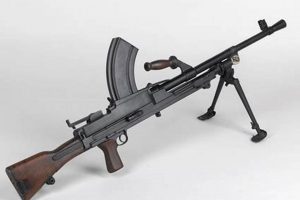
The defining characteristics of a high-quality airsoft weapon encompass several crucial elements. These elements contribute significantly to its overall performance, durability, and user satisfaction. For instance, a superior internal mechanism ensures consistent firing and reduces the likelihood of malfunctions. Similarly, robust construction materials, such as reinforced polymers or metal alloys, enhance the longevity of the device, even under rigorous usage conditions. A well-designed hop-up system further improves accuracy by imparting backspin to the projectiles, extending their range and minimizing trajectory deviations.
The selection of an appropriate airsoft weapon is paramount for an optimal gaming experience. A reliable and accurate device enhances a player’s effectiveness on the field, increasing their competitive advantage. Furthermore, a durable construction minimizes the need for frequent repairs or replacements, resulting in cost savings over time. Historically, airsoft technology has evolved from simple spring-powered mechanisms to more sophisticated electric and gas-powered systems, each offering varying levels of performance and realism. The advantages of investing in a quality airsoft gun, therefore, extend beyond mere functionality to encompass long-term value and enhanced enjoyment.
Consequently, a detailed examination of key components and performance metrics is essential for making an informed purchasing decision. Subsequent sections will delve into specific aspects, including internal mechanisms, external build quality, accuracy and range considerations, and power source options, providing a comprehensive guide to evaluating the merits of different models. This analysis aims to provide a clear understanding of the factors that contribute to a weapon’s overall value and suitability for various gameplay scenarios.
Essential Considerations for Airsoft Weapon Selection
This section outlines critical factors to evaluate when choosing an airsoft weapon, focusing on aspects that contribute to performance, durability, and overall user satisfaction.
Tip 1: Internal Mechanism Integrity: Examine the quality of the internal components, particularly the gears, piston, and motor in electric-powered models (AEGs). Durable materials and precise construction contribute to consistent firing rates and reduced wear and tear. For gas-powered models, evaluate the gas efficiency and the reliability of the valve system.
Tip 2: External Build Material Assessment: Scrutinize the materials used in the external construction. Reinforced polymers offer a balance of durability and weight, while metal alloys provide greater robustness and a more realistic feel. Consider the stress points, such as the receiver and barrel, and ensure they are constructed from high-quality materials.
Tip 3: Hop-Up System Evaluation: The hop-up system is critical for accuracy and range. Assess the adjustability and effectiveness of the hop-up unit. A well-tuned hop-up system imparts backspin to the BB, extending its flight path and improving its consistency. Consider models with adjustable hop-up units for fine-tuning performance based on BB weight and environmental conditions.
Tip 4: Power Source Determination: Select the appropriate power source based on gameplay preferences and requirements. AEGs offer consistent performance and are suitable for sustained engagements. Gas-powered models provide realistic recoil and often higher power output, but may require more frequent maintenance and gas refills. Spring-powered models are simpler and more reliable but typically offer lower firing rates.
Tip 5: Accuracy and Range Testing: Prioritize accuracy and range based on the intended gameplay style. CQB (Close Quarters Battle) scenarios may prioritize maneuverability over long-range accuracy, while outdoor engagements demand greater range and precision. Research the model’s performance in practical tests and read reviews from experienced players.
Tip 6: Ergonomics and Handling: Consider the ergonomics and handling characteristics. The weapon should feel comfortable and balanced in the hands. Evaluate the placement of controls, such as the fire selector and magazine release, and ensure they are easily accessible. A comfortable and ergonomic design reduces fatigue during extended gameplay sessions.
Tip 7: Aftermarket Support and Availability of Parts: Check for the availability of aftermarket parts and accessories. A wide range of upgrade options allows for customization and performance enhancements. Ensure that replacement parts are readily available to facilitate repairs and maintenance.
These considerations provide a structured approach to selecting an airsoft weapon that aligns with individual needs and preferences, ultimately enhancing the overall airsoft experience.
The subsequent section will offer a detailed explanation of the different types of airsoft guns to give more clarity on selecting one that suits your needs.
1. Durability

Durability, in the context of airsoft weaponry, signifies the capacity of a device to withstand the stresses of regular use, environmental factors, and potential impacts without experiencing significant degradation in performance or structural integrity. It is a fundamental attribute contributing to the overall quality and long-term value of an airsoft gun.
- Material Composition and Construction
The selection of materials directly impacts the weapon’s ability to endure physical stress. High-quality polymers, reinforced with fibers, offer a balance between weight and impact resistance. Metal alloys, such as aluminum or steel, provide enhanced rigidity and resistance to deformation. The construction methods employed, including the precision of assembly and the use of durable fasteners, further influence the weapon’s overall resilience.
- Resistance to Environmental Factors
Airsoft guns are frequently used outdoors, exposing them to various environmental conditions. Durability encompasses resistance to moisture, temperature fluctuations, and ultraviolet (UV) radiation. Moisture can lead to corrosion of metal components and degradation of polymer parts. Extreme temperatures can affect the performance of seals and lubricants. UV exposure can cause discoloration and weakening of plastic materials.
- Impact Resistance and Shock Absorption
During gameplay, airsoft guns are susceptible to impacts from falls, collisions with obstacles, and other accidental forces. Durability entails the ability to absorb these impacts without sustaining critical damage, such as cracks, breaks, or misalignments. Internal components must also be adequately protected from shock to prevent malfunctions or premature wear.
- Wear and Tear on Internal Components
The internal mechanisms of airsoft guns, particularly electric-powered models (AEGs), are subject to constant friction and stress during operation. Durable internal components, such as gears, pistons, and bearings, are constructed from wear-resistant materials and designed to withstand repeated cycling without experiencing excessive wear or failure. Regular maintenance and lubrication are also crucial for extending the lifespan of these components.
The facets outlined above underscore the multifaceted nature of durability in airsoft weapons. High-quality materials, robust construction, resistance to environmental stressors, and the ability to withstand operational wear are essential characteristics that contribute to a device’s longevity and consistent performance, thereby influencing user satisfaction and overall value. A durable airsoft gun translates to reduced maintenance costs and a more reliable experience on the field.
2. Accuracy
Accuracy, in the context of airsoft, represents the degree to which a projectile consistently impacts the intended target area. It is a pivotal attribute that significantly contributes to the effectiveness and overall quality of an airsoft weapon. Superior accuracy allows players to engage targets with greater precision, enhancing their competitive advantage and tactical capabilities.
- Hop-Up System Efficiency
The hop-up system is a critical component influencing accuracy. It imparts backspin to the BB, generating lift that counteracts gravity and extends the projectile’s range. A well-designed and properly adjusted hop-up system ensures consistent backspin, resulting in a flatter trajectory and improved accuracy. Inconsistent hop-up performance leads to unpredictable shot patterns and reduced precision.
- Barrel Quality and Stability
The quality of the inner barrel, including its bore diameter, smoothness, and rigidity, directly affects accuracy. A tight-bore barrel, typically around 6.01mm to 6.03mm, can improve consistency by minimizing BB wobble. A smooth barrel surface reduces friction and promotes more uniform projectile acceleration. A stable barrel, securely mounted within the outer barrel and receiver, minimizes vibrations that can disrupt shot trajectory.
- Ammunition Consistency
The uniformity of BBs, in terms of weight, shape, and surface finish, plays a crucial role in achieving consistent accuracy. High-quality BBs, manufactured to tight tolerances, minimize variations in flight characteristics. Using low-quality BBs with inconsistencies can lead to erratic shot patterns and reduced precision. Selecting BBs of appropriate weight for the weapon’s power output is also essential for optimal performance.
- Sighting Systems and Alignment
The effectiveness of sighting systems, such as iron sights, red dot sights, or scopes, depends on their clarity, adjustability, and proper alignment with the barrel. A clear and well-calibrated sighting system allows the user to accurately aim at the intended target. Misaligned sights introduce a systematic bias, causing shots to consistently deviate from the point of aim. Regular verification and adjustment of sighting systems are essential for maintaining accuracy.
These interconnected elements, comprising the hop-up system, barrel quality, ammunition consistency, and sighting system alignment, collectively define the accuracy of an airsoft gun. Optimizing each of these facets is crucial for achieving superior precision and enhancing the overall performance of the weapon. An airsoft gun’s capacity to consistently place shots on target significantly contributes to its value and suitability for various gameplay scenarios.
3. Reliability
Reliability, in the context of airsoft weaponry, denotes the consistency with which a device functions as intended, under specified operating conditions, without experiencing failures or malfunctions. It is a cornerstone attribute contributing significantly to what constitutes a proficient airsoft gun. A reliable airsoft gun minimizes downtime during gameplay and ensures consistent performance, thus enhancing the user’s experience and competitive advantage. The connection between reliability and an airsoft gun’s overall quality is direct: a less reliable weapon will necessitate frequent repairs or replacements, diminishing its value and utility. For instance, consider two identical airsoft rifles; one constructed with high-quality internal components and meticulous assembly will exhibit far greater reliability than one assembled with lower-grade materials and less rigorous quality control. The former will likely maintain consistent firing rates and accuracy over extended periods, while the latter may suffer from frequent jams, misfires, or component failures, rendering it less desirable and ultimately less effective on the field.
The practical implications of understanding an airsoft gun’s reliability are substantial. Players who prioritize reliability can make informed purchasing decisions, selecting models known for their robust construction and consistent performance. Furthermore, proper maintenance and care can significantly extend the lifespan and reliability of an airsoft gun. Regularly cleaning and lubricating internal components, using appropriate power sources, and storing the weapon properly can prevent premature wear and tear, thereby maintaining its operational integrity. Consider the example of a gas-powered airsoft pistol; neglecting to lubricate the seals can lead to gas leaks and inconsistent firing power, drastically reducing its reliability. Conversely, diligent maintenance will ensure consistent gas pressure and optimal performance over time. Moreover, the understanding of reliability influences the selection of upgrade components. Choosing aftermarket parts from reputable manufacturers, known for their quality and durability, can enhance the reliability of an airsoft gun beyond its original specifications.
In summary, reliability is an indispensable attribute of a superior airsoft gun. It directly affects the weapon’s performance, longevity, and overall value. By prioritizing reliability in purchasing decisions and implementing proper maintenance practices, players can ensure consistent and dependable operation on the field. However, assessing reliability can be challenging, often requiring research, user reviews, and firsthand experience. The inherent complexity of airsoft gun mechanisms necessitates a comprehensive understanding of their internal workings and potential failure points to accurately evaluate their reliability. Despite these challenges, the pursuit of reliability remains paramount in the selection and maintenance of any airsoft weapon, ultimately contributing to a more enjoyable and competitive gaming experience.
4. Range
Range, in the context of airsoft weapons, defines the effective distance at which a projectile can accurately and consistently reach a target. Its significance to determining “what makes a good airsoft gun” cannot be overstated, directly influencing tactical options, engagement distances, and overall battlefield effectiveness. A weapon with inadequate range limits a player’s ability to engage opponents, impacting their strategic capabilities and overall contribution to a team.
- Hop-Up System Optimization
The hop-up system directly influences the range of an airsoft weapon. A properly adjusted hop-up unit imparts backspin to the BB, creating lift and extending its flight path. The effectiveness of the hop-up depends on its design, adjustability, and compatibility with the weight of the BB. For instance, a hop-up designed for heavier BBs will not perform optimally with lighter BBs, resulting in reduced range and accuracy. Advanced hop-up designs, such as rotary or flat-hop systems, offer finer adjustments and more consistent performance, contributing to increased effective range.
- Power Output and Velocity
The power output of an airsoft gun, typically measured in feet per second (FPS), directly correlates with its potential range. Higher FPS values generally translate to greater projectile velocity and a flatter trajectory, extending the effective range. However, power output is often regulated by field rules to ensure player safety. Exceeding these limits can result in disqualification or injury. Balancing power output with accuracy and consistency is crucial for achieving optimal range within regulatory constraints.
- Barrel Length and Bore Diameter
The length and bore diameter of the inner barrel influence range and accuracy. Longer barrels typically allow for more efficient gas or air compression, increasing projectile velocity and range. However, excessively long barrels can reduce maneuverability, particularly in close-quarters environments. Tight-bore barrels, with smaller internal diameters, can improve consistency and accuracy by minimizing BB wobble, potentially increasing effective range at the cost of reduced FPS. The optimal barrel length and bore diameter depend on the weapon’s overall design and intended use.
- Environmental Factors
Environmental conditions significantly impact the range of an airsoft weapon. Wind, humidity, and temperature can all affect the trajectory and range of BBs. Wind can cause projectiles to drift off course, reducing accuracy and effective range. Humidity can affect the BB’s flight characteristics, while temperature can influence the performance of gas-powered weapons. Adjusting hop-up settings and selecting appropriate BB weights can help mitigate the effects of environmental factors and maintain consistent range.
The relationship between range and “what makes a good airsoft gun” is complex and multifaceted. While increased range offers a tactical advantage, it must be balanced with accuracy, consistency, and adherence to safety regulations. Optimizing the hop-up system, managing power output, selecting appropriate barrel configurations, and accounting for environmental factors are all essential considerations for maximizing range and enhancing the overall performance of an airsoft weapon. Understanding these interdependencies is crucial for making informed purchasing decisions and achieving success on the airsoft field.
5. Ergonomics

Ergonomics, concerning airsoft weaponry, is the scientific discipline of designing and arranging items so that the people using them interact most efficiently and safely. Ergonomics directly contributes to a weapon’s usability, comfort, and control, thereby significantly influencing “what makes a good airsoft gun.” Poor ergonomics can lead to user fatigue, reduced accuracy, and increased risk of injury, negating the benefits of even the most powerful and accurate platforms.
- Grip Design and Texture
The design and texture of the grip profoundly affect weapon control and user comfort. An ergonomically designed grip conforms to the natural contours of the hand, providing a secure and comfortable hold. Features like finger grooves, palm swells, and textured surfaces enhance grip in various conditions, including wet or gloved hands. For instance, a pistol grip with aggressive texturing ensures a firm hold during rapid firing sequences. Conversely, a poorly designed grip can cause hand fatigue, slippage, and reduced control, negatively impacting accuracy and maneuverability.
- Weight Distribution and Balance
The distribution of weight across the airsoft gun significantly impacts its handling characteristics and ease of use. A well-balanced weapon is easier to aim, maneuver, and control during extended gameplay. Ideally, the center of gravity should be located near the user’s hands, minimizing the effort required to maintain stability. Front-heavy weapons can cause fatigue and reduce aiming speed, while rear-heavy weapons can be awkward to manipulate. For example, a rifle with a lightweight polymer handguard and a balanced internal distribution will be easier to handle than one with a heavy metal handguard and an unbalanced weight distribution.
- Adjustability of Controls and Features
The adjustability of key controls and features, such as the stock, sights, and trigger, allows users to customize the weapon to fit their individual body size and shooting style. An adjustable stock enables users to modify the length of pull for optimal comfort and sight alignment. Adjustable sights allow for precise zeroing and accurate target acquisition. A customizable trigger can improve trigger response and enhance shooting accuracy. The ability to personalize these features significantly enhances user comfort and control. Consider a rifle with an adjustable cheek rest and length of pull; this allows the user to properly align their eye with the sights, improving accuracy and reducing strain.
- Accessibility of Key Components
The accessibility of key components, such as the magazine release, fire selector, and battery compartment (in AEGs), impacts the speed and efficiency of weapon operation. Ergonomically placed controls allow users to quickly reload magazines, switch firing modes, and access the battery compartment without disrupting their grip or sight picture. This is especially important in fast-paced combat scenarios where seconds can make a difference. An example would be an ambidextrous magazine release, which allows both right and left-handed users to quickly reload, enhancing their effectiveness in dynamic environments. Difficulty accessing these components can lead to delays, frustration, and reduced performance.
The interplay between grip design, weight distribution, adjustability, and component accessibility collectively shapes the ergonomic profile of an airsoft gun. Prioritizing ergonomic considerations in weapon design and selection enhances user comfort, improves weapon handling, and increases overall effectiveness. By optimizing these facets, manufacturers and users can maximize the potential of their airsoft weapons, creating platforms that are both comfortable and capable in a variety of operational scenarios. A weapon with superior ergonomics provides a distinct advantage, allowing users to perform at their best with minimal fatigue or discomfort.
Frequently Asked Questions
This section addresses common inquiries regarding the characteristics and attributes of effective airsoft weaponry, offering insights into factors that contribute to performance, reliability, and overall value.
Question 1: What are the primary indicators of a high-quality airsoft gun’s internal mechanism?
A robust internal mechanism typically features durable gears constructed from hardened steel or reinforced polymers, a high-torque motor (in AEGs) with efficient energy transfer, and a precision-engineered piston assembly with a reliable air seal. These components collectively ensure consistent firing rates, minimize wear and tear, and contribute to the overall longevity of the weapon.
Question 2: How does external build quality influence the performance and lifespan of an airsoft gun?
Durable external materials, such as reinforced polymers or metal alloys, enhance the weapon’s resistance to impacts, environmental factors, and general wear and tear. Solid construction minimizes flexing and wobbling, maintaining the integrity of internal components and ensuring consistent performance over time.
Question 3: What role does the hop-up system play in achieving accuracy and range?
The hop-up system imparts backspin to the BB, creating lift that counteracts gravity and extends the projectile’s range. An adjustable hop-up unit allows users to fine-tune the amount of backspin, optimizing accuracy for different BB weights and environmental conditions. A well-designed hop-up system is essential for achieving consistent and accurate shots at varying distances.
Question 4: What are the advantages and disadvantages of different airsoft gun power sources (AEG, gas, spring)?
AEGs (Automatic Electric Guns) offer consistent performance and are suitable for sustained engagements. Gas-powered models provide realistic recoil and often higher power output, but may require more frequent maintenance and gas refills. Spring-powered models are simpler and more reliable but typically offer lower firing rates. The choice depends on individual preferences and gameplay requirements.
Question 5: How does ergonomics contribute to a positive user experience?
Ergonomic design enhances user comfort, improves weapon handling, and reduces fatigue during extended gameplay sessions. Key considerations include grip design, weight distribution, adjustability of controls, and accessibility of essential components. A well-designed weapon feels natural in the hands and allows for efficient operation, maximizing performance and enjoyment.
Question 6: Why is aftermarket support and parts availability an important consideration?
A wide range of aftermarket parts and accessories allows for customization, performance enhancements, and repairs. Ensuring that replacement parts are readily available facilitates maintenance and extends the lifespan of the weapon. Models with strong aftermarket support offer greater flexibility and long-term value.
In summary, numerous factors contribute to “what makes a good airsoft gun”. Internal mechanisms, external build, hop-up systems, power sources, ergonomics, and after market support are all critical considerations. Evaluating these aspects allows for an informed decision.
The subsequent section will explore specific models and brands, offering practical examples of weapons that embody these characteristics.
Concluding Remarks on Airsoft Weaponry
The preceding analysis has comprehensively examined the multifaceted characteristics that define a superior airsoft gun. The discussion has encompassed internal mechanics, material quality, accuracy determinants, power source options, ergonomic considerations, and aftermarket support. Each of these elements contributes significantly to the overall performance, reliability, and user satisfaction associated with these devices.
The selection of an appropriate airsoft gun is thus a complex process requiring careful consideration of individual needs, gameplay preferences, and budgetary constraints. Continued advancements in airsoft technology are expected to further refine these attributes, leading to increasingly sophisticated and effective weaponry. Therefore, ongoing research and informed decision-making remain crucial for both enthusiasts and serious players seeking to optimize their airsoft experience.