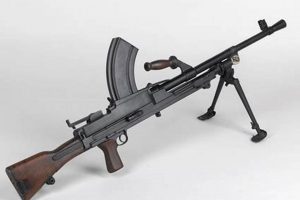
Mitigating the sound signature of an airsoft replica involves reducing the noise generated during its operation. This can be achieved through various modifications and additions to the device, impacting the perceived loudness and acoustic profile. For instance, implementing internal dampening materials within the outer barrel assembly can absorb and dissipate sound waves produced by the internal mechanisms.
The motivation behind reducing audible output stems from strategic advantages in gameplay, allowing for enhanced concealment and reduced detection probability by opposing players. Historically, attempts to diminish airsoft replica noise have mirrored developments in firearm sound suppression, albeit adapted to the lower energy levels and unique mechanisms of airsoft devices. This pursuit offers a competitive edge by minimizing the chance of revealing one’s position.
The following sections will detail specific methods, materials, and considerations involved in minimizing the auditory impact, encompassing both readily available components and more involved modification techniques. Understanding the principles of sound propagation and applying them to the specific construction of an airsoft device is paramount for effective sound reduction.
Techniques for Reducing Airsoft Replica Sound Output
Effective sound reduction in airsoft replicas requires a comprehensive approach, addressing multiple sources of noise generation. The following techniques offer potential methods for minimizing auditory output.
Tip 1: Utilize Barrel Extensions with Sound Dampening. Implementing a barrel extension filled with sound-absorbing materials, such as foam or specialized baffling, can significantly reduce muzzle report. Ensure proper fitment to avoid affecting projectile trajectory.
Tip 2: Modify the Piston Head. Replacing the stock piston head with a quieter alternative constructed from softer polymers or incorporating rubber dampeners minimizes impact noise within the gearbox. Verify compatibility with the existing cylinder and gearbox components.
Tip 3: Install Sorbothane Pads. Strategic placement of Sorbothane pads within the gearbox shell can dampen vibrations and reduce overall mechanical noise. Proper adhesion and minimal interference with moving parts are crucial for optimal performance.
Tip 4: Optimize Gearbox Shimming. Precise shimming of the gears within the gearbox reduces friction and mechanical wear, resulting in a quieter operating sound. Employ appropriate shimming tools and techniques to achieve optimal gear mesh.
Tip 5: Apply Sound Dampening Material to the Receiver. Adhering sound dampening material to the inner surfaces of the receiver can absorb vibrations and reduce resonance. Choose materials that are lightweight and non-obstructive to internal mechanisms.
Tip 6: Ensure Proper Air Seal. Maintaining a tight air seal throughout the compression system maximizes efficiency and reduces wasted energy that can contribute to noise. Inspect and replace worn O-rings and cylinder heads as needed.
These methods, when implemented correctly, can collectively contribute to a noticeable reduction in the sound produced by an airsoft replica, enhancing its stealth capabilities. However, it’s crucial to understand potential implications on performance and to adhere to local regulations regarding replica modifications.
The subsequent discussion will explore legal considerations and ethical responsibilities related to sound reduction modifications in airsoft replicas.
1. Material Selection

Material selection plays a pivotal role in mitigating the auditory signature of airsoft replicas. The inherent properties of chosen materials directly influence the transmission, absorption, and dissipation of sound waves generated during operation. Strategic application of specific materials can significantly contribute to effective sound reduction.
- Density and Acoustic Impedance
Denser materials generally exhibit higher acoustic impedance, meaning they resist the passage of sound waves more effectively. Utilizing dense foams or polymers within barrel extensions or around the gearbox can attenuate sound propagation. Conversely, less dense materials, such as open-cell foam, are better suited for absorbing sound energy by converting it into heat through friction. The mismatch in acoustic impedance between materials encourages sound reflection and reduces transmission. For instance, layering dense rubber with a less dense foam can maximize sound reduction.
- Vibration Damping Characteristics
Materials with high damping coefficients effectively absorb and dissipate vibrational energy. Sorbothane, a viscoelastic polymer, is frequently employed for its exceptional vibration damping properties. Applying Sorbothane pads strategically within the gearbox or receiver minimizes mechanical noise by reducing the amplitude of vibrations. Selecting materials that inherently dampen vibrations, as opposed to resonating and amplifying them, is crucial for achieving quieter operation.
- Resilience and Durability
The selected materials must withstand the mechanical stresses and environmental conditions encountered during airsoft gameplay. Components subjected to repeated impacts or vibrations, such as piston heads or gearbox linings, require durable and resilient materials that maintain their sound-dampening properties over time. Degradation or deformation of materials can compromise their effectiveness and necessitate replacement. For example, a piston head made of a brittle polymer may crack and lose its sound-dampening ability, leading to increased noise.
- Compatibility with Airsoft Replica Components
Materials chosen for sound reduction must be chemically compatible with existing components of the airsoft replica. Certain adhesives or solvents can degrade polymers or metals, leading to structural damage or performance issues. Ensuring compatibility prevents premature failure of components and maintains the overall integrity of the replica. Furthermore, the dimensions and weight of added materials must be carefully considered to avoid negatively impacting the replica’s balance or operational characteristics.
The efficacy of sound reduction in airsoft replicas relies heavily on a nuanced understanding of material properties and their strategic application. Optimizing material selection based on density, damping characteristics, resilience, and compatibility facilitates a significant reduction in auditory signature, enhancing the user’s stealth and tactical advantage.
2. Air Volume Control

The manipulation of air volume within an airsoft replica’s pneumatic system directly influences its sound profile. Excess air expulsion contributes significantly to the noise generated during operation. A larger volume of compressed air discharged upon firing results in a louder, more abrupt report. Conversely, precisely controlling the air volume to match the projectile’s needs reduces extraneous air expulsion, thereby diminishing the sound produced. This principle aligns with firearm suppressor design, where controlling expanding gases is paramount to noise reduction. For example, a replica utilizing a ported cylinder achieves air volume control by venting excess air before it exits the barrel, reducing the intensity of the muzzle report.
Implementing air volume control involves several techniques. One method is using cylinders with strategically placed ports, allowing excess air to escape before the piston completes its travel. This reduces the amount of compressed air expelled at the muzzle. Another approach involves the use of adjustable nozzles or regulators that restrict airflow, optimizing the air volume for different barrel lengths or projectile weights. Furthermore, meticulous sealing of the air compression system minimizes air leaks, preventing the unnecessary expulsion of air and reducing associated noise. The effectiveness of these methods depends on precise calibration and careful consideration of the replica’s specific configuration.
Air volume control stands as a crucial aspect of sound mitigation in airsoft replicas. Addressing this factor through modifications to the cylinder, nozzle, or air seal yields a marked reduction in the overall sound signature. However, it is crucial to balance air volume control with projectile velocity and accuracy, as excessive restriction can negatively impact performance. Understanding the interplay between these factors is essential for optimizing both sound reduction and operational effectiveness.
3. Vibration dampening
Vibration dampening is intrinsically linked to sound reduction in airsoft replicas. The operational mechanisms within these devices, particularly the gearbox and piston assembly, generate significant mechanical vibrations. These vibrations propagate through the replica’s structure, radiating outward as audible noise. Effective sound reduction strategies, therefore, necessitate mitigating these vibrations at their source or interrupting their transmission pathways.
Components such as the piston head impacting the cylinder head, gears meshing within the gearbox, and the motor driving the gear train are primary sources of vibration. Utilizing materials with enhanced dampening properties in these components, such as Sorbothane pads strategically placed within the gearbox or softer polymers for piston heads, absorbs vibrational energy and reduces noise. Similarly, minimizing gaps between components through precise shimming and lubrication reduces the amplitude of vibrations generated during operation. Incorrect shimming can lead to greater friction and vibration, negating other sound-dampening efforts. Therefore, dampening contributes to quiter sound of airsoft guns.
The integration of vibration dampening techniques is essential for comprehensive sound reduction. While other factors such as air volume control and barrel extensions with baffles contribute to silencing, addressing the fundamental sources of vibration provides a synergistic effect, significantly reducing the overall acoustic signature of the airsoft replica. Without proper vibration dampening, other sound reduction methods are less effective. Successful silencing relies on managing vibrations within the airsoft replica.
4. Internal component modification
Internal component modification constitutes a critical aspect of achieving significant sound reduction in airsoft replicas. The operational noise generated within these devices stems primarily from the rapid mechanical actions of internal components, such as the piston impacting the cylinder head and gears meshing during cycling. Modifying these components directly impacts the magnitude and frequency of the resulting sound waves. For instance, replacing a hard polymer piston head with one incorporating a softer, shock-absorbing material reduces the impact noise generated during each firing cycle. Similarly, upgrading to quieter gears, often manufactured with tighter tolerances and optimized tooth profiles, minimizes the noise produced by their interaction. The effects of such modifications are cumulative, contributing to a noticeable reduction in the overall sound signature of the replica.
The practical application of internal component modification extends beyond simple replacement. Optimizing component fitment through careful shimming, for example, minimizes unnecessary friction and vibration within the gearbox, resulting in quieter operation. Furthermore, applying specialized lubricants designed to dampen vibrations and reduce friction can further enhance the effect of modified components. One example is the use of dampening grease on the gear train, which helps to absorb vibrations produced during cycling and minimizes noise transmission through the replica’s frame. Successfully modifying internal components requires a thorough understanding of the replica’s mechanical workings and the properties of various materials used in their construction. Incorrect modification can lead to decreased performance or even component failure, underscoring the importance of proper technique and knowledge.
In conclusion, internal component modification is a vital, albeit intricate, element of effectively reducing sound in airsoft replicas. While external modifications such as barrel extensions contribute to sound dampening, addressing the noise at its source through component alteration often yields the most substantial results. However, such modifications should be undertaken with a comprehensive understanding of the replica’s mechanics and the potential consequences of altering its internal components, ensuring both effective sound reduction and continued operational reliability. Therefore, internal component modification can be implemented to airsoft gun.
5. External baffle integration

External baffle integration is a method employed to reduce the sound signature of an airsoft replica. The principle of operation relies on the redirection and dissipation of propellant gas as it exits the barrel. Baffles, strategically positioned within an external housing, create a series of chambers. As gas enters these chambers, it expands, cools, and is forced to change direction multiple times. These processes reduce both the velocity and pressure of the exiting gas, thereby diminishing the intensity of the muzzle report. For instance, a common design incorporates a series of conical baffles, each progressively wider than the last, to maximize gas expansion and turbulence. This technique is analogous to the function of a firearm suppressor, although adapted to the lower energy levels and specific requirements of airsoft replicas.
The effectiveness of external baffle integration is influenced by several factors, including baffle design, chamber volume, and material selection. Baffles constructed from materials with high sound-absorbing properties, such as dense foams or specialized polymers, further enhance sound reduction. The spacing and alignment of baffles are also critical, as improper configuration can create resonant frequencies that amplify, rather than attenuate, sound. Practical application involves selecting a suitable suppressor unit or constructing a custom design tailored to the specific airsoft replica and desired level of sound reduction. Adherence to local regulations regarding replica modifications is paramount.
In summary, external baffle integration constitutes a viable technique for diminishing the auditory signature of an airsoft replica. Its effectiveness is contingent upon proper design, material selection, and installation. Understanding these factors enables the construction or selection of baffle systems that significantly contribute to sound reduction, thereby enhancing tactical advantages in gameplay. Challenges include balancing sound reduction with potential impacts on projectile accuracy and adherence to legal restrictions on replica modifications.
Frequently Asked Questions
The following section addresses common inquiries regarding methods for mitigating the auditory output of airsoft replicas. Information presented is intended for educational purposes and should not be construed as legal advice.
Question 1: Does reducing the sound of an airsoft replica compromise its performance?
Modifications aimed at diminishing sound levels may, in certain circumstances, impact projectile velocity or accuracy. Careful consideration should be given to the balance between sound reduction and operational effectiveness. Techniques that excessively restrict airflow or alter internal component mechanics can negatively affect performance metrics.
Question 2: Is it legal to modify an airsoft replica to reduce its sound output?
Legality varies depending on jurisdiction. Local laws and regulations pertaining to airsoft replicas, including permissible modifications, should be thoroughly researched prior to implementing any alterations. Certain jurisdictions may prohibit or restrict modifications that alter the appearance or function of airsoft replicas.
Question 3: What are the primary sources of noise in an airsoft replica?
The dominant sources of noise include the rapid expulsion of compressed air, the impact of the piston on the cylinder head, and the mechanical action of gears within the gearbox. Addressing each of these sources through appropriate modifications is crucial for effective sound reduction.
Question 4: What materials are most effective for sound dampening in airsoft replicas?
Materials with high density and sound-absorbing properties are generally preferred. Examples include dense foams, specialized polymers, and viscoelastic materials such as Sorbothane. Strategic application of these materials can significantly reduce noise transmission and vibration.
Question 5: Can a barrel extension effectively reduce the sound of an airsoft replica?
A barrel extension, when properly designed and filled with sound-absorbing materials, can contribute to noise reduction. However, the effectiveness of a barrel extension depends on its internal design, the type of materials used, and the specific characteristics of the airsoft replica.
Question 6: Are there any ethical considerations related to modifying airsoft replicas for sound reduction?
Ethical considerations may arise if sound reduction modifications are employed to gain an unfair advantage in gameplay or to circumvent established rules and regulations. Honesty and fair play should be prioritized when engaging in airsoft activities.
Effective reduction of auditory output from airsoft replicas requires a multi-faceted approach, involving careful planning and execution. Compliance with relevant legal and ethical guidelines is essential.
The subsequent discussion will address safety precautions.
Achieving Auditory Minimization
The preceding analysis has detailed various methods and considerations pertaining to how to silence an airsoft gun. Crucial aspects include material selection, air volume control, vibration dampening, internal component modification, and external baffle integration. Each technique contributes to a reduction in the sound signature, with cumulative implementation yielding the most significant results. Furthermore, legal and ethical implications necessitate careful adherence to jurisdictional regulations and principles of fair play.
The responsible application of this information is paramount. Modifications should be undertaken with a thorough understanding of the potential impact on replica performance, as well as unwavering commitment to legal compliance and ethical conduct. Continued research and development in this area hold the potential to further refine sound reduction techniques, thereby enhancing the tactical and recreational experience while upholding safety and integrity within the airsoft community.