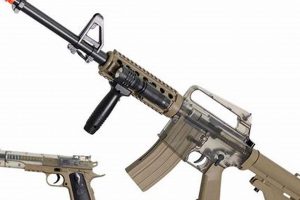
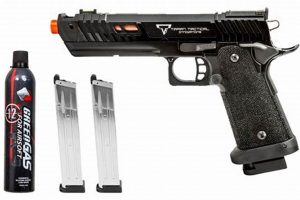
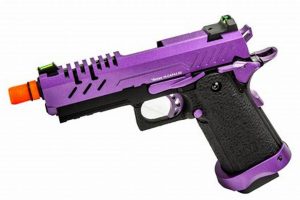
These devices are realistic replicas designed to fire small, non-lethal projectiles powered by compressed gas or springs. Mimicking the appearance and function of their real-steel counterparts, these items are popular in simulated combat scenarios and target shooting activities. One example includes a six-shot model powered by CO2 cartridges, utilizing plastic BBs as ammunition.
Their significance stems from providing a safe and controlled environment for tactical training and recreational shooting. The historical context involves a gradual evolution from basic spring-powered models to more sophisticated gas-powered versions, mirroring advancements in firearm technology while adhering to safety regulations. This evolution has broadened accessibility and appeal, making them attractive for both beginners and experienced players.
The following sections will delve deeper into specific aspects such as operation mechanisms, different types, performance characteristics, and safety considerations associated with these recreational items, ensuring a comprehensive understanding for potential users and enthusiasts.
Airsoft Gun Revolver
Optimal performance and safe operation of these replicas necessitate adherence to specific guidelines. The following tips enhance user experience and ensure responsible handling.
Tip 1: Gas Cartridge Management: Maintain consistent gas pressure for reliable performance. Ensure the CO2 cartridge is correctly inserted and punctured to prevent leaks and maintain consistent velocity. Incorrect insertion can lead to gas wastage and diminished power.
Tip 2: Proper BB Loading: Utilize the recommended BB weight and type for the particular model. Overloading or using incorrect BBs can cause jamming or damage to the internal mechanism. Always refer to the manufacturer’s specifications.
Tip 3: Regular Cleaning and Maintenance: Periodically clean the barrel and cylinder to remove debris and residue. Use appropriate cleaning solutions designed for these specific replicas to avoid damaging the components. Consistent maintenance prolongs the lifespan and accuracy.
Tip 4: Secure Storage: Store the item in a safe and secure location, away from unauthorized access. Ensure it is unloaded and the gas cartridge is removed to prevent accidental discharge. A dedicated case or storage container is recommended.
Tip 5: Consistent Lubrication: Apply lubricant to moving parts, such as the cylinder and trigger mechanism, to reduce friction and ensure smooth operation. Use silicone-based lubricants specifically designed for these devices to avoid damage to seals and O-rings.
Tip 6: Accurate Aiming Techniques: Practice proper aiming techniques to improve accuracy and consistency. Utilize a stable stance and proper grip, focusing on sight alignment and trigger control. Consistent practice will enhance shooting proficiency.
These guidelines ensure enhanced performance, prolong equipment lifespan, and prioritize user safety during operation. Mastering these tips contributes to a more enjoyable and responsible experience.
The subsequent sections will explore common issues, troubleshooting methods, and advanced modifications to further optimize the user experience with these realistic replicas.
1. Mechanism

The functionality of an airsoft gun revolver is directly dictated by its internal mechanism. This mechanism encompasses the components responsible for loading, firing, and cycling ammunition. A malfunction within this system directly results in reduced performance or complete operational failure. For instance, a worn or improperly sealed gas valve will cause pressure loss, leading to a decrease in projectile velocity and range. The cylinder rotation mechanism, crucial for indexing each chamber, must function smoothly; otherwise, the device will misfire or jam. This dependence highlights the mechanism’s importance as the core operational element.
Consider a gas-powered model: The mechanism involves a valve system regulating gas release to propel the BB. This system comprises a hammer, valve knocker, and seals. The trigger pull initiates a sequence, causing the hammer to strike the valve knocker, which opens the gas valve. This release of gas propels the BB forward. Consistent gas pressure and precise valve timing are critical for accurate and consistent shots. A failure in any one of these components leads to significant impairment. The knowledge of this internal setup allows users to diagnose issues such as gas leaks or velocity inconsistencies, which may otherwise require a specialist repair service.
In summary, the airsoft gun revolver’s mechanism is the primary determinant of its effectiveness and reliability. Understanding its function is essential for proper maintenance, troubleshooting, and ensuring consistent performance. Its intricate components work in concert to deliver the desired firing sequence, and any compromise within this system invariably leads to diminished functionality, therefore, regular checks are recommended to ensure the device mechanism is functioning correctly.
2. Ammunition
The selection and type of ammunition are critical factors influencing performance, accuracy, and the internal integrity of these replicas. Inappropriate ammunition can damage the device and diminish its effectiveness. Therefore, understanding the relationship between these two elements is paramount.
- BB Weight and Material
Airsoft guns primarily utilize spherical plastic projectiles referred to as BBs. The weight of these BBs, typically ranging from 0.12g to 0.40g, significantly impacts the range and trajectory. Lighter BBs are generally suitable for lower-powered models, while heavier BBs provide enhanced stability and accuracy in higher-powered units. BB material affects durability and environmental impact; biodegradable options are increasingly favored. Using heavier BBs than recommended in a low-powered replica can cause jams or reduced velocity, whereas using lighter BBs in a high-powered unit can result in inaccurate shots due to wind resistance.
- BB Size Consistency
Airsoft BBs are nominally 6mm in diameter. However, variations in manufacturing tolerances can lead to inconsistencies in size. Such inconsistencies can negatively affect accuracy and can potentially damage internal components. High-quality BBs offer tighter tolerances, leading to better consistency. Overly large BBs may jam the revolver’s cylinder or barrel, while undersized BBs may result in air leakage and reduced velocity.
- BB Quality and Surface Finish
The surface finish of the BB is critical for consistent trajectory and minimizing friction within the barrel. High-quality BBs exhibit a smooth, polished surface free of imperfections. Low-quality BBs may have seams or surface irregularities that can cause erratic flight paths. This impacts a revolver’s accuracy potential, particularly at longer ranges.
- Ammunition Storage and Handling
Proper storage and handling of BBs are necessary to maintain their integrity and performance. BBs should be stored in a dry, clean environment to prevent contamination and degradation. Exposure to moisture or extreme temperatures can warp or deform the BBs, negatively impacting their performance. Contaminated BBs may introduce debris into the revolver’s mechanism, leading to malfunctions or damage.
Consequently, optimal functioning of any model relies on selecting the appropriate weight, material, and quality of ammunition. Adhering to the manufacturer’s recommendations regarding BB specifications is crucial for preserving the device’s performance and preventing potential damage, demonstrating a direct correlation between ammunition choice and airsoft gun revolver longevity and consistent operation.
3. Materials

The operational lifespan, performance characteristics, and overall realism of an airsoft gun revolver are intrinsically linked to the materials used in its construction. The choice of materials directly influences durability, weight distribution, and the ability to withstand the stresses of repeated use. For example, a revolver constructed primarily of low-grade plastic is susceptible to breakage under stress, particularly in critical areas such as the trigger mechanism or cylinder assembly. Conversely, a model utilizing high-strength polymers and metal alloys can endure more rigorous handling and environmental conditions, resulting in extended service life. Metal components often contribute to a more realistic weight and feel, enhancing the user’s experience.
Specific material choices serve distinct functions. Aluminum alloys are frequently employed in the construction of cylinders and barrels due to their combination of lightweight properties and high strength, facilitating rapid cylinder rotation and maintaining dimensional stability under pressure. Steel is often used in the hammer and trigger mechanisms to resist wear and ensure consistent performance over time. The external shell, or frame, may consist of reinforced polymers or zinc alloys to balance durability, aesthetic appeal, and cost considerations. The type of gas used within the revolver mechanism may also dictate internal seals and valve materials that must withstand corrosive chemicals and prevent leaks.
In conclusion, the material composition of an airsoft gun revolver is not merely an aesthetic consideration but a critical factor dictating its reliability, longevity, and overall value. The selection of appropriate materials, such as high-strength polymers, aluminum alloys, and steel, is essential for ensuring consistent performance, realism, and durability in various operational conditions. Understanding the properties and applications of these materials is vital for users seeking to make informed purchasing decisions and maintain their equipment effectively. A poor material selection in any component can have detrimental consequences to the entire device, shortening its usable life and detracting from its operational quality.
4. Realism
The concept of realism in the context of an airsoft gun revolver transcends mere aesthetic similarity. It encompasses functional accuracy, weight distribution, and operational mechanics, all contributing to an immersive simulation experience. This element is crucial for both training applications and recreational enjoyment.
- External Appearance and Proportions
Replicating the exact dimensions, contours, and surface finishes of a real firearm is a primary aspect of realism. Accurate reproductions feature correct grip angles, trigger placement, and sight profiles. This attention to detail provides a visually authentic representation. For example, a model replicating a Colt Python would include its distinctive vented rib and full underlug, mirroring the firearm’s iconic silhouette. The external appearance influences user perception and contributes to a sense of authenticity.
- Weight and Balance
Mimicking the weight and weight distribution of the actual firearm is essential for realistic handling. This is achieved through the use of similar materials and internal component designs. A replica with comparable weight to its real-steel counterpart offers a more convincing tactile experience. In practical terms, a heavier revolver necessitates more controlled movements and impacts stability, mirroring the handling challenges presented by a real firearm. Weight distribution affects balance and ease of manipulation.
- Functional Mechanics and Operation
The operating mechanisms, including cylinder rotation, hammer action, and trigger pull, contribute significantly to the overall realism. Accurate replicas simulate the loading, firing, and ejection processes of the actual firearm. For example, a double-action revolver should require a heavier trigger pull to cycle the cylinder and fire, replicating the effort required in real operation. Functional accuracy provides a more authentic user experience and can be valuable for training purposes.
- Sound and Recoil Simulation
Advanced models may incorporate features to simulate the sound and recoil of a real firearm. This can include enhanced firing sounds and blowback mechanisms. While these features do not replicate the full force of a real firearm’s recoil, they contribute to a more immersive and engaging experience. Audible feedback and tactile sensations enhance the realism of the simulation.
The convergence of these elements elevates an airsoft gun revolver from a mere toy to a realistic training tool or collector’s item. The degree of realism impacts its suitability for different applications, ranging from casual target shooting to tactical simulations. The demand for increasingly realistic replicas demonstrates the value placed on authenticity by users.
5. Safety

The safe handling and operation of airsoft gun revolvers are paramount, given their realistic appearance and potential for misuse. A comprehensive understanding of safety protocols and responsible practices is essential for preventing accidents and ensuring a secure environment for all participants.
- Protective Gear
The consistent use of appropriate protective gear, particularly eye protection, is non-negotiable. Airsoft projectiles, though non-lethal, can cause serious eye injuries. Full-seal goggles or masks meeting ANSI Z87.1 standards are mandatory for all individuals within the vicinity of operation. Examples of injuries from lack of eye protection include corneal abrasions and retinal damage. The implications of neglecting eye protection extend to potential permanent vision impairment.
- Safe Zones and Handling Practices
Designated safe zones, where airsoft devices are prohibited from firing and magazines are removed, are critical for preventing accidental discharges. In these areas, devices should be handled with utmost care, with barrels pointed in a safe direction. Real-world scenarios demonstrate that accidental discharges often occur during transitions between playing areas and rest areas, emphasizing the need for strictly enforced safe zones.
- Storage and Transportation
Secure storage and transportation protocols are essential for preventing unauthorized access and accidental misuse. Airsoft revolvers should be stored unloaded, with magazines removed and batteries disconnected, in a locked container or out of reach of children. When transporting these items, they should be concealed and treated with the same care as real firearms. Improper storage can lead to accidental injuries or misuse by unauthorized individuals.
- Adherence to Local Laws and Regulations
Compliance with local laws and regulations governing the ownership, use, and transportation of airsoft devices is mandatory. Regulations may vary significantly between jurisdictions, encompassing age restrictions, permissible usage areas, and required markings. Failure to comply with these laws can result in fines, confiscation of equipment, or legal prosecution. Responsible users are expected to be fully informed of and compliant with all applicable regulations.
Integrating these facets into the operational framework surrounding airsoft gun revolvers is not merely recommended, but imperative. Adherence to these safety measures mitigates potential risks, fosters responsible usage, and ensures the safety and well-being of all participants. Neglecting these protocols compromises the integrity of the activity and poses significant dangers.
Frequently Asked Questions
This section addresses common inquiries regarding airsoft gun revolvers, providing concise and factual responses to enhance understanding and promote responsible usage.
Question 1: What is the typical effective range of an airsoft gun revolver?
The effective range varies based on factors such as power source, BB weight, and barrel length. Generally, an accurate shot can be achieved within a 50-100 feet range under ideal conditions.
Question 2: What type of power source is commonly used?
CO2 cartridges and green gas are the most prevalent power sources. Spring-powered models also exist, though are generally less powerful.
Question 3: What BB weight is recommended for optimal performance?
The recommended BB weight typically ranges from 0.20g to 0.28g, but the manufacturer’s specifications should always be consulted for the specific model.
Question 4: How should these be stored to ensure safety?
These items should be stored unloaded, with the gas cartridge removed, in a secure location inaccessible to unauthorized individuals, particularly children.
Question 5: What are the legal restrictions surrounding ownership and use?
Legal restrictions vary by jurisdiction. It is essential to be familiar with and adhere to local laws regarding age restrictions, permissible usage areas, and required markings.
Question 6: What routine maintenance is required for reliable operation?
Routine maintenance includes cleaning the barrel and cylinder, lubricating moving parts with silicone oil, and ensuring proper gas seal integrity. Regular checks will help ensure continuous smooth function.
Understanding these core aspects facilitates responsible operation and maximizes the performance of airsoft gun revolvers.
The following section will delve into advanced customization options and troubleshooting common issues.
Conclusion
This exploration of the airsoft gun revolver has underscored its multifaceted nature, encompassing operational mechanisms, ammunition considerations, material composition, realism, and paramount safety protocols. Each element contributes significantly to the device’s performance, longevity, and responsible application. Adherence to established guidelines, coupled with informed decision-making regarding component selection and maintenance, is crucial for maximizing user experience and mitigating potential risks.
The continued evolution of the airsoft gun revolver reflects a broader trend toward realistic simulation and tactical training. The responsible use of these devices, grounded in a thorough understanding of their capabilities and limitations, remains essential. Users are encouraged to prioritize safety, comply with local regulations, and engage in responsible practices to ensure the continued viability and acceptance of this recreational activity.