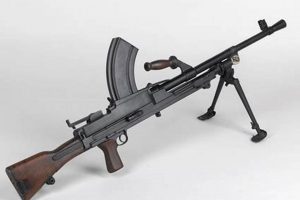
The inability of an airsoft gun to discharge projectiles represents a common malfunction. Identifying the source of this operational failure is the initial step in remediation. Potential causes range from simple issues such as an empty magazine or discharged battery, to more complex problems within the gun’s internal mechanisms.
Addressing this issue promptly ensures continued usability and enjoyment of the airsoft gun. Correct diagnosis and repair can also prevent further damage to the internal components, extending the lifespan of the device. The ability to troubleshoot and resolve these malfunctions independently can save time and expense associated with professional repair services.
The following sections will outline a systematic approach to diagnosing and rectifying common issues that result in a non-firing airsoft gun. These include examining the power source, verifying magazine functionality, and inspecting the internal components for obstructions or damage.
Troubleshooting a Non-Firing Airsoft Gun
This section provides actionable guidance for resolving instances where an airsoft gun fails to discharge projectiles.
Tip 1: Verify Power Source Integrity: Ensure the battery is adequately charged and correctly connected. A voltmeter can confirm the battery’s voltage output. If using a gas-powered airsoft gun, confirm the gas reservoir is filled and the regulator is functioning.
Tip 2: Examine Magazine Functionality: Check that the magazine is properly seated and locked into the gun. Ensure it is loaded with sufficient BBs and that the winding mechanism (if applicable) is functioning to feed BBs into the firing chamber.
Tip 3: Inspect Barrel and Hop-Up Unit for Obstructions: A lodged BB or foreign object can block the barrel. Use a cleaning rod to dislodge any obstruction. Examine the hop-up unit for debris or damage that could impede BB passage.
Tip 4: Analyze Gearbox Operation (AEGs): Listen for the motor engaging when the trigger is pulled. If no sound is heard, the motor, wiring, or trigger contacts may be faulty. If the motor engages but BBs are not fired, the gearbox may be jammed or a piston may be damaged.
Tip 5: Assess Nozzle and Bucking (AEGs and Gas Blowbacks): The nozzle must seal properly against the bucking to create air pressure. Check for cracks, tears, or misalignment in either component. Replacement may be necessary if damage is present.
Tip 6: Confirm Anti-Reversal Latch Engagement (AEGs): The anti-reversal latch prevents the gears from spinning backward. If this latch is disengaged or malfunctioning, the gearbox may not cycle correctly.
Tip 7: Check for Air Leaks (Gas Blowbacks): Examine the seals and O-rings within the gun for leaks. Apply silicone oil to these components to improve sealing. If leaks persist, replacement O-rings may be required.
Adhering to these investigative steps can effectively identify and resolve many common issues preventing an airsoft gun from firing, restoring its functionality.
Further consultation with a qualified airsoft technician may be necessary for complex or persistent malfunctions.
1. Power source verification

Power source verification represents a foundational step in addressing a non-firing airsoft gun, particularly for Automatic Electric Guns (AEGs) and gas-powered models. A depleted or improperly connected power source is a common cause of operational failure. AEGs rely on batteries to drive their internal mechanisms, while gas-powered guns require adequate gas pressure to propel projectiles. Failure of either system directly prevents firing.
The process involves checking the battery charge level in AEGs, ensuring proper polarity connection, and verifying the battery’s overall health using a voltmeter. For gas-powered guns, confirming sufficient gas fill and inspecting for leaks are essential. As an example, an AEG with a fully discharged battery will exhibit no motor response when the trigger is pulled. Similarly, a gas-powered gun with a leaking valve will lack the necessary pressure to launch BBs. These are direct cause-and-effect relationships where the power source directly impacts the gun’s ability to function.
Therefore, systematically verifying the power source eliminates a significant potential cause of the malfunction early in the troubleshooting process. Overlooking this step can lead to misdiagnosis and unnecessary exploration of more complex internal issues. Prioritizing this verification streamlines the diagnostic process and often provides a simple, readily implementable solution, directly addressing the issue of an airsoft gun that will not fire. It ensures a logical and efficient approach to resolving the problem.
2. Magazine functionality check

The magazine’s role in feeding BBs into the firing chamber of an airsoft gun is critical for proper operation. A malfunctioning magazine directly contributes to the issue of an airsoft gun that fails to fire. Therefore, thorough inspection and maintenance of the magazine are essential troubleshooting steps.
- BB Capacity and Loading
Insufficient BBs or improper loading can prevent the gun from firing. Overloading may jam the magazine, while underloading results in an empty chamber. The correct BB capacity varies depending on the magazine type. Verifying the correct loading procedure and ensuring adequate BBs are present directly addresses potential firing issues.
- Winding Mechanism (Hi-Cap Magazines)
High-capacity magazines rely on a winding mechanism to feed BBs. Failure to wind the magazine sufficiently will result in a lack of BBs reaching the firing chamber. The winding mechanism should be inspected for damage or binding, and the magazine should be wound until adequate tension is achieved.
- Magazine Seating and Locking
If the magazine is not properly seated and locked into the gun, it may fail to engage the feeding mechanism. This can prevent BBs from entering the chamber. Ensure the magazine is fully inserted and locked into place. The magazine release mechanism should be checked for proper function, and any obstructions preventing proper seating should be removed.
- Magazine Spring Tension (Low/Mid-Cap Magazines)
Low and mid-capacity magazines utilize spring tension to feed BBs. Over time, the spring can weaken, resulting in reduced feeding reliability. If the spring exhibits diminished tension, replacement of the magazine or internal spring may be necessary to ensure consistent BB feeding.
Addressing these facets of magazine functionality ensures proper BB delivery to the firing mechanism. Correctly loaded, wound, and seated magazines are prerequisites for a functional airsoft gun. Neglecting these checks often leads to misdiagnosis of other internal issues when the problem lies simply with magazine operation, therefore this step is crucial in attempting to resolve a non-firing weapon.
3. Barrel obstruction removal

Barrel obstruction removal constitutes a fundamental aspect of resolving the issue of an airsoft gun’s failure to discharge projectiles. A blockage within the barrel prevents the BB from exiting, rendering the gun inoperable. Addressing this obstruction is a critical step in restoring functionality.
- Identification of Obstructions
Obstructions can range from lodged BBs (often due to using low-quality ammunition that shatters) to foreign debris entering the barrel. Recognizing the presence of an obstruction is the first step. Common indicators include a muffled sound when firing or a complete lack of projectile launch. Persistent attempts to fire with a blocked barrel can exacerbate the problem, potentially damaging internal components. Therefore, immediately ceasing operation upon suspicion of a blockage is crucial.
- Tools and Techniques
The primary tool for removing barrel obstructions is a cleaning rod, typically made of metal or plastic. The rod is inserted into the barrel from either the muzzle or the breech end (after removing the magazine and ensuring the gun is safe). Gentle, consistent pressure should be applied to dislodge the obstruction. Avoid using excessive force, which could damage the barrel’s internal surface or further compact the blockage. The use of a soft cloth wrapped around the cleaning rod can minimize the risk of scratching the barrel.
- Prevention Strategies
Preventing barrel obstructions is preferable to repeatedly addressing them. Using high-quality BBs minimizes the risk of shattering and subsequent blockage. Storing the airsoft gun in a clean environment and using a barrel cover when not in use prevents the entry of foreign debris. Regular cleaning of the barrel, even when no obstruction is apparent, helps maintain optimal performance.
- Hop-Up Unit Interaction
The hop-up unit, responsible for imparting backspin to the BB, can sometimes contribute to obstructions. BBs can become lodged within the hop-up unit, particularly if the unit is improperly adjusted or if damaged BBs are used. When removing a barrel obstruction, it is often necessary to also inspect and clear the hop-up unit to ensure complete restoration of functionality. This interaction highlights the need for a holistic approach to troubleshooting a non-firing airsoft gun.
The act of removing a barrel obstruction is a direct intervention aimed at restoring the projectile pathway. Effective implementation of this procedure, coupled with preventative measures, contributes significantly to the sustained operation and reliable performance of the airsoft gun. Addressing this issue often resolves the malfunction entirely, underscoring its importance in resolving a non-firing airsoft gun.
4. Hop-up unit inspection
The hop-up unit’s functionality is integrally linked to an airsoft gun’s ability to fire projectiles accurately and consistently. Therefore, a hop-up unit inspection is a crucial component of troubleshooting a non-firing airsoft gun. The hop-up unit imparts backspin to the BB, creating lift and extending its range. A malfunctioning or misadjusted hop-up can cause a variety of issues, including a complete inability to fire, inaccurate shots, or significantly reduced range. These malfunctions arise when the hop-up either obstructs the BB’s path, fails to impart the necessary backspin, or induces inconsistent spin. Real-world examples include BBs becoming lodged within the hop-up chamber due to improper adjustment or the use of low-quality ammunition that deforms easily. The practical significance of understanding this connection lies in the ability to accurately diagnose and resolve firing issues that might otherwise be attributed to more complex internal problems. The initial step is to visually inspect the hop-up unit for any visible obstructions, damage to the bucking (the rubber piece that applies backspin), or misalignment. Adjustments to the hop-up setting should be made incrementally to assess their impact on firing performance.
Furthermore, the connection between the hop-up unit and the airsoft gun’s overall firing mechanism extends beyond simple obstruction. An improperly adjusted hop-up can create excessive friction, reducing the BB’s velocity and preventing it from exiting the barrel with sufficient force. Alternatively, a completely disabled hop-up (set to its lowest setting) might cause the BB to drop rapidly, leading to the perception that the gun is not firing correctly or with sufficient power. Diagnosing these nuances requires careful observation of the BB’s trajectory and the sound of the gun firing. For instance, a faint “thud” sound instead of a sharp “snap” might indicate that the BB is not clearing the barrel effectively due to hop-up interference. Practical application of this understanding involves not only cleaning and inspecting the hop-up unit but also fine-tuning its adjustment to achieve optimal range and accuracy. This process often requires trial and error, adjusting the hop-up setting slightly and observing the BB’s flight path.
In conclusion, the hop-up unit inspection is an indispensable step in addressing issues related to an airsoft gun that will not fire, and its role extends beyond simply clearing obstructions. The unit’s adjustment and condition directly affect the BB’s trajectory and firing performance. Challenges arise when the symptoms are subtle or when the hop-up unit is located deep within the gun’s internals, requiring disassembly for thorough inspection. However, a systematic approach that includes visual inspection, adjustment, and careful observation of firing performance is essential for resolving these issues and ensuring consistent, accurate projectile launch. This understanding is critical for both routine maintenance and troubleshooting, linking directly to the broader theme of maintaining airsoft gun functionality and performance.
5. Gearbox diagnostics (AEGs)
Gearbox diagnostics are paramount when addressing a non-firing Automatic Electric Gun (AEG). The gearbox houses the intricate mechanisms responsible for cycling the piston, compressing air, and propelling BBs. Malfunctions within this system invariably lead to a failure to fire.
- Motor Functionality and Engagement
The motor drives the gears within the gearbox. A faulty motor, damaged pinion gear, or wiring issues can prevent the gears from turning, thus precluding projectile launch. Auditory cues, such as the absence of motor sound upon trigger pull, are indicative of such problems. For example, a burned-out motor winding would prevent engagement, requiring motor replacement.
- Gear Integrity and Alignment
The gears within the gearbox must be properly aligned and free from damage to transfer motor power effectively. Stripped gears, broken teeth, or improper shimming can disrupt this power transfer, resulting in a non-firing state. A visual inspection of the gears, often requiring gearbox disassembly, is necessary to assess their condition. Misalignment, such as an improperly shimmed bevel gear, can cause excessive friction and prevent proper cycling.
- Piston Assembly and Air Seal
The piston, cylinder, and cylinder head work in concert to compress air. A cracked piston, damaged O-ring, or improperly sealed cylinder head will result in air leakage, preventing the generation of sufficient pressure to propel the BB. Compression testing, involving manually cycling the piston and feeling for air resistance, can identify such leaks. A torn piston O-ring, for instance, would allow air to escape, drastically reducing firing power.
- Trigger Contacts and Electrical Circuit
The trigger contacts complete the electrical circuit, allowing power to flow to the motor. Corroded, worn, or misaligned trigger contacts can interrupt this circuit, preventing the motor from engaging. Visual inspection and cleaning of the contacts are essential. A build-up of carbon deposits on the trigger contacts, for example, can create resistance and prevent proper electrical flow.
Effective gearbox diagnostics require a systematic approach, combining auditory cues, visual inspection, and component testing. Addressing malfunctions within this complex system is often necessary to restore an AEG to a functional state. Proper diagnosis and repair directly address the core issue of a non-firing AEG, ensuring the air compression and projectile launch mechanisms operate as intended.
6. Nozzle/bucking assessment

The nozzle and bucking are critical components in the air delivery system of an airsoft gun, and their proper function directly correlates with the ability to discharge projectiles. Assessing their condition and alignment is therefore a fundamental step in determining how to rectify a non-firing airsoft gun. The nozzle seals against the bucking to direct compressed air behind the BB, propelling it down the barrel. A failure in this seal, caused by damage, wear, or misalignment, results in a loss of air pressure and a subsequent inability to fire. A common example is a cracked nozzle that allows air to escape laterally instead of directing it forward. Similarly, a bucking with a torn or worn contact point will fail to create an airtight seal with the nozzle. Thus, thorough assessment of these components is essential for diagnosing the cause of the malfunction.
The assessment process involves a visual inspection of both the nozzle and bucking for any signs of physical damage, such as cracks, tears, or deformation. The nozzle should be checked for smooth movement and proper alignment with the bucking. The bucking’s lips, which seal against the nozzle, should be inspected for wear or irregularities. In practical application, a compression test can reveal issues with the nozzle/bucking seal. This test involves blocking the barrel with a finger and manually cycling the piston to feel for air resistance. A significant loss of resistance indicates a leak, often stemming from the nozzle/bucking interface. Furthermore, the type of BBs used can impact the bucking’s lifespan. Low-quality BBs with imperfections can accelerate wear on the bucking, leading to sealing issues. Therefore, regular inspection and maintenance of these components, coupled with the use of high-quality BBs, contribute to the overall reliability of the airsoft gun.
In conclusion, the nozzle and bucking are integral to the air delivery system, and their condition profoundly impacts the gun’s ability to fire. The Nozzle/bucking assessment is a critical piece of “how to fix a airsoft gun that won’t shoot”. Addressing this aspect of potential malfunction often necessitates disassembly and component replacement. While challenges may arise in accessing these internal components, particularly in complex gearboxes, a systematic assessment of these components is essential for diagnosing and resolving many common issues associated with a non-firing airsoft gun, linking directly to improved operational performance.
7. Air leak identification
Air leak identification is a crucial step in the process of determining how to restore a non-functional airsoft gun to operational status. The presence of an air leak directly diminishes the pressure required to propel the BB, thereby rendering the gun incapable of firing or significantly reducing its effective range. Air leaks commonly manifest in gas-powered airsoft guns (GBBs) and within the compression components of Automatic Electric Guns (AEGs). Addressing these leaks is often a primary factor in restoring functionality. Causes of air leaks include degraded O-rings, loose connections, and cracks in pressure-bearing components. For example, a worn O-ring on a GBB magazine valve can prevent the gun from charging, while a crack in an AEG cylinder head will reduce compression. In both scenarios, the symptom is an inability to effectively discharge projectiles. The practical significance of understanding this connection lies in prioritizing leak detection during troubleshooting, guiding repair efforts, and informing preventative maintenance strategies.
The process of identifying air leaks involves several techniques. Visual inspection can reveal obvious damage such as cracked components or misaligned seals. Auditory cues, such as hissing sounds emanating from specific areas of the gun, can also indicate leak locations. For GBBs, a common method involves submerging the magazine or gun components in water to observe for escaping air bubbles. For AEGs, a compression test, performed by blocking the barrel and manually cycling the piston, can reveal significant air loss. The application of silicone oil to seals and O-rings can temporarily improve sealing, aiding in leak identification by observing changes in performance. An example of practical application involves systematically testing each connection point within a GBB system, from the gas reservoir to the nozzle, to isolate the source of a leak. Similarly, within an AEG, checking the seal between the cylinder head, piston head, and nozzle is critical for maintaining compression. These methodologies ensure a thorough and targeted approach to leak detection.
Effective air leak identification represents a direct pathway to resolving a non-firing airsoft gun. The ability to pinpoint and address leaks, either through component replacement or sealing repairs, contributes significantly to restoring the weapon’s operational efficiency. Challenges arise when leaks are subtle or located within complex internal assemblies, requiring partial or full disassembly for proper diagnosis. However, a systematic approach to leak detection, combined with preventative maintenance measures such as regular lubrication and component replacement, is essential for maintaining consistent airsoft gun performance and minimizing the occurrence of firing malfunctions, thereby demonstrating the importance of this procedure to successfully fix an airsoft gun that won’t shoot.
Frequently Asked Questions
The following questions address common concerns related to diagnosing and rectifying the issue of an airsoft gun that fails to discharge projectiles.
Question 1: What is the most frequent cause of an airsoft gun failing to fire?
The most common cause is a lack of power. For AEGs, this typically means a discharged or improperly connected battery. For gas-powered guns, an empty gas reservoir is often the culprit.
Question 2: Can the type of BBs used affect an airsoft gun’s ability to fire?
Yes. Low-quality BBs can shatter within the barrel or hop-up unit, causing obstructions and preventing subsequent shots. High-quality BBs are recommended to minimize this risk.
Question 3: Is it possible to damage an airsoft gun by repeatedly attempting to fire it when it is not working?
Yes, continued attempts to fire can exacerbate existing problems. If a jam or obstruction is present, repeated firing can damage internal components, such as the motor, gears, or piston.
Question 4: How often should an airsoft gun be cleaned and maintained to prevent firing issues?
Regular cleaning and maintenance are recommended, particularly after periods of intensive use. Cleaning the barrel, lubricating seals, and inspecting for wear can prevent many common malfunctions.
Question 5: Are there specific tools recommended for disassembling and repairing an airsoft gun?
Specific tools will vary depending on the model of airsoft gun, but common tools include screwdrivers, Allen wrenches, pliers, and a cleaning rod. Specialized tools, such as gearbox openers, may be required for more complex repairs.
Question 6: When is it advisable to seek professional assistance for a non-firing airsoft gun?
If troubleshooting steps fail to identify the cause of the malfunction, or if the repair requires specialized knowledge or tools, seeking assistance from a qualified airsoft technician is recommended to avoid further damage.
Proper diagnosis and timely intervention are key to resolving a non-firing airsoft gun. Understanding the underlying causes and implementing appropriate solutions ensures continued functionality.
The following section will address preventative measures to maintain optimal airsoft gun performance.
Conclusion
This exploration has detailed a systematic approach to diagnosing and resolving the issue of “how to fix a airsoft gun that won’t shoot”. The assessment encompasses power source verification, magazine functionality checks, obstruction removal, hop-up unit inspection, gearbox diagnostics (for AEGs), nozzle/bucking assessment, and air leak identification. Effective implementation of these procedures often restores operational functionality.
Maintaining consistent airsoft gun performance requires proactive preventative measures and diligent troubleshooting. By understanding the potential causes of firing malfunctions and applying the appropriate diagnostic and repair techniques, operators can minimize downtime and ensure reliable weapon functionality. Consistent maintenance is key to long term performance.