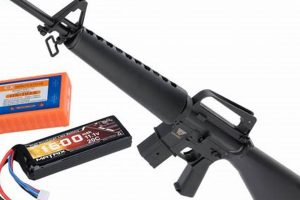
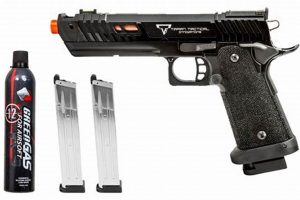
Spherical projectiles, typically 6mm in diameter, are employed as ammunition in airsoft replicas. These projectiles are constructed from a lightweight polymer material. For example, a player might load a magazine with these polymer spheres prior to engaging in a simulated combat scenario.
The use of these projectiles enables a relatively safe form of simulated combat training and recreational activity. Their low mass and composition minimize the potential for serious injury upon impact. Historically, the development of these projectiles coincided with the rise in popularity of airsoft as a sport and training tool.
The subsequent sections will delve into the manufacturing processes, variations in weight and composition, and the environmental considerations associated with these projectiles. Furthermore, the discussion will encompass storage guidelines and safe handling practices to ensure responsible utilization.
Airsoft Gun Plastic Pellets
The following guidelines are crucial for the safe and effective utilization of airsoft replicas and their associated ammunition.
Tip 1: Utilize Appropriate Projectile Weight: The mass of the polymer sphere affects accuracy and range. Lighter spheres (e.g., 0.20g) are suitable for indoor environments, while heavier spheres (e.g., 0.25g or greater) provide improved stability in outdoor settings. Selection should be based on the specific replica and playing environment.
Tip 2: Employ Quality Projectiles: Variations in diameter and imperfections in the surface of the polymer sphere can significantly impact accuracy and increase the risk of jamming. Use reputable brands to ensure consistent quality and minimize performance issues.
Tip 3: Proper Storage is Essential: These polymer spheres are susceptible to degradation from moisture and extreme temperatures. Store them in a cool, dry, and airtight container to maintain their integrity and performance characteristics.
Tip 4: Handling with Caution: While considered relatively safe, direct impacts, particularly to the eyes, can cause injury. Always wear approved eye protection when handling and utilizing airsoft replicas. Never intentionally aim at unprotected individuals.
Tip 5: Environmental Considerations: Standard polymer spheres can persist in the environment for extended periods. When possible, utilize biodegradable alternatives to minimize the ecological impact. Dispose of used spheres responsibly.
Tip 6: Avoid Reusing Projectiles: Deformed or dirty polymer spheres can damage the internal mechanisms of the airsoft replica. Discard used spheres to prevent performance issues and potential damage.
Tip 7: Maintain Cleanliness: Regularly clean the barrel of the airsoft replica to remove any residue or debris from polymer spheres. This ensures optimal performance and prolongs the lifespan of the replica.
Adherence to these guidelines will contribute to a safer, more enjoyable, and environmentally responsible airsoft experience. Proper selection, storage, and handling are paramount to optimizing performance and mitigating potential risks.
The subsequent discussion will focus on the legal and regulatory aspects surrounding airsoft replicas and ammunition, as well as future trends in projectile technology.
1. Material Composition

The composition of airsoft projectiles is a critical factor determining performance, environmental impact, and safety characteristics. The materials used directly influence the sphere’s density, structural integrity, and biodegradability.
- Standard Polymer Composition
Traditional airsoft projectiles consist primarily of acrylonitrile butadiene styrene (ABS) or similar polymers. These materials offer a balance of affordability and durability, resulting in consistent performance. However, ABS is not biodegradable, leading to environmental concerns associated with accumulation in outdoor environments.
- Biodegradable Alternatives
Environmentally conscious alternatives utilize materials such as polylactic acid (PLA) or other plant-based polymers. These materials are designed to decompose under specific environmental conditions, reducing the long-term impact on ecosystems. Biodegradable projectiles generally exhibit a shorter lifespan than ABS counterparts and may be more susceptible to moisture absorption.
- Weight Additives
Manufacturers incorporate additives to adjust the projectile’s mass and density. Barium sulfate, for example, increases density, enhancing the projectile’s stability and resistance to wind. These additives impact both the projectile’s flight characteristics and its overall environmental profile.
- Coatings and Surface Treatments
Surface treatments and coatings can enhance the smooth passage of the sphere through the barrel of the airsoft replica and improve flight consistency. These coatings must be uniformly applied to avoid creating imbalances that would reduce accuracy and increase the risk of replica malfunctions.
Understanding the compositional makeup of airsoft projectiles is vital for informed purchasing decisions. Choosing between standard polymer and biodegradable options involves weighing performance characteristics against environmental responsibility. The material composition, therefore, plays a pivotal role in the overall airsoft experience and its impact on the environment.
2. Weight variations

The mass of individual projectiles directly influences their trajectory and performance within an airsoft system. Variations in this attribute, while seemingly minor, elicit significant alterations in range, accuracy, and wind resistance. Specifically, lighter-mass spheres (e.g., 0.12g – 0.20g) exhibit higher velocities initially but are more susceptible to environmental factors, resulting in decreased accuracy at longer distances. Conversely, heavier-mass spheres (e.g., 0.25g – 0.40g) maintain momentum more effectively, offering improved stability and longer effective ranges, albeit at potentially reduced initial velocity. The cause of these variations arise from manufacturing processes; denser materials or larger volumes translate into increased mass.
The practical significance of understanding weight variations lies in optimizing projectile selection for specific playing environments and replica power output. For instance, in indoor environments with limited space and minimal wind, lighter-mass spheres may suffice. However, in outdoor settings, employing heavier-mass spheres becomes crucial for achieving consistent accuracy and range. Selection of the appropriate mass spheres involves balancing replica power output, as excessively heavy spheres may not reach adequate velocities with lower-powered replicas. In competitive airsoft scenarios, precise knowledge of projectile weight and its impact on ballistics is a determinative factor.
In summary, weight variations are a crucial, if nuanced, characteristic, of airsoft replica projectiles. Understanding and accounting for these variations are essential for maximizing accuracy, effective range, and overall performance. Selecting the ideal mass sphere is dependent on environmental conditions, replica specifications, and individual player preferences. Failure to consider projectile weight will invariably lead to inconsistent performance and reduced effectiveness in the airsoft engagement.
3. Diameter consistency
Diameter consistency is a critical attribute of the spheres employed in airsoft replicas. Deviation from the specified diameter, typically 6mm, introduces inconsistencies in the projectile’s interaction with the replica’s internal mechanisms, particularly the barrel and hop-up unit. The hop-up unit imparts backspin to the sphere, extending its range; however, inconsistent diameters disrupt this effect. Projectiles with varying diameters experience inconsistent backspin, resulting in unpredictable trajectories and reduced accuracy. For instance, if some projectiles are marginally undersized, they may not engage the hop-up unit effectively, causing them to fall short of the intended target. Conversely, projectiles that are oversized may experience excessive friction within the barrel, reducing velocity and potentially causing replica malfunctions.
The manufacturing process exerts a significant influence on diameter consistency. High-quality projectiles are produced using precision molding techniques that minimize diameter variations. Reputable manufacturers employ stringent quality control measures, including diameter measurement and sorting, to ensure that only projectiles meeting the specified tolerances are packaged and sold. Conversely, inferior projectiles often exhibit significant diameter inconsistencies, leading to diminished performance and reliability. A practical example is found when utilizing a high-precision barrel in an airsoft replica; the benefits of the barrel are negated if the projectiles lack diameter uniformity. This results in a wider dispersion pattern and reduced overall effectiveness.
In summary, diameter consistency is a paramount factor governing the performance of polymer spheres utilized in airsoft replicas. Inconsistencies in diameter introduce trajectory variations, reducing accuracy and potentially causing replica malfunctions. Selecting high-quality projectiles from reputable manufacturers is essential to ensure diameter uniformity and optimize performance. While other factors contribute to accuracy, diameter consistency provides a baseline level of predictability and reliable operation. Addressing this element ensures the effective and responsible use of airsoft replicas.
4. Biodegradability options
The increasing awareness of environmental concerns has led to the development of biodegradable alternatives to standard polymer spheres used in airsoft replicas. These options aim to reduce the ecological impact associated with non-degrading plastic accumulation in outdoor environments where airsoft activities occur. The implementation and effectiveness of these biodegradable alternatives vary based on composition, environmental conditions, and responsible disposal practices.
- Material Composition of Biodegradable Spheres
Biodegradable airsoft projectiles are typically composed of materials like Polylactic Acid (PLA) or other plant-based polymers. PLA is derived from renewable resources such as corn starch or sugarcane and is designed to break down under specific conditions, including exposure to moisture, microorganisms, and temperature. However, the biodegradation process is not instantaneous and requires appropriate environmental conditions to occur effectively.
- Environmental Degradation Factors
The rate and extent of biodegradation are influenced by environmental factors such as temperature, humidity, and the presence of microorganisms in the soil. In dry or cold climates, the degradation process may be significantly slower compared to warm, humid environments. Improper disposal, such as leaving biodegradable spheres in sealed containers or non-composting environments, can also inhibit the biodegradation process. This highlights the need for responsible disposal and awareness of local environmental conditions.
- Performance Considerations
While biodegradable options offer environmental advantages, it’s important to consider their performance characteristics compared to standard polymer spheres. Biodegradable spheres may exhibit variations in weight, density, and structural integrity, potentially impacting accuracy and range. Some players may notice differences in performance compared to traditional plastic projectiles, requiring adjustments to their gameplay style or replica settings. Ongoing advancements aim to improve the performance of biodegradable options to closely match that of standard spheres.
- Cost and Availability
Biodegradable spheres typically cost more than standard polymer options due to the manufacturing processes and materials involved. Availability may also be limited depending on the region and retailer. As environmental awareness grows, demand for biodegradable alternatives is expected to increase, potentially leading to broader availability and reduced costs. Informed consumers can actively seek out and support the adoption of these environmentally responsible options within the airsoft community.
The adoption of biodegradable projectiles represents a step toward mitigating the environmental impact of airsoft activities. However, the effectiveness of these options hinges on responsible disposal practices and awareness of environmental conditions. While performance considerations and cost factors exist, ongoing advancements and increasing demand are likely to drive further improvements and adoption of biodegradable options, fostering a more sustainable approach to the sport.
5. Storage requirements
The preservation of polymer spheres employed in airsoft replicas is directly contingent upon adherence to specific storage protocols. Improper storage can significantly degrade the structural integrity and ballistic performance of these projectiles. Therefore, understanding and implementing appropriate storage measures is paramount for maintaining their quality and ensuring consistent performance.
- Environmental Control
Polymer spheres are susceptible to degradation from moisture and extreme temperatures. Exposure to humidity can cause the spheres to swell, altering their dimensions and potentially leading to jamming in airsoft replicas. Elevated temperatures can warp or deform the spheres, affecting their flight characteristics. Storage in a cool, dry environment, ideally with controlled humidity, is essential for preventing these issues. A dehumidifier may be considered in particularly humid climates to maintain optimal storage conditions. For example, storing projectiles in an uninsulated garage subject to temperature fluctuations will likely result in diminished performance.
- Airtight Containment
Exposure to air can lead to oxidation and degradation of the polymer material over time. Storing projectiles in airtight containers minimizes air exposure, prolonging their lifespan and maintaining their ballistic properties. Resealable bags or airtight containers with desiccant packs are suitable options. Avoid leaving containers open or partially sealed, as this negates the benefits of airtight storage. An example of proper airtight containment would be storing the projectiles in a vacuum-sealed bag with a desiccant packet.
- Protection from Sunlight
Ultraviolet (UV) radiation from sunlight can accelerate the degradation of polymer materials. Prolonged exposure to sunlight can cause the spheres to become brittle and prone to cracking. Storing projectiles in a dark or shaded location protects them from UV radiation, preserving their structural integrity. Opaque containers further enhance protection from sunlight exposure. Storing polymer spheres on a sunny windowsill would be an example of improper storage, leading to premature degradation.
- Prevention of Contamination
Contamination from dirt, dust, or other debris can negatively impact the performance of polymer spheres. Contaminants can scratch the inner barrel of airsoft replicas, leading to decreased accuracy and potential malfunctions. Storing projectiles in clean containers and preventing exposure to contaminants helps maintain their surface quality. Regularly cleaning storage containers minimizes the risk of contamination. A common source of contamination comes from re-using projectiles that have been exposed to outdoor elements.
In conclusion, adhering to stringent storage requirements is vital for preserving the quality and performance of polymer spheres used in airsoft replicas. Controlling environmental factors, utilizing airtight containment, protecting from sunlight, and preventing contamination are key considerations. By implementing these measures, users can ensure that their projectiles remain in optimal condition, maximizing accuracy and minimizing the risk of replica malfunctions, regardless of whether the projectiles are standard polymer or biodegradable variants. Proper storage translates directly into reliable and consistent performance on the field.
6. Trajectory characteristics

The flight path of projectiles fired from airsoft replicas is governed by a complex interplay of factors, primary among which are projectile mass, initial velocity, aerodynamic properties, and environmental conditions. The sphere’s mass and the force exerted upon it by the airsoft mechanism dictate initial velocity. Once launched, the projectile is subject to gravitational acceleration, air resistance (drag), and, critically, the Magnus effect induced by backspin imparted by the hop-up unit. This backspin creates a pressure differential, lifting the projectile and extending its range. Variations in projectile manufacturing, specifically diameter and surface irregularities, introduce inconsistencies in aerodynamic drag and Magnus force, resulting in trajectory deviations. The spheres construction with either standard plastic or biodegradable material contributes to weight and density differences, ultimately affecting flight patterns. For instance, a sphere with minor surface imperfections will experience turbulent airflow, leading to erratic deviations from its intended path. Without a consistent projectile quality and understanding of atmospheric effects, achieving predictable trajectories becomes highly improbable.
Wind speed and direction exert considerable influence on the trajectory. Even a slight crosswind can significantly alter the spheres path, particularly at longer ranges. This effect is amplified by the projectile’s low mass. Moreover, inconsistencies in hop-up adjustment and air seal within the replica introduce variations in backspin and velocity, further compounding trajectory unpredictability. A practical demonstration of this effect can be observed when attempting to engage a target at a distance of 50 meters in a moderate crosswind. Without proper compensation for wind drift and hop-up adjustment, the projectile is unlikely to strike the intended target. Such compensation requires a comprehensive understanding of projectile characteristics and environmental conditions, applied through careful sighting and trigger control. The Magnus effect, a critical element, demands a projectile of sufficient quality and uniformity so that the applied backspin produces a predictable and consistent result.
The predictability of flight path depends upon the consistent properties of the airsoft replica and the projectiles, requiring responsible management of the equipment and projectiles. Variations in projectile characteristics and environmental conditions introduce uncertainty. Competent utilization demands careful consideration of these factors and precise adjustment of the replica to compensate. Thus, understanding and mastering trajectory characteristics is fundamental to effective target engagement and responsible airsoft operation. Inconsistent trajectory will greatly diminish an airsoft user’s overall performance.
7. Impact energy
The kinetic energy transferred upon contact between an airsoft projectile and a target, commonly known as impact energy, is a critical consideration in evaluating the safety and ethical implications of airsoft activities. This metric, measured in Joules (J), is directly proportional to the projectile’s mass and the square of its velocity. Understanding and regulating impact energy is paramount to mitigating potential injuries and ensuring responsible use.
- Calculation and Measurement
Impact energy is calculated using the formula: Kinetic Energy (KE) = 0.5 mass velocity. Mass is measured in kilograms (kg), and velocity in meters per second (m/s). Chronographs are commonly used to measure a projectile’s velocity, allowing for calculation of impact energy. Governing bodies for airsoft often mandate velocity limits based on projectile weight to constrain the maximum potential impact energy.
- Variables Influencing Impact Energy
Projectile mass, velocity, and replica type exert primary influence on impact energy. Heavier projectiles, propelled at the same velocity as lighter ones, deliver greater kinetic energy. High-powered replicas, or those modified to exceed factory specifications, may propel projectiles at velocities that result in excessive impact energy. Maintaining adherence to velocity and power limits is therefore essential for safety.
- Potential Injuries and Safety Considerations
Excessive impact energy can result in injuries ranging from minor welts and bruises to more serious contusions, abrasions, or, in rare cases, eye injuries. Eye protection is non-negotiable in airsoft activities due to the risk of corneal damage from projectile impact. Governing bodies and event organizers establish maximum impact energy limits to reduce the likelihood of significant injuries. Players must respect these limits to prioritize safety.
- Regulation and Legal Aspects
Various jurisdictions and airsoft organizations impose regulations concerning maximum permissible impact energy. These regulations often specify velocity limits based on projectile weight. Some regions may classify airsoft replicas as firearms if they exceed specified energy thresholds, subjecting them to stricter legal controls. Compliance with local laws and regulations is essential for responsible participation in airsoft activities.
The interrelation of these components dictates the overall risk profile associated with airsoft activities. By carefully controlling projectile weight, replica power, and adhering to safety regulations, participants can minimize the potential for injury and ensure responsible use of airsoft replicas. Without due consideration to managing the impact energy, the nature of airsoft changes from recreation to hazard.
Frequently Asked Questions
This section addresses common inquiries and misconceptions surrounding the ammunition employed in airsoft replicas, providing clear and concise information for responsible use.
Question 1: What is the typical composition of these projectiles?
These projectiles are commonly manufactured from Acrylonitrile Butadiene Styrene (ABS) plastic. Biodegradable options, utilizing Polylactic Acid (PLA), are also available.
Question 2: What projectile weight is best suited for specific airsoft replicas?
Projectile weight should be selected based on the replica’s power output and the playing environment. Lighter projectiles (0.20g) are suitable for indoor environments, while heavier projectiles (0.25g or higher) offer improved stability in outdoor settings.
Question 3: How can the accuracy of airsoft replicas be maximized?
Accuracy can be maximized by employing high-quality projectiles with consistent diameter, proper hop-up adjustment, and consideration of environmental factors such as wind.
Question 4: How should these polymer spheres be properly stored?
These projectiles should be stored in a cool, dry, airtight container, away from direct sunlight and extreme temperatures to prevent degradation.
Question 5: Are biodegradable spheres truly environmentally friendly?
Biodegradable projectiles offer a reduced environmental impact compared to standard plastic, but their degradation requires specific environmental conditions and responsible disposal.
Question 6: What are the potential safety risks associated with these projectiles?
Potential safety risks include eye injuries and minor contusions. Eye protection is mandatory, and projectile velocity should adhere to established safety limits.
In summary, responsible usage necessitates understanding projectile composition, selecting appropriate weight, optimizing accuracy, adhering to proper storage, acknowledging the limitations of biodegradable options, and prioritizing safety through adherence to established guidelines.
The following section will delve into the legal and regulatory considerations surrounding the use of airsoft replicas and their associated ammunition.
Airsoft Gun Plastic Pellets
This exploration has addressed the numerous facets of airsoft gun plastic pellets, from material composition and weight variations to storage requirements and trajectory characteristics. The examination underscored the critical role these spheres play in the performance, safety, and environmental impact of airsoft activities. Proper selection, storage, and handling are essential for optimizing performance, mitigating risks, and promoting responsible play.
The continued evolution of projectile technology, particularly in the realm of biodegradable materials, offers a promising path toward minimizing the ecological footprint of airsoft. Adherence to safety regulations and a commitment to responsible usage remain paramount. The future of airsoft hinges on the collective responsibility of participants to prioritize safety, environmental awareness, and ethical conduct in all aspects of the sport. These commitments will ensure the longevity and positive perception of airsoft for years to come.