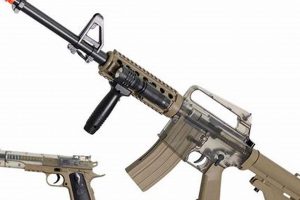
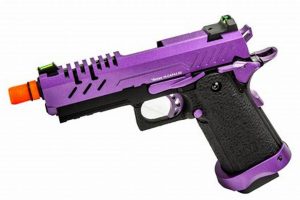
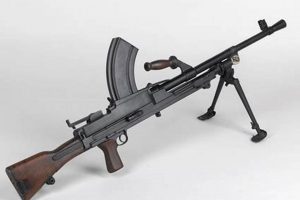
Applying aerosolized paint to an airsoft replica offers a method to alter its aesthetic appearance. This process allows for customization, camouflage application, and overall personalization of the device. The resulting finish can range from a simple color change to complex, multi-layered patterns.
Modifying the exterior of an airsoft replica serves several purposes. It can provide a tactical advantage in gameplay scenarios through effective camouflage, making the device less visible in various environments. Furthermore, it allows individuals to express personal style and create a unique representation of their equipment. This practice has evolved from simple coloration to intricate designs mirroring real-world firearm patterns.
The subsequent sections will detail the necessary preparatory steps, material selection guidelines, and the recommended application techniques to achieve a durable and visually appealing painted surface on an airsoft replica. Surface preparation, paint selection, and appropriate spraying methods constitute critical elements for successful project completion.
Essential Guidelines for Applying Aerosol Coatings to Airsoft Replicas
Achieving a professional and long-lasting finish requires careful attention to detail throughout the application process. These guidelines aim to enhance the durability and aesthetic quality of the modified airsoft device.
Tip 1: Disassemble Components Prior to Application: Thoroughly dismantle the airsoft replica to isolate individual components. This prevents overspray onto sensitive internal mechanisms and allows for uniform coverage of each surface.
Tip 2: Thoroughly Degrease and Clean Surfaces: Utilize a suitable degreasing agent to remove all traces of oils, silicones, and contaminants from the exterior of the airsoft replica. A clean surface promotes optimal paint adhesion and prevents premature chipping or peeling.
Tip 3: Apply Thin, Even Coats: Apply paint in multiple thin coats rather than a single thick application. This prevents runs, drips, and ensures proper curing of the coating. Allow each coat to dry completely before applying the subsequent layer.
Tip 4: Maintain Consistent Distance and Angle: Hold the aerosol can at a consistent distance (approximately 6-10 inches) from the surface, using a smooth, even motion. Maintain a perpendicular angle to the surface to ensure uniform paint distribution.
Tip 5: Employ Proper Ventilation: Perform all spraying operations in a well-ventilated area or utilize a spray booth equipped with appropriate filtration. This minimizes exposure to harmful fumes and ensures a safe working environment.
Tip 6: Apply a Protective Clear Coat: Once the base coats are fully cured, apply several layers of a clear coat to provide protection against scratches, abrasions, and UV damage. This extends the lifespan of the finish and preserves its aesthetic appeal.
Tip 7: Allow Sufficient Curing Time: Allow the painted components ample time to fully cure before reassembling the airsoft replica. Consult the paint manufacturer’s specifications for recommended curing times to achieve maximum durability.
Adhering to these guidelines contributes significantly to the quality and longevity of the finish on the airsoft replica. Careful preparation, proper application techniques, and patience yield a professional and durable result.
The subsequent section will delve into troubleshooting common issues encountered during the application process, along with potential solutions to mitigate undesirable outcomes.
1. Disassembly

Disassembly is a critical preparatory step when modifying the appearance of an airsoft replica via aerosol paint application. It directly influences the quality and longevity of the resulting finish. Proper disassembly allows for comprehensive and uniform paint coverage, prevents damage to internal components, and facilitates the application of intricate designs.
- Component Isolation
Complete disassembly isolates individual components such as the receiver, barrel, stock, and accessories. This isolation prevents overspray onto areas not intended for painting, specifically sensitive internal mechanisms like gearboxes, hop-up units, and electronic wiring. Isolating components ensures that only the intended surfaces receive the coating, preserving the functionality of the airsoft replica.
- Surface Accessibility
Disassembly increases accessibility to all surfaces of each component, enabling thorough cleaning and preparation. This includes removing oils, dirt, and existing coatings. Proper surface preparation is essential for optimal paint adhesion, preventing premature chipping, peeling, or blistering. Access to recessed areas and intricate details is significantly improved through disassembly.
- Detailed Design Application
For projects involving complex camouflage patterns or intricate designs, disassembly is essential. Individual components can be masked and painted separately, allowing for greater control over the application of each color and pattern. This level of detail is difficult, if not impossible, to achieve on an assembled airsoft replica.
- Damage Prevention
Disassembly minimizes the risk of damage to critical internal components during the painting process. Overspray can clog gears, interfere with electrical connections, or degrade the performance of the hop-up unit. By removing these components, the potential for damage is significantly reduced, ensuring the continued functionality of the airsoft replica after painting.
In essence, disassembly, as it pertains to the application of aerosol paint on airsoft replicas, is not merely a preliminary step, but an integral factor influencing the final outcome. Thorough disassembly ensures proper preparation, comprehensive coverage, and protection of sensitive internal mechanisms, all of which contribute to a durable and visually appealing finish.
2. Surface Preparation

Surface preparation directly dictates the adhesion and longevity of any applied coating when modifying an airsoft replica’s appearance. Inadequate preparation invariably leads to coating failure, manifesting as chipping, peeling, or an uneven finish. Surface contaminants, such as oils, silicones, and residue from manufacturing processes, create a barrier between the substrate and the paint, preventing proper bonding. Consequently, the effort expended on application becomes futile without rigorous surface cleaning. For instance, airsoft replicas often possess a release agent from the molding process; failure to remove this agent ensures the applied paint film will not adhere correctly.
The process typically involves degreasing with solvents such as isopropyl alcohol or specialized plastic cleaners. Abrading the surface with fine-grit sandpaper can further enhance adhesion by creating a mechanical key for the paint to grip. However, caution is necessary when sanding plastic components to avoid excessive material removal or altering the surface texture. A real-world example would be applying a base coat directly onto a glossy plastic surface without sanding; the paint would likely exhibit poor adhesion and be susceptible to scratching or peeling. Furthermore, proper masking of areas not intended for painting, such as threaded portions or functional components, constitutes an essential part of surface preparation.
In summary, surface preparation represents a critical component in achieving a durable and aesthetically pleasing finish. The absence of proper surface preparation undermines the entire application process, regardless of the quality of paint or the skill of the applicator. Addressing surface contaminants and creating a suitable bonding surface maximizes the effectiveness of the coating and ensures a lasting modification. Recognizing the practical significance of this understanding translates directly into a more robust and visually appealing modified airsoft replica.
3. Paint Selection

The effectiveness of applying aerosol coatings to airsoft replicas hinges significantly on the proper selection of paint. The chosen coating dictates not only the aesthetic outcome but also the durability and longevity of the modification. Using an inappropriate paint formulation can lead to a compromised finish, exhibiting poor adhesion, cracking, or discoloration. The material composition of the airsoft replica, whether plastic, metal, or a composite of both, directly influences the type of paint that should be selected. For example, utilizing a solvent-based paint on certain plastics may result in material degradation or structural weakening. Conversely, water-based paints may lack the necessary adhesion and resilience when applied to metal surfaces. The intended application, such as camouflage or a solid color finish, also determines the type of paint best suited for the project. Camouflage patterns frequently necessitate matte finishes to minimize light reflection, while a glossy finish might be preferred for a more aesthetically oriented modification.
Furthermore, the environmental conditions to which the airsoft replica will be exposed play a crucial role in paint selection. Replicas used in outdoor environments require paints with enhanced UV resistance to prevent fading and discoloration over time. Similarly, resistance to abrasion and impact is paramount for replicas subjected to rigorous use. Consider the example of an airsoft replica intended for woodland environments. A camouflage pattern created with standard acrylic paints would likely fade and scratch within a short period, whereas a similar pattern applied using a specialized airsoft paint designed for outdoor use would retain its appearance for a significantly longer duration. The compatibility of different paint layers, such as primer, base coat, and clear coat, also demands careful consideration to prevent adverse reactions, such as wrinkling or peeling.
In conclusion, paint selection stands as a critical factor in the successful application of aerosol coatings to airsoft replicas. A thorough understanding of the material properties of the replica, the intended application, and the environmental conditions of use is essential for selecting a paint that will deliver a durable, aesthetically pleasing, and long-lasting finish. Ignoring these considerations inevitably leads to a compromised outcome, necessitating costly and time-consuming rework. Therefore, careful attention to paint selection represents a fundamental element in the how to spray paint airsoft gun endeavor.
4. Application Technique
Proper application technique is paramount to achieving a professional finish when modifying the appearance of an airsoft replica with aerosol paint. The manner in which the paint is applied directly influences the uniformity, durability, and overall aesthetic quality of the finished product. Deviations from established best practices invariably result in imperfections and reduced longevity.
- Distance and Angle Control
Maintaining a consistent distance and perpendicular angle between the aerosol nozzle and the surface of the airsoft replica is crucial for even paint distribution. Varying the distance results in uneven coating thickness, potentially leading to runs or dry spots. A perpendicular angle ensures consistent coverage across the surface, preventing shadows or uneven color saturation. Deviation from the recommended distance or angle can result in a substandard finish that detracts from the overall appearance. For example, holding the can too close results in excessive paint buildup and potential drips, while holding it too far leads to a textured, “orange peel” effect.
- Layering and Coat Thickness
Applying multiple thin coats, rather than a single thick coat, is essential for optimal adhesion and a smooth finish. Thin coats allow the paint to properly bond with the substrate and minimize the risk of runs or drips. Furthermore, layering provides better control over the color saturation and allows for easier correction of minor imperfections. Applying a thick coat, conversely, traps solvents within the paint film, potentially leading to bubbling, cracking, or extended drying times. A real-world example would be applying several light coats of primer followed by multiple thin coats of color, as opposed to applying a single, heavy coat of each.
- Motion and Overlap
Employing a smooth, consistent motion while spraying ensures uniform paint distribution and prevents streaks or inconsistencies in color. Overlapping each pass by approximately 50% creates a seamless transition between coats, eliminating hard lines or variations in texture. Haphazard or jerky movements can result in an uneven surface with visible stripes or patterns. For instance, a sweeping, side-to-side motion with a slight overlap on each pass ensures complete and uniform coverage.
- Environmental Considerations
Ambient temperature and humidity significantly impact the drying and curing characteristics of aerosol paints. Applying paint in excessively hot or humid conditions can lead to blistering, bubbling, or a tacky finish. Conversely, applying paint in excessively cold conditions can result in poor adhesion and prolonged drying times. Therefore, adhering to the paint manufacturer’s recommended temperature and humidity ranges is crucial for optimal results. For example, spraying in a well-ventilated area on a dry day with a temperature between 65 and 75 degrees Fahrenheit is ideal.
In conclusion, a refined application technique constitutes a cornerstone of a successful aerosol paint modification of an airsoft replica. Mastering distance control, coat thickness, motion, and environmental considerations results in a durable and aesthetically pleasing finish. Conversely, neglecting these principles diminishes the quality of the project and wastes materials. The intricacies of how to spray paint airsoft gun effectively involves a deliberate and thoughtful execution of the application itself.
5. Curing Time

Curing time represents a critical phase following the application of aerosol paint to airsoft replicas, directly impacting the durability and resistance of the finished coating. Insufficient curing can compromise the paint’s ability to withstand handling, environmental exposure, and the stresses associated with gameplay. The curing process allows the solvents within the paint film to fully evaporate, resulting in a hardened and cross-linked polymer structure. This cross-linking provides the paint with its protective properties. Failing to allow adequate curing time results in a softer, more susceptible finish, prone to scratches, abrasions, and chemical damage. As an example, an airsoft replica reassembled and used prematurely may exhibit significant paint wear around high-contact areas, such as the grip or sling attachment points.
The required curing time varies depending on the type of paint used, the ambient temperature, and the humidity levels. Paint manufacturers typically provide specific curing time recommendations on the product label or technical data sheet. These recommendations should be strictly adhered to for optimal results. Elevated temperatures generally accelerate the curing process, while high humidity can impede it. Force-curing methods, such as the use of heat lamps or ovens, can be employed to expedite the curing process, but these methods require careful monitoring to avoid overheating or damaging the paint film. For instance, applying excessive heat can cause the paint to bubble or discolor. Furthermore, certain clear coats require extended curing periods to achieve maximum hardness and gloss.
In summary, curing time is an indispensable component of achieving a durable and aesthetically pleasing finish on airsoft replicas. Adhering to the paint manufacturer’s curing time recommendations is essential for ensuring the long-term performance of the coating. Rushing the curing process compromises the paint’s protective properties, leading to premature wear and diminished visual appeal. Careful planning and patience during the curing phase contribute significantly to the overall success of the paint application project. Recognizing the importance of adequate curing time prevents costly rework and ensures a lasting modification.
6. Protective Coating
The application of a protective coating represents the final, critical step in the process of applying aerosolized paint to an airsoft replica. This coating, typically a clear, durable film, serves to safeguard the underlying paint layers from environmental factors, physical abrasion, and chemical exposure. Without a protective layer, even the most meticulously applied paint job is susceptible to premature wear and degradation. A clear coat essentially acts as a sacrificial layer, absorbing damage that would otherwise compromise the base coats. For example, constant handling during gameplay can quickly wear down exposed paint, particularly on high-contact areas such as grips and edges. A properly applied clear coat significantly extends the lifespan of the custom paint finish.
The selection of an appropriate protective coating necessitates careful consideration. Factors such as the type of paint used for the base coats, the intended use environment of the airsoft replica, and the desired level of gloss all influence the optimal choice. Coatings formulated with UV inhibitors are essential for replicas frequently exposed to sunlight, preventing fading and discoloration. Furthermore, coatings with enhanced abrasion resistance are crucial for replicas subjected to rigorous use in challenging environments. The application process mirrors that of the base coats, requiring thin, even layers and adequate curing time. Improper application, such as applying a thick, uneven layer, can result in a cloudy or uneven finish. Consider the case of a custom camouflage paint job on an airsoft sniper rifle; the application of a matte clear coat ensures minimal light reflection, preserving the rifle’s concealment effectiveness.
In summary, the protective coating is an integral component of achieving a long-lasting and aesthetically pleasing finish. Its implementation directly correlates with the longevity and resilience of the paint job on the airsoft replica. In this context, proper execution requires careful product selection, meticulous application, and adherence to recommended curing times. By prioritizing the protective coating, one effectively safeguards the investment of time and materials associated with customizing an airsoft replica. The implementation of a final, clear coat maximizes resistance to external forces and preserves the visual integrity of the underlying paint layers. In conclusion, applying a protective coating is as essential to how to spray paint airsoft gun effectively as the paint application process itself.
Frequently Asked Questions Regarding Aerosol Paint Application on Airsoft Replicas
This section addresses common inquiries and concerns pertaining to the application of aerosol paint on airsoft replicas, providing factual and technical insights to guide the user.
Question 1: Is disassembly truly necessary prior to painting?
Complete disassembly is strongly recommended. It prevents overspray on internal mechanisms, ensures uniform coverage, and allows for meticulous preparation of individual components, thereby maximizing paint adhesion and overall finish quality.
Question 2: What type of surface preparation is adequate?
Thorough degreasing is mandatory. Subsequent abrasion with fine-grit sandpaper enhances paint adhesion. The selection of appropriate cleaning agents and abrasives is contingent on the substrate material of the airsoft replica.
Question 3: What type of paint is recommended for airsoft replicas?
Paints specifically formulated for plastics or metals, as appropriate to the replica’s construction, are essential. Considerations should include UV resistance, abrasion resistance, and compatibility with the intended clear coat.
Question 4: What constitutes an effective application technique?
Multiple thin coats, applied with consistent distance and angle, are crucial. Employing a smooth, even motion and overlapping each pass by approximately 50% ensures uniform paint distribution and minimizes imperfections.
Question 5: How long must the paint cure before reassembly?
Curing time is contingent on the paint formulation and environmental conditions. Adherence to the manufacturer’s specifications is paramount to ensure complete solvent evaporation and optimal paint hardness.
Question 6: Is a protective clear coat essential?
A protective clear coat is highly recommended. It provides enhanced resistance to scratches, abrasions, and UV damage, thereby extending the lifespan and preserving the aesthetic quality of the painted finish.
The provided information underscores the importance of meticulous preparation, appropriate material selection, and adherence to established application techniques for achieving a durable and visually appealing finish.
The subsequent section will explore advanced techniques for camouflage application and pattern creation on airsoft replicas.
Concluding Remarks on Aerosol Paint Application to Airsoft Replicas
This exposition has detailed the multifaceted process of aerosol paint application to airsoft replicas. Key aspects, including disassembly, surface preparation, material selection, application technique, curing time adherence, and protective coating implementation, were examined. Each stage represents a critical determinant of the project’s ultimate success.
Mastery of these techniques empowers individuals to customize and enhance their equipment effectively. Diligence in execution, coupled with a comprehensive understanding of the materials involved, promotes durable and aesthetically pleasing results. Continued refinement of these skills fosters innovation within the airsoft community and elevates the standard of personalized equipment modification.