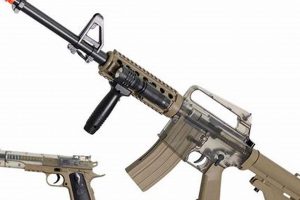
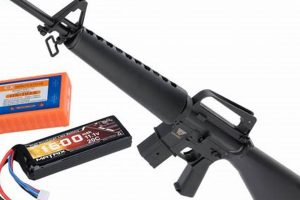
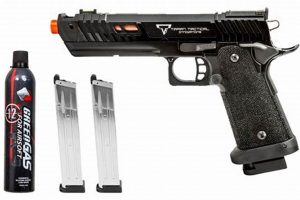
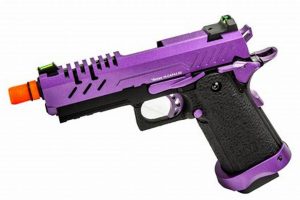
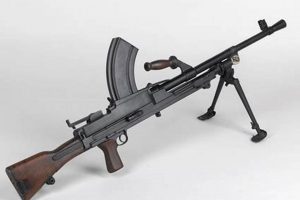
The term refers to modified or self-assembled projectile devices resembling realistic firearms but utilizing plastic projectiles. These items often lack serial numbers or traditional identifying markings. An example would be an individually constructed airsoft replica, designed to closely mimic the appearance and function of a real firearm, assembled from various commercially available parts or 3D-printed components.
The rise in popularity of these items presents several challenges. These include potential misuse due to their realistic appearance, difficulty in tracing ownership, and legal ambiguities surrounding their classification and regulation. Historically, airsoft devices were primarily considered recreational toys, however, modifications and the increasing availability of components have blurred the lines between toys and potential public safety concerns.
The following discussion will explore the legal implications, safety concerns, and ethical considerations surrounding the construction and distribution of such devices. It will also address the role of manufacturers, retailers, and regulatory bodies in addressing this emerging issue.
Safety and Legal Considerations
The assembly and use of airsoft replicas that closely resemble real firearms necessitate a heightened awareness of safety protocols and legal ramifications. Understanding these considerations is paramount to responsible handling.
Tip 1: Verification of Local Laws: Before acquiring parts or assembling any device, thoroughly research and understand all applicable local, state, and federal laws regarding imitation firearms and airsoft devices. Regulations vary significantly, and non-compliance can result in legal penalties.
Tip 2: Adherence to Safe Handling Practices: Treat every airsoft replica as if it were a real firearm. Maintain muzzle awareness, keep the device unloaded and on safe when not in use, and store it securely away from unauthorized individuals, especially children.
Tip 3: Modification Restraint: Avoid modifications that could increase the projectile velocity beyond legal limits or that could alter the device to accept real firearm components. Such alterations may lead to criminal charges and negate any pretense of recreational use.
Tip 4: Responsible Transportation: When transporting, keep the replica unloaded and stored in a case or bag. Avoid displaying it in public, as this may cause alarm or confusion. Comply with all transportation regulations, especially when crossing state lines.
Tip 5: Secure Storage: Store airsoft replicas in a secure location, such as a locked cabinet or safe, to prevent unauthorized access. This is especially important if there are children or individuals unfamiliar with firearm safety in the household.
Tip 6: Avoid Public Display: Refrain from brandishing or displaying the replica in public places. The realistic appearance can easily be mistaken for a real firearm, leading to potential misunderstandings, fear, and intervention by law enforcement.
Tip 7: Use in Designated Areas Only: Operate the replica only in designated airsoft fields or private property with the explicit permission of the owner. Never use the device in areas where real firearms are prohibited.
Strict adherence to these guidelines will contribute to responsible ownership and mitigate the potential for legal complications or accidental harm.
The following sections will delve further into the ethical responsibilities of manufacturers and retailers in preventing the misuse of these devices.
1. Modifiability

The inherent modifiability of airsoft devices is a primary contributing factor to the rise of privately assembled or altered replicas. The open architecture and readily available aftermarket parts allow individuals to significantly alter the appearance, performance, and functionality of these items. This capability enables the creation of devices closely resembling real firearms, lacking serial numbers or manufacturer markings, and thus, becoming untraceable.
A common example involves the replacement of internal components to increase projectile velocity beyond legal limits, or the external modification of the device to mimic specific firearm models. This ranges from cosmetic alterations to the integration of real firearm components, further blurring the lines between toy and potentially dangerous instrument. The ease with which these modifications can be accomplished, often facilitated by online tutorials and easily accessible parts, underscores the inherent risk associated with the modifiability aspect.
Understanding the connection between modifiability and untraceable replicas is crucial for developing effective regulatory strategies. Addressing this challenge requires focusing on restricting the availability of modification kits, regulating the sale of key components, and implementing stricter penalties for altering airsoft devices in ways that violate existing laws. Ultimately, mitigating the risk necessitates a multi-faceted approach encompassing legislative measures, educational initiatives, and industry self-regulation.
2. Lack of traceability
The absence of unique identifiers, such as serial numbers, on certain airsoft devices, particularly those self-assembled or heavily modified, directly contributes to a significant lack of traceability. This absence undermines law enforcement’s ability to track ownership and investigate potential misuse. When an incident occurs involving such a device, tracing its origin or identifying the responsible party becomes exceedingly difficult, impeding criminal investigations and hindering efforts to prevent future occurrences. The lack of traceability represents a core characteristic that elevates a modified or self-assembled airsoft replica into a category of concern due to its potential connection to illegal activities.
Consider a hypothetical scenario in which an airsoft replica, modified to resemble a specific firearm, is used in the commission of a crime. If the device lacks a serial number or other identifying markings, investigators face significant obstacles in determining its source, the individual who assembled it, or any prior owners. This anonymity can frustrate efforts to hold individuals accountable for their actions. Furthermore, the ready availability of parts and assembly instructions online enables individuals to construct these untraceable devices with relative ease, exacerbating the problem. The absence of traceability also poses challenges in cases of accidental injury, hindering efforts to determine the cause of the incident and to implement preventive measures.
In summary, the lack of traceability associated with certain modified or self-assembled airsoft devices significantly hinders law enforcement efforts and poses a risk to public safety. Addressing this challenge requires a multifaceted approach, including regulating the sale of components, implementing tracking mechanisms for key parts, and increasing awareness of the legal ramifications associated with the modification and use of untraceable devices. The practical significance of understanding this connection lies in the need to develop proactive strategies to mitigate the risks associated with these items.
3. Realistic Appearance

The realistic appearance of modified or self-assembled airsoft devices is a critical factor influencing potential misuse and public safety concerns. The close resemblance to actual firearms can lead to misidentification by law enforcement, potential escalation of encounters, and use in criminal activities where the imitation firearm serves to intimidate or deceive. The degree to which an airsoft device mirrors a real firearm directly correlates with the likelihood of it being perceived as a genuine threat, necessitating a response as if it were a lethal weapon. An example is the modification of an airsoft rifle to perfectly replicate the appearance of an AR-15, including its size, shape, and color. The practical significance lies in the increased risk of misinterpretation and the potential for dangerous reactions by law enforcement or civilians.
This realistic appearance also facilitates the use of these items in the commission of crimes. A perpetrator may brandish such a device to intimidate victims during robberies or other illegal activities, leveraging the fear induced by its resemblance to a real firearm. Furthermore, the ability to easily purchase or construct components that enhance the realism, such as realistic magazines, sights, and grips, amplifies the challenge. The design and marketing of airsoft products often prioritize accuracy in replicating real firearms, exacerbating the problem. Moreover, the use of these devices in public spaces can cause undue alarm and panic, even if no criminal intent is present, leading to unnecessary police intervention and disruption.
In conclusion, the realistic appearance of these airsoft replicas significantly contributes to the potential for misuse, misidentification, and public alarm. Addressing this issue requires a combination of regulatory measures, including restrictions on the sale of realistic-looking components, educational initiatives aimed at informing law enforcement and the public about the differences between real and imitation firearms, and responsible manufacturing practices. The key insight is that the visual resemblance to real firearms creates a substantial risk that must be proactively mitigated.
4. Legal Ambiguity

The term “legal ambiguity” surrounding modified or self-assembled airsoft devices stems from the complex interplay between existing firearms regulations, toy gun laws, and the evolving nature of these replicas. This ambiguity creates challenges for law enforcement, regulatory agencies, and individuals seeking to comply with the law.
- Classification Challenges
Defining an airsoft device that has been modified to closely resemble a firearm creates classification challenges. Is it a toy, an imitation firearm, or something else entirely? The lack of a clear legal definition can lead to inconsistent enforcement and varying interpretations across jurisdictions. For instance, some states may regulate airsoft devices based on projectile velocity, while others focus on their external appearance. This inconsistency creates confusion and uncertainty.
- Federal vs. State Laws
The interplay between federal and state laws further complicates the issue. Federal law primarily regulates real firearms, leaving the regulation of imitation firearms largely to the states. However, when an airsoft device is modified to accept real firearm components or converted into a functional firearm, it may fall under federal jurisdiction, triggering stricter regulations and potential criminal penalties. This jurisdictional overlap creates loopholes that individuals may exploit.
- Lack of Specific Regulations
In many jurisdictions, specific regulations addressing the construction, modification, and sale of airsoft parts are lacking. This absence allows individuals to acquire components and assemble realistic replicas without facing significant legal barriers. For example, the ease with which one can purchase parts online and assemble a replica that closely resembles a prohibited firearm highlights the insufficient regulation in place.
- Intent and Perception
The legal assessment often hinges on the intent of the possessor and how the device is perceived by others. If an individual intends to use a modified airsoft device to commit a crime or if the device is reasonably perceived as a real firearm by law enforcement, it may be treated as such, regardless of its actual functionality. This subjective element introduces further ambiguity, as the same device could be classified differently depending on the circumstances.
These facets of legal ambiguity underscore the challenges associated with regulating modified or self-assembled airsoft devices. The absence of clear definitions, jurisdictional complexities, and the consideration of intent and perception contribute to a legal landscape that is difficult to navigate and enforce. Addressing this ambiguity requires comprehensive legislation that clarifies the classification of these devices, establishes consistent standards for their manufacture and sale, and provides clear guidance to law enforcement and the public.
5. Safety Risks

The inherent safety risks associated with modified or self-assembled airsoft devices, designed to closely resemble real firearms, are a significant concern. These risks arise from a combination of factors, including the potential for accidental injury, misuse in criminal activities, and misidentification by law enforcement. A thorough understanding of these risks is paramount for responsible handling and the development of effective safety protocols.
- Accidental Injury
The modification of airsoft devices to increase projectile velocity or alter their firing mechanisms can significantly increase the risk of accidental injury. Altered devices may exceed safe limits, causing serious eye injuries, skin penetration, or other bodily harm. Examples include modifications to increase the power of the gas system or replacing internal components with stronger alternatives. These modifications can lead to unexpected malfunctions or uncontrolled projectile discharge. The improper handling of these devices, especially by untrained individuals, further exacerbates the risk of accidental injury.
- Misuse in Criminal Activities
The realistic appearance of these airsoft replicas can facilitate their misuse in criminal activities. They can be brandished to intimidate victims, used in robberies, or employed as props in staged crimes. The resemblance to real firearms may create a false sense of security for the perpetrator, leading to bolder actions. Law enforcement may respond as if the device were a real firearm, potentially escalating the situation and increasing the risk of violence. The use of these devices in criminal activities undermines public safety and erodes the perception of security.
- Misidentification by Law Enforcement
The realistic appearance of modified airsoft devices can lead to misidentification by law enforcement officers, particularly in high-stress situations. Officers may mistake these replicas for real firearms, leading to potentially lethal encounters. The rapid decision-making required by law enforcement in such situations leaves little room for detailed examination, increasing the likelihood of misidentification. This misidentification can have tragic consequences, underscoring the need for enhanced training and awareness among law enforcement personnel regarding the differences between real and imitation firearms.
The convergence of these safety risks underscores the potential dangers associated with modified or self-assembled airsoft devices. The possibility of accidental injury, the misuse of these replicas in criminal activities, and the risk of misidentification by law enforcement all contribute to a complex web of safety concerns. Addressing these concerns requires a multi-faceted approach, including stricter regulations on the modification and sale of airsoft devices, enhanced training for law enforcement, and increased public awareness regarding the potential dangers associated with these items.
6. Accessibility
The increasing accessibility of components and information necessary for the creation of modified airsoft devices significantly contributes to the rise of privately assembled replicas. Readily available parts, assembly guides, and modification instructions, primarily sourced through online retailers and forums, lower the barrier to entry for individuals seeking to construct these devices. This ease of access reduces reliance on traditional manufacturers and commercial channels, enabling the creation of untraceable items. The direct consequence is an increase in the number of such devices circulating, with limited oversight or accountability. For example, individuals can purchase complete airsoft kits, individual components to enhance realism, or even 3D-printed parts plans with minimal restrictions. The practical significance of this unchecked accessibility is an amplified risk to public safety due to the potential for misuse and the challenges in tracing ownership.
Furthermore, the accessibility extends beyond physical components to include detailed instructions and online communities dedicated to modifying airsoft devices. These resources provide step-by-step guidance on enhancing performance, altering appearance, and even converting airsoft mechanisms to accept components from actual firearms. This democratization of knowledge empowers individuals with the skills and resources necessary to create highly realistic and potentially dangerous replicas within their own homes. Examples include online forums where users share blueprints for 3D-printing airsoft frames that mimic specific firearm models or tutorials detailing methods for increasing projectile velocity beyond legal limits. The ethical implications are substantial, as accessibility contributes to the blurring of lines between recreational airsoft use and the potential for criminal activity or accidental harm.
In summary, the ease of access to components, instructions, and collaborative communities significantly fuels the proliferation of modified airsoft replicas. This accessibility presents a formidable challenge to regulators and law enforcement attempting to control the spread of these devices. Mitigation strategies require a multifaceted approach, including stricter regulation of online sales, increased monitoring of online communities sharing modification instructions, and enhanced education regarding the potential risks and legal consequences associated with the construction and modification of airsoft devices. The key takeaway is that controlling the accessibility of these elements is essential for addressing the broader challenges of safety and accountability.
Frequently Asked Questions
This section addresses common questions and misconceptions surrounding modified or self-assembled airsoft devices resembling real firearms.
Question 1: What defines an “airsoft ghost gun?”
The term generally refers to an airsoft replica that has been modified or self-assembled to closely resemble a real firearm, often lacking manufacturer markings or serial numbers. It implies an airsoft device that mimics the appearance and, in some cases, the function of a genuine firearm, potentially creating legal and safety concerns.
Question 2: Are airsoft ghost guns illegal?
The legality varies depending on jurisdiction. Possessing or manufacturing airsoft devices that violate local or federal laws related to imitation firearms may be illegal. This can include altering the device to accept real firearm parts, removing or altering required markings, or exceeding legal projectile velocity limits. The specific regulations depend on location and modifications made.
Question 3: What are the safety risks associated with airsoft ghost guns?
Safety risks include the potential for accidental injury due to modifications increasing projectile velocity beyond safe limits, misidentification by law enforcement leading to potentially dangerous encounters, and misuse in criminal activities due to their realistic appearance. The lack of traceability also makes it difficult to determine their origin if used in a crime.
Question 4: How does the lack of traceability affect legal ramifications?
The absence of serial numbers or other identifying markings hinders law enforcement’s ability to track ownership and investigate potential misuse. This anonymity can impede criminal investigations and make it challenging to hold individuals accountable for their actions if an airsoft replica is used in illegal activities.
Question 5: What role do manufacturers and retailers play in preventing the misuse of airsoft ghost guns?
Manufacturers and retailers bear responsibility for ensuring that airsoft devices are sold and marketed responsibly. This includes adhering to all applicable laws and regulations, providing clear warnings about the potential dangers of modification, and implementing measures to prevent sales to individuals who may misuse these devices.
Question 6: How can individuals ensure responsible ownership of airsoft devices?
Responsible ownership includes thoroughly researching and complying with all applicable laws, adhering to safe handling practices, avoiding modifications that could increase projectile velocity or alter the device to accept real firearm components, storing the device securely, and only using it in designated areas with appropriate safety precautions.
Understanding the nuances surrounding modified airsoft devices is crucial for ensuring both individual safety and compliance with the law.
The next section will delve into the ethical responsibilities of manufacturers and retailers in addressing this emerging issue.
Conclusion
This exploration of airsoft ghost gun issues has underscored critical safety, legal, and ethical considerations. The inherent modifiability, lack of traceability, and realistic appearance of these devices, coupled with legal ambiguities and rising accessibility, present complex challenges. The potential for misuse, accidental injury, and misidentification by law enforcement demands diligent attention.
Addressing the concerns surrounding airsoft ghost gun requires a multi-faceted approach. This includes responsible manufacturing and retail practices, comprehensive regulatory frameworks, heightened public awareness, and individual diligence in adhering to safe handling and modification protocols. The continued vigilance and proactive engagement of all stakeholders are essential to mitigate the risks associated with these evolving devices and ensure public safety.