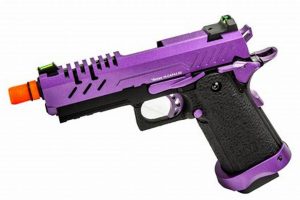
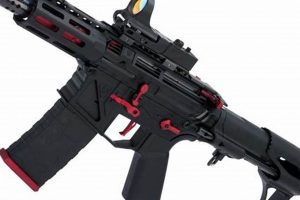
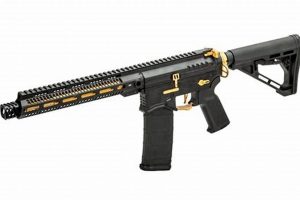
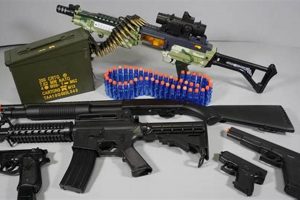
The suitability of airsoft guns for personal protection is a complex issue. These devices, designed primarily for recreational and training purposes, project non-lethal projectiles. Their construction typically mimics that of actual firearms, which can create the illusion of possessing a more formidable weapon. However, the effectiveness of an airsoft gun in a self-defense scenario is significantly limited due to its lack of stopping power and potential for misidentification.
A key consideration is the potential legal ramifications. Brandishing what appears to be a real firearm, even if it is an airsoft replica, can lead to serious legal consequences. Furthermore, relying on an airsoft gun for self-defense may escalate a situation, provoking a more dangerous response from an assailant. Historically, individuals have mistakenly perceived airsoft guns as genuine threats, resulting in unintended and harmful outcomes. The absence of lethal force also means that the device is unlikely to deter a determined attacker.
Therefore, a comprehensive evaluation of self-defense strategies should carefully weigh the practical limitations and potential risks associated with employing an airsoft gun. Alternative, purpose-built methods for personal safety may offer more effective and legally sound options. Further research into non-lethal defense tools and techniques is recommended.
Guidance on the Topic of Airsoft Guns and Self-Defense
The following points address crucial considerations related to the question of whether an airsoft gun is suitable for personal protection. These insights are intended to promote a realistic understanding of the device’s limitations in self-defense scenarios.
Tip 1: Recognize the Legal Risks. The visible resemblance of an airsoft gun to a real firearm can create significant legal liabilities. Brandishing such a replica may be perceived as a criminal threat, potentially leading to arrest and prosecution.
Tip 2: Acknowledge the Limited Stopping Power. Airsoft projectiles lack the kinetic energy necessary to reliably incapacitate an attacker. Reliance on this device may prove ineffective in neutralizing a genuine threat.
Tip 3: Understand the Potential for Escalation. An assailant, perceiving the airsoft gun as a real weapon, may respond with lethal force. This scenario could escalate a confrontation with devastating consequences.
Tip 4: Consider Alternative Self-Defense Options. Explore pepper spray, personal alarms, or self-defense training courses. These alternatives often offer a more effective and legally defensible means of protecting oneself.
Tip 5: Prioritize Situational Awareness. Maintaining vigilance and awareness of surroundings can often prevent dangerous situations from escalating in the first place. This proactive approach is a critical component of personal safety.
Tip 6: Seek Professional Training. If considering any self-defense tool, including an airsoft gun, proper training is essential. Understanding the device’s limitations and how to employ it safely is paramount.
A comprehensive assessment of personal safety strategies necessitates a realistic understanding of the drawbacks inherent in using an airsoft gun for self-defense. While potentially deterring some, its limitations and potential risks necessitate careful consideration of alternative approaches.
The conclusion of this assessment should encourage individuals to explore a wide range of self-defense options, prioritize safety education, and carefully weigh the legal and practical implications of all choices.
1. Legality

The legal implications surrounding the use of airsoft guns for self-defense are paramount. The perception of these devices under the law significantly impacts whether their deployment in a self-defense situation is justified or actionable.
- Misidentification as a Firearm
Airsoft guns often possess a striking resemblance to real firearms. This similarity can lead law enforcement and civilians to misinterpret their nature, resulting in the airsoft gun being treated as a lethal weapon. The act of brandishing or discharging what appears to be a firearm, even in self-defense, may constitute a criminal offense in many jurisdictions.
- State and Local Regulations
Laws governing the possession, use, and transportation of airsoft guns vary considerably by state and locality. Some jurisdictions impose restrictions similar to those placed on actual firearms, including age restrictions, permit requirements, and prohibitions on carrying them in public places. Violating these regulations, even in a self-defense scenario, can lead to legal penalties.
- Use of Force Laws
The legality of using any weapon, including an airsoft gun, in self-defense is governed by use-of-force laws. These laws typically require that the level of force used be proportionate to the threat faced. Employing an airsoft gun against a perceived threat may be deemed excessive force if the threat does not justify the use of a potentially lethal weapon. Self-defense claims can be challenged in court, necessitating a demonstration that the use of force was reasonable and necessary.
- Civil Liability
Even if the use of an airsoft gun in self-defense does not result in criminal charges, the individual may still face civil liability. If the airsoft gun causes injury or property damage, the individual could be sued for negligence or intentional tort. The financial burden of defending against such claims can be substantial, regardless of the outcome.
Given these legal considerations, the use of airsoft guns for personal protection introduces significant risks. The potential for misinterpretation, the complexity of local regulations, the limitations of use-of-force laws, and the threat of civil liability collectively undermine the practicality of airsoft guns as reliable self-defense tools. Alternative, legally sound methods of personal safety should be explored.
2. Stopping Power
The concept of stopping power is paramount when evaluating the suitability of any device for self-defense. In the context of “is an airsoft gun good for self defense,” stopping power refers to the capacity of the projectile to immediately incapacitate an attacker, preventing further aggression. The effectiveness of a self-defense tool hinges on its ability to halt a threat quickly and decisively. A primary cause of concern when considering airsoft guns for self-defense lies in their limited ability to deliver the necessary force to achieve this objective. The effect of an airsoft projectile is typically minimal, rarely sufficient to cause immediate cessation of hostile actions.
Real-life examples illustrate this deficiency. Instances where individuals have attempted to use airsoft guns in self-defense scenarios consistently demonstrate their inadequacy. Attackers, even when struck by multiple airsoft projectiles, often continue their assault unabated. This is due to the low kinetic energy transferred by the small plastic or BB projectiles. In contrast, tools designed for self-defense, such as pepper spray or tasers, are engineered to deliver a significantly greater disruptive effect, either through pain compliance or temporary incapacitation. The practical significance of this understanding is that reliance on an airsoft gun may not only fail to deter an attacker but could also create a false sense of security, leading to delayed or ineffective defensive actions.
In summary, the crucial element of stopping power underscores the unsuitability of airsoft guns for self-defense purposes. The lack of sufficient force to quickly neutralize a threat, coupled with the potential for escalation and legal ramifications, makes alternative self-defense tools a more prudent choice. The challenge lies in educating individuals about the limitations of airsoft guns and promoting awareness of more effective and legally sound methods of personal protection. The question “is an airsoft gun good for self defense” should consistently be answered with a caution towards its clear deficiency in effectively stopping an attacker.
3. Escalation Risks
The potential for escalating a confrontation is a critical consideration when evaluating whether an airsoft gun is suitable for self-defense. The use of what appears to be a firearm, even a non-lethal replica, introduces a range of factors that can intensify a dangerous situation.
- Misinterpretation by Assailants
An assailant may perceive an airsoft gun as a genuine firearm, triggering a more aggressive response, potentially including the use of lethal force. The perceived threat level influences the assailant’s actions, and a realistic-looking weapon can lead to the most extreme reaction. This misinterpretation negates the potential advantage of using a non-lethal option, replacing it with a significantly more dangerous scenario.
- Law Enforcement Intervention
The brandishing of what appears to be a firearm in public can attract the attention of law enforcement. Police officers responding to such a situation may perceive an imminent threat, leading to an armed confrontation. The time required to identify the weapon as an airsoft gun can be critical, and misidentification can result in unintended harm or even fatal consequences.
- Legal Consequences
Even if the airsoft gun is not mistaken for a real firearm, its use in a self-defense situation can still lead to legal ramifications. Aggressive use of any weapon, including an airsoft gun, may be deemed unlawful if the level of force is judged disproportionate to the perceived threat. The legal defense of self-defense requires demonstrating a reasonable belief of imminent harm, which can be challenging to establish when employing a replica firearm.
- Risk of Injury to Bystanders
Discharging an airsoft gun in a public space, even in self-defense, presents a risk of injury to bystanders. Projectiles, while non-lethal, can still cause harm, particularly to the eyes or face. Accidental injury to an uninvolved party can result in civil liability and further complicate the legal ramifications of the self-defense action.
These escalation risks highlight the potential for unintended and adverse consequences when employing an airsoft gun for self-defense. While the intention may be to deter or incapacitate an attacker, the realistic appearance of the weapon can inadvertently escalate the situation, leading to more severe outcomes. Therefore, a careful assessment of these risks is essential when considering alternative self-defense strategies.
4. Alternative Options

The question of whether an airsoft gun is suitable for self-defense inherently prompts the exploration of alternative options. These alternatives offer varying degrees of protection while mitigating the risks associated with using airsoft guns, specifically concerning legality, stopping power, and escalation. The existence of superior, readily available alternatives directly diminishes the viability of airsoft guns for personal protection. This is based on the premise that a responsible approach to self-defense prioritizes effectiveness, legal compliance, and the minimization of potential harm to all parties involved. For instance, pepper spray offers a non-lethal, easily deployable option that has a proven track record of incapacitating attackers. Its legal status is generally less ambiguous than that of airsoft guns, and the risk of escalation is arguably lower, as it is clearly identified as a defensive tool rather than a weapon mimicking a firearm.
Beyond pepper spray, personal alarms provide a non-violent method for deterring attackers and attracting attention. While they do not directly incapacitate an assailant, they can disrupt an attack and summon assistance, potentially preventing a confrontation from escalating. Furthermore, self-defense training courses equip individuals with practical skills to evade or de-escalate potentially dangerous situations. These skills offer a long-term advantage, empowering individuals to react effectively in various scenarios without relying on any weapon. The decision to pursue such training reflects a commitment to proactive safety measures rather than reactive armament. Real-world scenarios repeatedly demonstrate the effectiveness of these alternative strategies, underscoring the limitations and potential drawbacks of relying on an airsoft gun for self-defense. Victims armed with pepper spray have successfully deterred attackers, and individuals trained in de-escalation techniques have avoided potentially violent confrontations altogether.
In conclusion, a comprehensive evaluation of self-defense options necessitates a comparative analysis of alternatives to airsoft guns. These alternatives, including pepper spray, personal alarms, and self-defense training, offer demonstrably safer and more effective means of personal protection. The practical significance of understanding these alternative options lies in making informed decisions that prioritize safety, legality, and the minimization of potential harm. The challenges associated with airsoft guns misidentification, limited stopping power, and the risk of escalation highlight the importance of considering alternatives that mitigate these concerns. The ultimate goal is to equip individuals with the knowledge and resources necessary to make responsible choices regarding their personal safety, steering them away from less effective and potentially dangerous options such as airsoft guns.
5. Realistic Training
Realistic training is a critical factor when evaluating the effectiveness of any self-defense tool, including airsoft guns. The connection between training and practical application directly influences whether a device can be effectively employed in a high-stress, real-world scenario. Without realistic training, any potential benefits of a tool are significantly diminished, and the risk of misapplication increases. This exploration examines specific facets of realistic training in the context of airsoft guns and their suitability for self-defense.
- Stress Inoculation
Stress inoculation training simulates the physiological and psychological stressors experienced during a real self-defense encounter. Such training reveals how an individual’s performance degrades under pressure. For airsoft guns, this is particularly relevant because fine motor skills required for operation (e.g., aiming, firing, reloading) can be severely compromised. Individuals may discover that their perceived proficiency in a controlled environment does not translate to effectiveness under stress, potentially leading to critical errors or hesitation during an actual attack. Realistic scenario-based drills are essential to gauge an individual’s true capabilities.
- Force-on-Force Drills
Force-on-force training involves simulated engagements against resisting opponents. This type of training provides valuable feedback on the practical effectiveness of a chosen self-defense tool. In the context of airsoft guns, force-on-force drills can reveal limitations in range, accuracy, and stopping power that are not apparent in static target practice. Participants often realize that the minimal impact of airsoft projectiles may not deter a determined attacker, highlighting the potential for escalation. This type of training necessitates appropriate safety precautions and supervision to prevent injuries.
- Legal and Ethical Considerations
Realistic training must incorporate the legal and ethical implications of using force in self-defense. Participants need to understand the laws regarding self-defense in their jurisdiction, including the principles of proportionality and the duty to retreat (if applicable). Training scenarios should address when the use of force is justified and the potential legal consequences of using an airsoft gun inappropriately. Moreover, ethical considerations, such as the potential for misidentification and the risk of escalating a situation, should be thoroughly discussed.
- Alternative Tool Comparison
A comprehensive training program should include opportunities to compare the effectiveness of different self-defense tools. This allows participants to evaluate the strengths and weaknesses of airsoft guns relative to other options, such as pepper spray, personal alarms, or self-defense techniques. By experiencing the limitations of airsoft guns firsthand, participants can make more informed decisions about their personal safety strategy. This comparative approach underscores the importance of choosing a tool that aligns with individual capabilities, legal requirements, and ethical considerations.
In conclusion, realistic training is indispensable for accurately assessing the suitability of airsoft guns for self-defense. Without it, individuals may overestimate the device’s effectiveness and underestimate the potential risks. The insights gained from stress inoculation, force-on-force drills, legal and ethical considerations, and alternative tool comparisons provide a more comprehensive understanding of the limitations of airsoft guns, promoting informed decision-making and responsible self-defense strategies.
Frequently Asked Questions
The following questions address common inquiries regarding the suitability of airsoft guns for personal protection. These responses aim to provide clear and informative insights into the limitations and risks associated with their use in self-defense scenarios.
Question 1: Are airsoft guns legal to carry for self-defense?
The legality of carrying airsoft guns for self-defense varies by jurisdiction. Many localities treat airsoft guns similarly to real firearms, requiring permits or licenses. Brandishing an airsoft gun, even in self-defense, may constitute a criminal offense if perceived as a threat.
Question 2: Can an airsoft gun effectively stop an attacker?
Airsoft projectiles lack the kinetic energy necessary to reliably incapacitate an assailant. While they may cause discomfort, they are unlikely to deter a determined attacker, rendering them ineffective in stopping a serious threat.
Question 3: Does using an airsoft gun for self-defense pose escalation risks?
Yes. An assailant, misinterpreting the airsoft gun as a real firearm, may respond with lethal force. Law enforcement responding to the scene may also perceive an imminent threat, potentially leading to unintended harm.
Question 4: Are there safer alternatives to airsoft guns for self-defense?
Alternatives such as pepper spray, personal alarms, and self-defense training courses offer safer and more effective means of personal protection. These options minimize the risk of escalation and are often legally less problematic than using an airsoft gun.
Question 5: Is training with an airsoft gun sufficient preparation for self-defense?
While training can improve familiarity with the device, it does not adequately prepare individuals for the stress and chaos of a real self-defense encounter. The limited stopping power and potential for misinterpretation make airsoft gun training an insufficient substitute for comprehensive self-defense instruction.
Question 6: What are the potential legal consequences of using an airsoft gun for self-defense?
The potential legal consequences include criminal charges for brandishing a weapon, civil liability for injuries caused, and potential violations of local ordinances regarding airsoft gun possession and use. The legal ramifications can be significant, even if the intent was solely self-defense.
In summary, while airsoft guns may appear to offer a means of self-defense, their limitations, potential for escalation, and legal risks make them a problematic choice. Alternative methods of personal protection provide more effective and legally sound options.
This understanding serves as a foundation for exploring further details related to each consideration.
The Question of Airsoft Guns and Self-Defense
This analysis has meticulously examined the proposition of employing airsoft guns for personal protection. Scrutiny of legality, stopping power, escalation risks, the availability of alternative options, and the necessity of realistic training has revealed significant drawbacks. The inherent limitations of airsoft guns, compounded by potential legal and ethical complications, render them a questionable choice for self-defense purposes.
The pursuit of personal safety demands a comprehensive understanding of available tools and techniques. Prioritizing effective, legally sound, and ethically responsible methods is paramount. Individuals are encouraged to thoroughly investigate alternative self-defense strategies and seek professional guidance to make informed decisions that align with their specific needs and circumstances. The responsible path forward involves prioritizing personal safety through education, awareness, and the judicious selection of appropriate defensive measures.