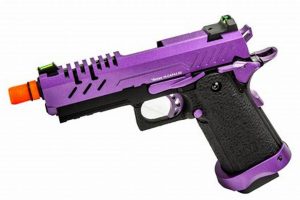
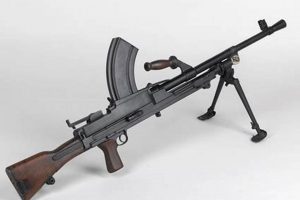
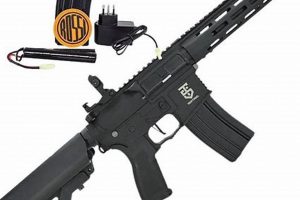
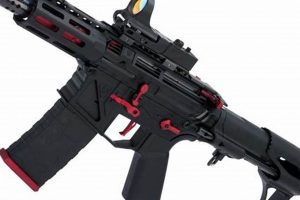
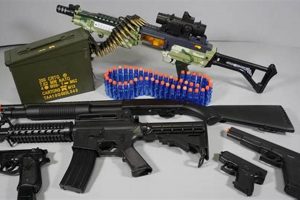
The suitability of using imitation firearms for safeguarding a residence is a question frequently posed. These devices, typically propelled by compressed gas or springs, launch plastic projectiles and are designed for recreational activities such as simulated combat games. Understanding their capabilities and limitations is essential for a balanced assessment.
The primary purpose of these recreational devices contrasts sharply with the objectives of effective home security strategies. While these devices might deter some individuals through their realistic appearance, they generally lack the power to inflict serious injury or incapacitate a determined assailant. Their historical context is rooted in entertainment, not personal safety, highlighting a significant divergence in intended application. A perceived benefit might be avoiding legal ramifications associated with using a real firearm, however, the lack of stopping power remains a critical drawback.
Evaluating the effectiveness for personal protection requires examining their potential drawbacks, available alternatives, and legal implications. A thorough understanding of these factors is necessary before considering employing these devices for residential safety.
Considerations Regarding Replica Firearms for Residential Security
The following points outline key aspects to contemplate when evaluating the viability of using replica firearms for protecting a home.
Tip 1: Assess the Limitations: These devices primarily launch plastic projectiles with limited kinetic energy. Their capacity to deter or incapacitate a determined intruder is minimal compared to conventional defense options.
Tip 2: Evaluate Legal Ramifications: Brandishing replica firearms may carry legal consequences, depending on local laws and regulations. Misidentification by law enforcement as a genuine firearm can lead to serious repercussions.
Tip 3: Emphasize Training Deficiencies: Proficiency with recreational devices does not translate to competence in self-defense scenarios. The skills and mental preparation required for real-world confrontation are significantly different.
Tip 4: Prioritize Layered Security: If considering these devices, integrate them as part of a comprehensive home security strategy. Relying solely on them is inadequate and potentially dangerous.
Tip 5: Explore Alternatives: Research and evaluate alternative, non-lethal defense options that offer superior protection capabilities, such as pepper spray or personal alarms.
Tip 6: Conduct a Risk Assessment: Analyze the specific security risks relevant to the residence. Factors like location, crime rates, and vulnerability influence the suitability of any defense method.
Tip 7: Seek Professional Advice: Consult with security professionals or law enforcement agencies to obtain guidance on appropriate home security measures tailored to individual circumstances.
Careful deliberation of these aspects is essential for making informed decisions about protecting a residence. Understanding both the benefits and the limitations of any chosen method is crucial for ensuring the safety and security of occupants.
Proceeding to the next section will cover other important aspects.
1. Stopping Power Inadequate
The assertion that these devices offer insufficient stopping power is central to evaluating their suitability for residential security. This deficiency directly impacts their effectiveness in deterring or incapacitating a potential intruder, thereby undermining their value as a primary defense tool.
- Kinetic Energy Limitations
Airsoft devices, designed for recreational use, propel plastic projectiles with limited kinetic energy. The energy imparted by these projectiles is generally insufficient to cause significant pain or physical trauma, reducing their deterrent effect on a determined assailant. Real-world scenarios often involve individuals under the influence of substances or driven by desperation, further diminishing the impact of low-energy projectiles.
- Inability to Incapacitate
Effective self-defense requires the ability to quickly incapacitate a threat. The projectiles fired from these devices lack the necessary force to reliably achieve this. While a well-placed shot might cause temporary discomfort, it is unlikely to prevent an intruder from continuing their advance or inflicting harm. This deficiency renders them unreliable in situations where immediate neutralization of a threat is paramount.
- Psychological Deterrent Limited
The visual appearance of an airsoft device may offer a degree of psychological deterrence. However, this effect is limited by the perception of their true nature. Intruders aware of the device’s non-lethal capabilities may be emboldened rather than deterred, potentially escalating the confrontation. A false sense of security based solely on appearance can be detrimental.
- Comparison to Alternative Options
Compared to dedicated defensive tools such as pepper spray, tasers, or firearms, airsoft devices offer significantly less stopping power. These alternatives are specifically designed to incapacitate an attacker, providing a greater degree of protection. Choosing an airsoft device over a more effective option compromises the safety and security of the occupants.
The limitations associated with stopping power render airsoft devices a poor choice for home defense. Reliance on such devices can create a false sense of security, while failing to provide the necessary means to effectively deter or incapacitate a potential threat. Prioritizing effective and reliable defense options is crucial for ensuring residential safety.
2. Legal Ramifications Exist

The potential legal consequences associated with using imitation firearms for residential protection are a significant consideration. Understanding these ramifications is critical when evaluating if these devices are appropriate for home security.
- Misidentification and Police Response
The realistic appearance of airsoft devices increases the risk of misidentification by law enforcement. An intruder using an airsoft weapon may be perceived as wielding a genuine firearm, potentially triggering a lethal response from responding officers. The individual using the airsoft device for defense may then face charges resulting from the escalated situation, despite intending only to protect their home. This scenario highlights the potential for tragic and unintended legal consequences.
- Brandishing Laws and Civil Liability
Many jurisdictions have laws regulating the brandishing or display of firearms, including replicas. Waving an airsoft device in a threatening manner, even on one’s property, may violate these laws, leading to criminal charges. Furthermore, if an individual is injured as a result of the use of an airsoft device, the homeowner may face civil lawsuits for damages resulting from negligence or excessive force. Establishing reasonable force in such scenarios is a complex legal matter.
- Federal and State Regulations
The sale, possession, and modification of airsoft devices may be subject to federal and state regulations. Certain modifications, such as removing orange safety tips, can render the device more realistic and increase the legal risk associated with its use. Furthermore, some states may restrict or prohibit the possession of realistic-looking replicas altogether. Ignorance of these regulations is not a valid legal defense.
- Restrictions on Minors
If minors are present in the household, storing or using airsoft devices for defense raises additional legal concerns. Many jurisdictions have restrictions on the possession and use of firearms (including replicas) by minors. Allowing a minor to use such a device for defense could lead to charges of child endangerment or improper storage of a weapon. This is particularly relevant in households where children may have access to the devices.
The legal risks inherent in utilizing airsoft devices for residential protection outweigh any perceived benefits. Alternative self-defense methods with fewer legal liabilities offer superior protection and minimize the potential for unintended legal consequences. A thorough understanding of local and federal laws is crucial before making any decisions regarding home security.
3. Realistic Appearance Deceptive

The deceptive nature of the realistic appearance of these recreational devices significantly influences their suitability for residential defense. This mimicry of genuine firearms introduces a complex set of considerations related to perception, risk, and potential consequences.
- Misinterpretation by Intruders
The realistic resemblance to actual firearms may initially deter some intruders. However, this deterrence is predicated on the intruder’s belief that the device is, in fact, a lethal weapon. Experienced criminals or those with prior knowledge may recognize the device as non-lethal, negating its deterrent effect and potentially emboldening them. A false sense of security can develop, leading to a misjudgment of the threat’s capabilities.
- Escalation of Encounters
The use of a realistic-looking replica may escalate an encounter with an intruder. If the intruder also possesses a weapon, they might perceive the replica as a direct threat requiring a forceful response. This escalation can lead to a more violent confrontation than might otherwise have occurred. The appearance of a firearm, even a non-lethal one, can trigger a defensive reaction in others.
- Challenges for Law Enforcement
In the event of police intervention, distinguishing a replica from a real firearm under stress is exceptionally difficult. This can lead to misidentification and potentially deadly force by law enforcement officers. The homeowner wielding the replica faces a high risk of being mistaken for an armed assailant, regardless of their intentions. This risk necessitates caution and clear communication during law enforcement encounters.
- Ethical Considerations
Intentionally deceiving an intruder by presenting a replica as a genuine firearm raises ethical concerns. While the intent may be self-preservation, the act involves an element of misrepresentation. Such actions may not be legally prohibited, but they present a moral dilemma related to deception and the potential consequences of that deception on others involved.
The deceptive nature of the realistic appearance introduces complexities beyond simple deterrence. The potential for misinterpretation, escalation, and challenges for law enforcement demands careful consideration. Alternative defensive measures that do not rely on visual deception may offer a safer and more ethical approach to residential security.
4. Training Is Not Transferable
The assertion that training with airsoft devices is not transferable to real-world self-defense scenarios is a critical factor in assessing whether airsoft weapons are suitable for home defense. While proficiency in handling these devices might develop, the skills and mental preparedness required for an actual confrontation diverge significantly. Airsoft training lacks the psychological stress, physiological responses, and legal considerations inherent in a genuine threat situation. The absence of these elements renders such training inadequate for preparing an individual to effectively defend against a home invasion.
Consider, for example, an individual who regularly participates in airsoft skirmishes. This individual might be adept at target acquisition, maneuvering, and tactical communication within the context of a game. However, the simulated environment lacks the life-or-death stakes of a home invasion. The adrenaline surge, fear, and potential for causing serious harm to another person are absent. Consequently, the individual might freeze under pressure, hesitate to act decisively, or make tactical errors that could prove fatal. Furthermore, the legal ramifications of using lethal force in self-defense, which necessitate careful judgment and adherence to specific legal standards, are not addressed in airsoft training. A clear understanding of when and how to use force is essential for protecting oneself while remaining within the bounds of the law. Airsoft games typically do not simulate these legal complexities.
Therefore, relying solely on airsoft training for home defense is a potentially dangerous proposition. The skills acquired in a simulated environment are not directly transferable to the chaotic and high-stakes reality of a home invasion. Comprehensive self-defense training, which includes realistic scenario-based simulations, stress inoculation, and a thorough understanding of legal principles, is necessary to develop the competence and mental fortitude required to effectively protect oneself and one’s family. While airsoft may provide some basic familiarity with weapons handling, it should not be considered a substitute for professional self-defense instruction. The critical distinction lies in the inability of airsoft to replicate the psychological, physiological, and legal complexities of a real-world threat, making the claim that “Training Is Not Transferable” a crucial point to consider in answering whether “are airsoft guns good for home defense”.
5. Non-Lethal Alternatives Superior

The effectiveness of airsoft devices for residential protection is significantly diminished when compared to dedicated non-lethal alternatives. The limitations inherent in airsoftspecifically, inadequate stopping power and potential legal ramificationshighlight the superiority of options specifically designed for self-defense without causing serious bodily harm. The existence of these superior alternatives directly undermines the argument for using airsoft as a primary means of home defense. The understanding of the superior performance stems from the design and construction of these items with real stopping power.
Devices such as pepper spray, personal alarms, and stun guns offer a more reliable means of deterring or incapacitating an intruder. Pepper spray, for example, delivers a concentrated inflammatory agent that can temporarily disable an attacker, providing time to escape or call for assistance. Personal alarms generate a loud, attention-grabbing noise that can deter an intruder and alert neighbors. Stun guns deliver a high-voltage, low-amperage electrical shock that can temporarily disrupt muscle function, incapacitating an attacker. These devices are generally legal to own and carry in many jurisdictions, and their use is less likely to result in lethal force being used by law enforcement. When evaluating “are airsoft guns good for home defense,” the practical significance of these alternative options becomes clear. Consider a scenario where an intruder attempts to enter a home. The homeowner deploying pepper spray or a stun gun can incapacitate the intruder, allowing them to escape or call for help. In contrast, an airsoft device might only provoke the intruder, escalating the situation and putting the homeowner at greater risk.
In conclusion, the availability and effectiveness of non-lethal alternatives significantly reduce the justification for utilizing airsoft devices for home defense. The specific design to debilitate as part of the product construction of pepper sprays, tasers, or alarms has demonstrated repeatedly in practical cases the impact in deterring intruders with more success. A risk assessment, combined with the study of practical applications of each item in the arsenal, proves the inferiority of airsoft, and this analysis should lead to prioritizing effective and legally sound alternatives.
6. Risk Mitigation Minimal

The argument that airsoft devices offer minimal risk mitigation in a home defense scenario is a pivotal point when assessing their overall effectiveness. This limited risk mitigation stems from several factors, including insufficient stopping power, potential legal consequences, and the possibility of escalating a confrontation. The primary function of any home defense strategy should be to minimize the risk of harm to occupants. The use of these devices, when compared with established self-defense tools, fails to adequately achieve this goal. For example, an intruder, undeterred by an airsoft weapon, may escalate the attack, leading to increased danger for the homeowner. The presence of a visible airsoft weapon may also create a more volatile situation for law enforcement officers responding to the scene.
Furthermore, the potential for misidentification and the risk of legal repercussions contribute to the limited risk mitigation. If law enforcement perceives an airsoft device as a real firearm, the homeowner may face severe consequences, regardless of intent. This legal risk adds another layer of potential harm, further reducing the effectiveness of airsoft as a risk mitigation tool. Examples abound of individuals facing severe legal challenges after brandishing replica firearms in self-defense situations. These cases illustrate the inherent dangers and complexities associated with relying on airsoft for home protection. The reliance on the false perception of protection from airsoft only serves to increase the physical harm that could come to homeowners in the end. Alternatives that offer superior incapacitation with less risk would be prudent.
In summary, the minimal risk mitigation afforded by airsoft devices renders them unsuitable as a primary home defense strategy. The potential for escalation, legal consequences, and inadequate stopping power outweigh any perceived benefits. Prioritizing defensive tools with proven effectiveness and reduced legal risk is essential for ensuring the safety and security of a residence. Recognizing and addressing these limitations is crucial in developing a comprehensive and responsible approach to home defense, thereby supporting the claim that “are airsoft guns good for home defense” is a poor question to ask.
7. Potential Escalation Present
The potential for escalating a conflict is a critical factor weighing against the suitability of imitation firearms for home defense. This risk arises from several interconnected factors: the limited incapacitation capability, the potential for misinterpretation by both intruders and law enforcement, and the inherent emotional volatility of a home invasion scenario. A homeowner brandishing a replica firearm may not immediately deter an intruder, potentially prompting a more aggressive response. An intruder, feeling threatened but not significantly injured, may escalate their actions, resorting to violence they might not have otherwise employed. This escalation directly contradicts the primary goal of home defense: to de-escalate or neutralize a threat with minimal risk to the occupants.
Real-world examples illustrate this danger. Instances exist where homeowners displayed replica firearms, only to have the situation devolve into a more dangerous encounter. In one case, an intruder, initially unarmed, retrieved a weapon from their vehicle after perceiving the homeowner’s replica firearm as a credible threat. Another incident involved a homeowner being shot by responding law enforcement officers who mistook the replica firearm for a genuine weapon. These incidents underscore the heightened risk of escalation associated with airsoft devices. The perceived threat by a homeowner armed with a replica could inadvertently trigger a chain of events leading to greater harm than might have occurred had alternative, de-escalation tactics been employed or more effective non-lethal methods used.
In conclusion, the potential for escalating a conflict is a significant drawback to using imitation firearms for home defense. This risk stems from limitations in stopping power, the potential for misidentification, and the inherent volatility of such encounters. A responsible approach to home security necessitates prioritizing de-escalation and employing defensive measures that minimize the risk of harm to all parties involved. Airsoft devices, due to their potential to exacerbate an already dangerous situation, fall short of meeting this standard. The focus should shift towards employing non-lethal alternatives or implementing comprehensive security measures that are less likely to result in unintended and harmful consequences.
Frequently Asked Questions
This section addresses common inquiries regarding the use of airsoft devices for home security, providing concise and informative answers based on factual considerations.
Question 1: Do these devices offer sufficient stopping power against a determined intruder?
The kinetic energy imparted by the projectiles is generally insufficient to reliably incapacitate an adult assailant. Their effectiveness as a deterrent is limited.
Question 2: What are the potential legal ramifications of using one for defense?
Brandishing a replica firearm may be illegal, and misidentification by law enforcement could lead to serious consequences. Civil liability for injuries caused is also a concern.
Question 3: Does training with one translate to competence in real-world self-defense?
Proficiency with airsoft does not equate to proficiency in self-defense. The skills and mental preparedness required for real-world confrontations differ significantly.
Question 4: Are there non-lethal alternatives that offer superior protection?
Alternatives, such as pepper spray or personal alarms, offer more reliable protection with reduced legal risk.
Question 5: Can the realistic appearance of an airsoft device de-escalate a conflict?
While visual deterrence may be present, the replica may escalate an encounter if the intruder perceives a credible threat or law enforcement responds. A false sense of security can form.
Question 6: How effective are these devices in mitigating overall risk during a home invasion?
Their capacity to mitigate risk is limited due to inadequate stopping power and potential legal consequences. Alternative security strategies are recommended for comprehensive risk reduction.
The information presented underscores the limitations associated with using airsoft devices for residential security. A balanced assessment requires considering their drawbacks alongside potential benefits.
The subsequent section delves into the conclusion.
Conclusion
This exploration into “are airsoft guns good for home defense” has revealed significant limitations that preclude their suitability as a primary means of residential protection. The analysis has detailed inadequate stopping power, potential legal ramifications, the deceptive nature of their realistic appearance, and the non-transferability of associated training to real-world self-defense scenarios. The availability of superior non-lethal alternatives and the minimal risk mitigation offered further solidify the conclusion that reliance on these devices for home security is imprudent.
Given the complexity of home defense, selecting appropriate strategies demands careful consideration of legal, ethical, and practical factors. The pursuit of residential security must prioritize methods proven effective in deterring threats, minimizing harm, and complying with legal frameworks. While the use of imitation firearms may seem appealing, a comprehensive approach to safety requires a more informed and responsible selection of tools and tactics.