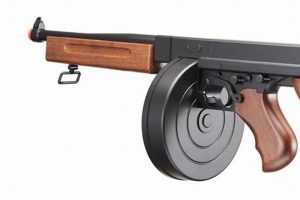
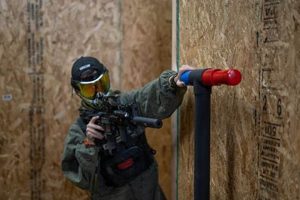
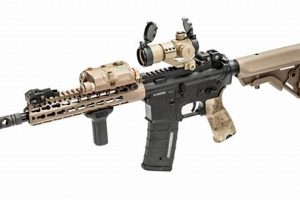
This simulated firearm activity utilizes modified airsoft replicas designed to produce an audible report and muzzle flash, similar to real firearms firing blanks. These devices are typically employed in training exercises, theatrical productions, and historical reenactments, offering a more immersive experience compared to standard airsoft markers. For instance, an operator might use a modified M4 platform to simulate room clearing during close-quarters battle training, benefiting from the auditory feedback and visual cues provided by the simulated gunfire.
The significance of this practice lies in its ability to provide a heightened sense of realism without the dangers associated with live ammunition. It allows participants to develop and refine their tactical skills in a safe and controlled environment. Historically, simulated firearm training has evolved from basic visual aids to increasingly sophisticated systems that mimic the sensory aspects of actual combat. This progression has led to enhanced training outcomes and a reduction in potential risks.
The following sections will delve into the specific modifications required for these airsoft devices, the safety protocols essential for their use, and the legal considerations that govern their operation in various jurisdictions. Furthermore, a comparative analysis with other simulation methods will be presented, alongside a discussion of the potential applications and future trends in this field.
Tips for Utilizing Simulated Firearm Devices
The effective and safe employment of simulated firearm devices requires adherence to specific guidelines. The following tips provide a framework for responsible operation and optimal performance.
Tip 1: Modification Integrity: Any alterations to an airsoft replica intended to simulate blank firing must be performed by qualified technicians. Compromised modifications can lead to malfunctions or unsafe operating conditions. For example, pressure release valves must be calibrated precisely to prevent overpressure events.
Tip 2: Propellant Selection: The type and quantity of propellant used are critical. Incorrect propellant can damage the replica or create excessive noise levels that may violate local ordinances. Always use manufacturer-recommended propellant types and adhere to specified fill volumes.
Tip 3: Protective Equipment: Eye and ear protection are mandatory for all participants in simulated firearm activities. The potential for debris ejection or high decibel levels necessitates the use of appropriate safety gear. Ensure all participants are equipped before commencement of any exercise.
Tip 4: Training and Familiarization: Comprehensive training is essential for all users. Operators must be proficient in the safe handling, loading, and unloading procedures specific to the modified airsoft device. Conduct regular refresher courses to maintain proficiency.
Tip 5: Range Control: Strict adherence to range safety protocols is paramount. Clearly define safe zones and establish rules of engagement before any exercise. Implement a designated range officer to oversee operations and enforce safety regulations.
Tip 6: Pre-Operation Inspection: Conduct thorough inspections of the modified airsoft replica before each use. Verify that all components are in good working order and that there are no signs of damage or wear. Any discrepancies should be addressed before proceeding.
Tip 7: Secure Storage: When not in use, simulated firearm devices must be stored securely to prevent unauthorized access. Implement robust storage procedures to minimize the risk of accidental discharge or misuse.
These guidelines underscore the importance of responsible operation and meticulous maintenance of simulated firearm devices. Adherence to these practices will promote safety and maximize the effectiveness of the simulation.
The subsequent sections will explore the legal and ethical considerations associated with these devices in greater detail.
1. Modifications

Modifications are the foundational element enabling standard airsoft replicas to function as simulated firearm devices. These alterations are not merely cosmetic; they are essential for replicating the aural and visual characteristics of blank firearms. The core objective is to safely generate a report and muzzle flash without projecting a projectile. This typically involves modifying the gas system to accommodate blank cartridges or specialized propellant, reinforcing the barrel to withstand the pressure of the simulated firing, and altering the firing mechanism to reliably ignite the propellant. A poorly executed modification can result in device malfunction, potential injury to the user, or even legal repercussions if the device is no longer classified as an airsoft replica. For example, a modification that increases the device’s energy output beyond legal limits could reclassify it as a firearm, subject to stricter regulations.
The practical significance of understanding these modifications lies in ensuring safe operation and compliance with legal standards. Manufacturers and technicians involved in these alterations must possess a thorough understanding of airsoft mechanics, pyrotechnics, and applicable regulations. Detailed schematics, rigorous testing procedures, and adherence to safety protocols are paramount. In theatrical applications, for instance, a prop master must ensure the device functions reliably during performances without posing a risk to the actors or audience. Military training exercises necessitate durable and dependable simulated firearms, requiring meticulous attention to the quality and safety of the modifications. Furthermore, documentation of modifications is essential for traceability and accountability in case of incidents.
In summary, modifications are the critical link between standard airsoft replicas and their function as safe and effective simulated blank-firing devices. Understanding the complexities of these alterations, and the consequences of improper implementation, is crucial for manufacturers, users, and regulatory bodies. Challenges remain in establishing standardized modification protocols and enforcing regulations to prevent misuse and ensure public safety. Continued research and development are necessary to refine modification techniques and enhance the realism of these devices while mitigating potential risks.
2. Propellants
The functionality of simulated firearm devices hinges directly on the propellants utilized. These substances, typically a form of compressed gas or a pyrotechnic compound, provide the energy necessary to generate the simulated firing effect, including the audible report and muzzle flash characteristic of blank fire. The choice of propellant dictates the intensity of the effect, the operational safety of the device, and adherence to legal standards. Incorrect selection or improper handling of propellants can lead to device malfunction, personal injury, or violations of relevant regulations. For instance, using a propellant with excessive pressure could cause a catastrophic failure of the modified airsoft replica, resulting in shrapnel and potential harm to the user and bystanders. Conversely, insufficient propellant might produce a weak or nonexistent firing effect, rendering the device ineffective for its intended purpose.
Practical applications demonstrate the importance of propellant selection. In theatrical productions, low-pressure gas propellants might be preferred to minimize noise levels and ensure the safety of actors in close proximity to the simulated firearms. Military training exercises, however, may require higher-pressure pyrotechnic compounds to simulate the more intense auditory and visual effects of live fire, enhancing the realism of the training scenario. Moreover, the environmental impact of propellants is a growing consideration. Some compounds may release harmful emissions when ignited, prompting a shift towards more environmentally friendly alternatives. The development and adoption of biodegradable or less polluting propellants represent a significant advancement in the responsible use of these simulated firearm devices. Laws often regulate the transport, storage, and use of these propellants.
In summary, propellants are a critical component in simulated blank-firing systems, determining both the performance and safety profile of the device. Understanding the characteristics and proper handling of different propellant types is essential for users, manufacturers, and regulatory bodies. Ongoing research and development efforts aim to refine propellant technology, seeking to improve safety, environmental impact, and the realism of the simulated firing experience. Challenges remain in balancing these competing objectives, particularly in meeting the diverse needs of various applications while ensuring compliance with evolving regulations.
3. Safety Protocols

Stringent safety protocols are paramount when employing modified airsoft replicas for simulated blank firing. The inherent risks associated with propellants and modified equipment necessitate meticulous adherence to established guidelines to prevent injury and ensure responsible operation.
- Mandatory Protective Gear
Eye and ear protection are non-negotiable. Simulated blank firing can generate significant noise levels capable of causing auditory damage. Moreover, there exists a risk of ejecta from the modified device. Protective eyewear, such as ballistic-rated goggles, and earplugs or earmuffs are essential for all participants within the operational area. Failure to employ appropriate protective gear constitutes a direct violation of safety protocols.
- Pre-Operational Inspections
Prior to each use, a comprehensive inspection of the modified airsoft replica is mandatory. This includes verifying the integrity of the modified components, checking for any signs of wear or damage, and ensuring the propellant system is functioning correctly. A designated individual, qualified to assess the device’s condition, should conduct this inspection. Any discrepancies must be addressed before commencement of simulated firing activities. This measure mitigates the risk of malfunction and potential injury.
- Designated Range Safety Officer
A qualified Range Safety Officer (RSO) must be present during all simulated blank firing activities. The RSO is responsible for overseeing operations, enforcing safety protocols, and maintaining control of the operational area. This individual must possess a thorough understanding of the modified airsoft devices and the associated risks. The RSO has the authority to halt operations if any safety violations are observed or if hazardous conditions arise.
- Restricted Access Zones
Clear and well-defined access zones are essential. Unauthorized personnel must be restricted from entering the operational area during simulated blank firing activities. Barriers, signage, and verbal warnings should be employed to delineate the boundaries of the safe zone. This prevents accidental exposure to the risks associated with the activity.
These safety protocols are not merely suggestions; they are mandatory requirements for the responsible and safe utilization of modified airsoft replicas for simulated blank firing. Negligence in adhering to these protocols can have severe consequences, including physical injury, legal repercussions, and damage to property. Continuous reinforcement of these safety measures is essential to maintain a safe operating environment.
4. Legal Restrictions

The operation of modified airsoft devices designed for simulated blank firing is subject to a complex web of legal restrictions that vary significantly by jurisdiction. These regulations often concern the classification of the device, the permissible modifications, and the allowable usage scenarios. Failure to comply with these restrictions can result in severe penalties, including fines, confiscation of equipment, and even criminal charges. The classification of a modified airsoft device as a firearm, for instance, triggers a host of stringent regulations regarding ownership, storage, transportation, and permissible usage locations. Modifications that increase the device’s energy output or convert it to fire live ammunition may lead to such reclassification. In some regions, simulated blank firing activities are restricted to designated ranges or require permits, reflecting concerns about noise pollution and potential public safety risks.
Real-world examples underscore the practical significance of understanding these legal restrictions. A theatrical production using improperly modified airsoft devices for simulated gunshots could face legal action if the devices are deemed to violate firearm regulations. Military training exercises employing simulated blank firing scenarios must adhere to strict protocols to ensure compliance with local and international laws. Historical reenactment groups may encounter restrictions on the type of propellants used and the permissible locations for their activities. Moreover, the sale and distribution of modified airsoft devices may be subject to licensing requirements and restrictions on interstate transport. Ignorance of these regulations is not a valid defense, and individuals or organizations engaging in simulated blank firing activities are responsible for ensuring compliance with all applicable laws.
In summary, legal restrictions constitute a critical factor in the safe and responsible operation of modified airsoft devices for simulated blank firing. A thorough understanding of these regulations is essential for manufacturers, users, and regulatory bodies to prevent misuse, ensure public safety, and avoid legal repercussions. Ongoing monitoring of evolving legal landscapes and proactive adaptation to new regulations are necessary to maintain compliance and promote the responsible use of these devices. The challenges lie in balancing the desire for realistic simulation with the need to protect public safety and prevent the unlawful use of firearms.
5. Applications
The utility of simulated firearm devices extends across various sectors, each leveraging the realism afforded by these systems for specific training, entertainment, or historical representation purposes. The capabilities of blank fire airsoft significantly enhance the immersive experience within these diverse applications, providing tangible benefits over less sophisticated simulation methods.
- Military and Law Enforcement Training
Simulated blank fire airsoft provides a cost-effective and safe method for realistic combat training. Military units and law enforcement agencies employ these devices to simulate live-fire scenarios in controlled environments. This allows personnel to practice tactical maneuvers, weapons handling, and communication under stress without the inherent dangers of live ammunition. For instance, urban warfare training can be conducted within simulated building complexes, allowing trainees to experience the auditory and visual effects of gunfire in close-quarters battle scenarios. This heightened realism contributes to improved decision-making and operational effectiveness.
- Theatrical and Film Productions
In the entertainment industry, simulated blank fire airsoft offers a safe and visually compelling alternative to real firearms. These devices allow filmmakers and theater companies to create realistic gunfight scenes without the risks associated with live ammunition or the limitations of purely visual effects. The auditory and visual cues generated by these devices enhance the audience’s immersion in the narrative, contributing to a more engaging and believable experience. Prop masters carefully manage the use of these devices, ensuring compliance with safety regulations and maintaining a safe environment for actors and crew.
- Historical Reenactments
Historical reenactors utilize simulated blank fire airsoft to recreate historical battles and events with greater authenticity. These devices allow participants to experience the sights and sounds of historical warfare, providing a more immersive and educational experience for both reenactors and spectators. Reenactment groups often invest significant effort in researching and replicating historical firearms, ensuring that the simulated blank fire airsoft devices accurately reflect the weapons used during the period being portrayed. Safety regulations are strictly enforced to minimize the risk of accidents and ensure the well-being of all participants.
- Security Personnel Training
Security firms employ simulated blank fire airsoft for training personnel in active shooter response and security protocols. These devices allow security officers to practice responding to simulated threats in a realistic and controlled environment. Training scenarios can be tailored to specific environments, such as office buildings, shopping malls, or public transportation hubs, allowing security personnel to develop and refine their skills in relevant contexts. The auditory and visual feedback provided by simulated blank fire airsoft enhances the realism of the training, improving the officers’ ability to react effectively in real-world situations.
These applications highlight the diverse utility of simulated blank fire airsoft, demonstrating its ability to enhance realism, improve training outcomes, and provide a safe alternative to live firearms in various settings. The continued development and refinement of these devices, coupled with rigorous safety protocols, will further expand their potential applications and solidify their role as a valuable tool across multiple sectors.
6. Maintenance
The longevity and safe operation of modified airsoft replicas used for simulated blank firing are directly contingent upon rigorous and consistent maintenance practices. Neglecting maintenance precipitates a cascade of potential problems, ranging from diminished performance and increased risk of malfunction to outright equipment failure and potential safety hazards. For example, residue from propellants can accumulate within the firing mechanism, impeding its function and potentially causing misfires or even uncontrolled bursts. O-rings and seals, crucial for maintaining pressure within the system, degrade over time and require periodic replacement to prevent gas leaks and ensure consistent performance. Furthermore, external components, such as the barrel and receiver, are susceptible to wear and tear, necessitating regular inspection and lubrication to prevent corrosion and maintain structural integrity.
Proper maintenance extends beyond simple cleaning and lubrication. It encompasses a comprehensive inspection process, wherein each component is scrutinized for signs of wear, damage, or potential failure. This proactive approach allows for the identification and rectification of minor issues before they escalate into major problems. For instance, hairline cracks in the barrel, if left unaddressed, can compromise the structural integrity of the device and pose a significant safety risk during simulated firing. Similarly, loose screws or improperly tightened fittings can affect the device’s accuracy and reliability. In practical application, a military training unit relying on simulated blank firing devices for realistic combat exercises must implement a robust maintenance schedule to ensure that the equipment is consistently operational and safe for use. The consequences of equipment failure during a training exercise could range from disruption of the training scenario to potential injury of personnel.
In summary, maintenance is not merely an ancillary consideration but an integral component of responsible blank fire airsoft operation. It directly impacts the reliability, safety, and longevity of the modified airsoft replicas. The challenges lie in establishing standardized maintenance protocols, providing adequate training for users, and ensuring consistent adherence to established procedures. Prioritizing maintenance mitigates the risk of equipment failure, promotes user safety, and maximizes the return on investment in simulated blank firing systems. Neglecting maintenance introduces unnecessary risks and compromises the effectiveness of these valuable training and entertainment tools.
Frequently Asked Questions About Blank Fire Airsoft
This section addresses common inquiries and misconceptions surrounding the utilization of modified airsoft replicas for simulated blank firing. The information presented aims to provide clarity and promote responsible engagement with this technology.
Question 1: What constitutes a “blank fire airsoft” device?
The term refers to an airsoft replica that has been modified to produce an audible report and muzzle flash, simulating the effect of a firearm firing blanks. These modifications typically involve alterations to the gas system, barrel, and firing mechanism to accommodate blank cartridges or specialized propellants. The device should not be capable of firing projectiles.
Question 2: Is “blank fire airsoft” inherently dangerous?
The practice carries inherent risks associated with propellants and modified equipment. However, adherence to stringent safety protocols, including the use of protective gear and pre-operational inspections, significantly mitigates these risks. Negligence in following safety guidelines can result in injury.
Question 3: Are there legal restrictions governing “blank fire airsoft?”
Yes, legal restrictions vary significantly by jurisdiction. These regulations often concern the classification of the device, permissible modifications, and allowable usage scenarios. Compliance with local and national laws is mandatory, and failure to comply can result in fines, confiscation of equipment, or criminal charges.
Question 4: What applications are suitable for “blank fire airsoft?”
Suitable applications include military and law enforcement training, theatrical and film productions, historical reenactments, and security personnel training. The simulated blank fire effect enhances realism in these scenarios, providing tangible benefits over less sophisticated simulation methods.
Question 5: What type of maintenance is required for “blank fire airsoft” devices?
Regular maintenance is crucial for ensuring the safe and reliable operation of these devices. This includes cleaning propellant residue, inspecting for wear and damage, lubricating moving parts, and replacing worn O-rings and seals. A proactive maintenance schedule can prevent malfunctions and extend the lifespan of the device.
Question 6: Can any airsoft replica be converted into a “blank fire airsoft” device?
Not all airsoft replicas are suitable for conversion. The design and construction of the replica must be robust enough to withstand the stresses associated with simulated blank firing. Modifications should only be performed by qualified technicians with experience in airsoft mechanics and pyrotechnics.
In summary, responsible engagement with simulated blank firing requires a comprehensive understanding of the associated risks, legal restrictions, and maintenance requirements. Adherence to established safety protocols is paramount to prevent injury and ensure the responsible utilization of this technology.
The following section will explore future trends and potential advancements in the field of simulated blank firing, including the development of more realistic and safer devices.
Conclusion
This examination has explored the multifaceted aspects of blank fire airsoft, emphasizing critical areas such as modification techniques, propellant considerations, stringent safety protocols, legal restrictions, diverse applications, and the necessity of meticulous maintenance. A comprehensive understanding of these elements is paramount for ensuring the safe, responsible, and effective utilization of modified airsoft replicas designed to simulate blank firing. The unique benefits of these devices extend to military training, theatrical productions, historical reenactments, and security training, offering a realistic simulation experience without the inherent dangers associated with live firearms.
As blank fire airsoft continues to evolve, a commitment to safety, adherence to legal regulations, and continuous refinement of best practices are essential. Further research and technological advancements promise to enhance the realism and safety of these systems, expanding their utility and promoting responsible engagement across diverse applications. Maintaining a vigilant approach to safety and ethical considerations will ensure that blank fire airsoft remains a valuable tool for training, entertainment, and historical representation.
![Top Rated: Best Airsoft Vest [Guide & Reviews] | Ultimate Airsoft Guide for Beginners, Tactics & Gear Reviews](https://airsoftica.com/wp-content/uploads/2026/05/th-90-300x200.jpg "Top Rated: Best Airsoft Vest [Guide & Reviews] Ultimate Airsoft Guide for Beginners, Tactics & Gear Reviews")